

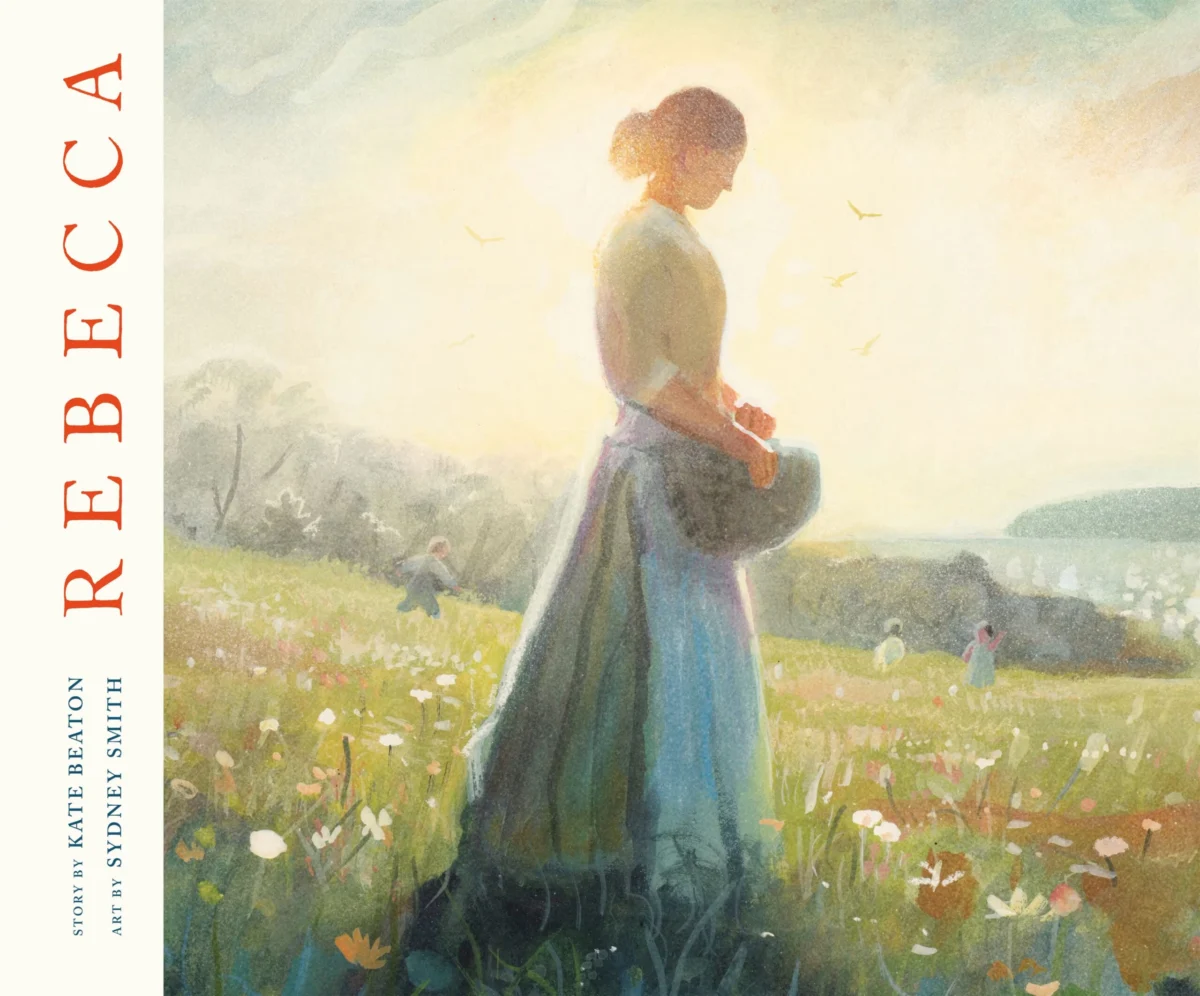
Kate Beaton, the acclaimed Canadian cartoonist and author of the award-winning graphic memoir Ducks: Two Years in the Oil Sands, has released a new children’s picture book titled Rebecca. Published by Roaring Brook Press, the work serves as a profound exploration of grief, ancestral continuity, and the resilience of the maternal line. The book’s narrative is deeply rooted in Beaton’s personal experiences, specifically the death of her older sister, Rebecca "Becky" Beaton, and the subsequent birth of her daughter. By intertwining her family’s contemporary tragedy with the 18th-century history of her great-great-great-great-grandmother, also named Rebecca, Beaton constructs a multi-generational study of how families endure loss.
The publication of Rebecca marks a significant thematic shift for Beaton, whose previous work often balanced sharp historical satire with poignant social commentary. In this latest project, Beaton addresses the "bifurcation" of life that occurs after the loss of a loved one to terminal illness, providing a factual yet emotive look at how grief reshapes individual identity and creative output.
A Chronology of Personal and Familial Transition
The development of Rebecca is inextricably linked to a specific four-year period in Beaton’s life, beginning with her sister’s diagnosis and culminating in the author’s transition into motherhood.
In 2015, Rebecca Beaton was diagnosed with aggressive cervical cancer. For three years, the Beaton family navigated the complexities of the healthcare system and the physical toll of terminal illness. Becky Beaton died on May 14, 2018. This date became a cornerstone of the author’s personal chronology, marking what she describes as the end of her "first life" and the beginning of a "second life" defined by absence.
The following year provided a stark contrast in the family’s timeline. On May 13, 2019—Mother’s Day and the eve of the first anniversary of her sister’s death—Beaton gave birth to her first child, a daughter. The proximity of these two dates—May 14 and May 13—highlights the cyclical nature of life and death that informs the book’s core message. Beaton has noted that the process of writing Rebecca began in the quiet hours of early motherhood, as she reflected on the rhythmic breathing of her sleeping children, a sound she translates into the book as a "soft musical sigh."
Historical Context: The Legacy of Rebecca Lombard Smith
While the book is informed by the loss of Beaton’s sister, it focuses its narrative lens on a historical figure: Rebecca Lombard Smith, an 18th-century matriarch in Cape Breton, Nova Scotia.
Rebecca Lombard Smith was born in Truro, New England, and eventually settled in the village of Port Hood. Her life was marked by a catastrophic event in March 1789, when her husband, Captain David Smith, a prominent whaling captain, perished after falling through the ice near Port Hood Island. At the time of his death, Rebecca was pregnant with their last child.
Historical accounts of the Smith family typically prioritize the tragedy of Captain David Smith, emphasizing his status as a master mariner and the dramatic circumstances of his passing. However, Beaton’s research and subsequent narrative re-center the story on Rebecca. Left alone on a remote island with six sons and one daughter, Rebecca Lombard Smith managed to raise her children to adulthood, ensuring the survival of her lineage. Beaton identifies a direct connection to this history, as her own family descends from Rebecca’s only daughter.
The author’s physical proximity to this history further grounded the project. Living in Port Hood, Beaton frequently visited the Old Protestant Graveyard, where Rebecca Lombard Smith is buried. The headstone, erected by her sons Lewis, Parker, and David, stands as a rare 19th-century testament to maternal influence, surviving until 1821 when Rebecca died at the age of 76.
Supporting Data: Cervical Cancer and the Impact of Sibling Loss
The personal impetus for the book—the death of Becky Beaton—reflects broader public health challenges. Cervical cancer, while preventable through screening and HPV vaccination, remains a significant cause of mortality. According to the World Health Organization (WHO), cervical cancer is the fourth most common cancer in women globally. In Canada, despite robust screening programs, aggressive forms of the disease continue to impact younger women, causing profound disruptions to family structures.

Research into sibling loss suggests that the death of a brother or sister in adulthood is often an "enfranchised" or overlooked form of grief. Unlike the loss of a parent or a spouse, sibling loss can sometimes lack formal social support systems, yet it significantly alters the survivor’s sense of past and future. Beaton’s work contributes to a growing body of literature that seeks to "write the grief out," providing a framework for understanding how loss integrates into daily life rather than simply "ending."
Editorial and Industry Responses
The publication of Rebecca by Roaring Brook Press represents a departure from traditional children’s literature norms. Connie Hsu, the publishing director at Roaring Brook Press, acknowledged the unconventional nature of the manuscript when it was first presented.
"My initial reaction to Rebecca was awe," Hsu stated. "My brain began to think about all the usual ‘rules’ about picture book publishing. Here, the main protagonist is an adult, the book is about loss, and two people die in the book! But I just had to publish it."
Industry analysts suggest that Beaton’s stature in the literary world—bolstered by the success of Ducks, which appeared on former President Barack Obama’s 2022 favorite books list and was a New York Times Notable Book—allowed for greater creative flexibility. Rebecca is being positioned as a "crossover" title, appealing to both children navigating the concept of family history and adults grappling with the complexities of legacy.
Analysis of Implications: Grief as a Permanent Space
A central theme of Beaton’s recent work and her public commentary on Rebecca is the rejection of the "closure" narrative. Instead, the book posits that grief is a permanent addition to one’s life—a "space" that one learns to inhabit.
This perspective aligns with contemporary psychological theories of "continuing bonds," which suggest that healthy mourning involves maintaining a symbolic connection with the deceased rather than severing ties. By naming her book after her sister and her ancestor, Beaton reinforces the idea that names are vessels for history and strength. The "mother’s strength" that Beaton observed in her sister’s battle with cancer is linked back to the historical Rebecca’s survival on Port Hood Island.
Furthermore, the book highlights the importance of oral and local history in the Maritimes. In regions like Cape Breton, where genealogical ties are often deeply felt, the act of recording these stories serves as a form of cultural preservation. Beaton’s transition from the satirical webcomics of Hark! A Vagrant to the somber, historical reflections of Rebecca demonstrates the versatility of the graphic and illustrated medium in handling heavy biographical themes.
Broader Literary Impact
Kate Beaton’s Rebecca enters a literary landscape that is increasingly open to "bibliotherapy"—books designed to help readers process difficult emotional or social realities. While the book is ostensibly for children, its focus on an adult protagonist and historical tragedy suggests it may serve as a tool for intergenerational dialogue about death and endurance.
The book’s release is expected to resonate particularly well in Canada, where Beaton is a celebrated cultural figure. Her ability to take a localized story from the shores of Cape Breton and give it universal relevance regarding the nature of love and loss remains a hallmark of her career.
As Beaton continues to live and work in Cape Breton with her family, Rebecca stands as a tribute to the women who preceded her and a legacy for the children who follow. The work confirms that while individual stories may end in loss, the collective narrative of a family is often one of hope and continuity, sustained by the names and the strengths passed down through generations.
The publication of Rebecca is not merely the release of a new title; it is the culmination of a decade of personal transformation for one of North America’s most influential illustrators. By documenting the "intermission" of her sister’s illness and the "second life" that followed, Beaton has provided a factual and historical anchor for the ephemeral experience of mourning.
