


A significant and increasingly prevalent trend observed in pediatric sleep clinics nationwide is the frequent use of melatonin by children. While melatonin is a naturally derived hormone and an important tool in managing sleep disorders, its widespread and often unsupervised administration has raised considerable concern among medical professionals. This escalating reliance on melatonin, sometimes viewed as a quick fix for sleep issues, prompts a deeper examination of its efficacy, safety, and the underlying reasons for its burgeoning popularity among families.
The exact prevalence of melatonin use in children remains challenging to pinpoint. However, data from adult studies offers a glimpse into the broader trend. A 2022 study published in JAMA revealed that adult melatonin use had tripled between 2005 and 2018, with users increasingly opting for higher doses. This surge in adult consumption is mirrored in the pediatric population, where aggressive marketing of melatonin products appears to be contributing to a perception of universal safety and accessibility. This has led some parents to view melatonin as a convenient shortcut, bypassing the often more demanding but ultimately more sustainable implementation of robust sleep hygiene practices. Anecdotal evidence, such as a father’s review on Amazon quoted in a Wall Street Journal article, highlights this sentiment: "Well, for whatever reason, this is not our strong suit. This 1 mg light dosage of melatonin is very helpful winding our kids down and getting them ready for bed." This perspective underscores the pressure parents face and the appeal of a seemingly simple solution.
Further underscoring the rise in melatonin consumption, a New York Times article in May 2020, titled "Parents Are Relying on Melatonin to Help Their Kids Sleep. Should They?", reported an 87% increase in overall melatonin sales in the year preceding March 2020. A survey conducted by the Times involving 933 parents with children under 18 found that over half had administered melatonin to their children at some point, with one-third reporting a history of sleep difficulties in the past year. More recent data indicates an alarming nearly 500% increase in melatonin prescriptions in Scandinavia. In the United States, melatonin has tragically become the most common cause of overdose in pediatric emergency rooms and a leading reason for calls to poison control centers, signaling a global issue that demands urgent attention and careful consideration.
Understanding Melatonin’s Role and Mechanism
Melatonin is a hormone naturally produced by the pineal gland in the brain. Its primary functions are as a chronobiotic agent, regulating the body’s circadian rhythm or internal clock, and as a hypnotic agent, which at higher doses can induce sleep. Crucially, while its chronobiotic effect is consistent across individuals, its hypnotic effect is not universal and is dose-dependent. The natural increase in melatonin levels typically occurs one to three hours before sleep onset, a phenomenon known as the "dim light melatonin onset" (DLMO). This biological signal marks the body’s readiness for sleep, essentially indicating the end of the "wakefulness" signal generated by the circadian system. In children experiencing insomnia, particularly those whose bodies are not yet signaling readiness for sleep at the desired bedtime, melatonin may be administered. This is one reason why behavioral interventions like "bedtime fading," which aligns bedtime with the child’s natural sleep onset, can be effective. Clinical doses of melatonin, often ranging from 0.5 mg to 10 mg or higher, significantly exceed the physiological amounts naturally secreted by the body.
The Effectiveness of Melatonin for Pediatric Sleep Issues
The documented effects of melatonin in children often include a reduction in the time it takes to fall asleep and an increase in overall sleep duration. However, comprehensive research on its efficacy in pediatric populations is notably limited. Most studies involve small cohorts and short follow-up periods. A significant factor contributing to this data gap is the regulatory status of melatonin in the United States, where it is classified as a dietary supplement rather than a pharmaceutical. This distinction means that large-scale, long-term safety and efficacy studies, typically funded by pharmaceutical companies for regulated drugs, are largely absent for melatonin. The International Pediatric Sleep Association (IPSA) provides valuable resources, including parent guides and literature reviews on melatonin use in both typically developing children and those with autism, offering a crucial source of evidence-based information and dosing recommendations.
The prevailing consensus suggests that melatonin typically results in approximately 30 minutes of additional sleep per night, primarily by shortening the sleep latency. While this effect is considered consistent across trials, it is essential to recognize that melatonin is not a magical cure for all sleep disturbances.
Chronic Sleep Onset Insomnia in Typically Developing Children
Sleep onset insomnia, characterized by difficulty falling asleep, is a common issue for children. When this difficulty occurs at least three times per week for three months or more, leading to dissatisfaction with sleep or daytime impairment, it is classified as chronic insomnia. A 2023 meta-analysis by Edemann-Callesen, combining data from 419 children, indicated an approximate 30-minute increase in total sleep time, with about 18 minutes attributed to reduced sleep latency. Notably, this study found no significant improvement in daytime functioning and observed an increase in adverse events in the melatonin treatment group compared to placebo. The 2025 IPSA position paper on melatonin for typically developing children offers important recommendations for this demographic.
Autism Spectrum Disorder (ASD) and Melatonin
Sleep disturbances are frequently observed in children with Autism Spectrum Disorder (ASD), manifesting as prolonged sleep onset, reduced nighttime sleep, and issues with nocturnal and early morning awakenings. Some research suggests that children with autism may exhibit lower melatonin levels and less variation in their daily secretion patterns. Consequently, melatonin has been commonly employed in this population, often leading to improved sleep onset and duration. Studies have utilized both immediate-release and long-acting melatonin formulations, typically administered 30-60 minutes before bedtime.
A 2025 meta-analysis by Yang et al. identified sleep efficiency and total sleep time as the most significantly impacted metrics, rather than sleep latency. The benefits of melatonin were found to be more pronounced in older children. The effectiveness of melatonin has also been observed to wane over time in some cases, with higher doses appearing more effective than lower ones. A 2017 trial examining a time-released melatonin preparation, PedPRM, at doses of 2-5 mg, demonstrated a significant increase in sleep duration and a reduction in sleep latency. While this medication is available in Europe under the brand name Slenyto, it has not yet received FDA approval in the United States. The 2024 IPSA recommendations for melatonin use in ASD offer specific guidance.

The American Academy of Neurology published a guideline in 2020 recommending that behavioral interventions be addressed first, followed by melatonin, and then potentially long-acting melatonin. This approach emphasizes a stepwise progression of treatment. For families, resources such as the Autism Speaks Sleep Toolkit and the book "Solving Sleep Problems in Children with Autism Spectrum Disorders: A Guide for Frazzled Families" provide valuable support.
Attention-Deficit/Hyperactivity Disorder (ADHD) and Melatonin
Attention-deficit/hyperactivity disorder (ADHD) is strongly associated with sleep problems, and conversely, sleep disturbances can exacerbate attentional issues. Historical accounts, dating back to early descriptions of ADHD (then termed "hyperkinetic disorder"), noted that parental desperation over nighttime sleep issues often overshadowed daytime concerns. Studies indicate that up to 70% of children with ADHD may experience sleep problems, including difficulty falling asleep, altered sleep architecture, and daytime sleepiness.
A 2024 review article by Cortese on the management of sleep issues in ADHD highlighted two randomized controlled trials demonstrating positive outcomes. A systematic review by Larsson in 2024 reported a 30-minute decrease in sleep latency and improved sleep efficiency, though it found no evidence of improvement in quality of life or daytime ADHD symptoms. A small trial also suggested that melatonin might aid in insomnia for children with ADHD on stimulant medication, though this was based on chart review.
Delayed Sleep-Phase Syndrome (DSPS) and Melatonin
Delayed sleep-phase syndrome (DSPS) is a prevalent disorder among adolescents, characterized by a significant shift in their natural sleep-wake cycle later than typically required by their schedules, particularly school commitments. Teens with DSPS often struggle to fall asleep before 1-2 AM, and in some severe cases, as late as 4-5 AM. Melatonin plays a particularly beneficial role in managing DSPS. Administering small doses several hours before the intended sleep onset, in conjunction with light exposure management, sleep hygiene, and gradual schedule adjustments (chronotherapy), can effectively shift sleep periods earlier. This is attributed to a delayed DLMO, which melatonin dosing can help to advance. For children with DSPS, a regimen involving a dose several hours before their current sleep onset, gradually moved earlier every few days, is recommended, using low-dose preparations. Of the conditions discussed, DSPS demonstrates the clearest evidence of benefit from melatonin.
Children with Neurodevelopmental Delay and Melatonin
Children with various forms of neurodevelopmental delay often experience significant insomnia. Melatonin may offer relief, although in some instances, it has led to persistently high daytime melatonin levels and subsequent daytime sleepiness. A 2023 review by Edemann-Callesen examined melatonin use in a diverse group of conditions, including those with neurodevelopmental delays, and found a modest increase in total sleep time (primarily through reduced latency) but no significant subjective sleep improvement or daytime benefits.
Blindness and Melatonin
Some children with blindness may face challenges with regulating their sleep-wake cycles due to the absence of light cues for their circadian clock. While small trials in adults have suggested potential benefits, data on melatonin’s efficacy in visually impaired children remains very limited.
Eczema and Melatonin
Eczema, characterized by dry, itchy skin, is often associated with insomnia and non-restorative sleep in children. Some research suggests that children with eczema may have lower melatonin levels, and a recent trial indicated that melatonin might be beneficial in managing sleep difficulties in this population.
Concerns Regarding Melatonin Use in Children
Despite its perceived benefits, several areas warrant caution regarding melatonin use in children. These include theoretical side effects, potential issues with product quality and labeling, and the overall lack of extensive long-term safety data.
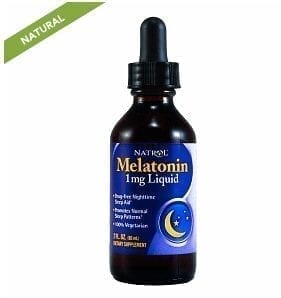
Theoretical Side Effects: Persistent elevation of blood melatonin levels throughout the day, potentially leading to daytime sleepiness, is a theoretical concern. However, the full extent of other potential effects remains unclear. It is critical to reiterate that melatonin has not undergone the rigorous testing required for pharmaceutical drugs, as it is regulated as a dietary supplement by the FDA. Long-term studies on children using melatonin have largely relied on parental reports rather than objective biochemical assessments. Dr. David Kennaway, a physician from Australia, has published editorials highlighting the inadequacy of information on long-term melatonin use in children. He notes that "melatonin is not registered for use in children, no rigorous long-term safety studies have been conducted in children and by the way melatonin is also a registered veterinary drug used to alter the reproduction of sheep and goats."
Product Quality and Labeling: The regulatory oversight for dietary supplements is substantially less stringent than for pharmaceuticals, impacting both safety and efficacy. Furthermore, the labeling of melatonin preparations can be frequently misleading. For example, a liquid preparation marketed as "1 mg" might actually contain 0.25 mg per dropperful, with the accurate dosage information buried on the product website or in the package insert, which many consumers may not consult.
Long-Term Safety Data: A 2020 study that followed 80 children for two years using the long-acting melatonin formulation PedPRM reported no evidence of adverse effects on weight, height, body mass index, or sexual development. While this study is reassuring, it represents one of the few long-term safety assessments, and a greater volume of such research is needed.
Navigating Melatonin Use: Recommendations for Parents and Physicians
For parents whose children are already taking melatonin, particularly if initiated without professional guidance, it is strongly advised to discuss its necessity with a pediatrician. If a child has been using melatonin long-term and is sleeping well, a gradual reduction in dosage and a trial of "as needed" use, rather than nightly administration, can be considered. Prioritizing robust sleep hygiene practices, including a consistent and high-quality bedtime routine and avoiding screen time for at least an hour before bed, is paramount. Periodic trials off melatonin, with a recommended duration of use typically limited to 3-6 months as per IPSA guidelines, are also encouraged. Ensuring melatonin is stored safely and dosed appropriately is crucial to prevent accidental ingestion and overdoses.
When melatonin is prescribed by a physician, careful consideration of its timing and dosage is essential. The effects of melatonin can vary significantly depending on when it is administered relative to the child’s usual sleep schedule. A small dose given a few hours before bedtime can be more impactful than a larger dose at bedtime. Generally, 30-60 minutes before the intended bedtime is considered optimal, though earlier administration may be beneficial in some cases.
Dosing recommendations from the 2025 IPSA guidelines are age-based, starting at 0.5 mg and increasing weekly by 0.5 mg until improvement is observed or the maximum dose is reached. A melatonin dosing calculator can assist parents and physicians in selecting the safest dose for their child. It is imperative to understand that melatonin is not a substitute for good sleep hygiene. It should be used in conjunction with a high-quality bedtime routine, appropriate light management, and a consistent sleep schedule. When possible, opting for USP Verified preparations can provide an added layer of assurance regarding product quality and adherence to manufacturing standards.
The Takeaway: A Balanced Approach to Pediatric Sleep
The decision to use melatonin for a child’s sleep issues is often made after extensive deliberation and typically follows unsuccessful attempts at behavioral interventions. Given the limited FDA-approved insomnia medications for children, melatonin has become a common tool in pediatric practice. While acknowledging the concerns raised by experts like Dr. Kennaway regarding long-term safety and regulatory oversight, the profound impact of chronic poor sleep on children and families cannot be understated. Thoroughly investigating other potential causes of insomnia, such as restless leg syndrome, is a critical first step. The ultimate goal remains to help children achieve restorative sleep with minimal reliance on medication. For some children, particularly those with autism or developmental challenges, medication may be a necessary component of a comprehensive sleep management plan.
If melatonin is deemed appropriate for a child, it should be integrated into a broader strategy that prioritizes behavioral interventions and optimal sleep hygiene. Parents should be informed about the potential risks and benefits, and treatment plans should be regularly reviewed and adjusted as needed. In instances where sleep difficulties arise suddenly, it may be indicative of a sleep regression, requiring a different management approach.
Ultimately, the widespread use of melatonin in children presents a complex challenge. While it offers a valuable tool for some, a nuanced understanding of its efficacy, safety, and appropriate application, in conjunction with robust sleep hygiene practices, is essential for ensuring the best possible sleep health outcomes for young individuals.
A special thanks to Bob Young R.Ph (aka the legendary "Bob from Pharmacy") for his assistance with the initial version of this article.
Originally published April 2026. Last reviewed/updated by Dr. Craig Canapari, MD in April 2026
