

The compelling narrative of Zarina Ayyub, a dedicated doula and breastfeeding advocate from Tooting, London, illuminates the profound challenges and ultimate triumph in navigating cultural expectations and systemic barriers to champion maternal and infant health. Her personal journey, spanning over three decades and five children, stands as a testament to resilience, transforming deeply entrenched societal views on breastfeeding within her South Asian community. From a young, unsupported mother to a respected peer supporter and doula, Ayyub’s story is not merely one of individual perseverance but a powerful catalyst for intergenerational change, underscoring the critical need for culturally sensitive maternal care.
Early Life and the Shadow of Past Trauma
Zarina Ayyub’s own entry into motherhood at the tender age of 20, just days after her birthday on November 1st, was fraught with vulnerability and a lack of informed support. Her personal experience was inextricably linked to the unaddressed trauma of her mother, a Pakistani immigrant who arrived in England in the late 1960s. This era marked a significant period of immigration from the Indian subcontinent to the UK, with new arrivals often facing immense cultural adjustments and limited access to culturally appropriate healthcare. Ayyub’s mother was among the first in her Asian community in Birmingham to give birth in England, a pioneering yet isolating experience.
Her mother’s attempts to breastfeed her older brother were met with formidable obstacles. In an institutional environment that frequently promoted formula feeding, she was given formula in the hospital and medication to suppress lactation—a practice that was common in the mid-20th century, often without fully informing mothers of its implications or alternatives. Compounding this, her mother lived in a crowded household with her in-laws, where privacy was scarce and breastfeeding was not encouraged. The cultural emphasis on maintaining harmony ("keeping the peace") within extended family structures often superseded individual maternal preferences, particularly for young wives in patriarchal settings. Her mother’s vivid recount of constant pain, feelings of inadequacy, and the belief that her baby was "never full" left a lasting scar, leading her to actively dissuade Zarina from breastfeeding, fearing she would endure similar suffering.
Further complicating matters were deeply rooted traditional beliefs. In parts of India, colostrum, the vital "first milk" rich in antibodies, was historically considered "dirty" or impure. Instead, newborns were sometimes given concoctions of cooled boiled water with fennel and other seeds, intended to clear meconium from their bowels. These practices, though well-intentioned within their cultural context, deprived infants of essential early nutrition and immunological protection. This ingrained distrust of colostrum, combined with her mother’s painful memories, formed a significant barrier to Zarina’s understanding and acceptance of breastfeeding from the outset.
A Difficult Start: Zarina’s First Foray into Motherhood
Zarina’s own first birth experience mirrored the systemic shortcomings that had affected her mother. At 20, she felt unheard and uninformed. Her baby, born prematurely at a tiny 4 lbs 13 oz due to placental insufficiency—a detail she was told but never fully explained—was immediately separated from her and placed in a special nursery, fed formula by tube. Isolated in her own room, without any guidance on expressing colostrum or the fundamentals of breastfeeding, Zarina felt a profound sense of helplessness. The hospital environment, devoid of visible breastfeeding mothers or proactive support, left her feeling alienated and fearful, even hesitant to hold her own child. Her mother’s repeated advice to "not ask questions" and "trust them" echoed the passive acceptance she herself had been forced into, further silencing Zarina’s nascent instincts.
When her daughter was finally brought to her on day three, Zarina was severely engorged, her breasts "big and hard, and felt heavy like bricks!" The physical discomfort was immense, compounded by her mother’s renewed pleas to take milk-drying pills. Her baby struggled to latch onto her swollen breasts, and a midwife’s forceful intervention—"grasped my breast and forced my baby onto me"—left Zarina traumatized and in tears, reinforcing her mother’s warnings of pain. This traumatic initiation set the tone for a challenging postpartum period.
Returning home around day five or six, Zarina faced cracked, bleeding nipples and overwhelming exhaustion. The lack of readily available support in Birmingham, where shops were not open at night, meant a desperate search for relief, culminating in an ineffective hand pump and an oversized dummy. The struggle to soothe her crying infant underscored the profound isolation and lack of practical support she experienced.
Navigating Cultural Expectations in a New Home
Following her initial postpartum period at her mother’s, Zarina moved with her husband to their own flat in London. This move, however, did not alleviate the cultural pressures. Living initially with her husband’s extended Pakistani family—aunt, uncle, and grandparents—meant a continued lack of privacy and intense scrutiny. Even after moving to their own flat, a constant stream of relatives, newly arrived in the UK and offered hospitality by her husband, filled their home. This created an environment where Zarina felt embarrassed to breastfeed outside or even openly at home, leading her to isolate herself.
The expectation for women in the community to be constantly engaged in housework, contributing to the family unit, clashed sharply with the demands of responsive breastfeeding. Her in-laws, including her mother-in-law who had breastfed her own sons, questioned Zarina’s commitment to breastfeeding, comparing her unfavorably to another daughter-in-law who prioritized a "spotless house" over infant feeding. "They saw sitting to feed as laziness," Zarina recounts, highlighting the stark cultural divide where visible productivity often outweighed the invisible labor of infant care.
Furthermore, traditional views on infant weight and health added another layer of pressure. Zarina’s husband, influenced by community comparisons, expressed concern that their children were "too skinny" and advocated for "bottle milk." This perception often arises from a cultural preference for larger, chubbier babies, sometimes misinterpreting the natural growth patterns of breastfed infants. Zarina, being five feet tall, naturally had smaller babies, exacerbating these comparisons and fueling her husband’s anxieties. Despite these external pressures, Zarina intuitively understood her baby’s need for touch and closeness, picking her up whenever she cried, demonstrating an innate maternal instinct often at odds with prevailing cultural advice.
Zarina’s understanding of infant feeding was also shaped by her mother’s formula-feeding schedule, leading her to attempt a rigid three-hourly feeding regimen, unaware of the principles of responsive, on-demand feeding crucial for successful breastfeeding. She initially envisioned breastfeeding only until her planned return to work at six months, anticipating a transition to formula—a common trajectory for many mothers in the absence of comprehensive breastfeeding education and workplace support.
The Turning Point: Education and Empowerment
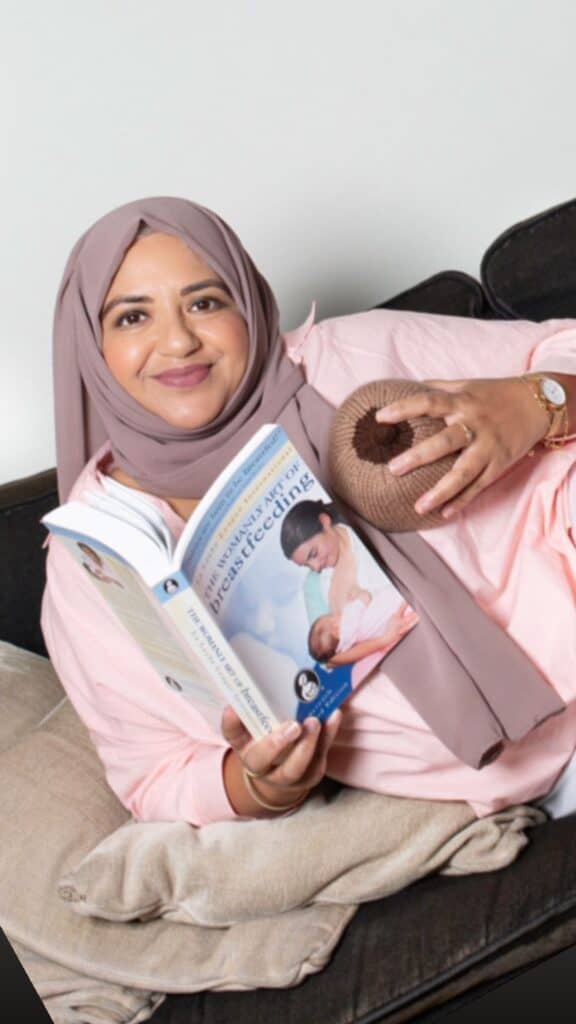
The birth of her third child marked a pivotal moment in Zarina’s journey. By this time, her household was even fuller, with her husband’s mother and two brothers also living with them. The sheer density of people and opinions made her determination to breastfeed even more remarkable. It was during this pregnancy that Zarina discovered The Womanly Art of Breastfeeding, a foundational text by La Leche League (LLL). She borrowed it from the library and immersed herself in its contents for nine months, voraciously absorbing knowledge that directly contradicted many of the misconceptions she had grown up with. "Colostrum is not dirty, if you lose your milk, you can relactate…" she learned, feeling armed with information that would empower her. This newfound knowledge instilled a powerful resolve: "I felt that now I had all this information, no one was going to mess with me!" she declared, feeding that baby for two full years despite constant criticism.
Her commitment was tested when her third baby was a few weeks old and Zarina developed mastitis, a painful breast infection. This led her to contact an LLL Leader and attend a local LLL group in Wimbledon. This experience, while crucial for support, also highlighted the cultural chasm. As the only woman in a shalwar kameez—traditional South Asian attire she wore to mitigate conflict with her in-laws—she felt "awkward and embarrassed" trying to feed in a longer top. This initial discomfort underscores the need for diverse representation and culturally sensitive spaces within breastfeeding support networks. It took her years to regain the courage to attend another group.
From Personal Struggle to Peer Support
Even amidst her early struggles, Zarina harbored a nascent desire to support other mothers. Just four weeks after becoming a mother herself, she found herself helping her husband’s aunt, who had returned from the hospital with a new baby and was struggling with engorgement, mirroring Zarina’s own initial pain. This informal support, born out of shared experience within a similar household dynamic, was less awkward because of their mutual desire to breastfeed. She also extended her support to her younger sister, guiding her through breastfeeding all her children. This sustained positive example eventually softened her mother’s stance, leading to her wholehearted support for Zarina’s last two children, a powerful testament to the impact of successful role models.
The formalization of her passion for support came after her fifth child. This baby, born prematurely at 35 weeks with severe reflux, presented significant breastfeeding challenges. Despite seeking professional help, Zarina received "really poor" advice from a breastfeeding counsellor. This frustration spurred her to attend a local breastfeeding café, years after her initial awkward LLL experience. It was there she saw an advertisement for La Leche League’s 12-week peer supporter training course, run by the NHS in her area. "Thank God I came today!" she exclaimed, recognizing her calling. The course provided structured knowledge and a sense of validation, culminating in a graduation ceremony and a cherished pink knitted breast model, a symbol of her journey.
As a peer supporter for two to three years, Zarina was often the "only Muslim peer supporter," highlighting a significant gap in culturally specific support. She observed that Asian women rarely attended the groups she ran, underscoring the importance of shared identity in building trust, even without a language barrier. Her impact extended beyond her community, with many mothers she supported wishing they could "take me home with them!" a testament to her empathetic and effective approach.
Expanding Advocacy: Doula Work and Systemic Change
Today, with her children grown (aged 18 to 34), Zarina has transitioned to working as a doula, offering crucial support during both birth and the postnatal period. This role allows her to integrate her wealth of personal experience and professional training, providing holistic care that addresses not only physical needs but also emotional and cultural sensitivities. Her advocacy now extends to systemic change, as evidenced by her participation in projects like The Raham Project in Peterborough and the charity BLISS. These initiatives focus on neonatal intensive care units and premature babies, addressing the specific needs of ethnic minority families. Sharing her deeply painful birth stories in these forums, particularly regarding her first baby, continues to be a raw but necessary part of her work.
Intergenerational Impact and a Vision for the Future
Zarina’s legacy is perhaps most powerfully illustrated through her own daughters. Her eldest daughter, now with three children under four, has embraced breastfeeding with remarkable success, feeding her first for two years, tandem feeding her first two, and continuing with her youngest at eight months. This stands in stark contrast to Zarina’s own difficult beginnings, demonstrating a profound intergenerational shift. Even her son-in-law, whose family initially held reservations about breastfeeding, has become a strong supporter. Zarina’s influence has also extended to her daughter-in-law, who has had a "brilliant" breastfeeding journey.
The Ayyub household, once constrained by traditional prudishness, has evolved into a "very unusual Pakistani household." Zarina’s unwavering openness about women’s health topics, from breastfeeding to periods, has normalized these discussions within her family, influencing her children’s spouses and friends. This cultural shift is also manifesting in other significant ways, with her younger daughters expressing interest in home births, a concept considered a "huge miracle" within their community.
Despite these positive changes, Zarina acknowledges that significant challenges remain. "There is still a lot of shame surrounding breastfeeding in the Asian community," she states, noting that many families remain "quite prudish." This cultural reticence often prevents South Asian women from accessing vital breastfeeding support, as they may feel uncomfortable exposing themselves in a room full of people, even other women. Zarina emphasizes that this is a cultural, not religious, barrier. The Muslim faith, she clarifies, actually teaches that a baby has a right to be breastfed for as long as desired, often interpreted as up to two years.
Zarina Ayyub’s enduring message is a call to action: to build relationships of trust, to provide culturally sensitive support, and to normalize breastfeeding as a fundamental, beneficial, and natural aspect of life. Her journey from unsupported young mother to a powerful advocate embodies the transformative potential of education, empathy, and unwavering determination in reshaping deeply ingrained norms for the health and well-being of future generations. Her work continues to bridge divides, ensuring that all mothers, particularly those from underrepresented communities, receive the support they need to embark on their breastfeeding journeys with confidence and pride.
Breastfeeding Matters LLLGB Podcast
In January 2025, Zarina Ayyub shared further insights into her experiences on the LLLGB Podcast "Breastfeeding Matters." In conversation with volunteer breastfeeding counsellors Maria Yasnova and Sarah Fletcher, she elaborated on the crucial need for a safe and supportive environment for new mothers from the very beginning. The discussion delved into the ancient tradition of the "first 40 days" or the "fourth trimester," a practice observed by many cultures worldwide, emphasizing the importance of rest, nourishment, and community support for postpartum recovery and bonding. This broader context further highlights the universal need for holistic maternal care, a principle Zarina Ayyub has championed throughout her remarkable career.
