

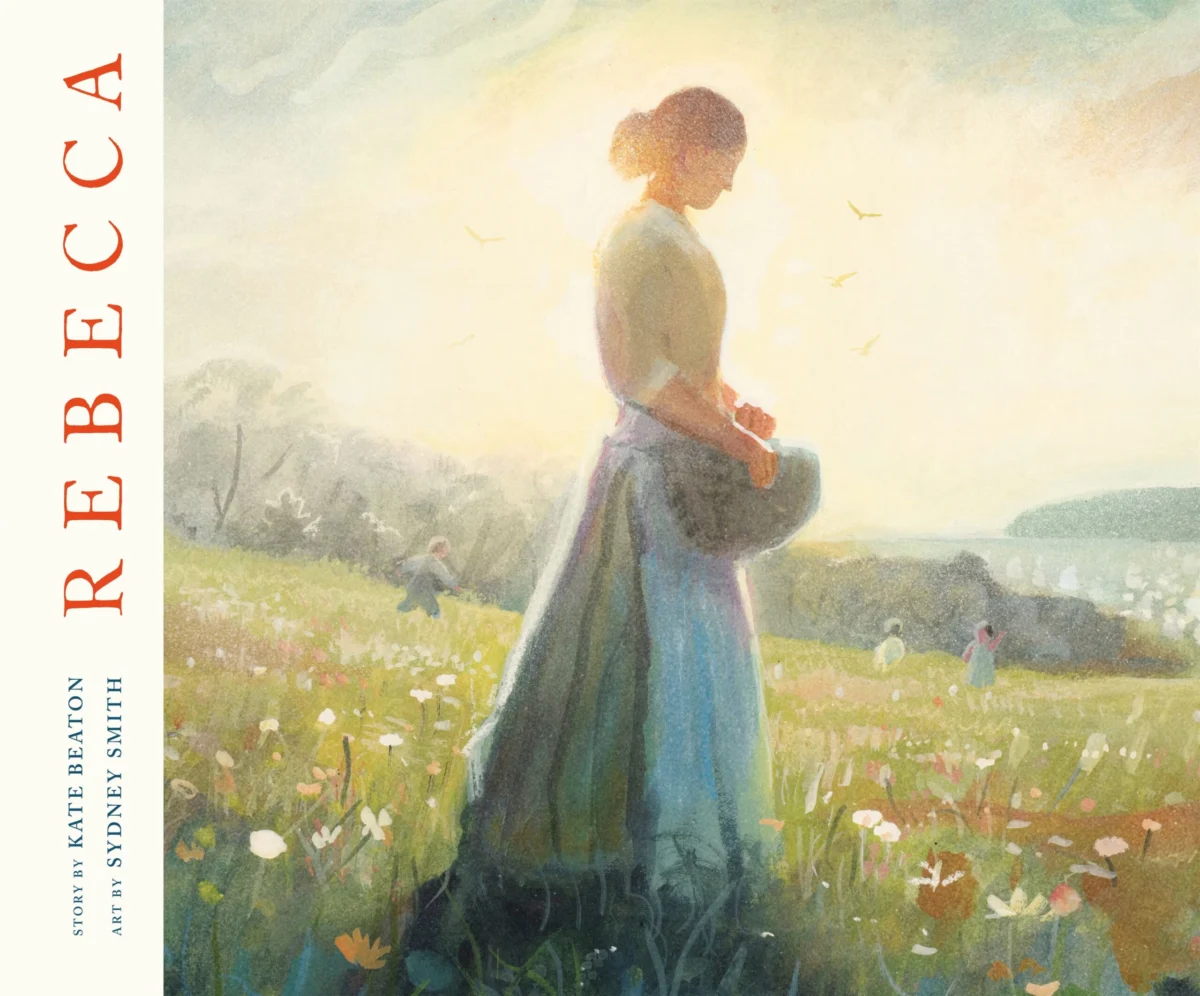
The acclaimed Canadian author and cartoonist Kate Beaton, widely recognized for her satirical webcomic Hark! A Vagrant and her award-winning graphic memoir Ducks: Two Years in the Oil Sands, has announced the release of her latest project, a children’s picture book titled Rebecca. This new work marks a significant thematic departure for Beaton, as it navigates the complex emotional terrain of sibling loss, maternal resilience, and the historical echoes of her own lineage in Cape Breton, Nova Scotia. The book is ostensibly a historical narrative based on Beaton’s 18th-century ancestor, Rebecca Lombard Smith, but it serves as a profound vessel for the author’s personal mourning following the death of her sister, Becky Beaton, in 2018.
The Convergence of Personal Tragedy and Creative Output
The genesis of Rebecca is rooted in a period of intense personal upheaval for Beaton. On May 14, 2018, her older sister, Becky, succumbed to an aggressive three-year battle with cervical cancer. In the wake of this loss, Beaton described her life as becoming "bifurcated," a state defined by the stark contrast between the person she was before her sister’s illness and the person she became after the bereavement. This experience of watching a loved one decline—a process Beaton characterizes as a "surprise horror movie"—is a central, albeit underlying, driver of her recent creative work.
The emotional weight of this loss was further complicated by the timing of Beaton’s entry into motherhood. In May 2019, almost exactly one year after her sister’s passing, Beaton went into labor. Her daughter was born on May 13, narrowly avoiding the anniversary of Becky’s death. This juxtaposition of life and death, occurring within a 24-hour window across two consecutive years, forced a confrontation with the nature of grief. Beaton has noted that becoming a mother in the shadow of such sorrow revealed that grief does not possess a definitive conclusion; instead, it becomes a permanent fixture in one’s daily existence, requiring a form of coexistence rather than a "cure."
A Chronology of the Beaton-Smith Legacy
To understand the depth of the narrative in Rebecca, one must examine the chronological and genealogical links Beaton utilizes. The book focuses on Rebecca Lombard Smith (1745–1821), Beaton’s great-great-great-great-grandmother. The historical record of the Smith family is a testament to the harsh realities of 18th-century maritime life in Atlantic Canada.
In March 1789, Captain David Smith, a whaling captain and Rebecca’s husband, perished after falling through the ice near Port Hood Island. At the time of his death, Rebecca was pregnant with their last child. While local history often centers on the dramatic and tragic end of Captain Smith, Beaton’s work shifts the focus to the widow. Rebecca Lombard Smith remained on the isolated island, successfully raising six sons and one daughter in an era of extreme physical and economic hardship.
Beaton’s connection to this history is not merely academic; it is geographic and nominal. Living in Port Hood, Cape Breton, Beaton frequently viewed Port Hood Island from her window, the same vista her ancestor would have surveyed centuries earlier. The naming tradition in Beaton’s family—where she and her sister were named after their grandmothers, Kathryn and Rebecca—further bridges the gap between the 18th-century matriarch and the 21st-century sisters.
Supporting Data on Maternal Lineage and Regional History
The historical context of Rebecca Lombard Smith’s life coincides with a period of significant migration to Cape Breton. Following the American Revolution, many settlers from New England—like the Smiths, who originated in Truro, Massachusetts—moved north to the Maritimes. These settlers faced a rugged environment where survival depended on the strength of family units and the resilience of women who often managed households alone for months while men were at sea, or permanently following maritime disasters.
Statistical data from the era suggests that maritime fatalities were a leading cause of widowhood in coastal communities. The fact that all of Rebecca’s children survived into adulthood was a notable feat given the infant mortality rates of the late 1700s, which could range as high as 20% to 30% in rural settlements. Beaton identifies this survival as a source of "hope" that contrasts with the "loss" of her sister’s story, allowing her to write a narrative that finds a way forward through tragedy.

Editorial and Professional Reception
The publication of Rebecca by Roaring Brook Press represents a calculated risk in the children’s literature market. Connie Hsu, the publishing director of Roaring Brook Press, acknowledged that the book defies several conventional industry standards. Typically, picture books feature child protagonists and avoid themes of terminal illness or multiple deaths. However, Hsu noted that the raw emotional honesty of Beaton’s manuscript necessitated its publication.
"My brain began to think about all the usual ‘rules’ about picture book publishing," Hsu stated. "Here, the main protagonist is an adult, the book is about loss, and two people die in the book! But I just had to publish it."
This sentiment reflects a broader trend in contemporary children’s publishing, where authors are increasingly using the medium to address "heavy" topics like grief, displacement, and historical trauma. Beaton’s reputation as a New York Times bestselling author and a favorite of high-profile readers—including former U.S. President Barack Obama, who included Ducks on his 2022 "favorite books" list—provides a platform that allows for such unconventional storytelling.
Analysis of Literary Evolution: From Satire to Memoir
Kate Beaton’s career trajectory is an example of a creator moving from lighthearted, intellectual humor toward deeply personal, socio-political commentary. Her early work, Hark! A Vagrant, utilized a sharp, minimalist drawing style to poke fun at historical and literary figures. However, the publication of Ducks in 2022 signaled a shift. That memoir, which detailed her experiences working in the Alberta oil sands to pay off student loans, tackled themes of environmental degradation, class struggle, and sexual violence.
Rebecca continues this evolution by stripping away the satirical lens entirely. The book was composed "line by line" in Beaton’s head during the quiet hours of putting her children to sleep. The rhythmic, repetitive sounds of a sleeping child—captured in the text as "Hummmm. Hummmm"—serve as the heartbeat of the narrative, linking the mundane tasks of modern parenting with the profound historical weight of the Smith family legacy.
By focusing on the name "Rebecca," Beaton creates a lineage of strength. She draws a direct line from the 18th-century widow’s survival on a frozen island to her sister Becky’s fight against cancer, and finally to her own journey as a mother navigating the "open wound" of grief.
Broader Implications for Historical Narrative and Grief
The release of Rebecca highlights the importance of reclaiming maternal narratives in history. Most historical markers and records in the 18th and 19th centuries focused on the achievements or deaths of men—as seen in the focus on Captain David Smith’s death on the ice. Beaton’s observation of Rebecca’s headstone in the Old Protestant Graveyard in Port Hood reveals a rare "personal touch": the names of her sons, Lewis, Parker, and David, are inscribed on her stone, a gesture Beaton interprets as a public declaration of love and a recognition of her role as the family’s anchor.
Furthermore, Beaton’s work contributes to the discourse on "complicated grief." The concept, often discussed in psychological circles, involves the intersection of joy and sorrow, such as experiencing the birth of a child shortly after the death of a sibling. Beaton’s narrative suggests that these two states are not mutually exclusive but are instead deeply intertwined.
As Rebecca hits shelves, it stands as a testament to the power of storytelling as a tool for survival. For Beaton, the book is not just a historical account or a children’s story; it is a necessary act of "writing the grief out" of herself. It serves as a reminder that while individual lives end, the names, stories, and resilience of those who came before continue to shape the lives of those who remain. In the quiet walks to the graveyard with her children, Beaton finds a connection to the past that provides a framework for the future, proving that even in the face of devastating loss, the "steps forward" continue.
