

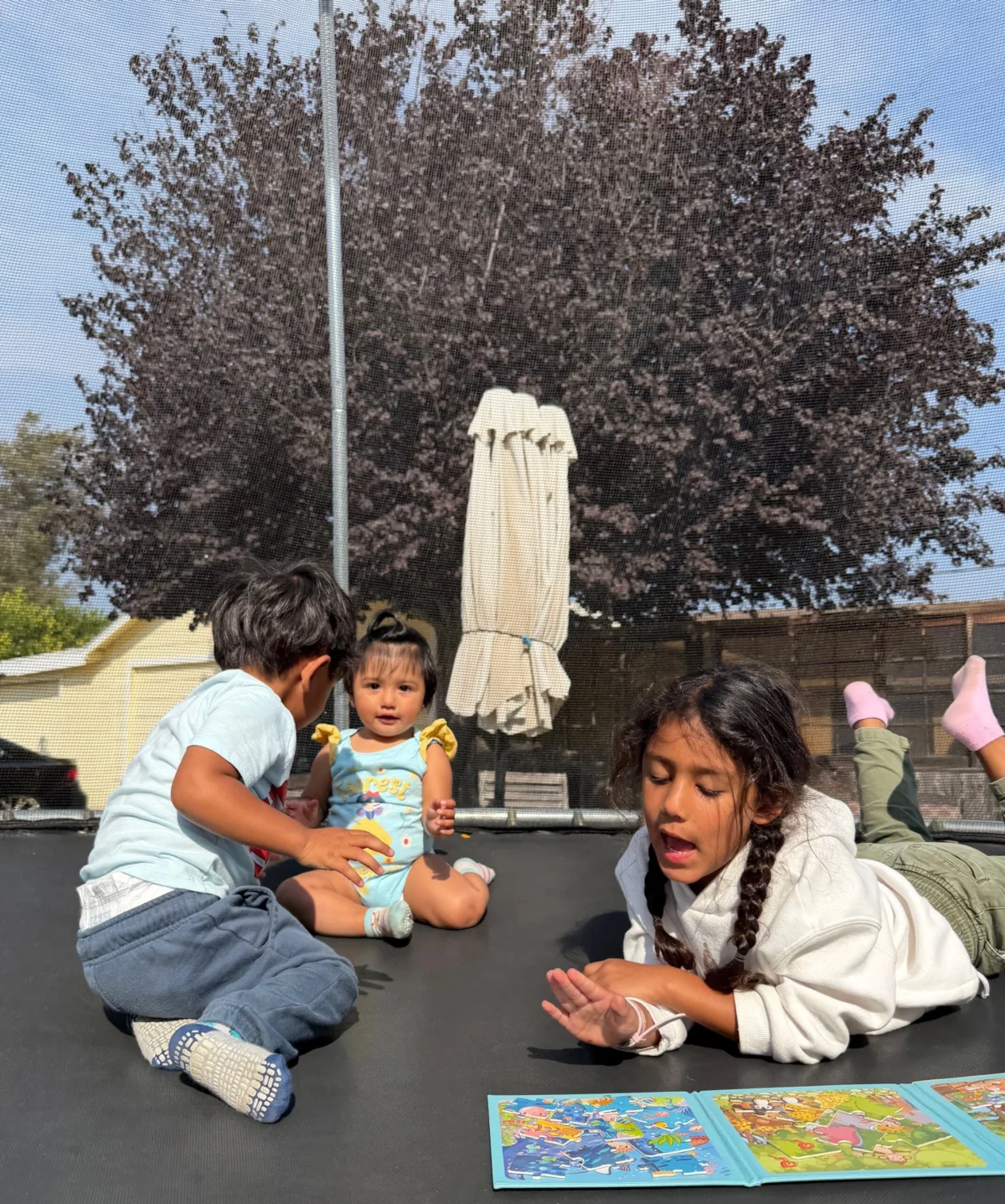
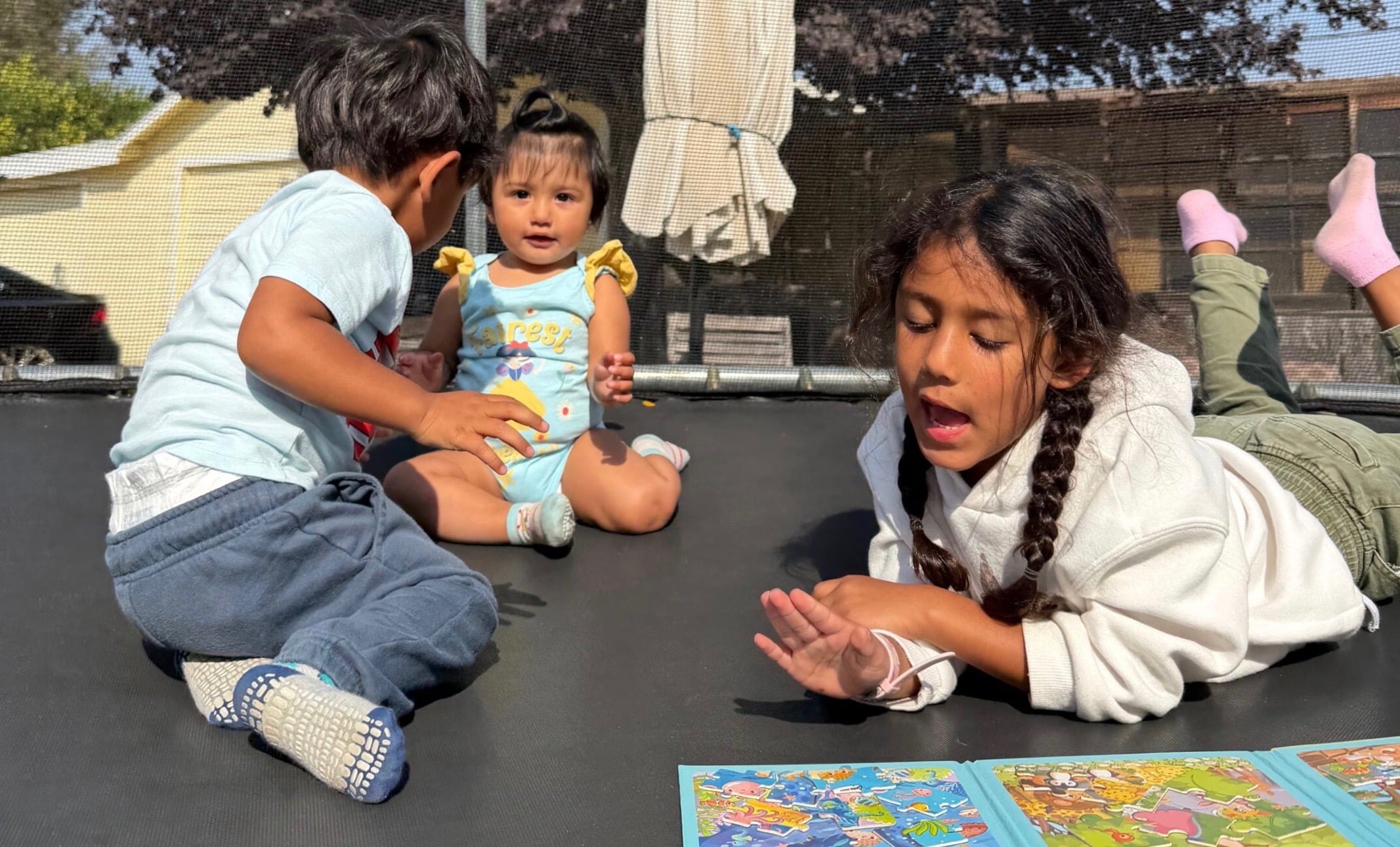
On a residential afternoon in late September 2026, a mother of three, identified in family narratives as Jannelley, engaged in a recreational session with her children on a backyard trampoline. During this period of physical activity, her five-year-old daughter, Ella, initiated a request for a historical narrative regarding the mother’s own childhood experiences. This interaction highlights a significant pedagogical and psychological phenomenon: the transmission of "family lore" and its foundational role in fostering emotional intelligence, cognitive development, and intergenerational bonding within the modern family unit.
The primary anecdote shared during this session involved a specific event from the mother’s fourth year of life, occurring during a multi-generational family gathering. The narrative, which has since become a staple of the family’s oral history, serves as a case study in early childhood problem-solving, sensory processing, and the development of autonomy.
The Incident: A Chronology of Childhood Problem-Solving
The event in question took place at a family barbecue hosted at the residence of the subject’s grandparents. According to the account, the four-year-old subject was participating in aquatic activities in the family pool alongside several cousins. The environment was characterized by high-energy social interaction and the "mermaids" role-playing game common among children in that developmental stage.
The conflict arose from a recurring physiological need. The subject reported experiencing the urge to urinate at intervals that conflicted with her social standing and activity participation—specifically, when it was her turn to utilize the diving board or during the height of group play. After four successful trips to the restroom, the subject reached a point of decision-making influenced by what developmental psychologists often categorize as "efficiency-based logic."
Upon her fifth visit to the bathroom, the subject identified the primary obstacle to her efficiency: the difficulty of maneuvering a cold, wet, sequined one-piece swimsuit. In an act of radical autonomy, the subject removed the garment entirely. Rather than attempting the cumbersome task of reapplying the wet fabric to her skin, she deposited the swimsuit directly into the toilet bowl and exited the facility in a state of complete nudity.
The subject’s subsequent attempt to reintegrate into the social environment—believing that speed would mitigate the risk of detection—was unsuccessful. She was intercepted by a teenage cousin, Lupe, and subsequently by her mother, who provided a towel and terminated the day’s aquatic activities. Despite the disciplinary outcome, the subject reported a lasting sense of "pride and fascination" at having solved a complex logistical problem independently.
The Psychology of Shared Family Narratives
The popularity of the "bathing suit down the toilet" story among the subject’s children—specifically Ella’s request for nightly retellings—aligns with established psychological research regarding the "Do You Know?" scale. Developed by Dr. Marshall Duke and Dr. Robyn Fivush at Emory University, this research suggests that children who possess a robust knowledge of their family’s history and personal anecdotes exhibit higher levels of self-esteem and greater resilience in the face of stress.
According to the Emory study, family stories provide a "scaffolding" for a child’s own identity. When parents share stories of their own childhood failures, embarrassments, or unconventional problem-solving, it humanizes the parental figure. This transparency allows the child to internalize the concept that mistakes are a natural part of the human experience and that social or logistical "failures" can eventually be transformed into humorous and bonding narratives.
In the case of the trampoline session, the daughter’s reaction—rolling with laughter—indicates a successful "emotional transfer." By hearing about her mother’s breach of social norms and subsequent "big girl" logic, the child gains a sense of perspective on her own developmental hurdles.
Analytical Context: Sensory Processing and Child Logic
The incident also provides an informative look into the sensory challenges faced by young children. For a four-year-old, the tactile sensation of a wet swimsuit can be a significant source of "sensory friction." The decision to discard the suit into the toilet, while socially unacceptable and logistically problematic for the plumbing system, represents a direct and logical solution to a sensory irritant.
From a journalistic and developmental perspective, the reaction of the "related parties"—in this case, the mother rushing with a towel and the termination of pool time—represents the standard enforcement of social boundaries. However, the long-term impact of the event was not the punishment, but the subject’s internal realization of agency. This highlights a discrepancy between adult perceptions of "naughtiness" and a child’s perception of "functional independence."
Broader Implications for Modern Parenting and Oral Traditions
In an era increasingly dominated by digital entertainment, the reliance on oral storytelling within the home remains a critical component of linguistic development. Analysts suggest that the "lore" of a family functions as a private language, reinforcing the "in-group" status of family members.
Data regarding early childhood development suggests several key benefits of these specific types of stories:
- Vocabulary Acquisition: Narratives like the "bathing suit story" introduce children to descriptive language (e.g., "sequined," "cumbersome," "fascinated") within a context that has high emotional resonance.
- Theory of Mind: By listening to a story about their parent as a child, children develop "Theory of Mind"—the ability to understand that others have beliefs, desires, and perspectives different from their own, and that their parents were once small and vulnerable like themselves.
- Moral and Social Mapping: These stories serve as low-stakes "morality plays." They allow children to explore the consequences of actions (e.g., "the pool time was over") without the immediate pressure of being the one in trouble.
Official Responses and Social Context
While there are no official municipal records for a discarded swimsuit in a residential toilet, the social response to such anecdotes is overwhelmingly positive. On platforms where such stories are shared, such as the digital publication Cup of Jo, community engagement often exceeds average metrics. For instance, the original documentation of this trampoline interaction garnered over 117 comments within a short timeframe, with readers contributing their own "childhood lore."
This high level of engagement suggests a universal human drive to categorize childhood mishaps as valuable cultural capital. Experts in folklore studies note that these stories often follow a specific structure: the "Transgression," the "Discovery," and the "Resolution." In Jannelley’s account, the transgression (nudity/toilet disposal) is balanced by the discovery (the cousin’s observation) and the resolution (the mother’s towel), eventually evolving into the "Legend" (the evening retelling).
Conclusion: The Value of the "Best Piece of Childhood Lore"
The transition of a childhood mistake into a "best piece of childhood lore" serves as a vital mechanism for family cohesion. As Ella and her siblings continue to request the story, they are not merely seeking entertainment; they are participating in a ritual of historical preservation.
The analytical takeaway for educators and parents is clear: the most "cumbersome" problems of the past often provide the most significant emotional dividends in the future. By documenting and sharing these moments, parents provide their children with a sense of continuity and a framework for understanding their own burgeoning autonomy. The trampoline, in this context, served not just as a piece of play equipment, but as a stage for the oral transmission of a family’s unique identity and values.
As the subject noted, the mixture of "pride and fascination" she felt at age four remains the core of the narrative, teaching her children that even when a bathing suit ends up in the toilet, the story—and the family bond—remains intact.
