

Toddler night wakings present a unique and often exhausting challenge for parents. Unlike infant awakenings, toddlers can express their distress with prolonged crying and are more resistant to immediate reassurance, leaving many parents feeling drained and desperate for solutions. A primary culprit behind these frequent disruptions, impacting infants, toddlers, and even older children, is the presence of inappropriate sleep onset associations. This issue is amenable to behavioral management strategies, commonly referred to as sleep training.
Consider the common scenario within the Smith household. Fourteen-month-old Jimmy has, since infancy, been rocked to sleep each night around 8 PM. His parents, after finally settling him in his crib, anticipate the inevitable. Their brief respite, often spent relaxing to television, is shattered when Jimmy begins crying around 11 PM. A rushed trip to his room ensues, with parents attempting to soothe him by rubbing his back, hoping for a swift return to sleep. This pattern repeats throughout the night, with awakenings occurring every hour to an hour and a half. The inevitable 5:30 AM wake-up finds an irritable Jimmy and his equally exhausted parents, who lack the luxury of daytime naps to recover. Jimmy’s persistent night wakings are a textbook example of inappropriate sleep onset associations, a pervasive cause of nocturnal disturbances in toddlers.
However, it is crucial to acknowledge that a multitude of other factors can contribute to a toddler’s crying and screaming at night. Some children may experience a combination of these issues concurrently. When parents struggle to pinpoint the root cause of their child’s nighttime distress, consulting a pediatrician is always the recommended course of action.
For those seeking deeper understanding, a comprehensive discussion on toddler night wakings, early rising, and nap refusal can be found in the "Sleep Edit" podcast episode, "Your Pediatric Sleep Questions Answered." Additionally, a visual exploration of the subject is available through an accompanying video.
The Pervasive Influence of Inappropriate Sleep Onset Associations
Children aged six months to three years are most commonly affected by inappropriate sleep onset associations, though the age range can extend beyond this. These children often require parental presence to initiate sleep and subsequently experience frequent awakenings throughout the night. While parents often perceive the awakenings as the primary problem, they are, in fact, a symptom of a deeper issue: the child has not yet developed the independent skill of falling asleep on their own.
In essence, if a child relies on parental assistance to fall asleep at bedtime and subsequently needs that same assistance to return to sleep during the night, they are likely experiencing a sleep onset association. The solution lies in teaching the child to self-soothe and fall asleep independently, a process known as sleep training.
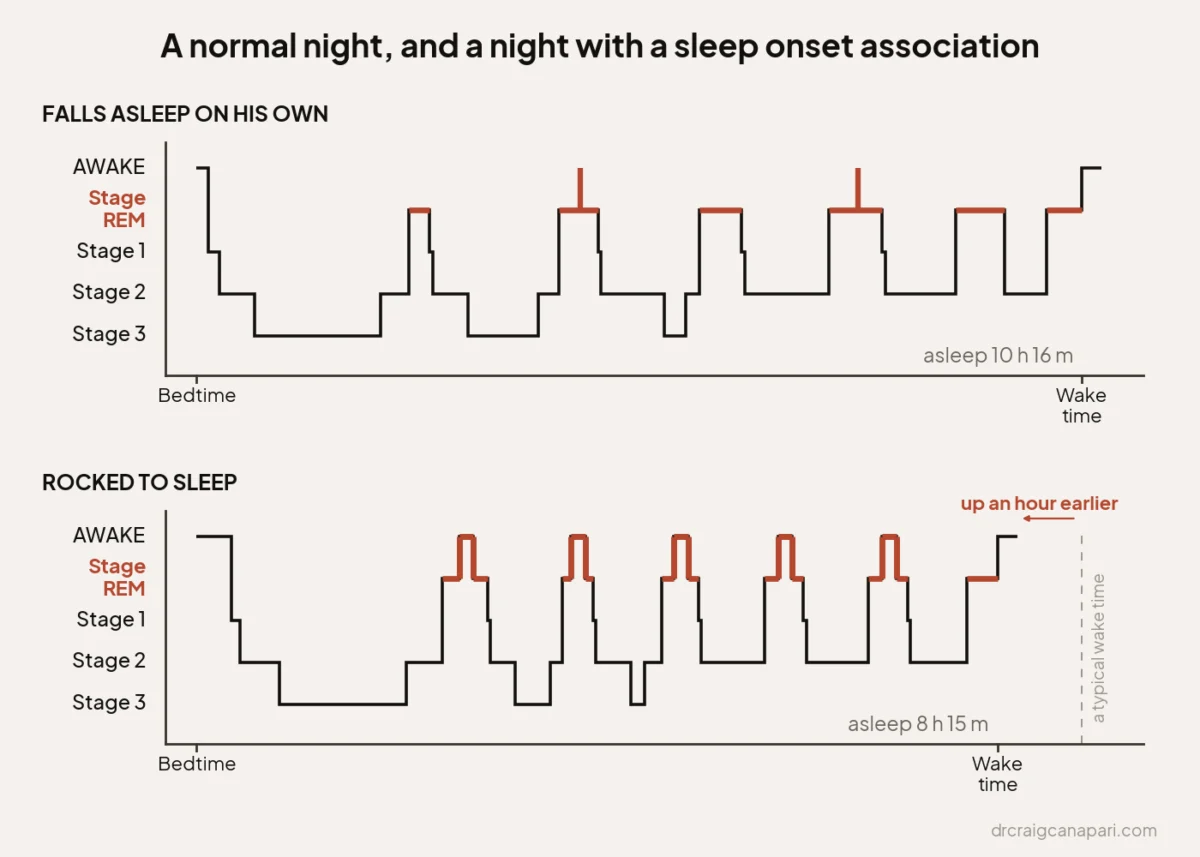
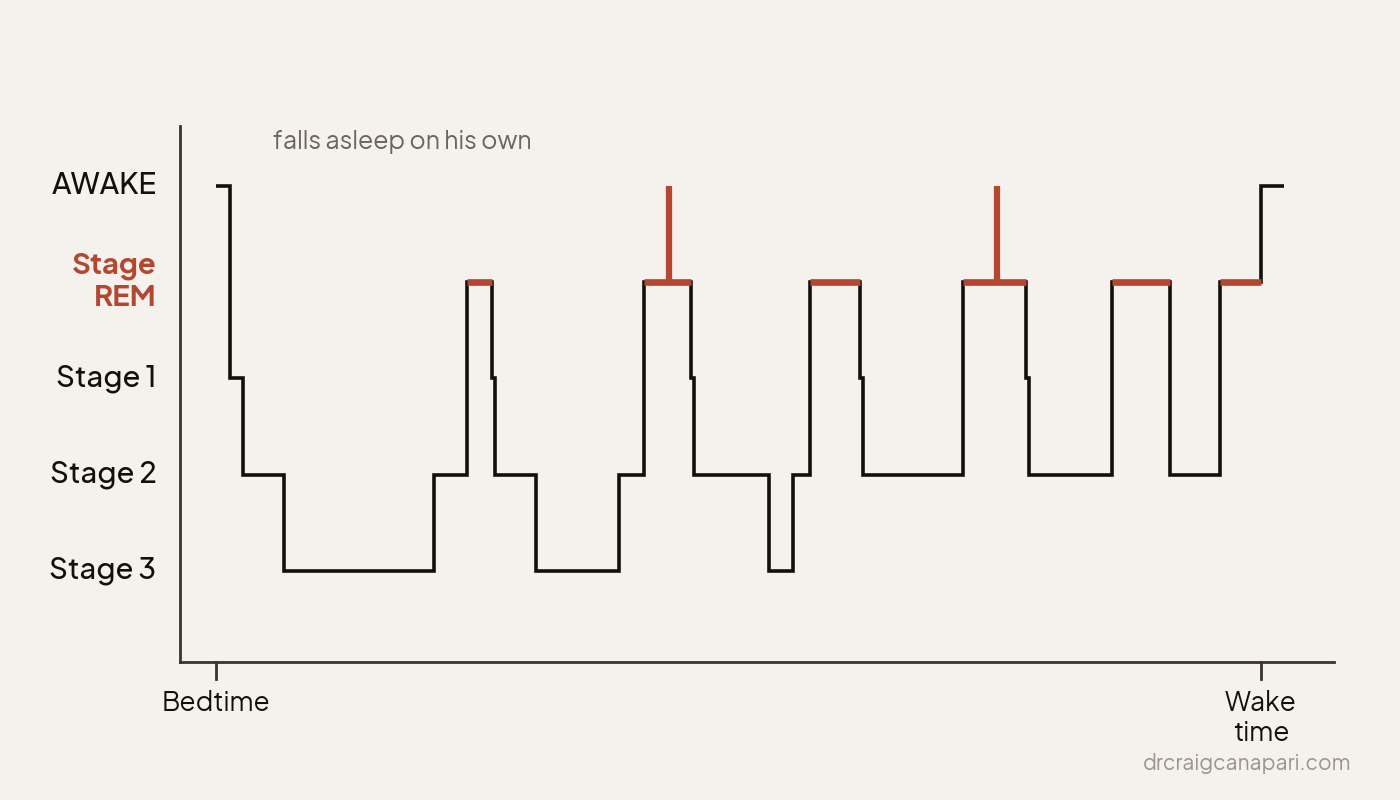
To illustrate this phenomenon, consider the typical progression of a night’s sleep depicted in a hypnogram, a graph illustrating sleep stages. A child who falls asleep independently enters deep sleep early in the night, transitioning to more REM (Rapid Eye Movement) sleep as the night progresses. Brief awakenings naturally occur, often emerging from REM sleep. However, because this child is accustomed to falling asleep alone, these brief awakenings do not typically prompt a call for parental intervention.
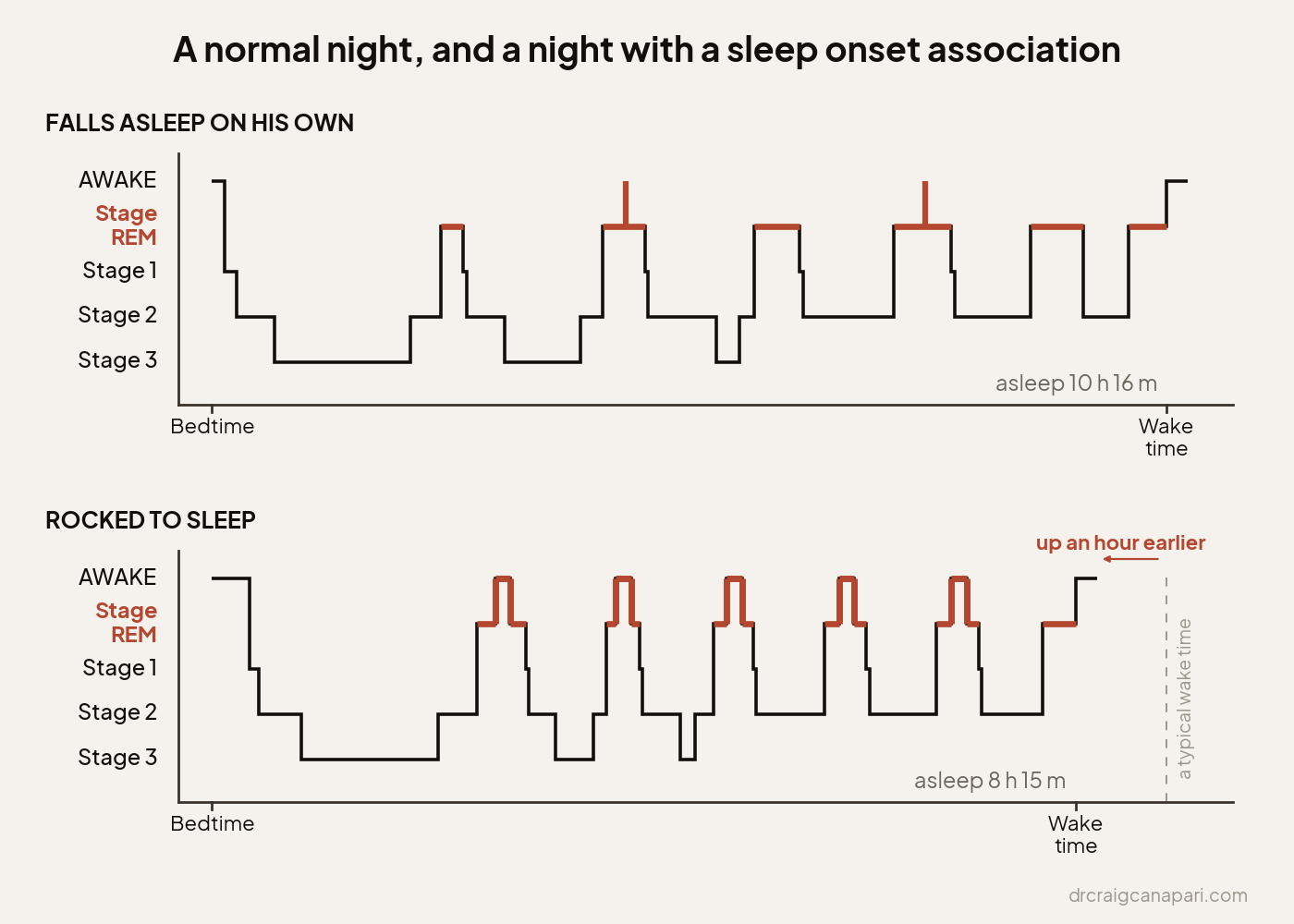
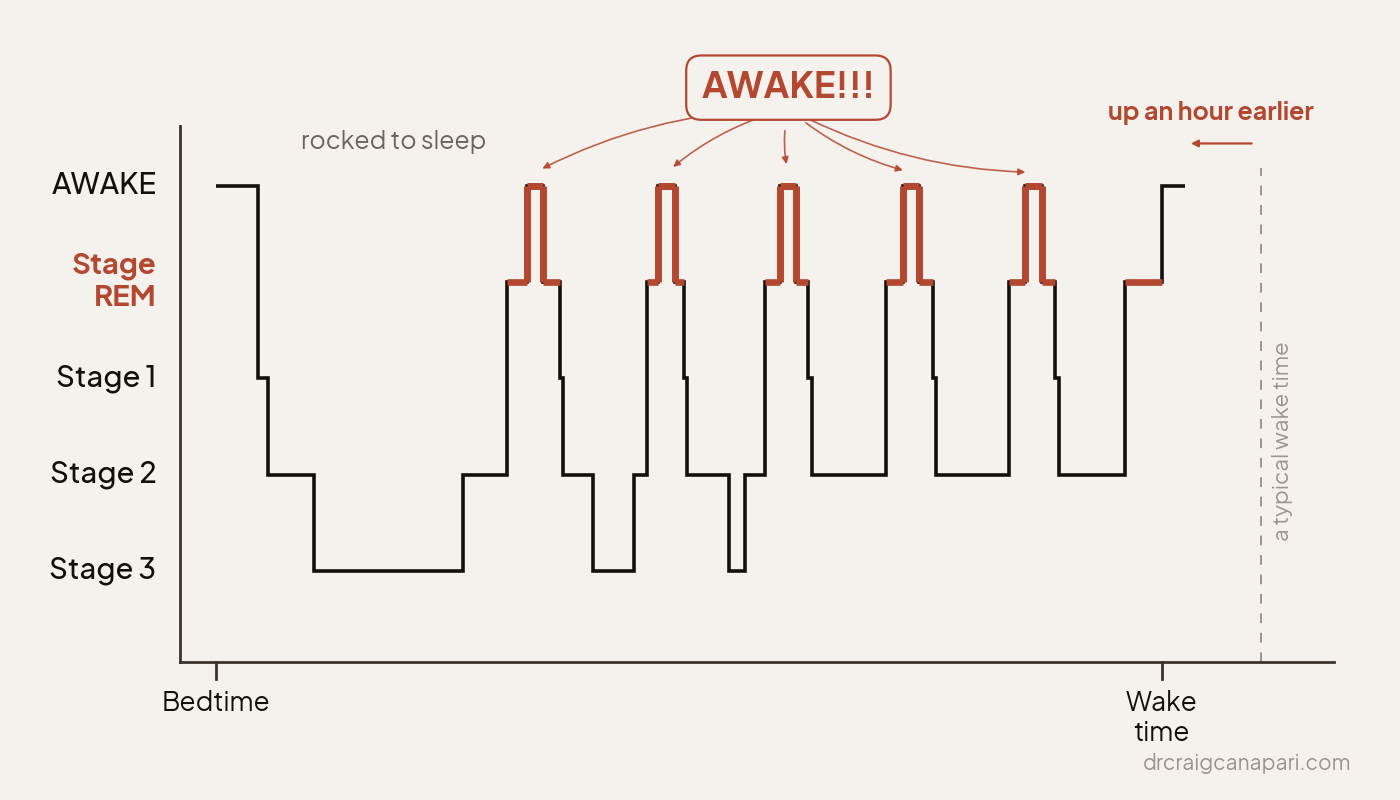
Contrast this with a child who requires parental presence to fall asleep. This might involve being held, rocked, nursed, or even falling asleep with a pacifier that subsequently dislodges. Using Jimmy’s case as an example, his reliance on being rocked to sleep sets a precedent. When he experiences a natural awakening, he seeks the same comfort and assistance he received at bedtime. If a child falls asleep under conditions that are not present throughout the night—such as being held, having their back rubbed, nursing, or even with a pacifier—they will necessitate those same conditions multiple times during the night to fall back asleep. This can lead to a cyclical pattern of frequent awakenings. Furthermore, this reliance on external sleep cues can contribute to early morning awakenings, as exhausted parents may inadvertently create new sleep onset associations by bringing their child into their own bed.
A visual comparison of a typical night for a child who falls asleep independently versus one who is rocked to sleep reveals significant differences. The latter often takes longer to fall asleep, experiences multiple full awakenings throughout the night, and tends to wake earlier than their independently sleeping counterparts. The initial awakening for a child with sleep onset associations typically occurs two to three hours after falling asleep.
Common sleep onset associations include:
- Physical dependence: Being held, rocked, or cuddled to sleep.
- Feeding dependence: Nursing or bottle-feeding to sleep.
- Object dependence: Pacifiers, blankets, or other comfort objects that are lost during sleep.
- Environmental dependence: A specific room temperature, light level, or sound.
Dr. Richard Ferber, a pioneer in pediatric sleep, used a compelling analogy: most adults sleep with a pillow and blanket. If these essential items were removed during the night, an adult would likely wake and search for them, experiencing discomfort and concern. Similarly, a child accustomed to a specific sleep aid or parental presence will seek that same aid upon waking.
The cornerstone of addressing inappropriate sleep onset associations is empowering the child to fall asleep independently. For detailed guidance on various sleep training methodologies, readers are directed to resources that outline effective strategies for parents.
It is important to differentiate sleep onset associations from separation anxiety, though they can sometimes coexist. Separation anxiety typically manifests as distress specifically related to a parent’s absence, often being more pronounced with one parent. Parents may inadvertently reinforce anxious behaviors through concessions, which can perpetuate the problem and lead to persistent co-sleeping. Strategies for addressing co-sleeping, even in the context of anxiety, are available.
The Technical Classification of Sleep Onset Association Problems
Historically, these sleep disturbances were categorized under "behavioral insomnia of childhood," with subtypes including sleep onset association disorder and limit-setting disorder. The latter, characterized by a child repeatedly leaving their room for parental attention—often referred to as "curtain calls"—frequently overlaps with sleep onset association disorder, particularly in children who have transitioned to a bed. Currently, if these issues persist for three months or more, they may be diagnosed as chronic insomnia.
Night Terrors: A Distinct Cause of Toddler Nighttime Screams
When a toddler awakens inconsolably crying and screaming, and no amount of parental soothing can quell their distress, they may be experiencing a night terror. Night terrors fall under the umbrella of NREM parasomnias, occurring during non-REM sleep stages and characterized by behaviors that mimic wakefulness.
Night terrors are prevalent in toddlers, affecting approximately one-third of 18-month-olds and roughly one in five by age two and a half. While distressing for parents, they are distinct from sleep onset associations. Night terrors originate from deep NREM sleep, typically in the first half of the night, though they can occur later. The key differentiator is the inability to console the child during an episode. Unlike sleep onset associations, where rocking or back-rubbing might offer temporary relief, night terrors render a child unresponsive to comfort. These episodes usually last 10 to 15 minutes but can extend to 30 or 40 minutes. Fortunately, night terrors are not typically a nightly occurrence and often resolve spontaneously. The primary concern during a night terror is ensuring the child’s safety, as they may thrash about, though they usually remain within their crib or bed. Further information on night terrors and sleepwalking is available.
Temporary Disruptions to a Good Sleeper: Developmental Milestones and Environmental Factors
Certain temporary disruptions to a child’s sleep pattern are a natural part of development and do not necessarily require extensive parental intervention. However, if parents respond to these disruptions by creating new sleep onset associations, the problem can persist.
Navigating Sleep Regressions
When a child who has previously slept well begins experiencing frequent night wakings, it is often attributed to a "sleep regression." While these disruptions are real, the notion of predictable, age-based regressions is not universally supported by research. Studies tracking night wakings over time generally show a steady decline, without distinct peaks at specific ages like 12, 18, or 24 months. Instead, significant developmental milestones, such as learning to walk or toilet train, are more likely to be associated with temporary sleep disturbances.
The table below outlines common developmental milestones and their potential impact on sleep:
| Age Group | Commonly Labeled "Regression" | Underlying Developmental Factor |
|---|---|---|
| 12–15 months | "12-month regression" | Independent walking, pulling up, cruising; potential transition from two to one nap. |
| 15–18 months | "15- or 16-month regression" | Transition from two to one nap (most common); heightened separation awareness; first molar eruption. |
| 18–24 months | "18-month or 2-year regression" | Emergence of autonomy and limit-testing; canine eruption; physical ability to climb out of crib. |
| 2–3 years | "2-year or 2.5-year regression" | Crib-to-bed transition; potty training; second molar eruption; beginnings of imagination and night fears. |
| 3–3.5 years | "3-year regression" | Nap cessation (common); decreased total sleep need; more prominent night fears; start of preschool. |
Beyond age-specific regressions, numerous other factors can disrupt a toddler’s sleep, including illness, travel, schedule changes, the arrival of a new sibling, or a move to a new home. The danger with an age-based framing of regressions is the potential for parental anxiety about events that may never materialize. It is important to recognize that developmental leaps, while potentially causing temporary sleep disruptions, are positive indicators of a child’s growth.
While these temporary disruptions often resolve on their own, responding by creating new sleep onset associations, such as rocking the child back to sleep, can lead to persistent night wakings.
Illness and Teething
Acute illnesses, such as colds or fevers, commonly disrupt sleep. Nasal congestion and ear pain can be exacerbated when lying down. During periods of illness, prioritizing the child’s comfort and seeking medical advice when necessary is paramount. However, parents should be cautious not to create new sleep dependencies, such as co-sleeping, during these times, as it may lead to a new sleep onset association.
Teething is frequently blamed for sleep problems, but its impact is generally limited to mild, localized irritability for a night or two around tooth eruption. Teething does not typically cause fevers, though a slight temperature elevation is possible. If a child presents with fever or appears unwell, attributing it solely to teething is ill-advised; a pediatrician should be consulted.
The Arrival of a New Sibling
The introduction of a new baby into the home can sometimes disrupt a toddler’s sleep, especially if the children share a room. A crying infant can inadvertently wake a toddler, and the use of a sound machine can be beneficial, provided it is used at an appropriate volume and placed safely. The stress associated with welcoming a new sibling can also impact a toddler’s sleep. These disruptions are usually brief, lasting less than a week. Dedicating quality time with the toddler, separate from the infant, can help them feel secure and adjust to the new family dynamic.
Underlying Medical Disorders
While less common, certain medical disorders can be the root cause of persistent night wakings. These are typically conditions that occur multiple times per week or are associated with a known chronic medical issue. Symptoms like frequent nighttime coughing may indicate asthma requiring treatment. Acid reflux can lead to nighttime abdominal pain and vomiting. Obstructive sleep apnea, often characterized by snoring, is another significant cause of sleep disruption. In such cases, the nighttime symptoms may be the first clue that a medical evaluation is necessary.
Schedule and Environmental Considerations
Structural issues related to a child’s sleep schedule or environment can also contribute to night wakings.
Hunger and Night Feeds
Toddlers generally do not require nighttime feedings unless there is a specific medical reason. If a child is being fed a bottle of milk or breastfed during the night, weaning these feeds can often lead to significant improvements in sleep. Resources detailing strategies for weaning night feedings are available for both bottle-fed and breastfed infants.
Excessive Time in Bed
"Too much time in bed syndrome" occurs when a child’s total sleep opportunity exceeds their current needs. For instance, a schedule that was appropriate for a 12-month-old may be too long for a 3-year-old, especially if they are still napping. As sleep needs decrease with age, an overly long nocturnal sleep period can lead to awakenings during the night. Often, children in this scenario wake up happy and well-rested. Adjusting bedtime later or considering nap elimination may be necessary. Information on children’s sleep needs is readily accessible.
Environmental Triggers
Obvious environmental factors can disrupt sleep. Electronic devices with lights or sounds should be removed from the bedroom. Noise disturbances from neighbors or traffic, or a sibling who is a noisy sleeper, can also be problematic. Room sharing with siblings can be particularly challenging, as one child’s awakening can easily rouse the other. Guidance on navigating room-sharing arrangements is available.
Conclusion
Toddler night wakings are a common and often debilitating issue for parents. When a child requires parental assistance to fall asleep at bedtime, implementing sleep training strategies can help them develop the ability to sleep through the night, leading to improved sleep for the entire family. If a child falls asleep independently, exploring other potential causes for their awakenings is the next step. Identifying and addressing the underlying issues, whether they are behavioral, developmental, medical, or environmental, is key to restoring peaceful nights for both toddlers and their parents.
