

Toddler night wakings can be a profoundly challenging experience for parents, often marked by prolonged crying and difficulty in comforting young children. While the exhaustion is palpable, understanding the underlying causes is the first step toward restoring restful nights. One of the most prevalent culprits identified by pediatric sleep experts is the development of “inappropriate sleep onset associations.” This behavioral pattern, while frustrating, is typically responsive to targeted sleep training strategies.
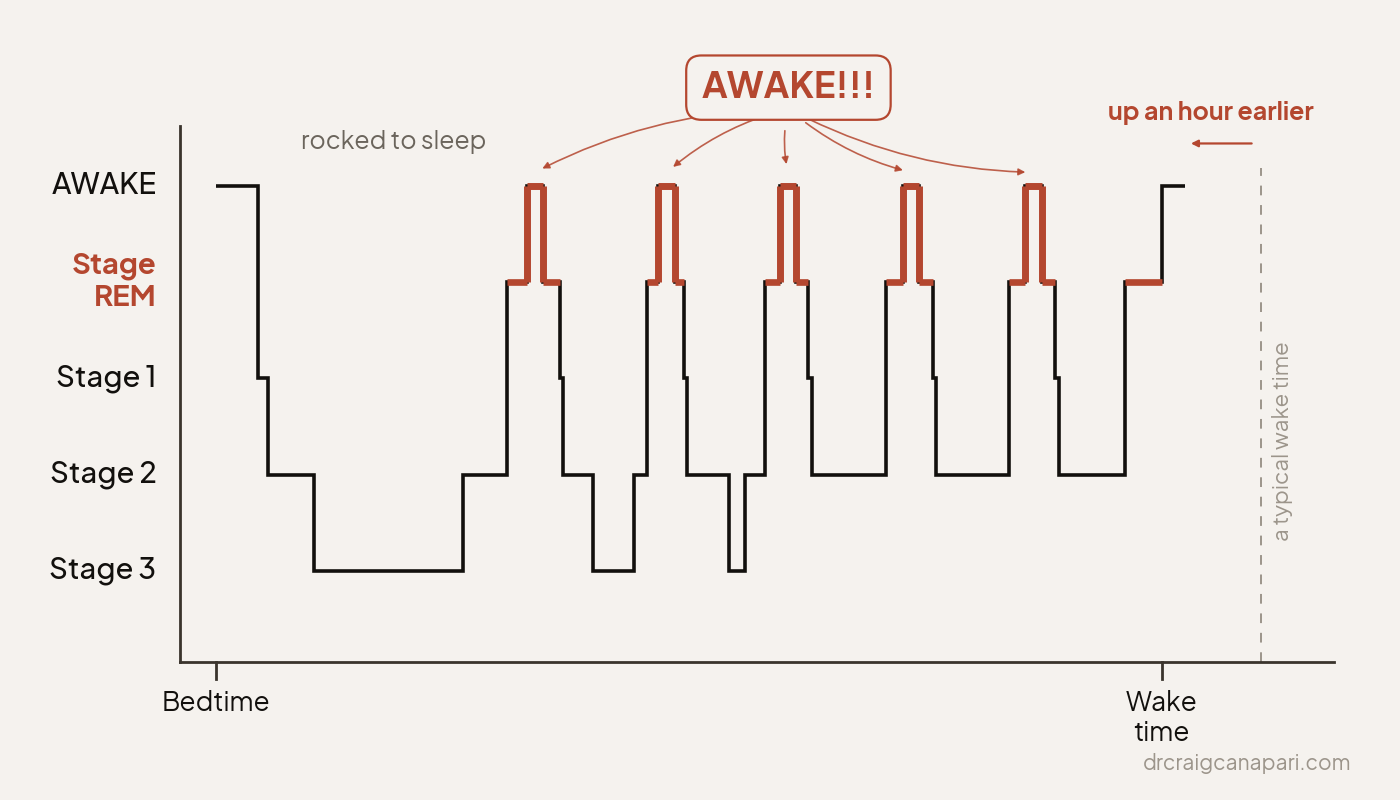
Consider the common scenario faced by many families, such as the Smith household. Their 14-month-old son, Jimmy, has a nightly routine that has inadvertently fostered a dependence on parental presence for sleep. Since infancy, Jimmy has been rocked to sleep each evening around 8 PM. While his parents anticipate a night of interrupted sleep, their fears are realized shortly after they settle in themselves. Around 11 PM, Jimmy begins to cry, prompting an immediate rush to his room for back rubs to lull him back to sleep. This cycle repeats throughout the night, with awakenings occurring every hour to hour and a half. By the time Jimmy wakes for the day at 5:30 AM, he is irritable, and his parents are equally depleted, facing another demanding day without the luxury of restorative naps. Jimmy’s frequent night wakings are a direct symptom of inappropriate sleep onset associations, a leading cause of such disruptions in toddlers.
However, it is crucial to acknowledge that inappropriate sleep onset associations are not the sole reason for nighttime crying and screaming in toddlers. A spectrum of other issues can contribute to these disturbances, and it is not uncommon for a child to experience multiple sleep challenges simultaneously. Parents grappling with persistent night wakings are advised to consult their pediatrician to accurately diagnose the root cause.
For those seeking a deeper understanding, discussions on toddler night wakings, early rising, and nap refusal are available in resources such as "The Sleep Edit" podcast episode 13.
Inappropriate Sleep Onset Associations: The Silent Disruptor of Sleep
The typical child exhibiting inappropriate sleep onset associations falls within the age range of 6 to 36 months, though this can extend to younger or older children. The defining characteristic is a dependence on a parent’s presence to initiate sleep. Consequently, these children frequently awaken during the night, not because of a primary sleep disorder, but because they lack the learned ability to self-soothe and return to sleep independently. Parents often perceive the awakenings as the core problem, when in reality, they are a secondary symptom of this fundamental developmental gap.
In essence, if a child requires a specific set of circumstances—such as being held, rocked, or nursed—to fall asleep at bedtime, they will likely need those same conditions met each time they experience a natural awakening during the night. This creates a cycle of dependency, where every brief awakening necessitates parental intervention to facilitate a return to sleep.
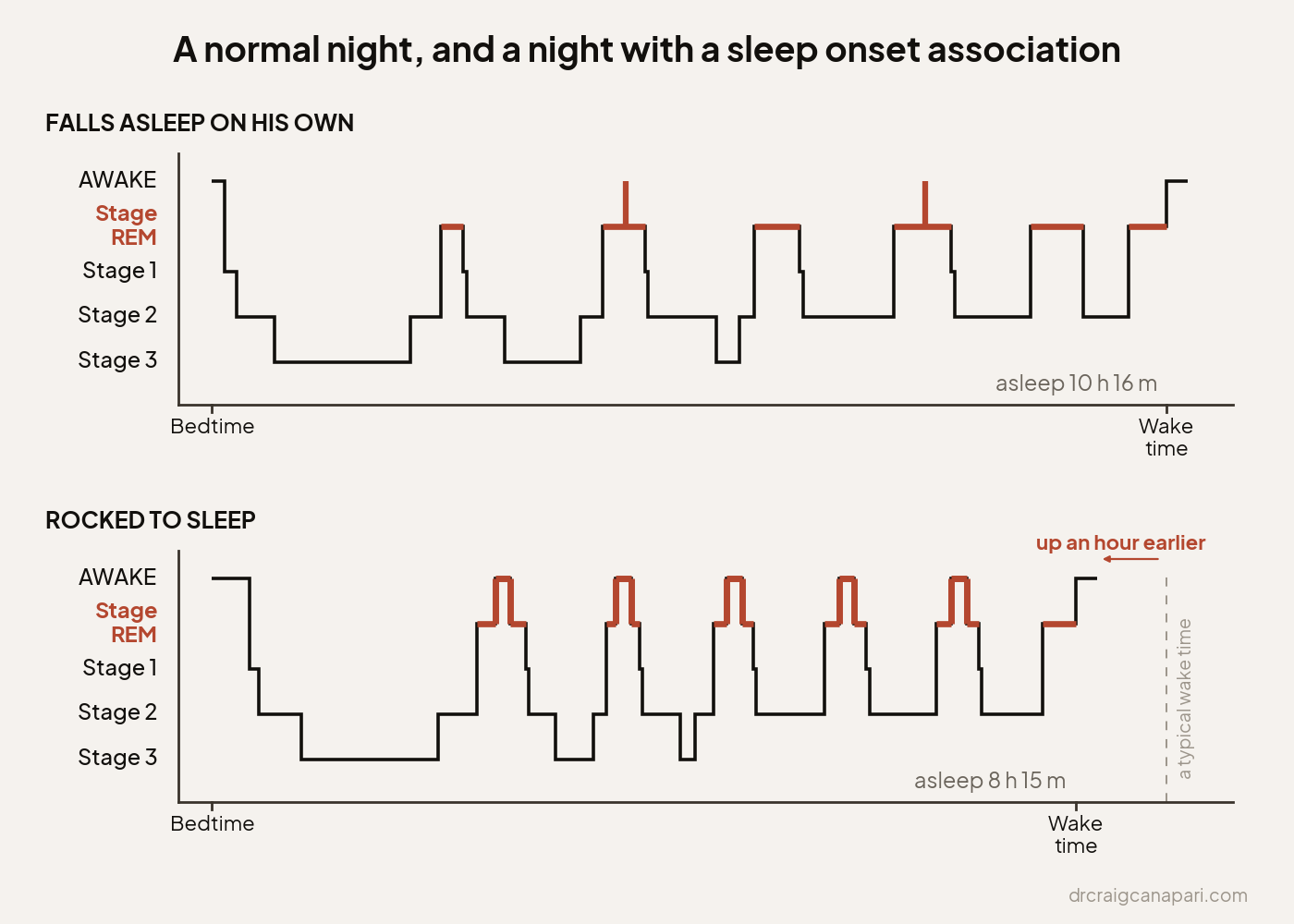
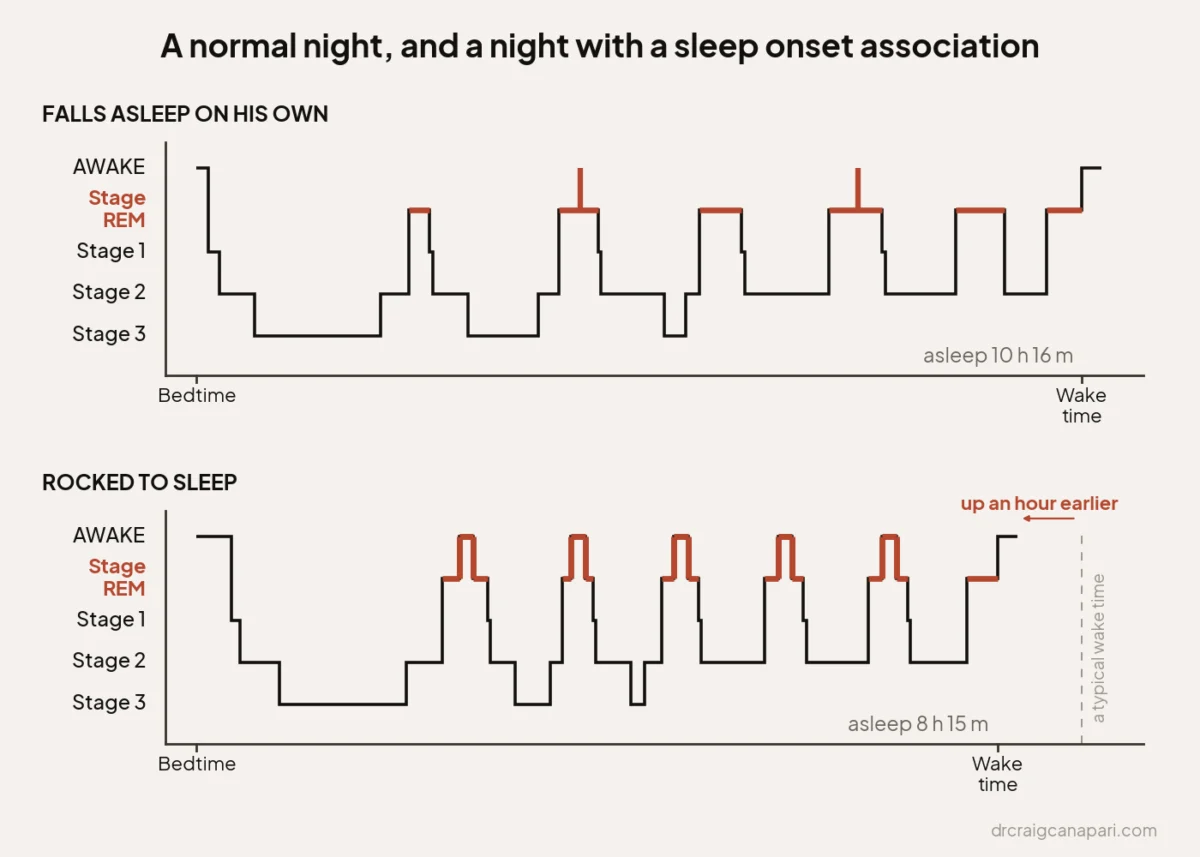
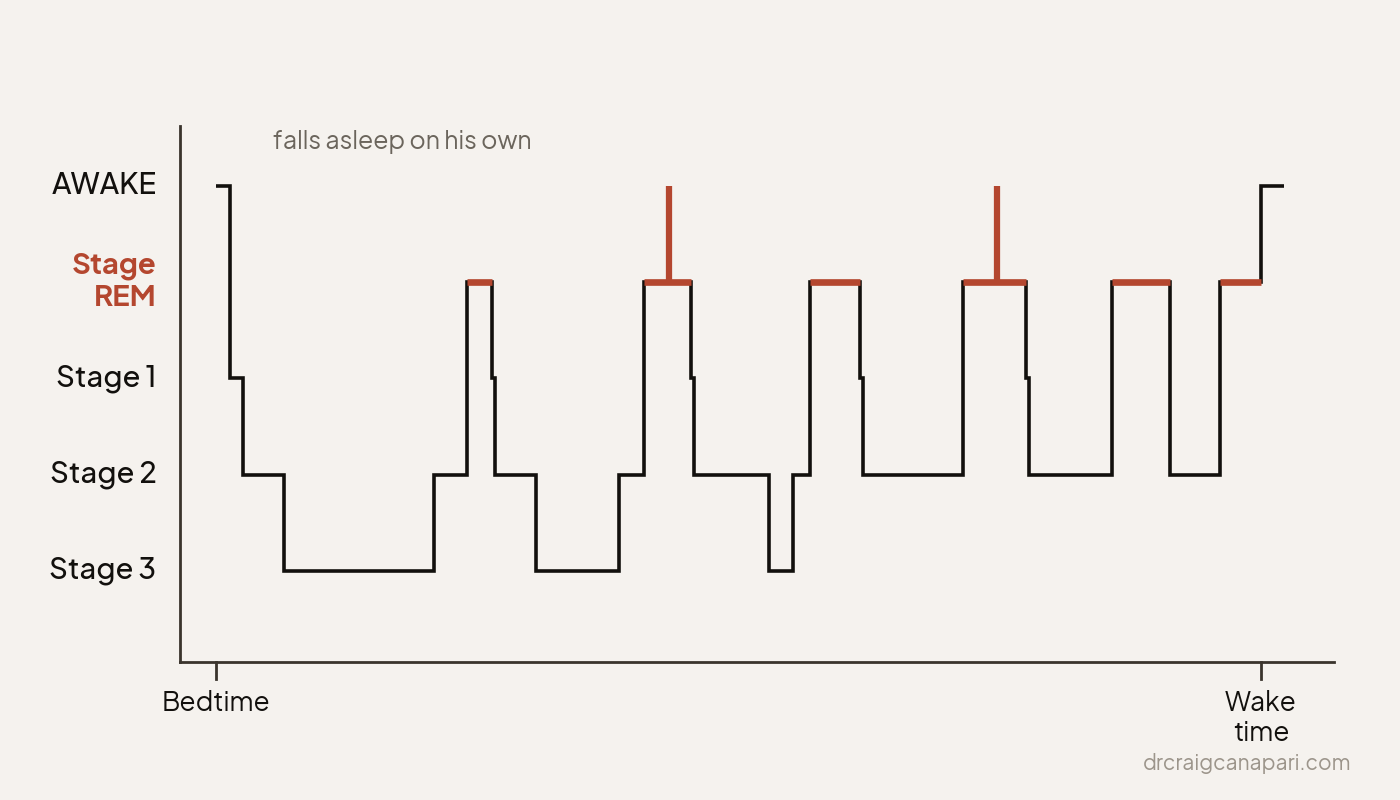
To illustrate this phenomenon, consider the physiological process of sleep. A normal night’s sleep for a child who falls asleep independently is characterized by distinct cycles of sleep stages. Early in the night, deep sleep (Stage 3) predominates, followed by periods of lighter sleep and REM (Rapid Eye Movement) sleep as the night progresses. Brief awakenings, often occurring out of REM sleep, are a natural part of this cycle. However, a child accustomed to falling asleep independently will typically rouse slightly and then seamlessly transition back to sleep without alerting their parents.
Conversely, a child who has developed inappropriate sleep onset associations experiences a different pattern. If their sleep initiation involves being rocked, having their back rubbed, or nursing, they will seek these same comforts upon waking. For example, if Jimmy falls asleep in his parents’ arms, he will likely cry out when he wakes during the night, needing that same comforting embrace to fall back asleep. This reliance on external aids can lead to prolonged sleep onset latency and frequent nighttime awakenings. Furthermore, these associations can contribute to early morning awakenings, as parents may bring a restless child into their own bed, inadvertently creating yet another sleep onset association.
Comparative hypnograms, which graphically represent sleep stages over time, starkly highlight this difference. A hypnogram of a child who falls asleep independently shows fewer and shorter awakenings, leading to more consolidated sleep. In contrast, a child with sleep onset associations demonstrates longer periods to fall asleep, multiple full awakenings throughout the night, and often an earlier wake-up time. This can result in a significant reduction in total sleep duration, leaving both the child and parents exhausted.
Night Terrors: A Different Kind of Nighttime Distress
While sleep onset associations account for a significant portion of night wakings, another distinct phenomenon that can cause a toddler to wake screaming is a night terror. Unlike sleep onset associations, night terrors are not about a child’s need for a specific comfort to fall back asleep. Instead, they are episodes of intense fear and agitation occurring during non-REM sleep.
Night terrors are relatively common in toddlers, affecting a substantial percentage of this age group. They are characterized by a child who appears to be awake and terrified, crying inconsolably and often thrashing about. Crucially, during a night terror, a child is not truly awake and cannot be easily consoled. Attempts to comfort them are usually futile, and they will persist in their distress for the duration of the episode, which can range from 10 to 40 minutes.
A key differentiator between night terrors and sleep onset association issues is the child’s responsiveness. With sleep onset problems, parental intervention can eventually lead to sleep. With night terrors, however, the child remains largely unresponsive to comfort, though it is vital to ensure their safety by staying nearby and preventing them from harming themselves. Night terrors typically occur in the first half of the night, during the deep non-REM sleep stages, and usually do not happen nightly. While unsettling, they are generally benign and tend to resolve on their own as children mature.
Temporary Disruptions and the Risk of New Associations
Beyond chronic behavioral patterns, several temporary factors can disrupt a toddler’s sleep. While these disruptions are often transient, the way parents respond can inadvertently create new, problematic sleep onset associations that prolong the issue.
Sleep Regressions: The term "sleep regression" is often used to describe periods when a previously good sleeper begins to wake frequently. While developmental milestones are undeniably linked to sleep disruptions, the concept of predictable, age-based regressions is debated. Instead, it’s more accurate to view these as temporary disruptions tied to significant developmental leaps. For instance, the emergence of independent walking around 12-15 months can coincide with sleep disturbances. The transition from two naps to one between 15-18 months, the burgeoning autonomy and limit-testing of toddlers aged 18-24 months, and the physical possibility of climbing out of the crib are all periods that can impact sleep.
Furthermore, the transition to a toddler bed between 2-3 years, potty training, and the eruption of second molars can all contribute to temporary sleep challenges. By age 3-3.5 years, nap dropping and the onset of night fears, often amplified by preschool, can further disrupt sleep patterns. These developmental shifts, while sometimes challenging, are a normal part of a child’s growth. The critical point is how parents manage these disruptions. If a parent resorts to new comforting strategies, like extensive rocking or co-sleeping, to navigate these temporary awakenings, they risk establishing new sleep onset associations that can persist long after the initial developmental hurdle has passed.
Illness and Teething: Acute illnesses, such as colds or ear infections, are common causes of temporary sleep disruption. Nasal congestion and ear pain can be exacerbated when lying down, leading to increased night wakings. During such times, providing comfort and care is paramount. However, parents should be mindful not to introduce new sleep associations, such as extended co-sleeping, as a remedy, as this can create a long-term problem.
Teething is frequently blamed for sleep disturbances, but its impact is generally localized and brief, typically lasting only a night or two around the actual tooth eruption. While teething can cause mild irritability, it does not typically lead to prolonged or severe sleep disruption, nor does it cause fevers. Persistent or severe symptoms should always be evaluated by a pediatrician to rule out other causes.
Environmental and Familial Changes: The arrival of a new sibling can also impact a toddler’s sleep. The stress and adjustment period for the family, coupled with the potential for a crying infant to disturb a toddler, can lead to temporary sleep disturbances. Spending dedicated, quality time with the toddler during the day can help them feel secure and ease this transition.
Medical and Environmental Factors
Beyond behavioral and developmental issues, underlying medical conditions or environmental factors can contribute to night wakings.
Medical Disorders: Certain medical conditions can manifest as chronic sleep disruption. Persistent coughing at night could indicate asthma, while acid reflux can cause nighttime discomfort and vomiting. Obstructive sleep apnea, characterized by snoring, is another common medical issue that can significantly disrupt sleep. If night wakings occur multiple times per week or are associated with known chronic conditions, a medical evaluation is warranted.
Schedule and Environment: The child’s sleep schedule and environment also play a crucial role. Toddlers generally do not require nighttime feedings unless there is a specific medical reason. Weaning night feeds can often lead to rapid improvements in sleep.
Furthermore, the total amount of time a child spends in bed should align with their age-specific sleep needs. Keeping a toddler on a schedule designed for an infant can lead to "too much time in bed syndrome," where they are awake for periods during the night because their sleep needs have decreased. Adjusting bedtime or considering nap reduction may be necessary.
Finally, the sleep environment itself must be conducive to rest. External noise, excessive light, or the presence of electronic devices can disrupt sleep. Sibling room-sharing can also present challenges, as one child’s waking can easily disturb the other.
In summary, toddler night wakings are a common and often distressing issue for families. While inappropriate sleep onset associations are a primary driver, a comprehensive understanding of other potential causes, including night terrors, developmental shifts, illness, medical conditions, and environmental factors, is essential for effective intervention. By identifying the root cause and employing appropriate strategies, parents can work towards restoring restful sleep for their children and themselves.
