

Toddler night wakings present a unique and often grueling challenge for parents, marked by prolonged crying episodes and a heightened difficulty in soothing compared to infants or older children. A primary culprit behind these nocturnal disturbances, affecting infants, toddlers, and even older children, is the development of "inappropriate sleep onset associations." This condition, characterized by a child’s reliance on specific external cues or parental presence to fall asleep, is a significant driver of frequent night awakenings and is amenable to behavioral interventions, commonly referred to as sleep training.
Consider the common scenario in the Smith household, where 14-month-old Jimmy exemplifies this issue. For as long as he has been an infant, Jimmy’s parents have diligently rocked him to sleep each night around 8 PM, subsequently placing him in his crib. While they attempt to reclaim a moment of respite, the anticipation of night wakings looms. As they settle into bed near 11 PM, Jimmy’s cries erupt, prompting a hurried rush to his room for back rubs in an effort to guide him back to sleep. These awakenings recur throughout the night at intervals of approximately one to one and a half hours. The consequence of this disrupted sleep pattern is a visibly irritable Jimmy at his 5:30 AM wake-up, and profoundly exhausted parents who find themselves unable to compensate with additional naps. Jimmy’s persistent night wakings are a direct manifestation of inappropriate sleep onset associations, a prevalent cause of frequent nocturnal awakenings in toddlers.
While sleep onset associations are a frequent cause, it is crucial to acknowledge that a multitude of other factors can precipitate crying and screaming during the night in toddlers. Some children may experience multiple overlapping issues. When faced with persistent difficulties in identifying the root cause of a child’s night wakings, consulting a pediatrician is always recommended.
Inappropriate Sleep Onset Associations: The Root of Frequent Awakenings
Children aged between six months and three years are most commonly affected by inappropriate sleep onset associations, though the age range can extend beyond this. These children typically require parental presence to initiate sleep and subsequently experience frequent awakenings throughout the night. While parents often perceive the awakenings themselves as the primary problem, they are, in fact, a symptom of the underlying issue: the child has not yet acquired the skill to fall asleep independently.
In essence, if a child requires their parent’s presence to drift off to sleep at bedtime, and consequently needs that same presence to return to sleep during the night, they are likely experiencing a sleep onset association. The solution lies in teaching the child to self-soothe and fall asleep independently, a process often termed sleep training.
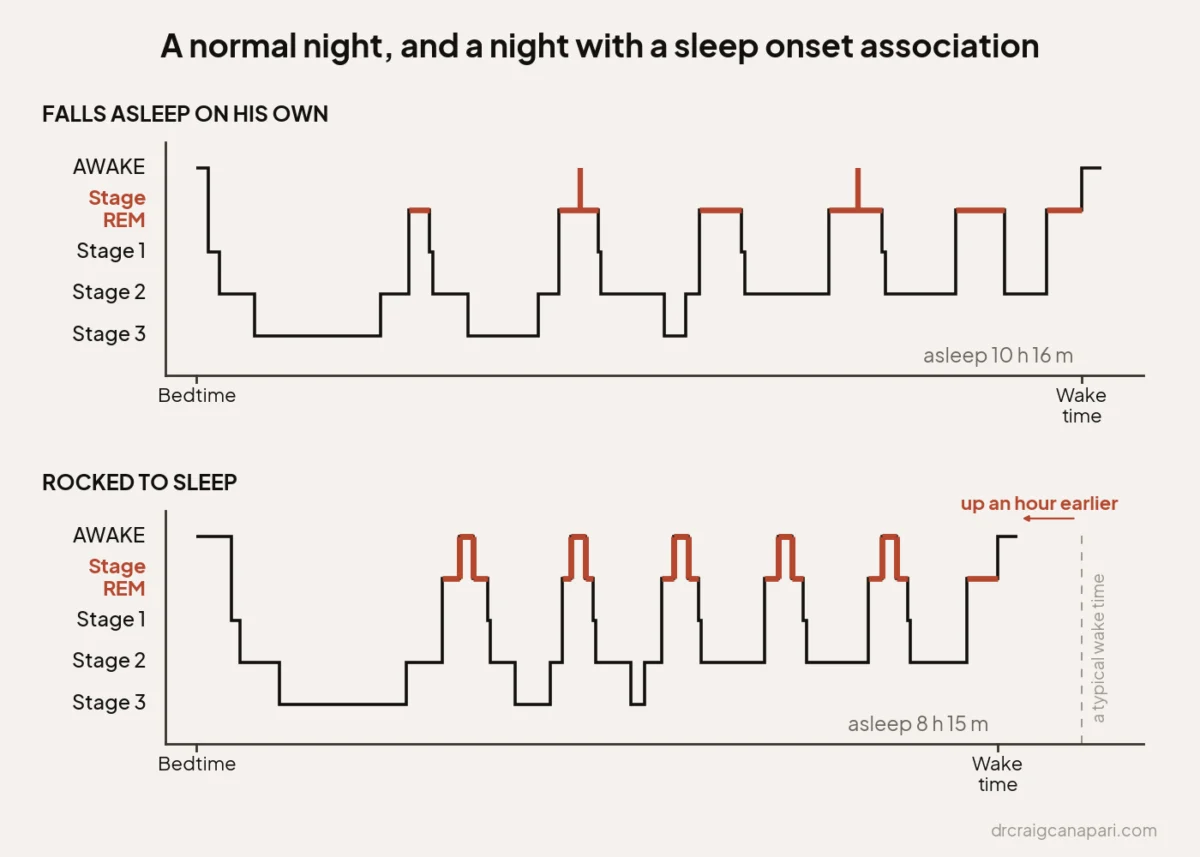
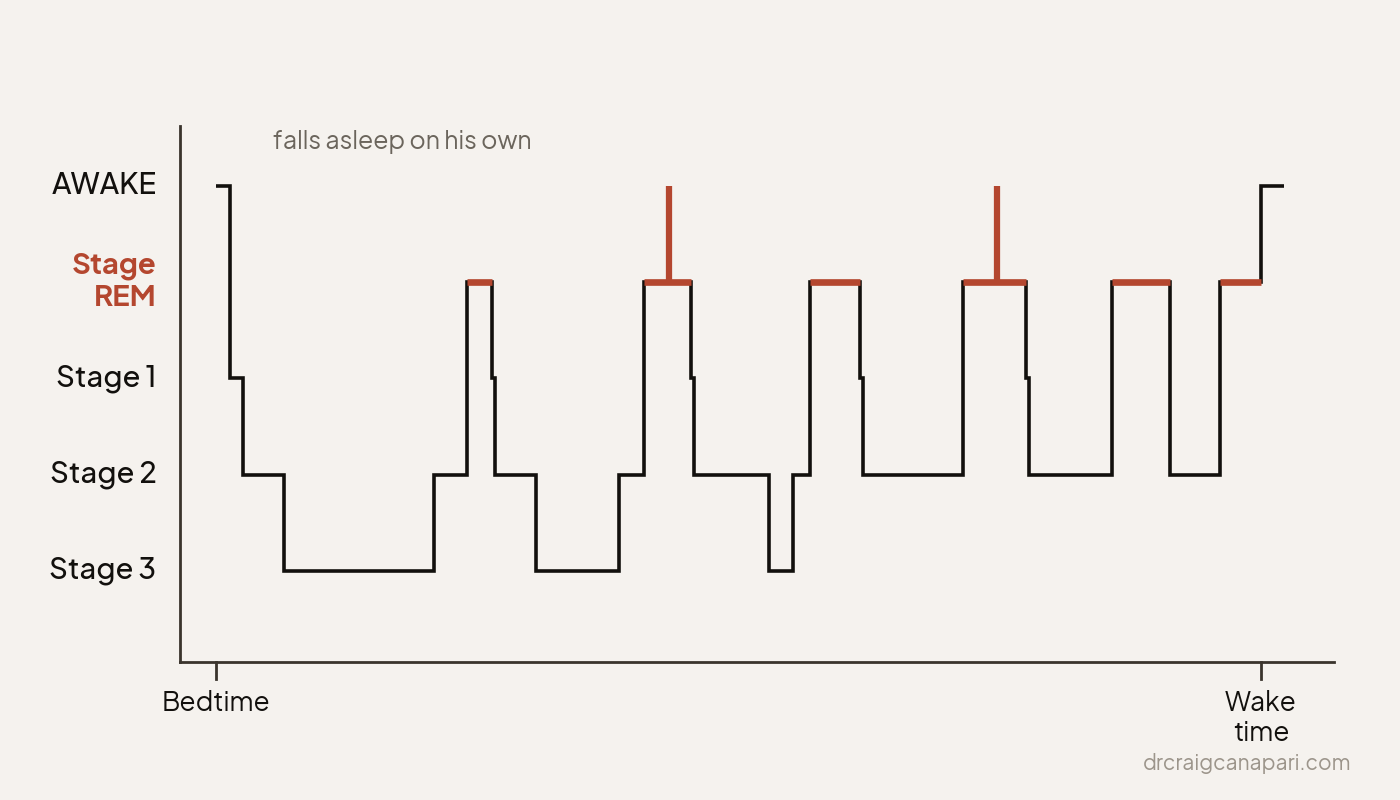
To better understand this phenomenon, consider the graphical representation of sleep patterns, known as hypnograms. A normal night of sleep for a toddler who falls asleep independently is characterized by an initial prolonged period of deep sleep (Stage 3), followed by cycles of lighter sleep (Stage 2) and REM (Rapid Eye Movement) sleep as the night progresses. While brief awakenings can occur, particularly after REM sleep, a child accustomed to falling asleep alone will typically transition back to sleep without signaling their parents.
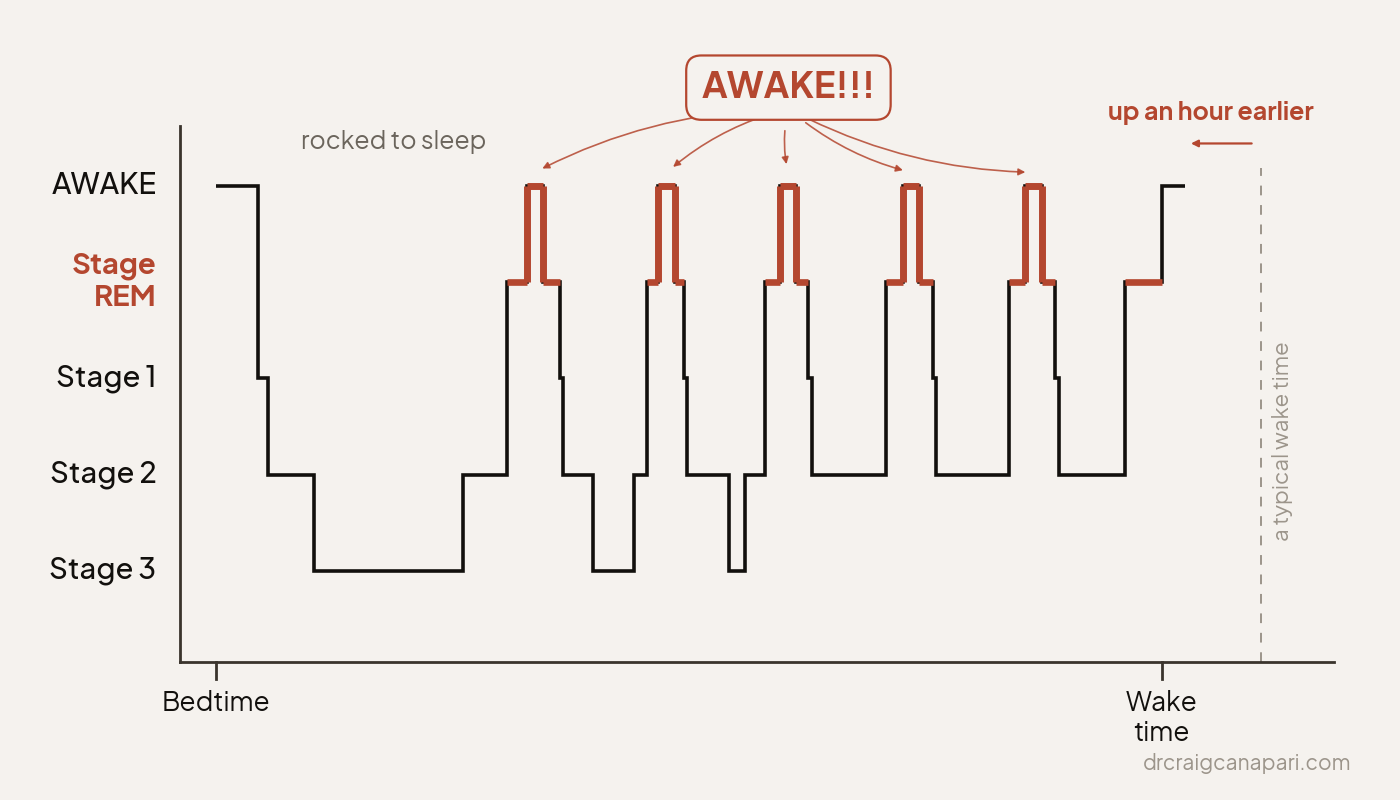
In stark contrast, a child who relies on parental intervention to fall asleep—whether through being held, rocked, having their back rubbed, nursing, or even using a pacifier that may fall out—will require these same conditions to resume sleep when they naturally awaken during the night. For instance, if Jimmy falls asleep in his parents’ arms, he will likely need them to hold him again each time he stirs. This dependency often leads to earlier wake-up times as well, particularly if exhausted parents bring the child into their bed, inadvertently creating a new sleep onset association. Consequently, sleep onset associations are a significant contributor to early morning awakenings.
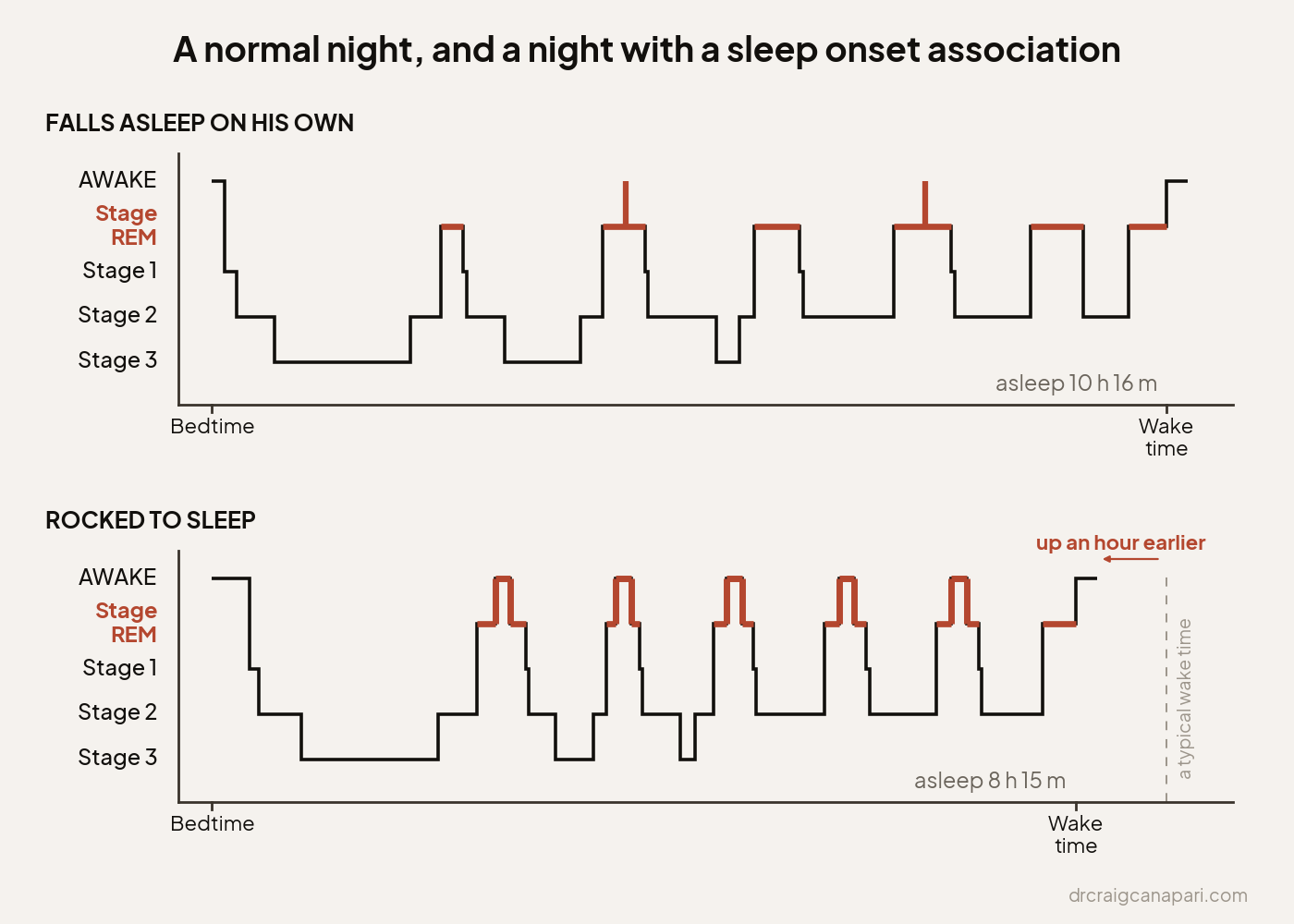
The comparative hypnograms illustrate this divergence. A child rocked to sleep takes longer to fall asleep initially, experiences multiple full awakenings throughout the night, and tends to wake earlier than their independently sleeping peers. The first awakening in such cases often occurs two to three hours after falling asleep. This pattern highlights the critical need for a child to learn self-soothing techniques to navigate these natural sleep cycles without distress.
The technical classification of sleep onset association problems has evolved. Historically, these were categorized under "behavioral insomnia of childhood," with subtypes including sleep onset association disorder and limit-setting disorder (characterized by a child repeatedly leaving their room, often termed "curtain calls"). However, given the frequent co-occurrence of these issues, particularly when a child transitions to a bed, they are now often grouped under the diagnosis of chronic insomnia, provided the pattern persists for three months or more.
Night Terrors: A Distinct Cause of Nighttime Distress
Another distinct reason for a toddler’s night wakings involving crying and screaming is night terrors. These episodes are part of a group of disorders known as NREM parasomnias, meaning they occur during non-REM sleep stages. Night terrors are relatively common in toddlers, affecting approximately one-third of 18-month-olds and diminishing to about one in five by two and a half years of age.
Differentiating night terrors from sleep onset associations is crucial. Night terrors typically occur during the deep, non-REM sleep phase early in the night, although they can manifest later. The key distinguishing feature is the child’s inconsolability during an episode. Unlike sleep onset associations, where parental intervention can guide the child back to sleep (albeit creating a cycle of dependency), during a night terror, no amount of soothing will typically calm the child. These episodes can last from 10 to 40 minutes. While unsettling, night terrors are usually not a nightly occurrence, tend to resolve on their own, and are generally benign. The primary concern during a night terror is ensuring the child’s safety, as they may thrash about, though they typically remain in their crib or bed.
Temporary Disruptions to a Good Sleeper
Certain disruptions to a toddler’s sleep are a natural part of development and everyday life and may not require extensive intervention. However, the manner in which parents respond to these temporary disruptions can inadvertently create new sleep onset associations, leading to persistent night wakings.
Sleep Regressions: Developmental Milestones and Sleep Challenges
The concept of "sleep regressions," periods where a previously good sleeper begins to wake frequently, is widely recognized. While the notion of predictable, age-based regressions is debated among researchers, developmental milestones are undeniably linked to temporary sleep disruptions. Major developmental achievements such as walking, talking, and potty training can indeed coincide with increased night wakings.
A table outlining common developmental phases and their associated "sleep regressions" can be illustrative:
| Age | Parent Terminology | Underlying Developmental Factor |
|---|---|---|
| 12-15 months | "12-month regression" | Independent walking, pulling up, cruising. Potential transition from two to one nap. |
| 15-18 months | "15- or 16-month regression" | Transition from two to one nap, sharpening separation awareness, eruption of first molars. |
| 18-24 months | "18-month or 2-year regression" | Emergence of autonomy and limit-testing, eruption of canines, physical capability to climb out of crib. |
| 2-3 years | "2-year or 2.5-year regression" | Crib-to-bed transition, potty training, eruption of second molars, development of imagination leading to night fears. |
| 3-3.5 years | "3-year regression" | Dropping the nap, decreased total sleep need, increased night fears, adjustment to preschool schedules and separations. |
Beyond these developmental milestones, other common disruptions include illness, travel, changes in routine, the arrival of a new sibling, or moving to a new home. The danger lies not in the disruption itself, but in the parental response. If a parent begins rocking their child back to sleep during a temporary wakefulness, they risk establishing a new sleep onset association that can prolong the problem.
Illness and Teething: Temporary Setbacks
Acute illnesses, such as colds or fevers, are common causes of temporary sleep disruption. Nasal congestion and ear pain can be exacerbated when lying down. During such times, prioritizing comfort and care is paramount, with prompt consultation with a pediatrician if concerns arise. However, vigilance is required to avoid creating new sleep associations, such as bringing a sick child into the parental bed, which may need to be addressed later.
Teething is frequently blamed for sleep problems, but its impact is generally limited to localized, mild, and brief irritability around the time a tooth erupts, typically lasting only a night or two. Teething does not cause fevers, though it may slightly elevate temperature. Persistent fevers or significant illness should always be evaluated by a pediatrician.
Family Dynamics and Environmental Factors
The introduction of a new baby into the home can disrupt a toddler’s sleep, particularly if siblings share a room. A crying infant can wake a toddler, making white noise machines a potentially helpful tool, provided they are used safely and at an appropriate volume. The stress associated with welcoming a new family member can also impact a toddler’s sleep. Spending dedicated, quality time with the toddler can help them feel secure during this transition.
Environmental factors also play a role. Ensuring the bedroom is free from electronic devices, minimizing external noise, and addressing potential disturbances from siblings sharing a room are important considerations.
Medical Disorders as Underlying Causes
Persistent night wakings, occurring multiple times per week or in the context of a known chronic medical condition, may signal an underlying medical disorder. Conditions such as asthma, characterized by nocturnal coughing, or acid reflux, which can cause nighttime belly pain and vomiting, can disrupt sleep. Obstructive sleep apnea, often accompanied by snoring, is another common medical issue that significantly impairs sleep quality.
Schedule and Environmental Adjustments
Structural issues related to a child’s sleep schedule or environment can also contribute to night wakings.
Hunger: Toddlers generally do not require nighttime feedings unless medically indicated. Weaning night feeds, whether bottles or breastfeeding, can often lead to rapid improvements in sleep.
Excessive Time in Bed: "Too much time in bed syndrome" occurs when a child’s total sleep opportunity exceeds their actual sleep needs. This can happen if a schedule suitable for a younger age is maintained as the child grows and their sleep requirements decrease. Adjusting bedtime or considering nap reduction may be necessary.
Environmental Disruptions: The sleep environment should be conducive to rest. This includes eliminating light and noise distractions, such as televisions or loud external sounds. Room sharing with siblings can also be challenging, as one child’s awakenings can trigger another’s.
In Summary
Night wakings in toddlers are a common and challenging issue for parents. Identifying the root cause is the first step toward resolution. Inappropriate sleep onset associations, a primary driver, can often be effectively addressed through sleep training, enabling both child and parents to achieve more restful sleep. For independently sleeping children, other factors such as developmental milestones, illness, environmental disruptions, or underlying medical conditions may be at play. A thorough assessment, often in consultation with a pediatrician, can guide parents toward appropriate strategies to improve their child’s sleep and restore peace to the household.
