

Toddler night wakings can be particularly challenging for parents, often characterized by prolonged crying and a difficulty in soothing that differs from infant wakefulness. While many factors can contribute to these disruptions, one of the most prevalent culprits identified by sleep experts is the presence of inappropriate sleep onset associations. This specific issue, often resolvable through behavioral management techniques commonly referred to as "sleep training," can significantly impact both the child’s and the family’s sleep quality.
Consider the common scenario in the Smith household. Fourteen-month-old Jimmy has, since infancy, been rocked to sleep by his parents each night around 8 PM. Once he’s asleep, they place him in his crib, hoping for a peaceful night. However, their relaxation is short-lived. By 11 PM, Jimmy begins to cry, prompting his parents to rush to his room, rubbing his back in an attempt to quickly lull him back to sleep. This pattern of waking every hour to hour and a half continues throughout the night. The result is an exhausted household, with Jimmy often waking for the day as early as 5:30 AM, irritable and undertired, while his parents struggle to manage their own fatigue and daily responsibilities. Jimmy’s persistent night wakings are a textbook example of developing inappropriate sleep onset associations, a primary driver of frequent nighttime awakenings in toddlers.
It is crucial to acknowledge, however, that a spectrum of other issues can also precipitate crying and screaming in toddlers during the night. Some children may experience multiple sleep challenges concurrently. For parents struggling to pinpoint the root cause of their child’s nocturnal distress, consulting a pediatrician is always recommended.
Understanding Inappropriate Sleep Onset Associations
Children between six months and three years old, though sometimes older or younger, often exhibit inappropriate sleep onset associations. This condition is characterized by a child’s reliance on specific parental presence or actions to fall asleep. Consequently, when they naturally stir during the night, they are unable to return to sleep without that same assistance. While parents often perceive the waking itself as the core problem, experts explain it is merely a symptom of the underlying issue: the child has not yet acquired the skill of independent sleep initiation.
In essence, if a child requires parental intervention to fall asleep at bedtime, they will likely require that same intervention to transition back to sleep when they wake during the night. The solution to this pattern lies in teaching the child to self-soothe and fall asleep independently, a process commonly known as sleep training.
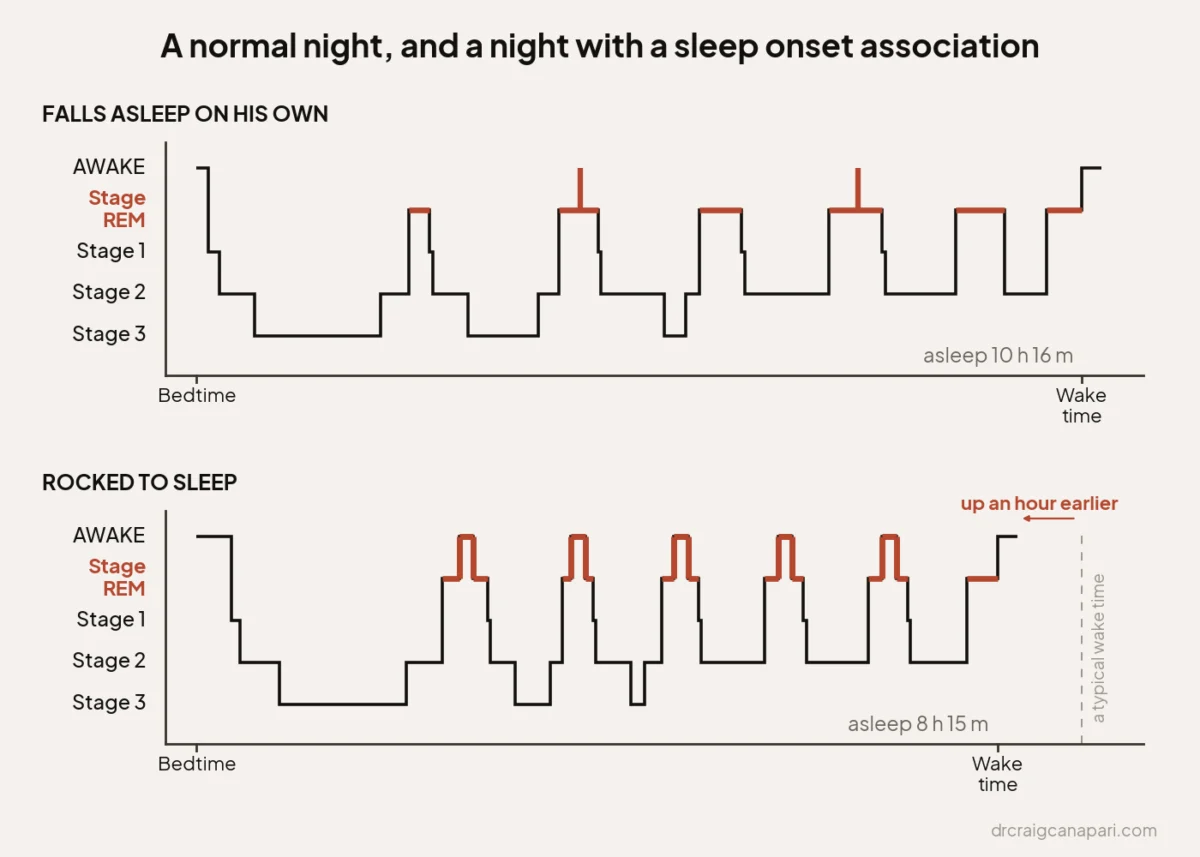
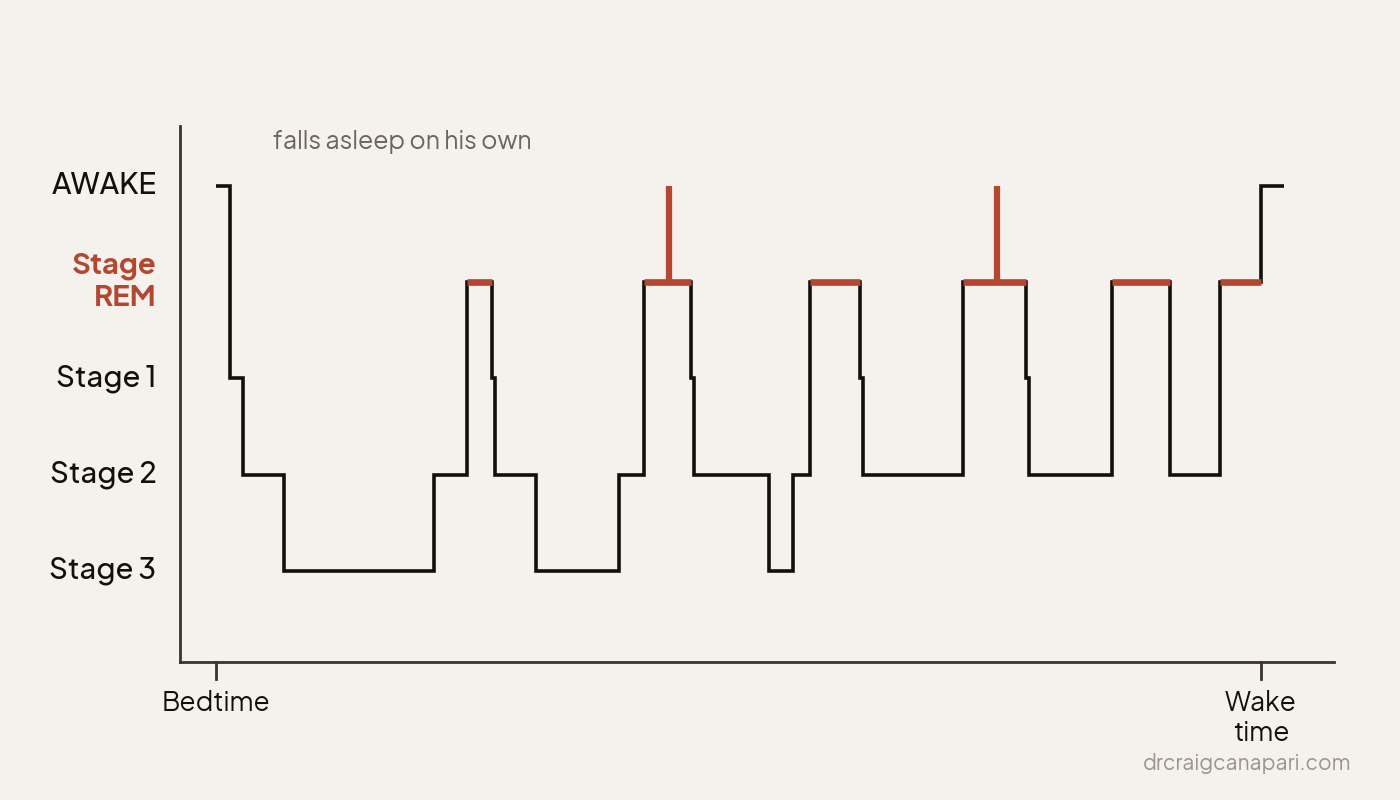
To illustrate this phenomenon, consider the typical progression of sleep cycles throughout the night. A healthy sleep pattern, often visualized on a hypnogram, begins with a prolonged period of deep sleep in the initial hours. As the night progresses, sleep cycles shift towards more REM (Rapid Eye Movement) sleep, the stage associated with dreaming. During these natural transitions, brief awakenings are common. For a child who has learned to fall asleep independently, these brief awakenings are often unnoticeable, and they seamlessly transition back to sleep without signaling to their parents.
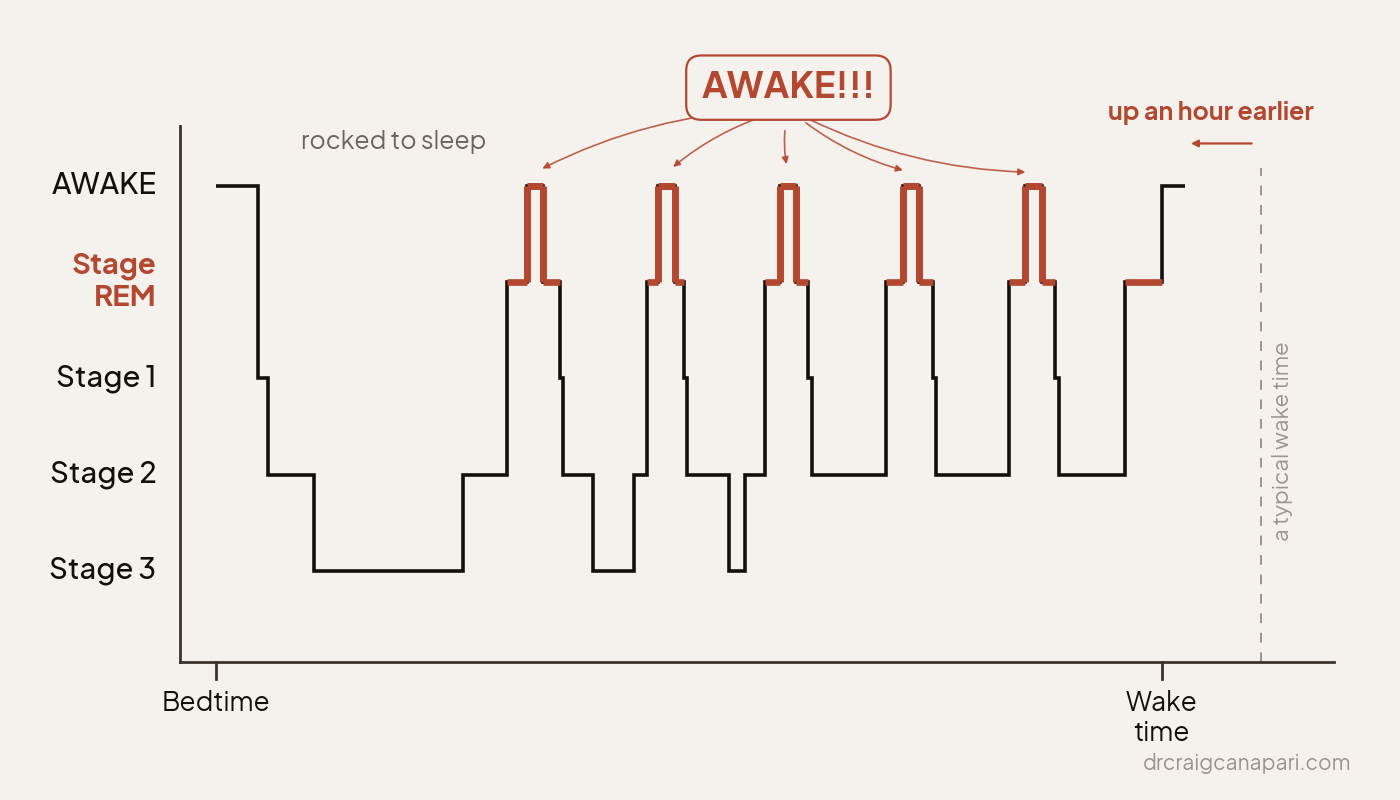
In stark contrast, a child who has developed a sleep onset association—such as being held, rocked, nursed, or soothed with a pacifier until asleep—will experience these same natural awakenings. However, lacking the ability to self-soothe, they will call out for their parents, needing the same external support to fall back asleep. If the initial sleep occurred while being held, for instance, the child will likely need to be held again multiple times throughout the night. This dependency can also lead to earlier morning wake-ups, as exhausted parents may bring the child into their own bed, inadvertently creating another sleep onset association. This cycle frequently contributes to early morning awakenings, a common companion to persistent night wakings.
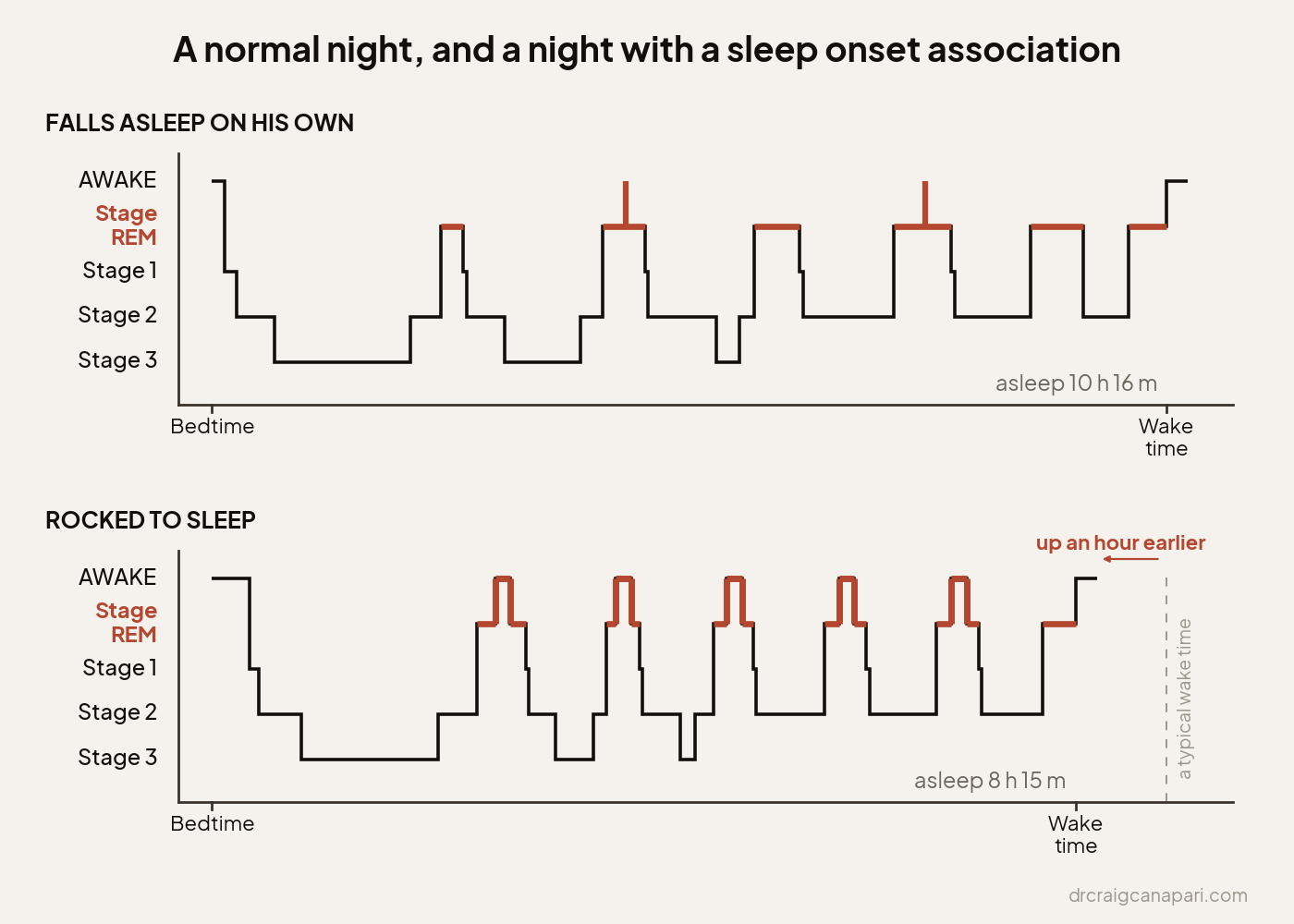
A comparative analysis of hypnograms vividly demonstrates this difference. A child who falls asleep independently typically experiences fewer and shorter awakenings, resulting in a longer overall sleep duration. Conversely, a child reliant on parental assistance often takes longer to fall asleep initially, experiences multiple full awakenings throughout the night, and may wake earlier than usual, leading to a significantly reduced total sleep time.
Common sleep onset associations include:
- Being rocked or held until asleep.
- Nursing or bottle-feeding to sleep.
- Using a pacifier.
- Parental presence in the room until asleep.
- Back-rubbing or patting.
Dr. Richard Ferber, a pioneer in pediatric sleep, used a relatable analogy: imagine falling asleep with your pillow and blanket. If you woke up and they were missing, you would naturally seek them out. Similarly, children with sleep onset associations are seeking the specific conditions under which they fell asleep.
Addressing inappropriate sleep onset associations requires guiding the child to develop the capacity to fall asleep independently. Various sleep training methodologies exist to facilitate this process, empowering parents with tools to foster healthier sleep habits.
While sleep onset associations are a primary concern, it is also important to consider separation anxiety. A key differentiator is whether the child needs help settling to sleep due to a specific object or action (like a pacifier) or if their distress is primarily triggered by the parent’s absence. Separation anxiety can sometimes be exacerbated by parental "accommodations," such as allowing persistent co-sleeping, which can perpetuate the problem.
Night Terrors: A Distinct Cause of Nocturnal Upset
Another significant reason for toddlers to wake up screaming and inconsolable is the occurrence of night terrors. These episodes are classified as NREM parasomnias, meaning they arise from non-REM sleep stages and involve behaviors that mimic wakefulness. Night terrors are relatively common, affecting approximately one-third of 18-month-olds and decreasing in prevalence but still impacting around one in five toddlers by age two and a half.
Night terrors are generally distinguishable from sleep onset associations. They occur during the deep, non-REM sleep stages, typically in the first half of the night, although they can happen later. Crucially, during a night terror, a child cannot be consoled. Unlike with sleep onset associations, where parental intervention can eventually lead back to sleep, a child experiencing a night terror will remain distressed and inconsolable, often for several minutes, and sometimes up to 30-40 minutes. The upside is that night terrors are usually not a nightly occurrence and tend to resolve on their own. The primary focus during these episodes is ensuring the child’s safety, as they may thrash about, though they typically remain in their crib or bed.
Temporary Disruptions to Good Sleepers
Sometimes, disruptions to a child’s sleep pattern are transient, stemming from normal developmental milestones or external factors. The critical aspect here is how parents respond to these temporary awakenings. If the response involves creating new sleep associations, these temporary disruptions can evolve into persistent problems.
Sleep Regressions: Developmental Leaps and Sleep Challenges
A common explanation for sudden sleep disturbances in previously good sleepers is the phenomenon known as a "sleep regression." While the concept of age-based, predictable regressions is often oversimplified on social media, significant developmental leaps can indeed lead to temporary sleep disruptions. Large-scale studies indicate that while night wakings tend to decrease with age, developmental milestones such as learning to walk, potty training, and the eruption of molars can be associated with short periods of increased awakenings.
For instance:
- 12-15 months: Independent walking, pulling up, and cruising are common. Some toddlers may also begin to resist their second nap.
- 15-18 months: The transition from two naps to one is frequent, alongside heightened separation awareness and the eruption of first molars.
- 18-24 months: Autonomy and limit-testing emerge. Canine teeth erupt, and toddlers may physically begin to climb out of their cribs.
- 2-3 years: The transition from a crib to a bed can occur, often prompted by climbing out or the arrival of a new sibling. Potty training, second molar eruption, and the development of imagination leading to night fears are also prevalent.
- 3-3.5 years: Naps may be dropped, and total sleep needs can decrease. Night fears may become more pronounced, and starting preschool introduces new schedules and separations.
Beyond these developmental stages, other factors like illness, travel, schedule changes, a new sibling, or a move can temporarily disrupt sleep. The danger lies not in the disruption itself, but in the parental response. If parents resort to new sleep-inducing methods, they risk establishing new sleep onset associations that can prolong the problem.
Illness and Teething: Temporary, But Manageable
Acute illness, such as a cold or fever, is a straightforward cause of temporary sleep disruption. Nasal congestion and ear pain can be exacerbated when lying down. During these times, comforting the child and seeking medical advice when necessary is the priority. However, it’s crucial to avoid creating new sleep associations, such as prolonged co-sleeping, which may need to be addressed later.
Teething is often cited as a cause of sleep problems, but its impact is generally limited to mild, localized irritability around the time a tooth erupts, typically lasting only a night or two. Teething does not cause fever, although it may slightly elevate body temperature. Persistent fevers or significant unwellness should not be attributed solely to teething and warrant a pediatrician’s evaluation.
New Sibling and Environmental Factors
The arrival of a new baby can sometimes disrupt a toddler’s sleep. This is particularly true if children share a room. A crying infant can easily wake a toddler, and a sound machine, used appropriately with attention to volume and placement, can be beneficial. The stress of a new sibling can also impact sleep, though these disruptions are usually brief. Spending dedicated, quality time with the toddler can help them feel secure during this transition.
Environmental factors, such as light from electronics, noise from outside, or a sibling’s movements in a shared room, can also cause awakenings. Removing electronic devices from the bedroom and using a sound machine can help mitigate noise disruptions. Managing room-sharing dynamics requires careful attention to minimize disruptions for all children involved.
Medical Disorders and Schedule Considerations
While behavioral factors are common, underlying medical conditions can also contribute to persistent night wakings.
Underlying Medical Conditions
Chronic medical issues can manifest as sleep disruptions. Persistent coughing at night might indicate asthma requiring treatment. Acid reflux can lead to nighttime stomach pain and vomiting. Obstructive sleep apnea, characterized by snoring, is another common condition that significantly disrupts sleep. Recognizing these symptoms and consulting a pediatrician is vital for diagnosis and management.
Schedule and Environmental Adjustments
Structural issues within the child’s sleep environment and schedule can also be addressed.
Hunger and Night Feeds
Toddlers generally do not require nighttime feedings unless there’s a specific medical reason. Weaning nighttime bottles or breastfeeding can often lead to rapid improvements in sleep. If concerns about a child’s growth or nutrition exist, a pediatrician should be consulted.
Excessive Time in Bed
"Too much time in bed syndrome" occurs when a child’s sleep schedule remains the same as when they were younger, even if their sleep needs have decreased. For example, a toddler who previously slept 12 hours at night might now only need 10-11 hours, leading to prolonged periods of wakefulness during the night. Adjusting bedtime or reconsidering nap schedules can help resolve this. Understanding a child’s current sleep requirements is key, and resources detailing age-specific sleep needs can be invaluable.
Environmental Factors
Beyond noise and light, the overall sleep environment plays a role. Ensuring the room is dark, quiet, and at a comfortable temperature is essential. Issues like room-sharing, where one child’s waking can trigger another’s, require specific strategies to manage effectively.
Conclusion
Toddler night wakings present a significant challenge for families, but understanding the underlying causes is the first step toward resolution. Inappropriate sleep onset associations are a primary driver, and teaching children to fall asleep independently through sleep training can lead to substantial improvements within weeks. For parents of children who consistently fall asleep independently, exploring other potential causes such as temporary developmental disruptions, illness, or environmental factors is crucial. By systematically identifying and addressing these issues, families can work towards achieving more restful nights for both children and parents.
Originally published September 2026. Last reviewed/updated by Dr. Craig Canapari, MD in November 2026.
