

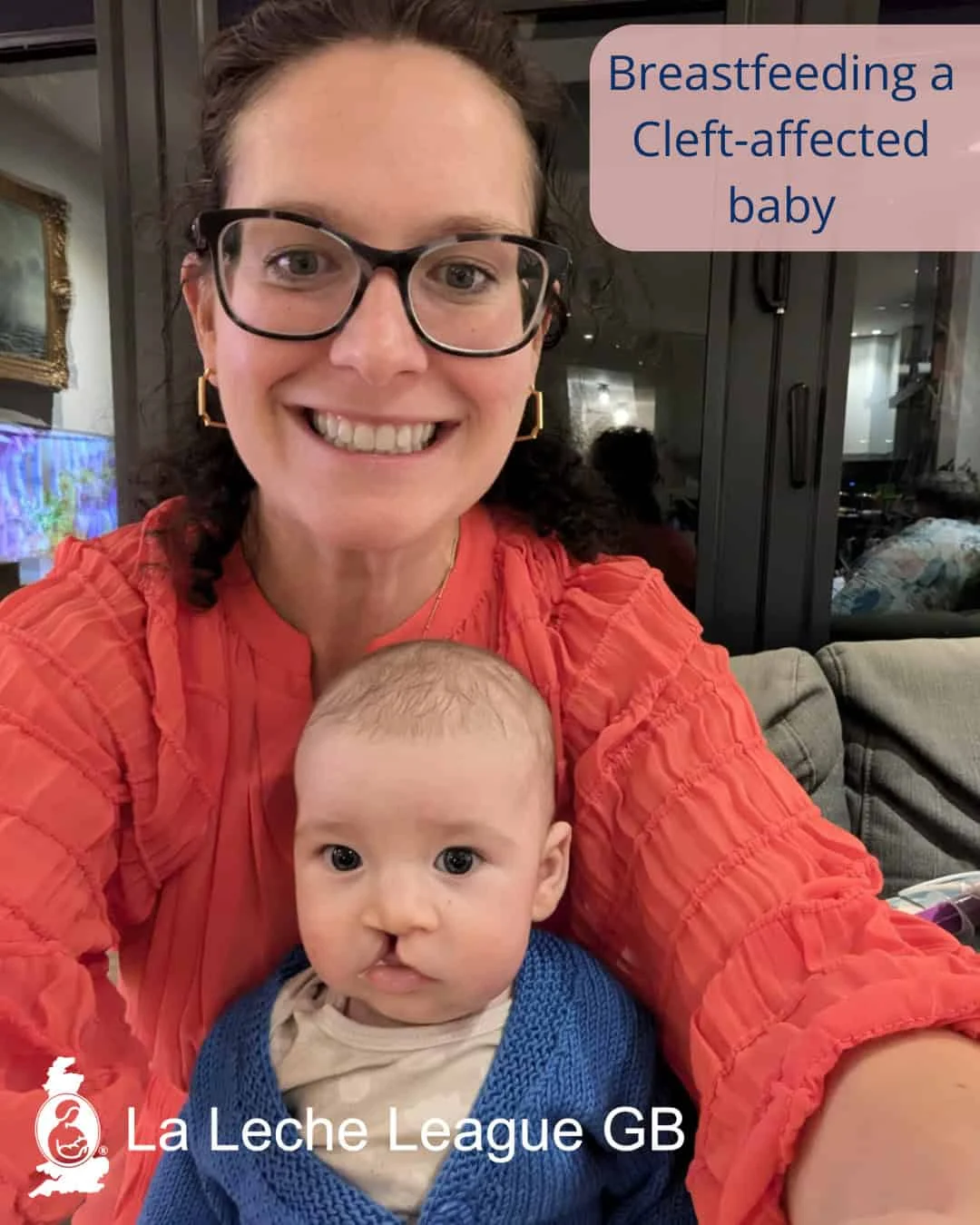
The journey of Sarah Muir-Little and her son, Russell, offers a compelling testament to maternal determination and innovative problem-solving in the face of significant medical challenges, culminating in successful breastfeeding despite an antenatal diagnosis of cleft lip and palate.
Antenatal Diagnosis and Initial Setbacks
The initial weeks of Sarah Muir-Little’s pregnancy were already fraught with anxiety, as her father-in-law was in intensive care, casting a shadow over what should have been a joyous period. The emotional strain intensified at the 20-week scan when, after confirming they were expecting a boy, the sonographer delivered unexpected news: "Have you heard of a cleft lip?" A subsequent conversation with a midwife delivered a further blow, suggesting that a cleft lip and palate diagnosis would preclude breastfeeding. This pronouncement marked the beginning of what Muir-Little described as a "battle" to achieve her desired feeding method.
A cleft lip or palate is a congenital condition where the structures forming a baby’s upper lip or the roof of the mouth fail to fuse completely during fetal development. This occurs in approximately 1 in every 700 babies born in the UK, making it one of the most common birth anomalies. While many babies with only a cleft lip can breastfeed with some adaptations, a cleft palate presents a more significant challenge. The inability to form the necessary suction pressure means that direct breastfeeding is typically not possible until surgical repair of the palate, usually performed within the baby’s first year. Organizations like the Cleft Lip and Palate Association (CLAPA) provide vital support and information for families affected by these conditions.
For Muir-Little, the news was particularly distressing. Having recently weaned her toddler in preparation for nursing her new baby, the prospect of being unable to breastfeed was deeply upsetting. She described grieving the loss of an experience that had been a fundamental part of her identity as a mother. A specialist nurse later offered a glimmer of hope, clarifying that some form of breastfeeding journey might still be possible, though it would likely differ from her previous experience. The extent of the palate involvement would only be clear after birth, but the potential lack of suction remained a significant barrier to traditional breastfeeding. The family was informed that their son would require at least two operations in his first year—one to repair the lip and another for the palate—with further surgeries anticipated later in childhood.
The Quest for Alternative Breastfeeding Methods
Undeterred by the initial prognosis, Muir-Little embarked on extensive research, trawling websites like CLAPA, La Leche League (LLL), and other sources for examples of successful breastfeeding post-palate surgery. The scarcity of such accounts was disheartening, but the few she found offered critical insights. These suggested that maintaining a sufficient milk supply was paramount, and that alternative methods could facilitate direct feeding at the breast.
Muir-Little was confident in her ability to maintain milk supply, having successfully nursed her toddler. While she had previously found pumping challenging, yielding modest amounts of milk even with prolonged effort, she believed that improved knowledge and technique could allow her to meet her new baby’s milk demands. This conviction underscored her proactive approach to overcoming obstacles.
The second crucial point involved finding practical methods for delivering milk at the breast without natural suction. Her research led her to explore direct hand expression into the baby’s mouth and, more promisingly, nursing supplementer systems. These systems typically consist of a bottle filled with expressed milk, connected to a thin tube that is positioned in the baby’s mouth while they are latched onto the breast, thereby delivering milk as the baby attempts to suckle.
The UK market offered two primary nursing supplementer systems suitable for cleft-affected infants. Muir-Little acquired both for evaluation. One system relied on gravity, which resulted in an unacceptably slow milk flow. The other featured a squeezable bottle, capable of delivering a good volume of milk, but its design made it awkward to hold. Traditional feeding positions, such as the "dancer hold"—a technique where the index finger and thumb form a "U" to support the baby’s chin and head, often used for babies with low muscle tone or prematurity—proved difficult to integrate with the supplementer apparatus. Practicing with a doll highlighted the impracticality of managing both the baby and the cumbersome feeding system simultaneously. The existing options did not feel intuitive or practical for her specific needs.
Russell’s Arrival and the Development of an Innovative System
Baby Russell’s birth brought the theoretical challenges into stark reality. Initially, he was fed expressed colostrum via a syringe, with a clean finger offered simultaneously to encourage non-nutritive sucking. This allowed time for Muir-Little’s milk supply to establish before attempting the more complex supplementer feeding at the breast.
A serendipitous discovery proved pivotal: some wrongly ordered syringes, though unsuitable for direct feeding, perfectly fitted the supplementer tube. Local midwives, displaying commendable flexibility, sourced larger syringes from the labour ward. Although these had a slightly different tip, Muir-Little ingeniously drilled a snug hole in their screw-on caps, creating a secure connection for the supplementer tube. This improvisation allowed for a controlled, measurable delivery of milk directly to the breast. It is important to note that when using syringes for feeding, safety guidelines, such as removing caps (a choking hazard) and feeding slowly while monitoring the baby’s comfort, must always be followed.
The standard advice for supplementer use often suggests either inserting the tube after the baby latches or taping it to the breast before latching. The former was unfeasible for Russell, whose fragile latch, owing to the absence of suction, could not be interrupted. The latter, taping a long section of tube to the breast, presented its own set of difficulties, particularly with a newborn’s small mouth and tendency to bob on and off the breast. Muir-Little devised her own method: taping the tube very close to the nipple, allowing for easier placement in Russell’s mouth. This required experimentation with different tapes and positions to find a waterproof solution that minimized disruption to the latch, though some milk loss inevitably occurred.
Seeking external assistance proved challenging. Many healthcare professionals lacked specific experience with such adapted breastfeeding methods for cleft babies, and some voiced concerns about potential aspiration (choking on milk). Despite these reservations and the emotional toll of difficult feeding moments, Muir-Little’s determination remained unwavering. After a week that encompassed the "magical home birth" and the frustrations of feeding, she had, through sheer persistence, established a system she believed was both effective and safe for delivering milk at a sensible pace.

Navigating Early Feeds and Professional Skepticism
The early weeks were characterized by continued challenges with positioning. The "dancer hold," previously deemed impractical, continued to cause stress for both mother and baby. Russell would bob on and off the breast, struggling to latch effectively. A temporary respite was found by feeding him from the non-taped breast, directly expressing milk into his mouth, confirming his hunger. This highlighted the need for a calmer, more familiar approach to latching with the supplementer.
After consulting with a specialist at Great Ormond Street Children’s Hospital, Muir-Little opted to continue using the cradle hold, a position she was comfortable with and which was generally appropriate for newborns. While this position sometimes resulted in more milk leakage from Russell’s mouth, the priority was creating a relaxed feeding environment. Advice on plugging the cleft with the breast or keeping the cleft side elevated to prevent milk loss was noted, but the primary focus remained on achieving calm feeds with a deep latch in the cradle position. Despite the initial messiness and frustration, Muir-Little felt the effort was immensely worthwhile.
Over time, mother and son developed a synchronized rhythm. Muir-Little learned to control the milk flow via the syringe, pausing when Russell paused, and adjusting the rate to prevent either frustration from slowness or overwhelm from excessive speed. She also learned to manage Russell’s expectations during syringe refills, either putting him down or repositioning him so he wouldn’t anticipate a continuous flow of milk.
The unique nature of their feeding journey often prompted comments from others. A friend initially questioned the effort involved in bridging the gap until potential direct breastfeeding after surgery, but upon witnessing them feed, understood the profound connection and the reality that Muir-Little was, indeed, already breastfeeding. Another friend, observing them from across a restaurant, remarked on the apparent disappearance of the breastfeeding worries. Such affirmations brought immense joy and validation to Muir-Little.
However, not all reactions were positive. A paediatrician expressed reservations, stating that their method was not "recommended," citing the "safe and effective" nature of specialized cleft bottles. These comments, particularly from healthcare professionals, were hurtful and required significant resilience to overcome. Muir-Little remained convinced of the validity of their approach, citing Russell’s healthy weight gain and his apparent enjoyment of feeding at the breast. While acknowledging the inconvenience of the supplementer, she emphasized the immense benefits derived from breastfeeding in the best way possible.
Adaptation, Surgical Intervention, and a Breakthrough
As Russell grew, his feeding needs and comfort levels evolved. Around ten weeks of age, he began to be bothered by the tape positioned close to his mouth. This prompted a further adaptation: taping the tube much further from the nipple, and eventually, eliminating the tape altogether. This transition demanded increased coordination but became manageable as both mother and baby grew more accustomed to the process.
The journey was not without its moments of regression. There were times when Russell would become upset or refuse to feed, leading Muir-Little to remind herself that he was a baby first, and his cleft was a secondary factor. Often, these issues stemmed from common infant behaviors, such as becoming easily distracted around three months of age, which can affect feeding.
The most significant milestones were the surgical interventions. Russell underwent surgery to reconstruct his lip and repair his hard palate. Post-surgery, while recovering from morphine, he initially accepted only bottle feeds. However, once he resumed feeding with the supplementer, he rejected bottles, perhaps associating them with the discomfort of his recovery, or finding the supplementer less effort. This period, requiring daily pumping and supplementer feeds, was exhausting but was greatly supported by her husband, who handled bottle washing, night feeds, and emotional reassurance. Muir-Little described their journey as a "tricky path" navigated as a team, emphasizing that every day of supplementer use was a bonus for Russell’s health and their bond.
The true breakthrough came just before Russell’s first birthday, after his palate surgery. Although the surgeon advised avoiding suction for a month, Muir-Little immediately noticed Russell attempting to suck for the first time. Four weeks later, he independently discovered how to use a straw, and remarkably, the very next day, began sucking and swallowing at the breast. This was a pivotal moment, a culmination of months of perseverance.
Achieving Direct Breastfeeding and Broader Implications
From that point, progress towards exclusive direct breastfeeding was gradual but steady. The supplementer was used less and less as Russell developed the ability to take more milk directly from the breast. After 15 months of daily pumping, Muir-Little was finally able to stop, marking a significant personal achievement.
Initially, Russell’s latch was not typical, but it was effective, and he was content. He now breastfeeds once or twice a day, a profound outcome that was once deemed impossible. This success story underscores the power of parental advocacy and the potential for individualized care to transcend conventional medical advice.
The journey of Sarah Muir-Little and Russell has broader implications for healthcare practices and parental support. It highlights the importance of:
- Patient-centered care: While standard protocols are vital, individualized approaches, especially for complex conditions, can lead to remarkable outcomes.
- Empowering parents: Providing parents with comprehensive information and supporting their choices, even when unconventional, can foster resilience and innovation.
- Rethinking "impossible": The initial blanket statement that breastfeeding would be impossible proved incorrect, challenging healthcare providers to offer more nuanced and hopeful guidance.
- The value of support networks: Organizations like CLAPA and La Leche League, alongside personal support from family and friends, are crucial for parents navigating difficult medical journeys.
- The psychological benefits of breastfeeding: For Muir-Little, breastfeeding was intrinsically linked to her identity as a mother, and achieving it, even through adapted means, significantly contributed to her well-being and bonding with Russell.
Sarah Muir-Little’s experience, as documented by La Leche League, serves as an inspiring narrative for families facing similar challenges. It demonstrates that with determination, ingenuity, and unwavering love, parents can forge their own paths to nurturing their children, even when the journey is unexpected and arduous. Her story is a powerful reminder that every "bonus" day of achieving a personal goal contributes significantly to a child’s health and the irreplaceable bond between parent and child.
