

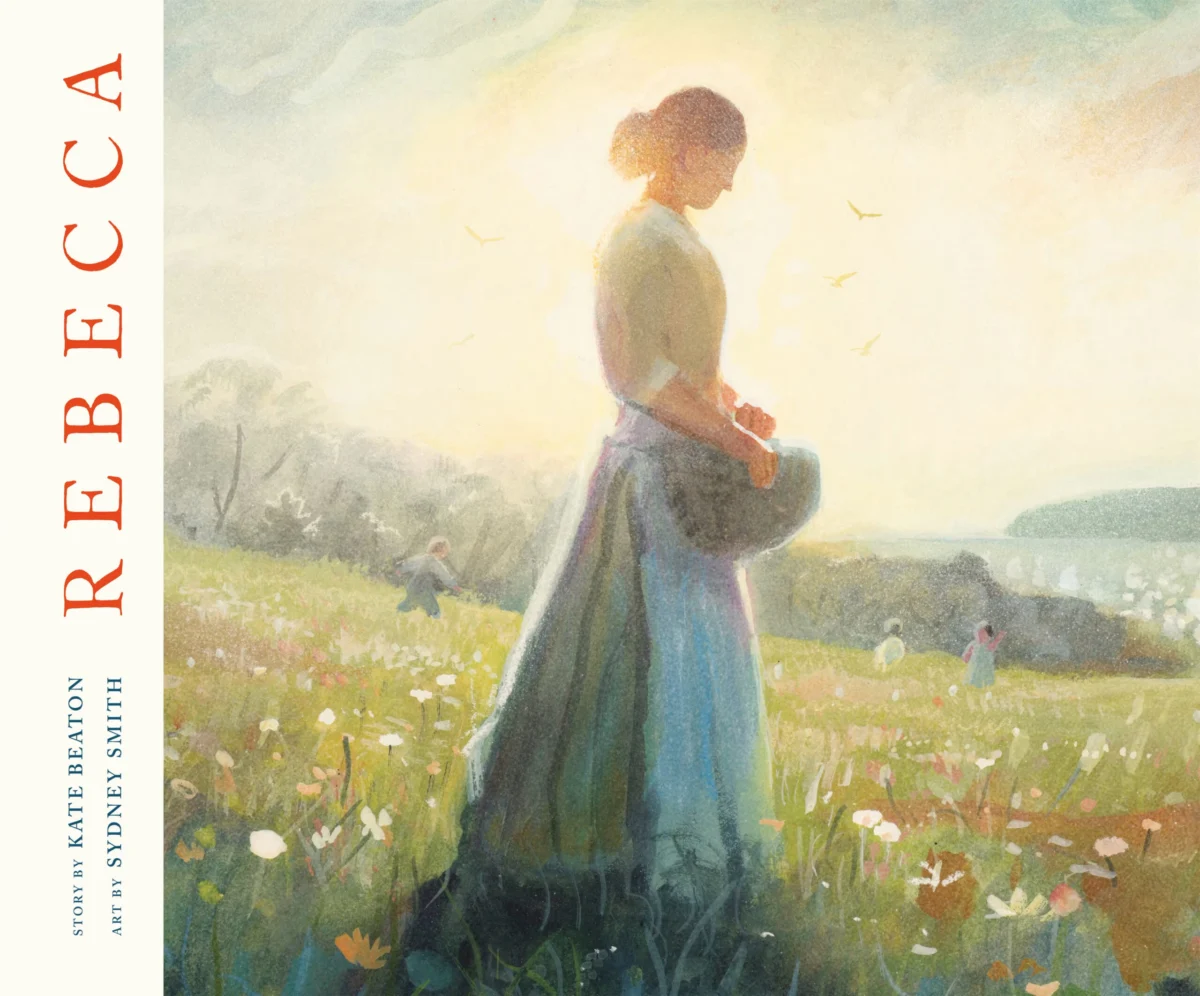
The publication of the children’s picture book Rebecca marks a significant departure and a profound evolution in the career of Kate Beaton, the acclaimed Canadian cartoonist and author. Known globally for her sharp-witted webcomic Hark! A Vagrant and her harrowing graphic memoir Ducks: Two Years in the Oil Sands, Beaton’s latest work emerges from a crucible of deep personal loss and a long-standing ancestral connection to the rugged landscape of Cape Breton, Nova Scotia. This new release is not merely a creative endeavor but a literary synthesis of a family’s grief, a mother’s resilience, and the historical echoes of the 18th century. By intertwining the story of her late sister, Rebecca "Becky" Beaton, with that of their common ancestor, Rebecca Lombard Smith, Beaton provides a meditative exploration of how names, legacies, and survival are passed down through generations of women.
The Biographical Catalyst: Personal Loss and the Bifurcation of Life
The foundation of Beaton’s recent work is rooted in a period of intense domestic upheaval. In 2015, her older sister, Becky, was diagnosed with an aggressive form of cervical cancer. For three years, the Beaton family navigated the complexities of terminal illness, a period Kate Beaton describes as an "intermission" or a "surprise horror movie." This experience is a common yet devastating reality for many families; according to the Canadian Cancer Society, cervical cancer remains a significant health concern, with hundreds of deaths reported annually despite advancements in screening and vaccination.
Becky Beaton succumbed to the disease on May 14, 2018. This event created what the author identifies as a "bifurcated life"—a sharp division between the person she was before the illness and the person she became after the loss. The psychological impact of witnessing a sibling’s decline is often characterized by a loss of agency and a profound shift in one’s worldview. For Beaton, this shift was compounded by the arrival of her first child almost exactly one year later.
On May 13, 2019, just one day before the first anniversary of her sister’s death, Beaton gave birth to a daughter. The proximity of these dates—the anniversary of a death and the celebration of a birth—serves as a poignant example of "anniversary reactions" often studied in grief psychology. Beaton’s personal narrative suggests that the arrival of her daughter on Mother’s Day, narrowly avoiding the May 14th date she had prayed to miss, allowed for a coexistence of joy and sorrow that would eventually inform the rhythmic, meditative prose of her latest book.
Historical Context: The Legacy of Rebecca Lombard Smith
To process the "open wound" of her sister’s passing, Beaton turned her gaze toward her family’s genealogy, specifically to their shared namesake, Rebecca Lombard Smith. The historical Rebecca was the great-great-great-great-grandmother of the Beaton sisters. Her life story is a testament to the harsh realities of 18th-century maritime existence in Atlantic Canada.
In March 1789, Rebecca’s husband, Captain David Smith, a prominent whaling captain, perished after falling through the ice near Port Hood Island. At the time of his death, Rebecca was pregnant with their last child. While local histories of Port Hood often center on the dramatic and tragic end of Captain Smith, Beaton’s research and personal connection refocus the narrative on the widow who remained.
Rebecca Lombard Smith raised seven children—six sons and one daughter—alone on a remote island off the shore of Cape Breton. Historical records from the late 1700s indicate that widowhood in such isolated colonial outposts required extraordinary physical and mental fortitude. The survival of all seven children in an era of high infant mortality is a statistical anomaly that speaks to the matriarch’s strength. Beaton’s lineage descends from the lone daughter, a fact that emphasizes a matrilineal transmission of resilience.
The physical markers of this history remain in Cape Breton. Rebecca Lombard Smith is buried in the Old Protestant Graveyard in Port Hood. Her headstone, which died in 1821 at the age of 76, is unique for its time, featuring the names of her sons—Lewis, Parker, and David—etched into the stone as a public declaration of filial love. This site became a destination for Beaton during her early days of motherhood, serving as a bridge between her grief for her sister and her responsibility to her newborn.
The Creative Process: Writing Through the "Quiet Hours"
The development of the picture book Rebecca occurred during the "quiet hours" of parenting. Beaton has noted that the book was composed line by line in her head while she sat in the dark, waiting for her children to fall asleep. This method of composition—born of necessity and the repetitive rhythms of childcare—is reflected in the book’s lyrical quality.
A recurring motif in the book is the "soft musical sigh" of a sleeping child, represented by the onomatopoeic "Hummmm." This sound serves as a metronome for the narrative, grounding the historical tragedy in the visceral, present-day experience of a mother tending to her young. By choosing to write about her 18th-century ancestor rather than her sister directly, Beaton created a protective distance that allowed her to explore themes of loss and hope without reopening the immediate trauma of 2018.

Editorial Challenges and the "Rules" of Children’s Literature
The publication of Rebecca by Roaring Brook Press, an imprint of Macmillan, highlights a growing trend in the industry toward "serious" or "difficult" picture books. Connie Hsu, the publishing director of Roaring Brook Press, admitted that the manuscript initially challenged standard industry conventions.
Traditional "rules" for picture books often dictate that the protagonist should be a child, the tone should be predominantly optimistic, and death should be handled with extreme delicacy or avoided entirely. Rebecca breaks these conventions:
- Adult Protagonist: The central figure is a mother and widow.
- Explicit Mortality: The book addresses the death of two characters (the husband and eventually the mother).
- Complex Emotionality: It deals with the long-term endurance of grief rather than a quick resolution.
Hsu’s decision to publish the work despite these deviations reflects a shift in how educators and publishers view children’s ability to process complex themes. Experts in bibliotherapy suggest that books addressing loss can provide essential vocabulary for children to understand their own emotions or the emotions of the adults around them.
Kate Beaton’s Literary Career: From Satire to Substance
To understand the weight of Rebecca, one must consider Beaton’s broader body of work. She first rose to prominence with Hark! A Vagrant, a webcomic that used a minimalist art style and sharp wit to satirize historical and literary figures. Her ability to humanize history made her a favorite among academics and casual readers alike.
However, her 2022 graphic memoir, Ducks: Two Years in the Oil Sands, signaled a shift toward more somber, autobiographical storytelling. Ducks explored her time working in the Alberta oil sands to pay off student loans, touching on environmental degradation, corporate culture, and the systemic trauma faced by women in male-dominated industries. The book was a critical triumph, appearing on former President Barack Obama’s "Favorite Books of 2022" list and winning the 2023 Canada Reads competition.
Rebecca represents the next step in this evolution. While Hark! A Vagrant was about the "facts" of history viewed through a comedic lens, and Ducks was about the "reality" of labor and trauma, Rebecca is about the "spirit" of ancestry and the endurance of the family unit.
Broader Implications and Analysis
The story of the two Rebeccas—the sister lost too soon and the ancestor who survived against the odds—offers a profound analysis of how modern individuals interact with their heritage. In an era of digital genealogy and DNA testing, Beaton’s approach suggests that the true value of ancestry lies not in the data of the past, but in the emotional resonance it provides for the present.
Furthermore, the book contributes to a necessary conversation about cervical cancer. Becky Beaton was a vocal advocate for health awareness during her illness, and her death underscores the importance of medical screening. By naming the book Rebecca, Kate Beaton ensures that her sister’s name remains in the public consciousness, linked to a narrative of strength rather than just a narrative of illness.
Conclusion: A Narrative of Hope and Survival
The release of Rebecca serves as a reminder that grief is not a linear process with a definitive end, but a "space in your life" that one learns to inhabit. For Kate Beaton, the act of walking to the Old Protestant Graveyard with her child strapped to her chest was a physical manifestation of moving forward while carrying the past.
The book concludes not with the tragedy of the ice in 1789, but with the hope inherent in the survival of the Smith children and the continuation of the family line. In the formal landscape of children’s literature, Rebecca stands as a unique monument—much like the headstone in Port Hood—to the mothers who stay, the sisters who are missed, and the love that necessitates the telling of their stories. Through this work, Beaton has successfully "written the grief out of herself," transforming a private wound into a universal narrative of maternal fortitude.
