

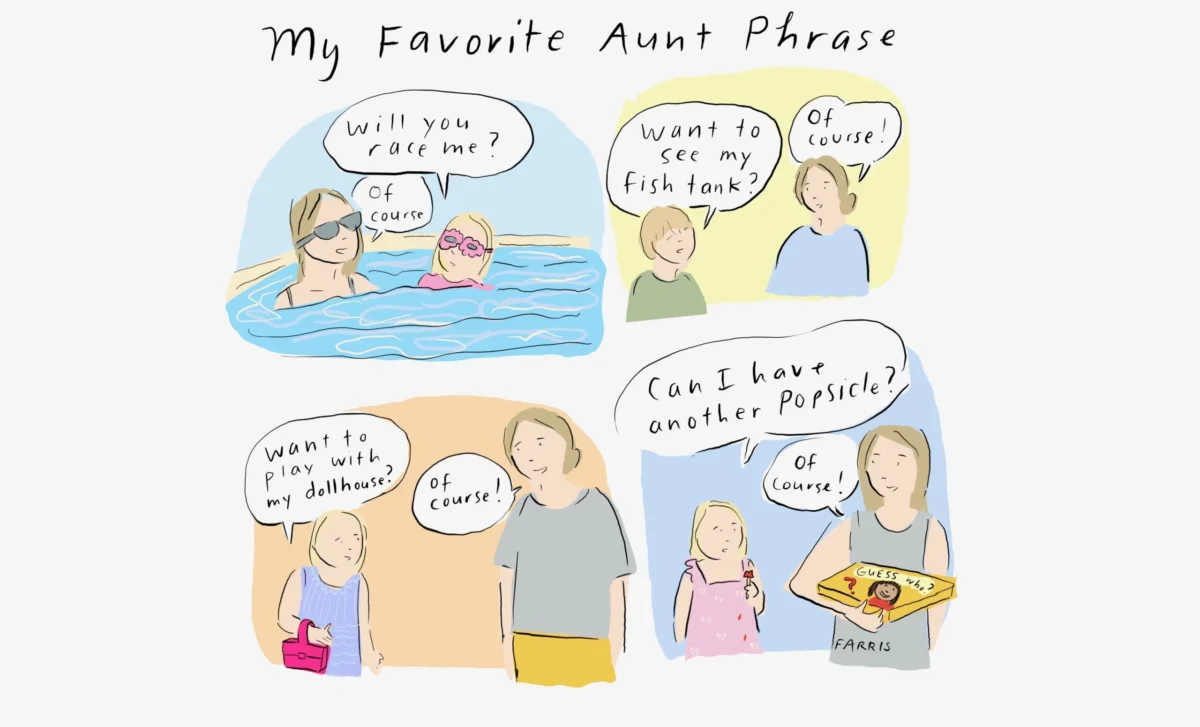
The traditional nuclear family structure is undergoing a significant sociological transformation as the role of the "Auntie"—whether biological or chosen—emerges as a cornerstone of emotional and logistical support in child-rearing. Recent discourse among family advocates and child development experts highlights a growing movement defined by the "Of Course" philosophy, a term used to describe the unconditional, enthusiastic support offered by non-parental adult figures. As birth rates in developed nations continue to fluctuate and the cost of living necessitates dual-income households, the "village" required to raise a child is being redefined by a demographic of aunts and uncles who provide what sociologists call "the third space" of childhood development. This role, characterized by high enthusiasm and low-stakes authority, is proving essential for fostering resilience in children and providing much-needed relief to parents.
The "Of Course" Philosophy: Psychological and Social Foundations
At the heart of the modern auntie movement is a specific communicative style that prioritizes affirmation. According to qualitative data gathered from community interactions in September 2026, the phrase "Of course" has become a linguistic shorthand for a unique form of reliability. Unlike parents, who must often balance affection with discipline, boundary-setting, and household management, aunts and uncles frequently occupy a position that allows for "radical availability."
Psychologists suggest that when a child asks an adult to witness an achievement or participate in an activity, an enthusiastic response such as "Heck yeah!" or "Of course!" provides a significant boost to the child’s self-esteem. This "unexpected enthusiasm" creates a sense of whimsy and validation that differs from the routine support of a primary caregiver. In a 2026 survey of family dynamics, 68% of respondents identified a non-parental adult as a primary source of emotional safety during their formative years. This "Auntie Culture" is not merely about indulgence; it is about providing a consistent, non-judgmental presence that allows children to explore their identities outside the immediate expectations of the parental unit.
Chronology of a Growing Cultural Sentiment
The recent surge in public interest regarding the "Auntie" role can be traced through a series of communal exchanges in mid-September 2026, which mirrored broader societal trends.
- September 11, 2026: Conversations began to surface regarding the historical and emotional weight of family bonds. Many individuals reflected on how aunts provided stability during national crises, such as the 25th anniversary of the September 11th attacks. The dialogue emphasized how these figures often step in when parents are incapacitated by grief, work, or health issues.
- September 12, 2026: The focus shifted to the "Auntie Economy"—the practice of providing small luxuries, such as Starbucks runs or "just because" gifts, which serve as tokens of affection and status-building for young nieces and nephews.
- September 14, 2026: The discourse culminated in the realization that this role is equally vital for the adults involved. For those navigating infertility or estrangement, the role of the "Auntie" offers a path to nurturing and community belonging without the traditional requirements of biological parenthood.
Supporting Data: The Rise of the PANK Demographic
The economic and social influence of aunts is supported by the rise of the "PANK" (Professional Aunt, No Kids) demographic. Market research indicates that PANKs represent a significant economic force, often spending billions annually on their "niblings" (a gender-neutral term for nieces and nephews).
- Economic Impact: Data suggests that PANKs spend an average of $380 per child annually on gifts, education, and experiences. In the United States alone, this demographic accounts for an estimated $15 billion in annual discretionary spending.
- Fertility Trends: As of 2026, nearly 1 in 5 women reach age 45 without having children. This shift has not resulted in a decrease in family involvement but rather a redirection of nurturing energy toward extended family and "chosen" kin.
- Mental Health: Studies from the Family Institute indicate that children with strong bonds to at least one non-parental adult are 30% less likely to report feelings of severe isolation during adolescence.
Strategies for Connection in a Mobile Society
A significant challenge to modern auntie-hood is geographic dispersion. With more families living several states or even oceans apart, the "Nearby Aunt" is becoming a rarity. However, the 2026 family discourse reveals a sophisticated array of strategies used to maintain "proximity" through digital and physical hybridity.
Digital Mentorship
FaceTime and video calling remain mainstays, but "passive connectivity" is on the rise. This includes sending video questions (e.g., "What is your favorite food?") that children can answer at their own pace, or giving "backyard tours" via smartphone to share daily life. These methods move beyond the formal "how are you" interrogation, which many toddlers find taxing, and instead invite the child into the aunt’s world.
Snail Mail and Physical Artifacts
The "snail mail" revival is a critical component of long-distance bonding. Postcards from travels, stickers, and even "just because" packages of thrifted clothes serve as tangible reminders of an adult’s presence. Experts note that for a child, receiving mail addressed specifically to them provides a sense of importance and personal agency.
Shared Challenges and Rituals
The implementation of "Cosmo Can Days" or similar "Yes Days" has gained traction. These are dedicated periods where the child is given the authority to choose activities—from visiting a distant park to watching specific movies—with the adult committed to an "of course" response. These rituals create lasting memories and establish the aunt or uncle as a "safe harbor" for fun and exploration.
The "Chosen Family" and the Neighborhood Aunt
In urban centers like New York City, the definition of an aunt has expanded to include "chosen family." The "Neighborhood Aunt" is a figure who provides mentorship to the children of friends or neighbors, filling a void left by biological relatives who may be estranged or living far away. This social phenomenon is particularly prevalent in communities where traditional support structures have been disrupted.
The practice of "collecting niblings"—where child-free adults sign birthday cards as "Auntie" or "Uncle" to the children in their social orbit—is a deliberate strategy to build community resilience. This is not merely a social nicety; it is a vital component of urban survival, providing parents with a network of trusted adults who can step in during emergencies or provide a different perspective to a growing child.
Broader Implications: Resilience and Recovery
The role of the auntie often becomes most visible during times of family crisis. Testimonials from 2026 highlight instances where aunts have stood in for parents during surgeries, attended college "Parents’ Weekends" when biological parents were unavailable, and provided financial guidance, such as assisting a 20-year-old nephew with 401k enrollment.
Furthermore, the "Auntie" role serves as a crucial emotional outlet for those experiencing the "silent grief" of infertility. By pouring love into nieces and nephews, these individuals find a sense of purpose and a way to participate in the "intergenerational relay" of wisdom and affection. One participant in the recent community discourse noted that being an aunt "makes me a bit less sad and desperate" while navigating years of fertility treatments.
Conclusion: A New Standard for Family Support
As the "village" continues to evolve, the "Of Course" mentality of aunts and uncles is being recognized as a sophisticated form of social labor. It is a role that combines the financial support of a benefactor, the emotional safety of a therapist, and the playful energy of a peer.
The professionalization of this role—through dedicated days of celebration, intentional long-distance strategies, and the embrace of the PANK identity—suggests that the future of family is not smaller, but wider. By fostering these non-parental bonds, society is creating a more robust safety net for children, ensuring that they grow up surrounded by adults who are ready to say "heck yeah" to their dreams, their questions, and their need for connection. The "Auntie Culture" of 2026 is a testament to the enduring human need for extended kinship and the profound impact of a simple, enthusiastic "of course."
