

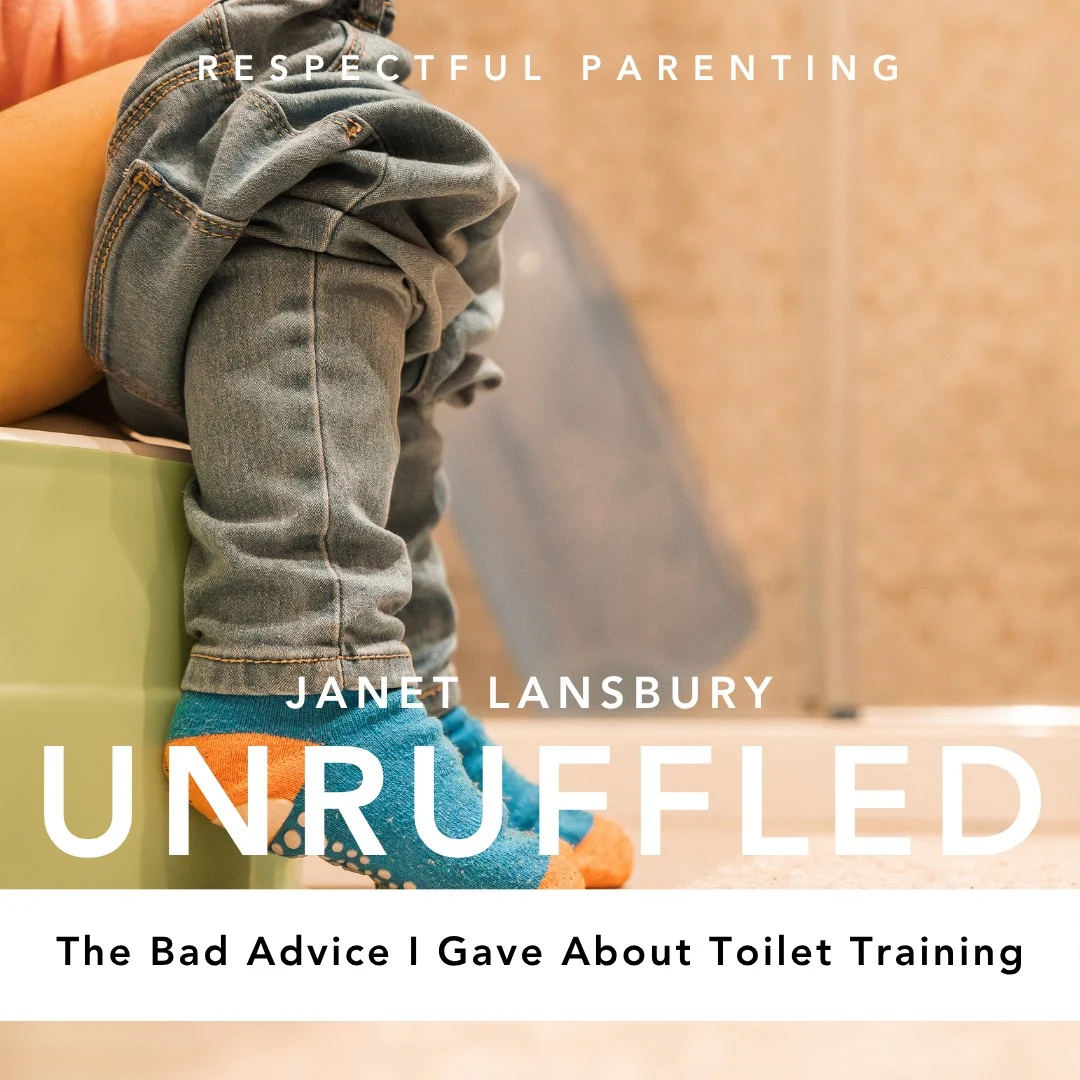
In a remarkable turn of events that highlights the complexities and often unpredictable nature of child-rearing advice, renowned parenting expert Janet Lansbury has publicly revisited a past recommendation regarding toilet training, acknowledging it as "bad advice" after receiving an update from a parent whose child’s four-year struggle finally concluded by defying her initial guidance. This introspection, shared in a recent episode of her podcast "Unruffled," offers valuable insights into the limitations of generalized advice and the paramount importance of parental intuition.
The case in question involved a parent who, after a protracted and frustrating journey with her daughter’s toilet training, contacted Lansbury with an update that both validated and challenged the expert’s established philosophy. Lansbury, who typically advocates for a child-led approach to toilet learning, admitting that her previous advice inadvertently steered this family in a direction that was ultimately unhelpful. This self-examination by a respected figure in early childhood education underscores a commitment to learning and adapting, even when it means confronting past recommendations.
The Genesis of the Conflict: A Child-Led Philosophy Meets Parental Doubt
Lansbury’s foundational approach to toilet learning, as presented in her work and this podcast episode, centers on the belief that children possess an innate drive to learn and master skills, including bodily autonomy. She advocates for allowing children to lead the process, emphasizing trust in their natural abilities and providing unwavering support. This philosophy is rooted in the understanding that many developmental milestones, when allowed to unfold organically, offer children a profound sense of accomplishment and self-efficacy.
However, the parent in this scenario presented a complex challenge. Her daughter, by all developmental indicators—physical, cognitive, and verbal—appeared ready for toilet training around the age of two. Yet, she exhibited an intense aversion to the potty, firmly stating her desire to remain in diapers "forever." This persistent resistance, despite the parents’ attempts to create a low-pressure environment and their careful observation of her readiness signs, led to significant parental doubt.
The parent’s dilemma, as articulated in her correspondence with Lansbury, stemmed from a perceived conflict between the "let-her-lead" philosophy and the practical realities of her child’s specific disposition. The daughter was described as "fearful and avoidant," characteristics that, in other contexts, prompted the parents to act as a "wise guide," gently but firmly encouraging her to engage with activities she feared. This approach, where emotions were acknowledged but not allowed to dictate actions, had proven successful in helping the child navigate other challenges. Applying this to toilet training, however, felt contradictory and, to the parent, akin to enabling a phobia.
A Four-Year Odyssey: The Parent’s Narrative
The parent’s account reveals a journey that began with conventional methods. Around the daughter’s second birthday, signs of readiness—dislike of diaper changes, body awareness, and verbal cues—prompted an attempt at a structured toilet training program, likely referencing popular, often intensive, methods. This approach, however, resulted in significant distress and physical resistance from the child, leading the parents to abandon it and revert to a waiting game.
For the next year, the parents adopted a more passive stance, occasionally mentioning the potty as an option. The daughter continued to engage with the concept through play, using stuffed animals and discussing it positively, yet she steadfastly refused to use a real potty. As she approached her third birthday, and with peers beginning to master toilet training, parental concerns resurfaced. The daughter’s continued reliance on diapers, coupled with her strong-willed and demand-avoidant nature, led the parents to seek external validation. Their pediatrician and a child therapist suggested a more direct approach: informing the child that it was simply time.
This intervention proved temporarily effective, with the daughter even selecting her own potty and underwear. However, the moment she experienced the sensation of needing to urinate, anxiety escalated, leading to refusal and accidents. After two days of this, the parents, fearing the exacerbation of her fear and physical withholding, retreated once more, returning to pull-ups and reiterating that she could do it when she was ready.
The subsequent six months saw no change. The daughter consistently expressed her refusal to use the potty, despite the ubiquitous presence of toilet training among her social circle. The parent, an self-described "anxious overthinker," grappled with the dichotomy of wanting to support her child’s autonomy while feeling a growing unease about the prolonged reliance on diapers. Her husband, conversely, appeared more relaxed about the situation, a dynamic that added another layer to the parental decision-making process.
Lansbury’s Initial Advice: Trust, Boundaries, and Feelings
In the original podcast episode, "When Kids Don’t Seem Motivated (to Potty, Crawl, or Create)," Lansbury addressed this parent’s concerns, offering three key remedies:
- Trust: A deep-seated belief in the child’s inherent abilities and inner direction, coupled with ample opportunities for practice.
- Reasonable Boundaries: Recognizing that sometimes parental limitations or expectations can impede a child’s progress.
- Welcoming Feelings: Allowing children to experience and express uncomfortable emotions like frustration or uncertainty without the parental urge to immediately fix them.
Lansbury’s initial feedback to the parent focused on the potential for mixed messaging. She suggested that the child might be sensing the parents’ underlying desire for her to be toilet trained, even amidst attempts at a relaxed approach. This perceived pressure, Lansbury posited, could be contributing to the child’s resistance and anxiety. She recommended a clear, decisive stance, leaning towards the child-led, trust-based approach, and advised against constant reminders or subtle attempts to nudge the child. Lansbury also touched upon the concept of "Velcro children" and the importance of clear boundaries, suggesting that the parent’s comfort with constant proximity might be inadvertently creating a sense of uncertainty for the child.
The Unexpected Resolution: Defying Expectations
The pivotal update came months later. As the daughter approached her fourth birthday, the parents, unwilling to have a child without developmental disabilities in diapers, made a firm decision: it was time, regardless of the child’s expressed interest. This marked a significant departure from the gentle, child-led approach.
The initial days were described as "grueling," characterized by intense fear and resistance from the child. However, the parents, now operating with "a hundred percent certainty" and a resolve to "force the issue," persevered. They pushed through the resistance, and remarkably, the breakthrough occurred. Within a week, the daughter had no accidents and was willingly using the toilet.
The parent’s update expressed a mixture of relief, pride, and profound reflection. She acknowledged that her daughter’s success was not a result of Lansbury’s advice but rather a direct consequence of a firm, parent-led intervention. She reflected, "I honestly feel regretful that I didn’t listen to myself as I look back at my previous email and push it earlier." Her daughter, she concluded, was a "scared kid who needed help doing something she was fully capable of." The parent no longer viewed toilet training as solely a developmental milestone that children inherently achieve when ready, but rather as something that, for her child, required a "strong and firm push," akin to getting a vaccine, rather than learning to walk.
Lansbury’s Re-evaluation: Acknowledging the "Bad Advice"
Receiving this update prompted a significant moment of introspection for Janet Lansbury. In her latest "Unruffled" episode, she candidly discusses her interpretation of the events, acknowledging that her advice, while well-intentioned and aligned with her core philosophy, was ultimately "bad advice" for this specific family.
Lansbury expressed genuine happiness for the parent and daughter’s successful outcome, offering a sincere apology if her guidance had led the parent away from her own instincts. Her analysis centered on the fundamental mismatch between her recommended approach and the parent’s deeply held beliefs and emotional state. While she still believes in the benefits of child-led toilet learning, she recognized that pushing a parent towards a belief system they do not genuinely inhabit can be counterproductive.
"I feel bad that then I recommended her to trust her child," Lansbury stated. "Because, as I said in the beginning of this episode today, I believe that’s preferable if we can do it. I believe it gives our child this tremendous opportunity to have one of the first big autonomous achievements in their development." However, she conceded that her advice had not resonated with the parent’s core instincts. The parent’s description of herself as an "anxious overthinker" and her daughter as "fearful and avoidant" suggested a dynamic where anxiety was likely transmitted and amplified between mother and child. Lansbury noted that when a parent’s own doubts and anxieties are present, children are highly attuned to this, creating "mixed messaging" that can indeed keep them stuck.
The parent’s regret at not listening to her own instincts—her feeling that her daughter had a "phobia" and needed parental intervention—was a crucial element in Lansbury’s re-evaluation. Lansbury acknowledged that she had advocated for the parent to "go the full-on trust direction," a path that did not align with the parent’s underlying feelings. The parent’s eventual success came from a place of "a hundred percent certainty" that it was time, a conviction that Lansbury had not fully grasped or adequately supported in her initial advice.
Broader Implications for Parenting Advice
This situation offers significant lessons for both parents seeking guidance and those providing it. It underscores the fact that:
- One-Size-Fits-All Advice is Limited: While general principles can be helpful, individual children and families present unique challenges. What works for one may not work for another.
- Parental Instincts are Crucial: As Lansbury herself concluded, advice must resonate with a parent’s core instincts. If a recommendation feels fundamentally wrong or goes against a parent’s deeply held beliefs about their child, it is unlikely to be effective.
- The Role of Anxiety: The interplay of parental and child anxiety in developmental processes is a critical factor that can create self-perpetuating cycles of resistance and avoidance.
- Certainty Matters: Whether adopting a child-led or parent-led approach, a parent’s unwavering belief and clear conviction can be more impactful than subtle nudges or hesitant attempts at guidance.
- Expertise is Not Infallible: Even seasoned experts can offer advice that, in retrospect, proves unhelpful for specific circumstances. The willingness to acknowledge error and learn from feedback is a hallmark of true expertise.
Lansbury’s willingness to publicly address her "bad advice" demonstrates a mature and ethical approach to her role as a parenting educator. It reinforces the idea that effective parenting is not about rigidly adhering to a single philosophy but about being responsive, adaptable, and deeply attuned to the unique needs of one’s child and family, always guided by an authentic inner compass. The ultimate success of this daughter’s toilet training, achieved through a method that initially contradicted Lansbury’s recommendations, serves as a powerful reminder that parents are often their child’s most insightful guides.
