

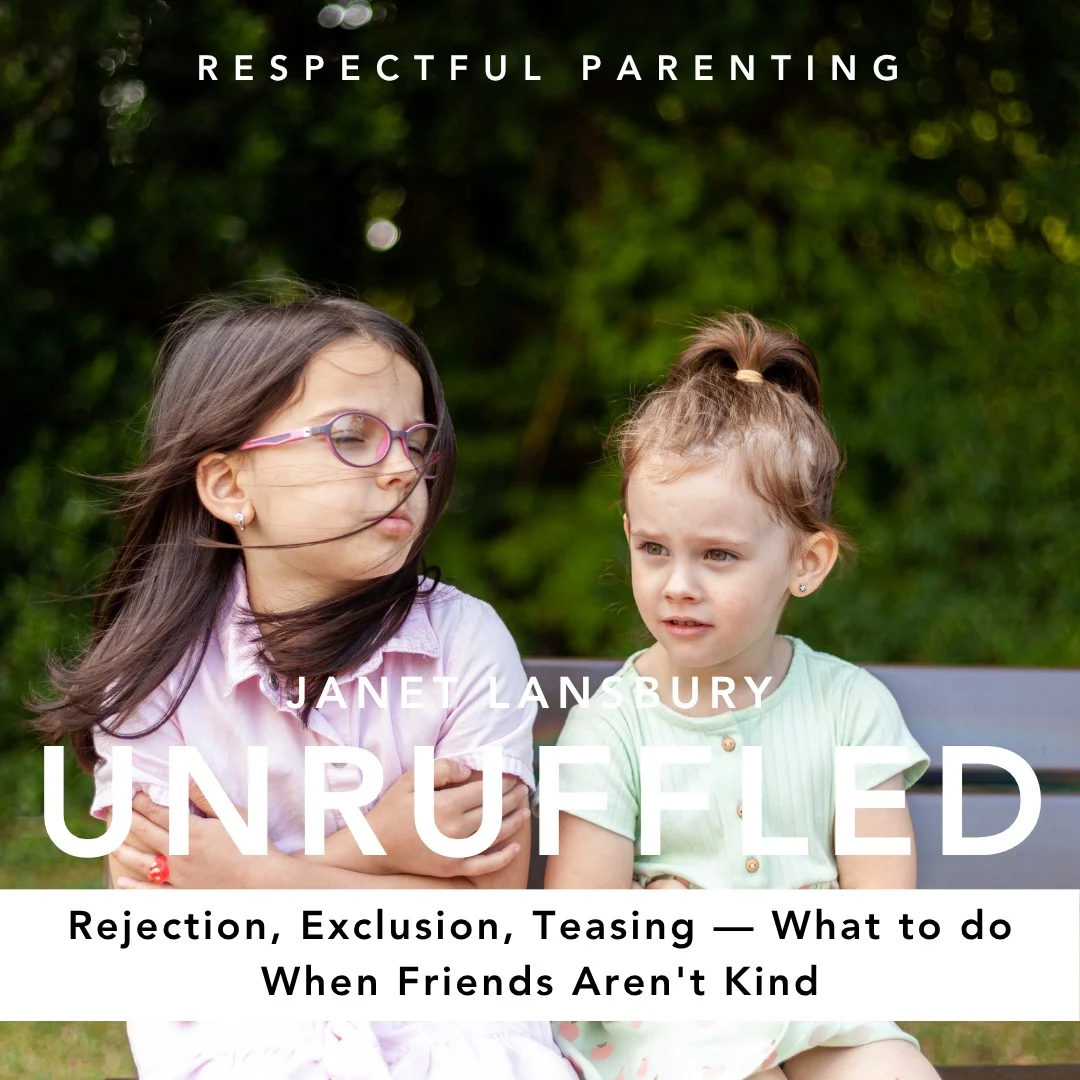
The landscape of childhood friendships, often idealized as a source of joy and belonging, can present complex challenges for young children and their parents. When interactions with peers devolve into exclusion, unkind words, or relational aggression, parents face the difficult task of supporting their children without overstepping. Renowned parenting expert Janet Lansbury, in her recent podcast episode and accompanying article, "Rejection, Exclusion, Teasing—What to Do When Friends Aren’t Kind," offers a perspective focused on empowering children by teaching them the fundamental principle that "people only have power over us when we give it to them." This approach, detailed through anonymized case studies from parents seeking guidance, emphasizes a less interventionist strategy, advocating for parental support and modeling over direct problem-solving.
The Evolving Dynamics of Childhood Social Interaction
In contemporary society, the pressures on children to navigate social hierarchies are amplified by factors such as increased digital exposure and heightened parental awareness of social-emotional development. While past generations often saw children work through peer conflicts with minimal adult oversight, today’s parents are frequently more attuned to their child’s emotional distress. This heightened awareness, however, can sometimes lead to parental anxiety and an urge to intervene, potentially undermining a child’s developing resilience.
Lansbury’s core message resonates with the understanding that friendships are a crucial part of a child’s development, fostering social skills, emotional intelligence, and a sense of self. However, the ideal of "thriving friendships" is not always realized. The pain, confusion, and disappointment experienced by a child when friends exhibit unkind behavior—be it through exclusion, teasing, or manipulative "games"—can be deeply concerning for parents. The challenge lies in discerning the appropriate level of parental involvement and understanding what children truly need in these moments.
Case Studies Illuminate Parental Concerns and Lansbury’s Approach
Lansbury presents several anonymized accounts from parents grappling with these issues, many of which involve young daughters around the age of five. These narratives highlight common scenarios and the parental struggles to find effective solutions.
Scenario 1: The Ultimatum Game
One parent describes her five-and-a-half-year-old daughter experiencing relational aggression from a friend. The dynamic typically involves the friend issuing ultimatums, such as "If you don’t do X, then I won’t be your friend anymore," or abruptly ending play and refusing interaction. The friend also seems to derive power from withholding pleasantries like goodbyes or hugs. The parent notes that while she and her cousins experienced similar dynamics as children and eventually outgrew them without adult intervention, she feels compelled to act now. She questions whether to address the ultimatums directly or use a more gentle approach, like exploring mutually agreeable solutions.
Lansbury’s response centers on the idea that the friend is asserting power through these actions. The parent’s distress, she suggests, inadvertently gives more power to the situation. Lansbury advocates for a step-back approach, focusing on supporting the child’s feelings without making the situation a larger drama. She suggests acknowledging the child’s hurt and observing the dynamic, rather than immediately trying to orchestrate a resolution. The core principle is to teach the child that they control how much power they give to another person’s unkind behavior.
Scenario 2: Neighborhood Exclusion and Social Dynamics
Another parent details how her nearly six-year-old daughter, after quickly making friends in a new country, began to be systematically excluded by two sisters in the neighborhood. These sisters not only excluded her but also influenced other children and younger siblings to do the same, even discouraging their own siblings from playing with the daughter. The parent is torn between wanting her daughter to be independent and ensuring she feels supported. She has spoken to the other parents, who are receptive, but struggles with how to interact with the children exhibiting bullying behavior while remaining a good neighbor. She notes that attempts at reconciliation through playdates have been short-lived, with the exclusionary behavior resuming.
Lansbury acknowledges the parent’s desire for her daughter to manage situations independently while feeling supported. She emphasizes trusting the child’s ability to navigate these social complexities. The exclusion, Lansbury posits, stems from insecurity and a desire for control by the other children. Instead of trying to mend fences or validate the exclusionary behavior by including the children in activities, Lansbury suggests focusing on nurturing the daughter’s positive friendships and reminding her that she doesn’t need to give power to the unkind behavior. The mother’s instinct to protect her daughter is valid, but Lansbury advises against over-intervention or trying to force a resolution that the children themselves are not initiating. The younger daughter’s loyalty to her sister, in this instance, is presented as a positive indicator of the children’s innate ability to discern genuine connection.
Scenario 3: The "Too Nice" Child and Parental Fears
A parent expresses concern that her five-year-old daughter, who is naive, sweet, and kind, is becoming a target for unkindness, mirroring the parent’s own childhood experiences of being bullied. The daughter has been excluded, told she can’t play, and has seen friends choose her younger sister over her. The parent fears that her daughter’s kindness will be perceived as weakness, leading to similar painful experiences in kindergarten. While working on self-esteem and a strong voice with her daughter, the parent confesses a desire to teach her to be "mean back" or to strategically gain allies, acknowledging that these are not appropriate lessons for a five-year-old.
Lansbury addresses the parent’s self-awareness, recognizing that her fears are rooted in her own past experiences. She reframes the daughter’s kindness not as weakness, but as a source of power. The ability to accept a situation and walk away, even with sadness, is presented as a sign of strength. Lansbury differentiates between kindness and empathy, and allowing oneself to be taken advantage of. She suggests that the parent’s intervention should focus on reinforcing the daughter’s inherent strengths and her agency in choosing who to give her power and time to. The parent’s own anxieties, Lansbury implies, need to be managed so they don’t overshadow the child’s journey. Encouraging the daughter to seek out other positive friendships is also advised.
Scenario 4: Bickering Siblings and Parental Triggers
The final case involves a five-year-old only child who, with her best friend, exhibits sibling-like bickering, including teasing and comments about being "better at X than you." The parent finds this bickering triggering, often reprimanding her own daughter more harshly than the friend. She admits to not being accustomed to sibling conflict due to being an only child and worries about her perceived inability to handle the situation appropriately. She notes that her daughter behaves well in other settings and with other children.
Lansbury acknowledges the parent’s self-awareness and suggests that her discomfort is a key factor. The bickering, she notes, is a common dynamic between close friends, akin to sibling rivalry. The parent’s own triggers and potential over-focus on her daughter’s behavior in this specific context are highlighted. Lansbury’s advice is to support both children neutrally, reflecting their feelings and experiences back to them without judgment or the need to "fix" the situation. The parent is encouraged to let the children navigate their own conflicts, offering support when needed and avoiding the temptation to take over the problem. The fact that the behavior is more pronounced in the parent’s presence suggests the daughter may be unconsciously seeking a reaction or testing boundaries within a safe, albeit triggering, environment.
The Power Dynamic: A Universal Lesson
Central to Lansbury’s philosophy is the concept that children, and indeed all individuals, possess the power to choose who influences them. In the context of peer relationships, this translates to teaching children that they are not obligated to grant power to those who are unkind, exclusive, or manipulative. This principle is particularly relevant in an era where social media can amplify feelings of inadequacy and comparison, exacerbating the "fear of missing out" (FOMO).
Implications for Parenting and Child Development
Lansbury’s approach offers a framework for parents to foster resilience, self-awareness, and healthy social navigation in their children. By stepping back and modeling a calm, observant, and supportive stance, parents can empower their children to:
- Develop self-awareness: Children learn to recognize their own feelings and reactions to social interactions.
- Understand power dynamics: They begin to grasp that they have agency in deciding who holds influence over them.
- Build resilience: By navigating challenges with parental support rather than direct intervention, children develop coping mechanisms.
- Cultivate genuine friendships: They learn to identify and nurture relationships with peers who are supportive and kind, while understanding how to disengage from those who are not.
The insights provided by Lansbury suggest that while parental concern is natural, a shift towards trusting children’s innate capabilities, coupled with a clear understanding of where true power lies—within oneself—can equip them with invaluable tools for navigating the complexities of human connection throughout their lives. This perspective challenges parents to manage their own anxieties and to view these often-painful social interactions not as failures, but as critical learning opportunities for their children.
