

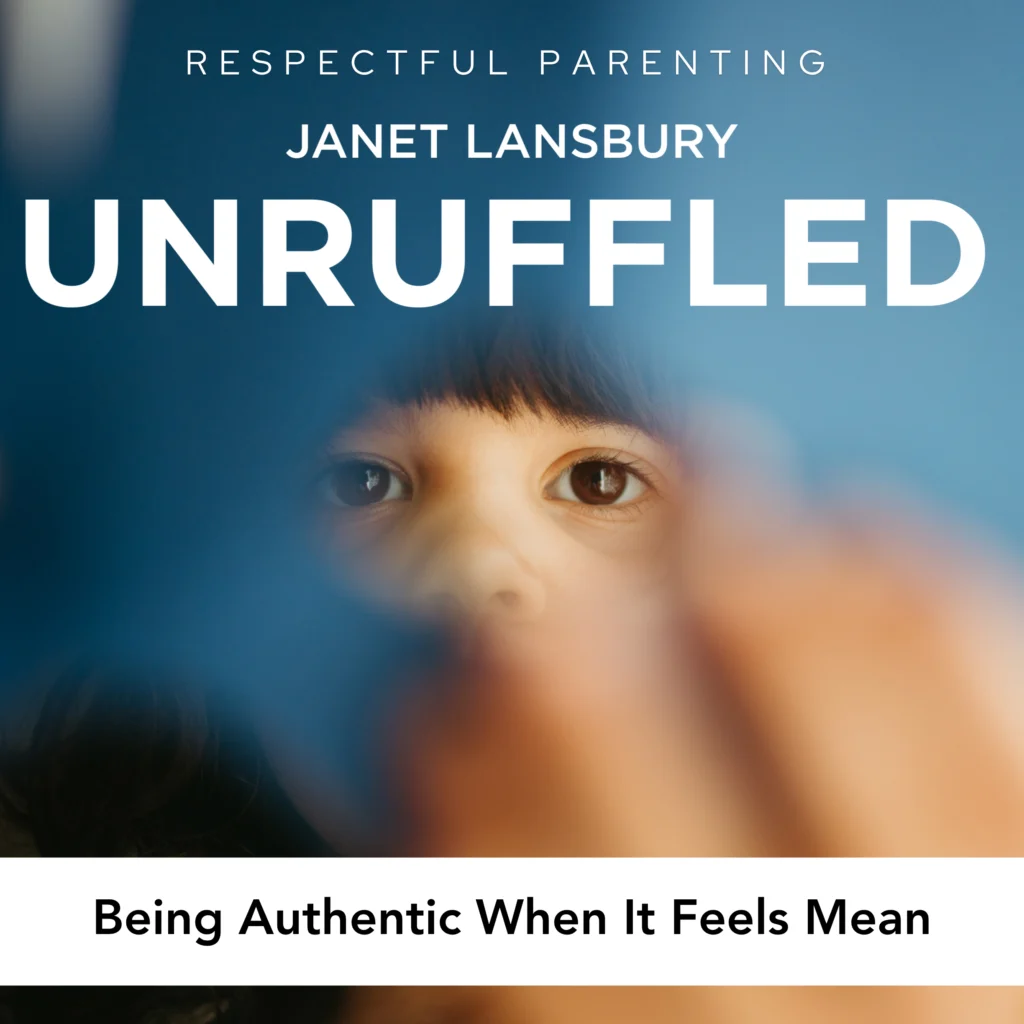
A concerned parent’s inquiry into balancing genuine emotional expression with the needs of a young child has ignited a broader discussion among parenting experts and educators about the complexities of authenticity in early childhood relationships. The core of the issue, as articulated in a recent online forum and subsequent podcast by renowned early childhood educator Janet Lansbury, revolves around a parent’s struggle to reconcile her own emotional experiences with the perceived impact on her three-year-old son. This situation highlights a common parental dilemma: how to be truthful about one’s feelings without inadvertently making a child feel rejected or insecure.
The parent, who wishes to remain anonymous, shared her experience of feeling annoyed and angry at her son’s behavior, specifically when he repeatedly engaged in actions like throwing tidied items, seemingly for amusement. Her initial response involved a detailed explanation of why the behavior was undesirable, a tactic that, while intended to set boundaries, left her feeling inauthentic when her son later sought a hug. The internal conflict arose from her desire to express her genuine feelings of annoyance, rather than offer a hug she didn’t feel, a decision she feared would convey to her son that affection was conditional upon his "good" behavior. This deeply personal reflection touches upon broader societal pressures and individual therapeutic journeys aimed at processing emotions rather than suppressing them.
Navigating the Landscape of Parental Authenticity
Janet Lansbury, an advocate for respectful parenting, addressed the parent’s concerns by emphasizing the critical importance of understanding a child’s developmental stage and the underlying needs that often drive their behavior. Lansbury’s approach, which has gained considerable traction in parenting circles, centers on observing children without judgment and responding to their actions with empathy and clear, concise communication.
In this specific case, Lansbury suggested that the parent’s extensive explanations to her son were likely unnecessary and potentially counterproductive. "Our children already know that," Lansbury stated, referring to the three-year-old’s awareness of his mother’s desire for a tidy house and her disapproval of his actions. This over-explanation, Lansbury posits, can inadvertently give undue weight to impulsive behaviors and contribute to parental impatience.
Deconstructing the Child’s Behavior: Beyond Simple Annoyance
A significant element of Lansbury’s analysis involved reframing the child’s seemingly "annoying" behavior. The parent perceived her son as throwing things "for fun," a notion Lansbury challenged by highlighting the profound awareness of young children. "Children don’t enjoy making us annoyed and they don’t do things like this for fun," Lansbury asserted. Instead, she proposed that such actions, particularly in a child with a younger sibling, could be a subconscious cry for attention or an expression of underlying anxiety about the shifting family dynamic.
The presence of a nine-month-old sibling is a crucial contextual detail. The transition from being an only child to a sibling can be a source of significant stress for a three-year-old. This period, often marked by increased parental attention to the infant, can trigger feelings of insecurity, jealousy, and a desperate need to regain perceived lost attention. The throwing behavior, in this light, is not merely a game but a communication tool, an unconscious attempt to elicit a reaction and signal distress.
Lansbury drew upon research indicating that even pre-natal infants are sensitive to their mother’s emotions. This heightened awareness continues throughout early childhood, meaning children are acutely attuned to their parents’ moods and feelings, even when they cannot articulate them. This understanding is pivotal for parents grappling with seemingly irrational behaviors, as it shifts the focus from the "what" of the behavior to the "why."
The Parent’s Internal Journey: Processing Past and Present
The parent’s mention of working with a therapist on identifying and allowing her feelings, stemming from a childhood where emotional expression was discouraged, is a vital piece of the puzzle. This personal journey underscores the intergenerational impact of parenting styles and the effort required to break cycles of emotional suppression. Her fear that her own anger, which she describes as a "crutch emotion," might be damaging to her children reflects a deep-seated concern for their well-being, informed by her own experiences.
Lansbury acknowledged the validity of this concern, noting that while children can indeed find their parents’ strong emotions uncomfortable and even frightening, these ruptures are often "mendable." The key, she suggests, lies not in suppressing one’s feelings entirely, but in managing their expression in a way that is both authentic and considerate of the child’s developmental capacity to process them.
Authenticity Redefined: Honesty Without Overload
The question of whether it is "wrong" to tell a child "I don’t really want to hug you right now because I’m annoyed with you" is at the heart of the parent’s dilemma. Lansbury’s response offers a nuanced perspective. While she validates the parent’s instinct not to engage in an inauthentic hug, she advises against overly detailed explanations of the parent’s negative emotions.
"He senses why, he just needs to know that they’re going to go on and it’s going to be okay between them," Lansbury explained, suggesting that a child of three does not require a complex rationale for a parent’s temporary lack of desire for physical affection. Instead, a simple, honest statement like, "I’m not going to hug right now, sweetie, but I love you. I’m going to hug you when I can," can suffice. This approach allows the parent to maintain her boundary without burdening the child with adult emotional complexities.
Authenticity, in this context, is not about unloading every internal feeling onto a child. Rather, it is about ensuring that a child’s external experience aligns with their parent’s internal state, especially in moments of connection. Forcing a hug when one feels annoyed creates a dissonance that children, with their acute awareness, can often sense, leading to further discomfort and insecurity.
Implications for Parenting and Child Development
The scenario presented by the parent and addressed by Lansbury has several broader implications for parenting in the early years:
- The Importance of Parental Self-Awareness: The parent’s ongoing therapeutic work highlights the benefit of parents understanding their own emotional triggers and past experiences. This self-awareness is crucial for navigating challenging parenting moments with greater equanimity.
- Understanding Child Development: Recognizing that a child’s behavior is often a form of communication, rather than simply defiance or naughtiness, is paramount. This perspective, supported by developmental psychology research, can significantly alter a parent’s response. Studies have shown that toddlers’ prefrontal cortexes, responsible for impulse control and emotional regulation, are still significantly underdeveloped, making emotional outbursts and challenging behaviors a normative part of their development.
- The Power of Concise and Clear Communication: In interactions with young children, less is often more. Over-explaining can dilute the message and increase parental frustration. Direct, age-appropriate statements about boundaries and actions are generally more effective.
- Redefining Boundaries: Setting boundaries does not equate to withholding love or affection. It is about establishing limits in a way that respects both the parent’s needs and the child’s developmental stage. The ability to say "no" or "not right now" with love and reassurance is a powerful lesson in healthy relationships.
- Repair and Reconnection: The parent’s concern about making her son feel unloved when she doesn’t want to hug him is addressed by emphasizing the importance of "repair." Acknowledging the temporary nature of her current feelings and promising future connection ("I’m going to hug you when I can") allows for a boundary to be set without permanently damaging the relationship. Research on attachment theory underscores that consistent, loving repair after a rupture can actually strengthen a child’s sense of security.
Moving Forward: A Path to Resilient Parenting
Janet Lansbury’s guidance aims to empower parents by offering a framework for understanding their children’s behavior through a lens of empathy and developmental awareness. The parent’s struggle, while deeply personal, resonates with many who grapple with the inherent tension between personal emotional needs and the responsibilities of caregiving.
The underlying message is one of hope and possibility. By striving to understand the child’s perspective, even when it’s challenging, parents can move beyond reactive annoyance and foster a more authentic, connected, and resilient relationship. This journey of self-discovery and empathetic understanding is, as Lansbury suggests, a "lifelong gift" for both parent and child, enabling them to navigate the complexities of human connection with greater confidence and compassion. The ongoing work in this area, supported by resources such as parenting courses and literature, continues to emphasize that authentic parenting is not about perfection, but about honest effort, continuous learning, and a commitment to understanding the nuanced world of a child.
