

Toddler night wakings can be a significant source of distress for both children and their parents. Unlike infants who may be soothed with familiar comforts, toddlers often exhibit longer periods of crying and are more challenging to reassure. A primary culprit identified by sleep experts is the establishment of inappropriate sleep onset associations, a behavioral pattern that can be effectively managed through sleep training.
The scenario presented by Dr. Craig Canapari, a pediatrician specializing in sleep medicine, vividly illustrates this common issue. Consider the Smith household, where 14-month-old Jimmy has been rocked to sleep every night since infancy. This nightly ritual, followed by his parents placing him in his crib around 8 PM, allows them a brief period of respite. However, this calm is short-lived. Typically around 11 PM, Jimmy begins to cry, prompting his parents to rush to his room, where they attempt to rub his back to lull him back to sleep. This pattern of awakenings, occurring every hour to hour and a half throughout the night, leaves Jimmy irritable by his early 5:30 AM wake-up, and his parents utterly exhausted. This situation, as Dr. Canapari explains, is a textbook example of inappropriate sleep onset associations, a leading cause of frequent nighttime awakenings in toddlers.
While sleep onset associations are a prevalent issue, it is crucial to acknowledge that numerous other factors can contribute to crying and screaming during the night in toddlers. Some children may present with multiple co-occurring issues. For parents struggling to pinpoint the root cause of their child’s sleep disturbances, consulting a pediatrician is always recommended.
Inappropriate Sleep Onset Associations: The Core of the Problem
The typical child experiencing inappropriate sleep onset associations falls within the age range of 6 to 36 months, though this can extend to younger or older children. The defining characteristic is a reliance on a parent’s presence or specific actions to initiate sleep. Consequently, these children frequently awaken during the night, not necessarily due to an inherent sleep disorder, but because the conditions under which they fell asleep are no longer present. As Dr. Canapari articulates, "if your child needs you to fall asleep at bedtime, then needs you there to go back to sleep in the middle of the night, you are likely dealing with a sleep onset association. The fix is teaching your child to fall asleep without you, a process we call sleep training."
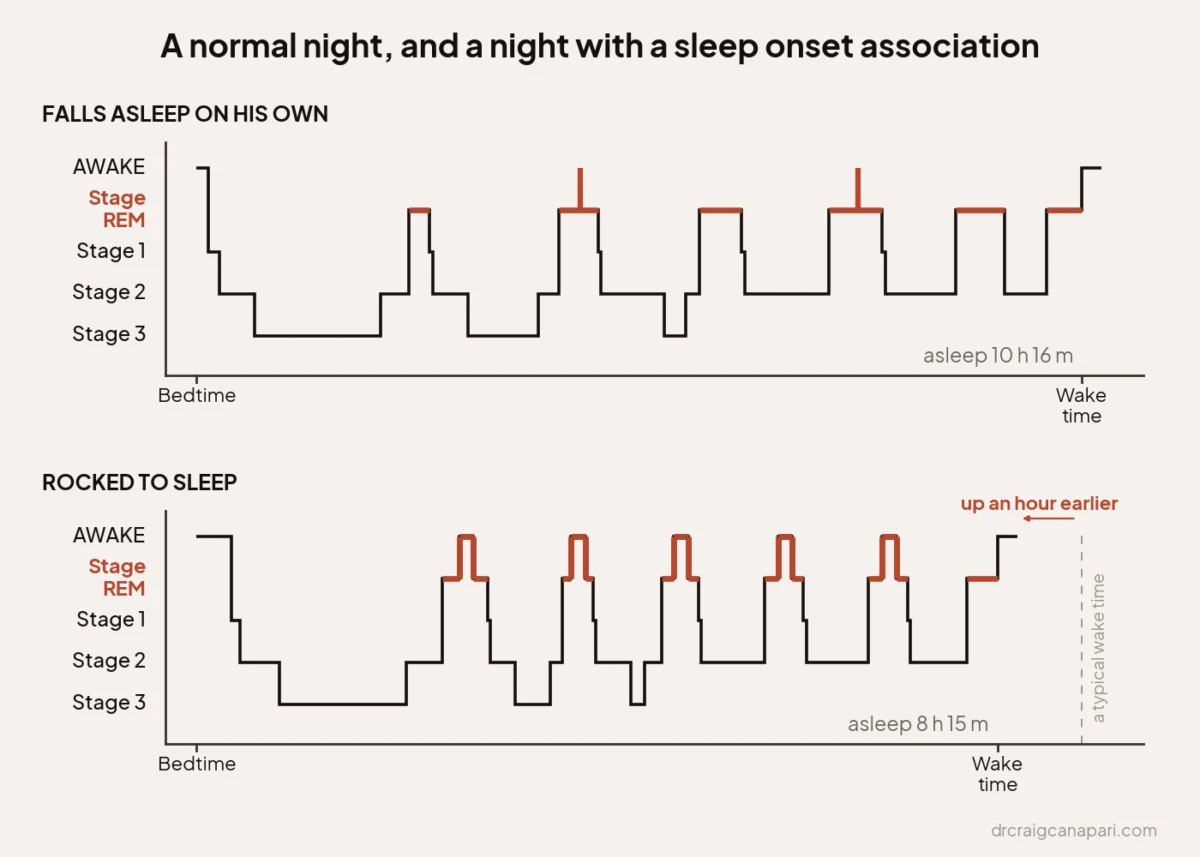
To better understand this phenomenon, consider the physiological processes of sleep. A typical night of sleep for a child who falls asleep independently is characterized by cycles of different sleep stages. Early in the night, deep sleep (Stage 3) predominates, followed by periods of lighter sleep and REM (Rapid Eye Movement) sleep as the night progresses. Brief awakenings are a normal part of these sleep cycles, particularly after REM sleep. However, a child accustomed to falling asleep on their own will typically transition back to sleep without signaling their parents.
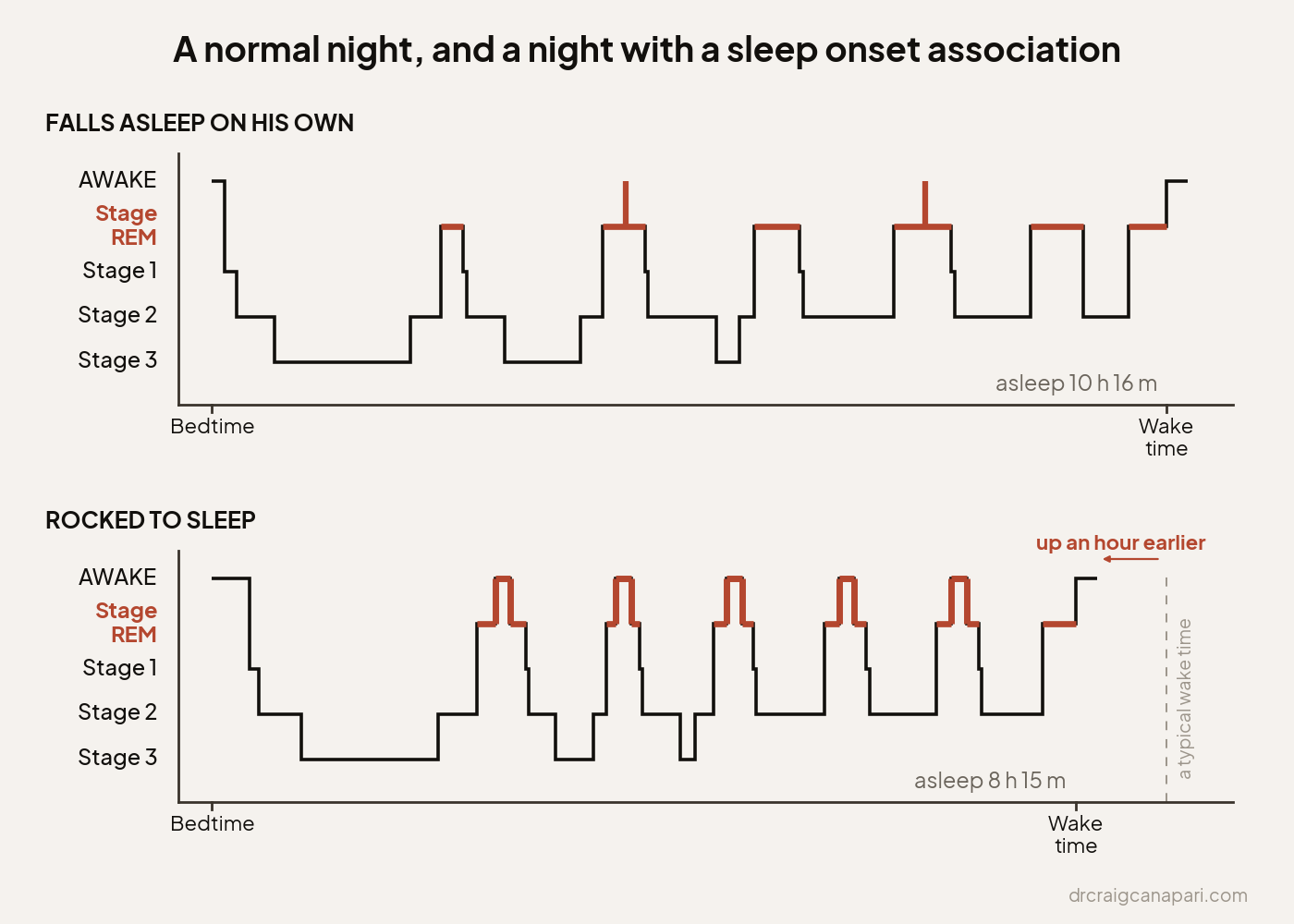
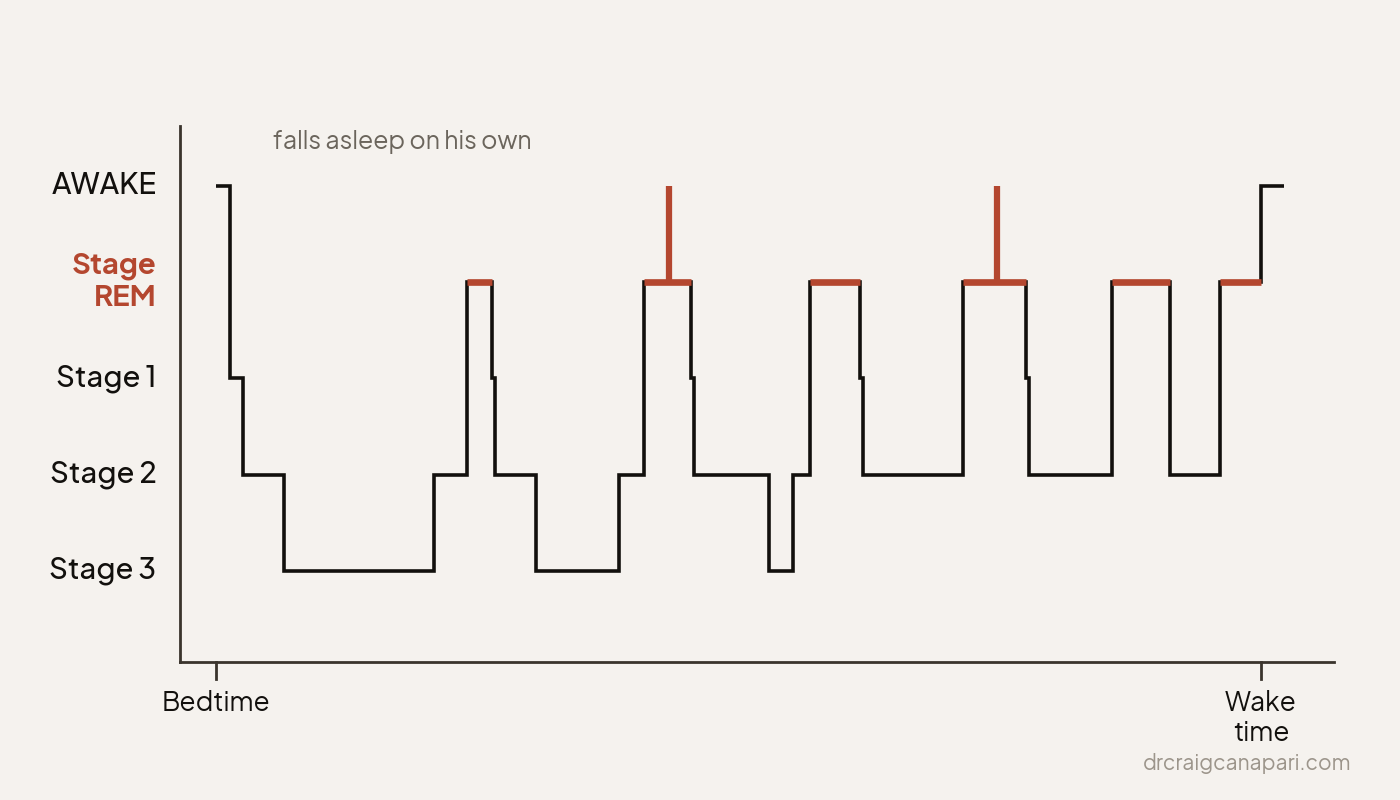
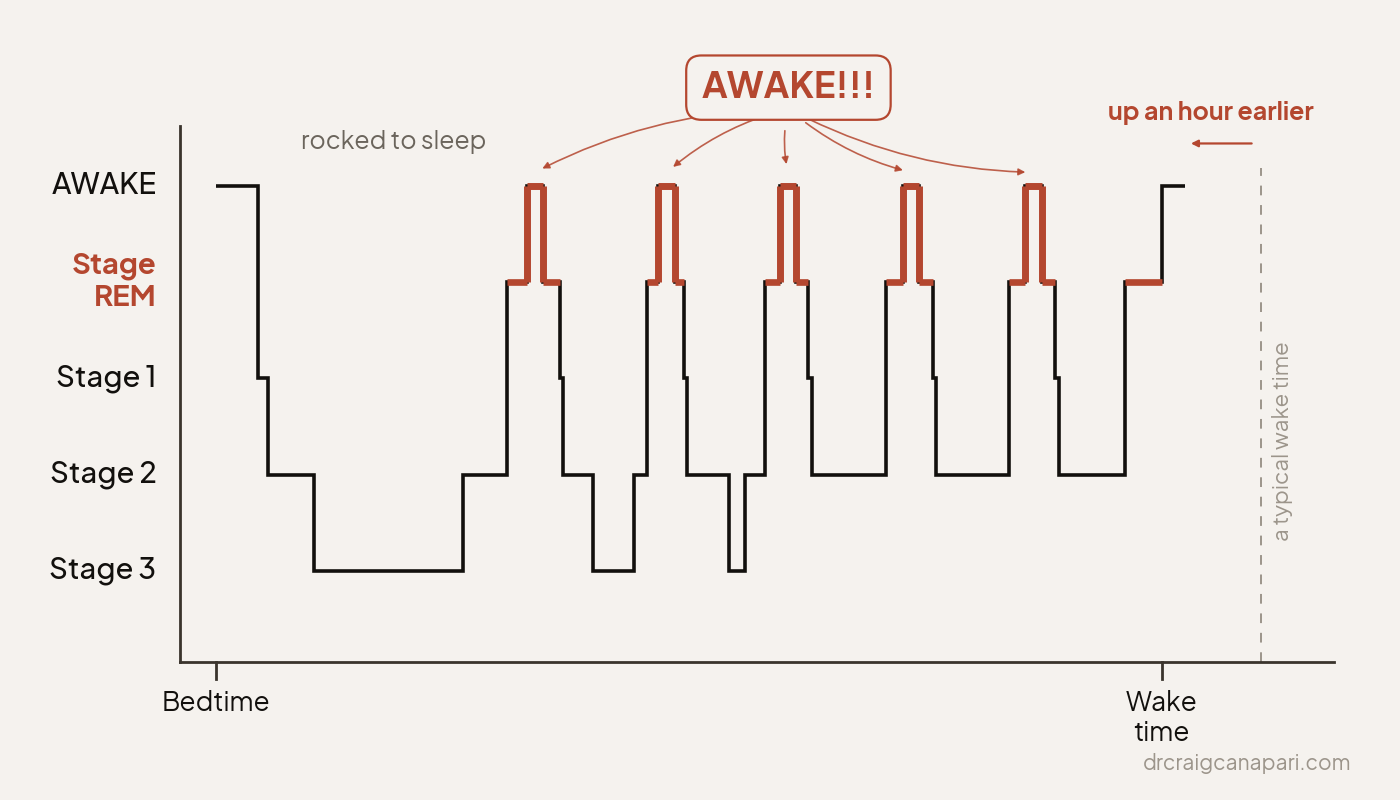
In contrast, a child who requires parental intervention to fall asleep—whether through rocking, back-rubbing, nursing, or even the presence of a pacifier—will likely experience more significant awakenings. When these children naturally transition between sleep cycles, they find themselves in a state of wakefulness without the familiar sleep cues. This prompts them to cry out for their parents, seeking the same comfort that initially facilitated their sleep. The consequence is a cycle of frequent awakenings, often accompanied by earlier morning wake-up times, as illustrated by comparative hypnograms (graphs depicting sleep stages). These graphs demonstrate that children reliant on external sleep aids take longer to fall asleep, experience more frequent full awakenings, and tend to rise earlier than their independently sleeping counterparts.
This reliance on specific conditions for sleep can be likened to Dr. Ferber’s analogy of a pillow and blanket. If a person wakes up and their essential comfort items are missing, they will naturally seek them out. Similarly, a child who falls asleep being held will need to be held again to return to sleep. This can lead to parents establishing new sleep onset associations, such as bringing the child into their own bed, which can further complicate sleep patterns and contribute to early morning awakenings.
Beyond sleep onset associations, other factors can disrupt a toddler’s sleep. Separation anxiety, while distinct, can sometimes manifest in ways that mimic sleep onset issues. The key differentiator is whether the distress stems from the parent’s absence specifically, or from the general inability to fall asleep without their help. Parents’ attempts to soothe anxiety through accommodations can inadvertently perpetuate the problem, potentially leading to persistent co-sleeping arrangements.
Technical Classifications of Sleep Issues
Historically, sleep onset association problems were categorized under "behavioral insomnia of childhood," with subtypes including sleep onset association disorder and limit-setting disorder. The latter, characterized by "curtain calls" (repeated requests for parental attention), often co-occurs with sleep onset association disorder, particularly when a child transitions to a bed. Modern classifications often group these issues under "chronic insomnia" if they persist for three months or longer.
Night Terrors: A Different Kind of Awakening
Night terrors present a distinct challenge, characterized by inconsolable crying and screaming during sleep. These episodes occur during NREM (non-REM) sleep stages and are a type of parasomnia. Night terrors are relatively common in toddlers, affecting a significant percentage of this age group. Unlike sleep onset associations, where parental intervention can eventually restore sleep, attempts to console a child during a night terror are often futile. These episodes, which can last from 10 to 40 minutes, typically occur in the first half of the night, during the deep sleep stages. While distressing, night terrors are generally benign and self-resolving, with the primary concern being the child’s safety during the episode, as they may thrash or move around.
Temporary Disruptions to Good Sleepers
Several factors can temporarily disrupt an otherwise good sleeper, often related to developmental milestones or transient events.
Sleep Regressions: Developmental Milestones and Disrupted Sleep
The concept of "sleep regressions," often associated with specific ages, is widely discussed. While developmental leaps are undeniable contributors to sleep disturbances, Dr. Canapari cautions against rigidly defined age-based regressions. Instead, he posits that significant developmental milestones, such as learning to walk or potty training, are more likely triggers for temporary sleep disruptions. The table below illustrates how these milestones align with commonly perceived "regressions":
| Age | Commonly Referred to As | Underlying Developmental Factor |
|---|---|---|
| 12–15 months | "The 12-month regression" | Independent walking (9–18 months range), pulling up and cruising, potential transition from two to one nap. |
| 15–18 months | "The 15- or 16-month regression" | Transition from two to one nap (12–24 months range), heightened separation awareness, eruption of first molars (13–19 months). |
| 18–24 months | "The 18-month or 2-year regression" | Emergence of autonomy and limit-testing, eruption of canines (16–23 months), physical ability to climb out of a crib. |
| 2–3 years | "The 2-year or 2.5-year regression" | Crib-to-bed transition (often due to climbing out or new sibling), potty training, eruption of second molars (23–33 months). |
| 3–3.5 years | "The 3-year regression" | Nap cessation (commonly 3–5 years), decreased total sleep need (10–13 hours), increased night fears, start of preschool. |
Beyond these age-related shifts, other common disruptions include illness, travel, schedule changes, the arrival of a new sibling, or moving. While these events may cause temporary awakenings, the crucial point is how parents respond. Reverting to sleep-inducing practices can inadvertently create new sleep onset associations that prolong the sleep issues.
Illness and Teething: Transient Causes of Discomfort
Acute illnesses, such as colds or fevers, naturally disrupt sleep due to discomfort like nasal congestion or ear pain, which are exacerbated when lying down. During such times, providing comfort and care is paramount. Teething, while often blamed, typically causes only localized, mild, and short-lived irritability around the time a tooth erupts, usually lasting only a night or two. It does not cause fevers, though it may slightly elevate temperature. If a child exhibits fever or appears unwell, it is essential to consult a pediatrician.
New Sibling Dynamics and Environmental Factors
The arrival of a new baby can sometimes impact a toddler’s sleep, especially if they share a room. A crying infant can disturb a toddler, making sound machines a potentially helpful tool, provided they are used at appropriate volumes and placed correctly. The stress of a new sibling can also lead to brief sleep disruptions, usually resolving within a week. Dedicating individual time with the toddler can help them feel secure during this transition.
Environmental factors such as excessive noise, light from electronic devices, or disruptive room-sharing can also contribute to night wakings. Sharing a room with siblings can be particularly challenging, as one child’s awakening can easily rouse the other.
Medical Disorders as Underlying Causes
While behavioral factors are common, it’s important not to overlook potential medical conditions. Chronic issues that occur multiple times per week or in the context of a known medical problem warrant investigation. Persistent nighttime coughing might indicate asthma, while acid reflux can cause nighttime belly pain and vomiting. Obstructive sleep apnea, characterized by snoring, is another significant, and often overlooked, cause of sleep disruption in children.
Schedule and Environmental Adjustments for Better Sleep
Addressing structural issues related to a child’s schedule and sleep environment can significantly improve sleep quality.
Nighttime Hunger and Feeding Habits
Toddlers generally do not require nighttime feedings unless there is a medical necessity. Weaning off nighttime bottles or breastfeeding can often lead to rapid improvements in sleep. Persistent nighttime hunger may indicate a learned behavior rather than true physiological need.
Optimal Time in Bed
The concept of "too much time in bed syndrome" occurs when a child’s sleep schedule remains unchanged as they grow, even though their sleep needs decrease. If a child is receiving adequate sleep but still waking during the night, it may be time to consider reducing their total sleep opportunity by shortening bedtime, eliminating a nap, or adjusting their bedtime slightly later. Understanding a child’s individual sleep needs, which can vary by age, is crucial.
Environmental Optimization
Ensuring a conducive sleep environment is vital. This includes removing electronic devices from the bedroom, minimizing external noise disruptions, and managing any issues related to room-sharing. A dark, quiet, and cool room promotes better sleep.
In Conclusion
Toddler night wakings are a prevalent and often challenging aspect of parenting. While inappropriate sleep onset associations are a primary driver, a comprehensive understanding of potential causes—ranging from developmental leaps and temporary disruptions to underlying medical conditions and environmental factors—is essential. By identifying the specific issues at play and implementing appropriate strategies, such as sleep training for behavioral challenges or addressing environmental concerns, parents can work towards fostering more restful nights for both themselves and their children. For persistent or concerning issues, consulting a pediatrician remains the most prudent course of action.
