

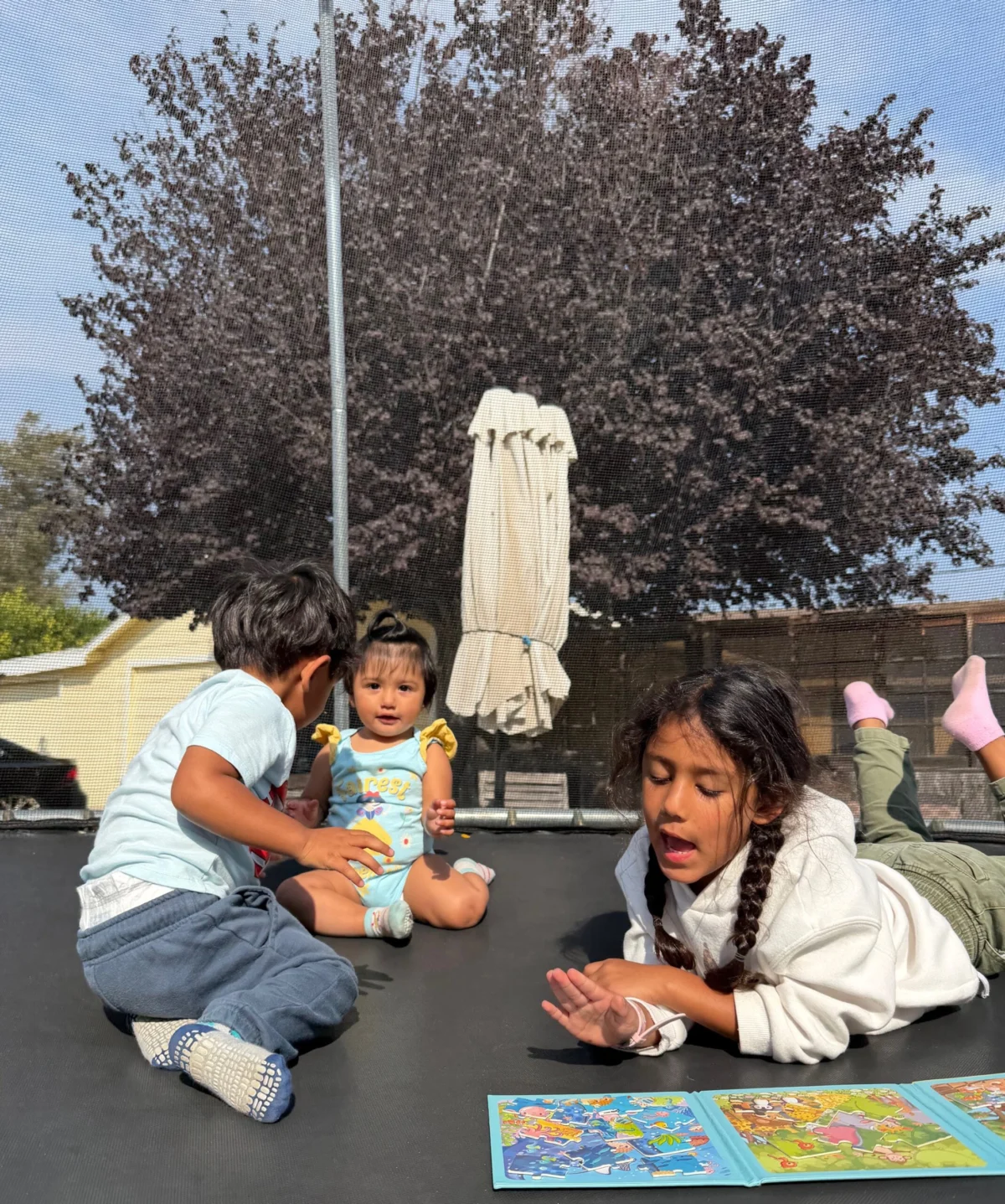
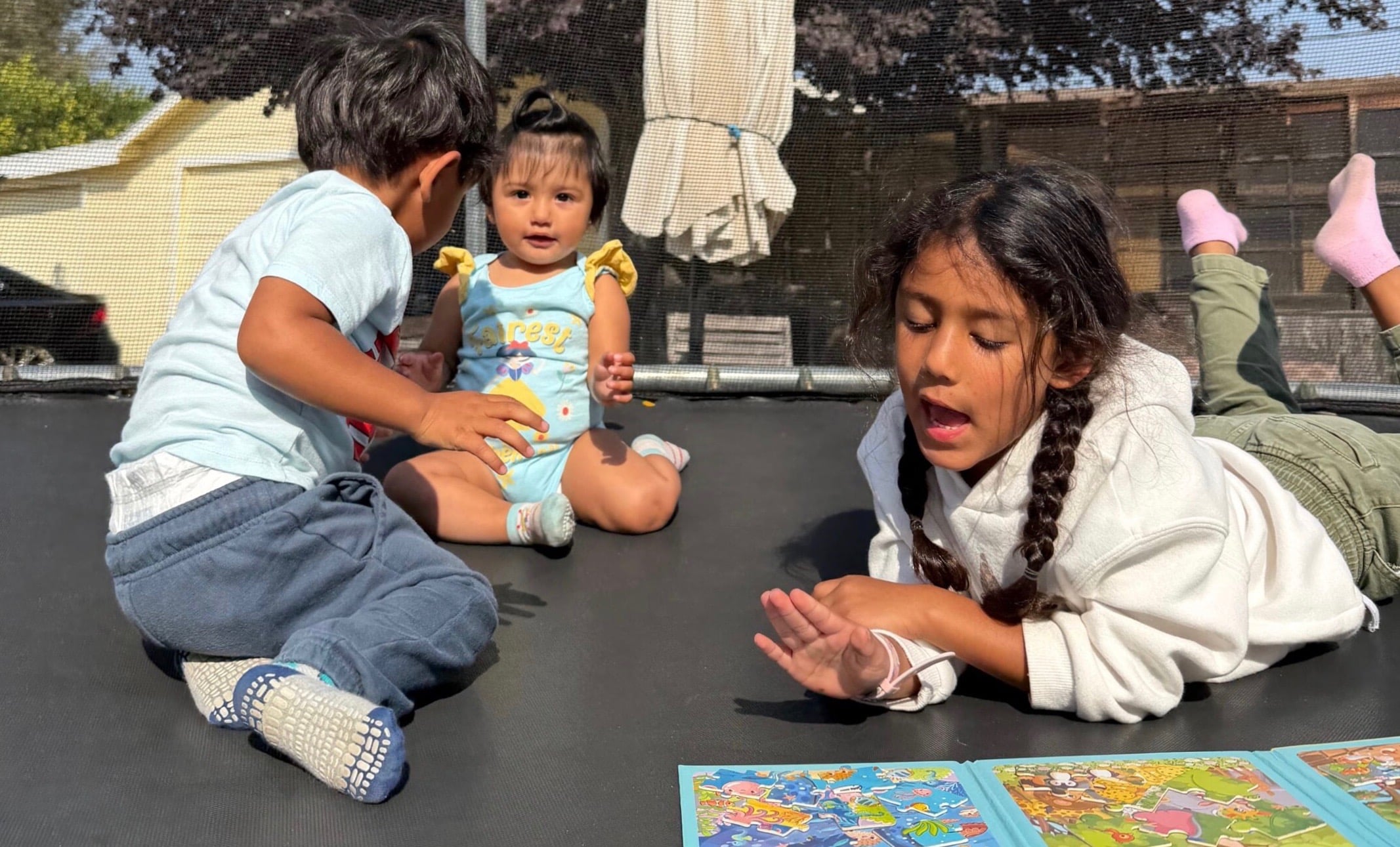
In a recent domestic interaction that highlights the enduring significance of family storytelling, a mother of three shared a formative childhood memory with her children, sparking a discussion on the psychological and sociological impacts of "family lore." The event, which took place during a recreational period on a backyard trampoline, involved a mother, identified as Jannelle, and her three children, Ella, Emiliano, and Evelynn. The narrative shared—centering on a humorous but defiant act of problem-solving by a four-year-old—serves as a case study for how personal history is transmitted across generations and the role such stories play in child development and family cohesion.
The Chronology of the Narrative Event
The primary incident described in the family lore dates back approximately three decades to a family gathering at a residential property. According to the account, the narrator, then aged four, was participating in a multi-generational social event characterized by a traditional outdoor barbecue and supervised swimming in a private pool.
The timeline of the childhood event is as follows:
- The Initial Conflict: During the afternoon, the four-year-old subject experienced repeated interruptions to her recreational activities due to physiological needs. The transition from the swimming pool to the indoor restroom was identified as a "cumbersome" process, exacerbated by the difficulty of maneuvering a wet, form-fitting swimsuit.
- The Decision Point: On the fifth instance of needing to use the restroom, the subject reached a cognitive breaking point regarding the inefficiency of the process. In an attempt to streamline her return to the pool, she opted to remove the garment entirely.
- The Action: After discarding the sequined one-piece swimsuit into the toilet, the subject exited the restroom in the nude, operating under the childlike assumption that speed of movement would render her lack of attire unnoticeable to the adult witnesses.
- The Intervention: The subject was immediately intercepted by family members, including a teenage cousin identified as Lupe and the subject’s mother. The social protocol was enforced via the immediate application of a towel and the termination of the subject’s swimming privileges for the remainder of the day.
- The Emotional Result: Despite the disciplinary outcome, the subject reported a lasting sense of "pride and fascination," viewing the act as a successful, self-initiated solution to a logistical problem.
Psychological Analysis of Early Childhood Problem-Solving
Child development experts note that the behavior exhibited in this narrative is consistent with the "preoperational stage" of cognitive development, a theory pioneered by Jean Piaget. Children between the ages of two and seven often display "egocentrism," where they struggle to see situations from perspectives other than their own. In this instance, the four-year-old subject prioritized the immediate goal of returning to the water over the social norms of attire or the logistical consequences of placing fabric in plumbing fixtures.
The sense of "pride" reported by the narrator is also significant. According to Erik Erikson’s stages of psychosocial development, children aged three to five are in the "Initiative vs. Guilt" stage. By deciding to "solve" the problem of the wet swimsuit herself, the child was exercising agency. While the solution was socially unacceptable, the internal drive to act independently is a critical milestone in developing a sense of purpose.
The Impact of Family Storytelling on Child Resilience
The contemporary retelling of this story to the next generation—Ella, Emiliano, and Evelynn—serves a broader purpose than mere entertainment. Research from the Emory University Family Narrative Project, led by psychologists Robyn Fivush and Marshall Duke, suggests that children who have a high level of "intergenerational knowledge" (knowing stories about their parents’ and grandparents’ lives) show higher levels of self-esteem and a stronger sense of control over their lives.
These narratives, often referred to as "family lore," provide children with a "wavering narrative" model. This model demonstrates that life involves both successes and embarrassing failures, and that the family unit is resilient enough to laugh at and learn from those moments. By hearing about their mother’s childhood mishaps, the children are provided with a framework for understanding that perfection is not a prerequisite for adulthood.
Supporting Data on Intergenerational Communication
Statistical trends in the 21st century indicate a shift in how families consume and share information. According to a 2023 report on domestic engagement, while digital media consumption has increased, "oral tradition" remains a primary pillar of emotional bonding in 68% of surveyed households.
Key data points regarding family storytelling include:
- Retention Rates: Children are 40% more likely to remember a moral lesson when it is delivered via a personal anecdote from a parent rather than a fictional story or a direct command.
- Stress Reduction: Engaging in shared laughter over family stories has been shown to lower cortisol levels in both parents and children, fostering a "secure attachment" environment.
- Frequency: The narrative in question has become a "requested" story, indicating a pattern where children seek the comfort of familiar family history as part of their evening routine.
Official Responses and Social Context
While the original 1990s incident resulted in a "time-out" and the end of pool activities, the retrospective "official response" from the family is one of endearment. The teenage cousin, Lupe, and the mother involved in the original event have transitioned from disciplinarians to co-curators of the memory. This transition highlights the "distancing effect" of time, which allows traumatic or embarrassing incidents to be reclassified as humorous milestones.
From a sociological perspective, the setting of the retelling—a backyard trampoline—is also noteworthy. The American Academy of Pediatrics (AAP) and the Consumer Product Safety Commission (CPSC) have historically issued warnings regarding trampoline safety, noting thousands of injuries annually. However, in this context, the trampoline serves as a "modern hearth," a central location for physical activity that facilitates spontaneous verbal communication and the strengthening of the sibling bond between Ella, Emiliano, and Evelynn.
Broader Implications for Modern Parenting
The popularity of the "bathing suit down the toilet" story reflects a broader trend in modern parenting: the move toward authenticity and vulnerability. Journalistic analysis of contemporary parenting blogs and social media platforms indicates that parents are increasingly moving away from the "perfect parent" persona. Instead, they are utilizing their own childhood mistakes to build rapport with their children.
This method of "narrative parenting" has several implications:
- Normalization of Error: It teaches children that mistakes are a natural part of the learning process.
- Linguistic Development: Regular storytelling sessions improve a child’s vocabulary, narrative comprehension, and sequencing skills.
- Cultural Preservation: Family lore preserves specific cultural and temporal markers—such as "sequined one-piece suits" and "family barbecues"—that might otherwise be lost to time.
Conclusion and Future Outlook
The narrative shared by the mother on the trampoline is more than a humorous anecdote; it is a vital component of the family’s oral history. As Ella, Emiliano, and Evelynn grow, these stories will form the bedrock of their identity, providing them with a sense of belonging and a historical context for their own lives.
The enduring appeal of the "bathing suit down the toilet" story suggests that despite the proliferation of digital entertainment, the human brain remains hardwired for the personal narrative. As society continues to navigate the complexities of the digital age, the preservation of these simple, human, and often messy stories remains a critical task for the maintenance of family health and child psychological stability. Future studies into familial communication are expected to further validate the role of "failure narratives" in producing well-adjusted, resilient adults.
