

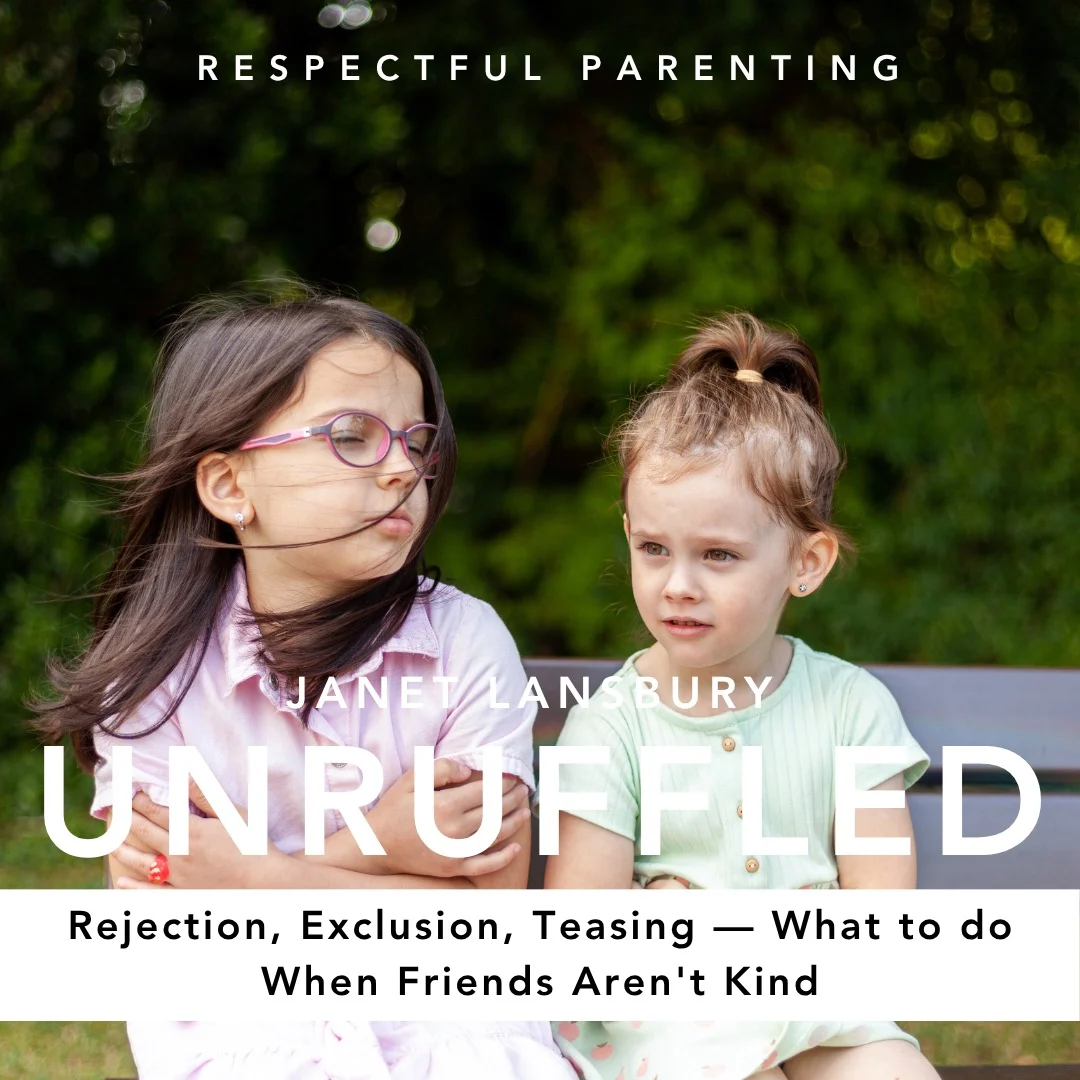
The desire for children to forge strong, supportive friendships is a universal parental aspiration. However, the reality of childhood social dynamics often presents challenges, leaving parents grappling with how best to support their children when peers exhibit unkind behaviors such as exclusion, rejection, or teasing. This complex issue is gaining renewed attention as experts emphasize the crucial role parents play in empowering children to navigate these difficult interactions, not by intervening directly, but by fostering their children’s inherent capacity to manage social challenges.
Understanding the Landscape of Childhood Friendship Dynamics
Recent discussions, notably those highlighted by parenting expert Janet Lansbury, underscore a significant parental concern: witnessing a child’s distress stemming from strained peer relationships. These situations, often characterized by what is termed "relational aggression," can manifest in various forms, from social exclusion and verbal taunts to more subtle forms of emotional manipulation. Lansbury’s approach centers on a fundamental principle: empowering children by recognizing that they possess the agency to control the influence others have over them. This perspective suggests that the key lies not in adult intervention to "fix" the situation, but in guiding children to understand and exercise their own power within social interactions.
The emergence of these challenges is not new, but the contemporary context, influenced by factors such as social media and an increased awareness of mental well-being, brings a heightened sense of urgency. Data from the Child Mind Institute indicates that while many children experience peer conflict, the impact on a child’s self-esteem and emotional regulation can be profound, potentially leading to anxiety and depression if not addressed constructively. The age group of approximately five years old, as noted in several parental inquiries shared by Lansbury, is a critical period for developing social skills and emotional resilience.
Navigating Exclusion and Relational Aggression: Case Studies and Expert Analysis
Several recent accounts from parents illustrate the multifaceted nature of these peer-related difficulties. One parent described a recurring scenario involving a five-and-a-half-year-old daughter and a friend whose interactions frequently ended in tears. The friend would employ tactics such as ultimatums ("If you don’t do X, I won’t be your friend anymore") or deliberate social exclusion, such as refusing to acknowledge the child or abruptly ending play sessions. The parent’s struggle highlighted a common dilemma: how to support the child without overstepping, thereby inadvertently amplifying the power of the negative behavior.
Lansbury’s analysis of this situation emphasizes the core tenet: "People only have power over us when we give it to them." This principle is particularly relevant in the context of childhood friendships, where the emotional stakes can feel incredibly high for both children and parents. The parent’s observation that the other child "feels the power in withholding" and the subsequent parental desire to intervene and "help them work it out" are seen as giving undue power to the situation. Instead, Lansbury advocates for a more detached, supportive role, acknowledging the child’s feelings without attempting to resolve the conflict directly. This approach aims to prevent the adult’s anxiety from becoming the child’s burden, thereby preserving the child’s autonomy in managing the social dynamic.
Another case involved a family that had recently moved to a new country, where the nearly six-year-old daughter, initially thriving socially, began to face exclusion from two sisters in the neighborhood. These sisters not only excluded the child but also actively discouraged other children from playing with her and forbade younger siblings from interacting with her. The parent’s dilemma revolved around balancing the desire for her daughter to develop independent coping mechanisms with the need to provide support, all while maintaining neighborly relations with the other family.
Lansbury’s advice in this instance reinforces the idea of trusting the child’s ability to navigate the situation, with parental support acting as a safety net rather than a direct intervention. The parent’s attempt to foster reconciliation through playdates was observed to be ineffective, as the exclusionary behavior resumed. This suggests that direct attempts to mend relationships may not always be productive and can, in fact, inadvertently legitimize the negative behavior. The emphasis remains on the child’s internal locus of control, encouraging her to direct her energy towards friendships that are reciprocally positive and to understand that the exclusionary behavior reflects the insecurity of the other children, not a deficiency in her own worth.
The Role of Parental Modeling and Emotional Regulation
A crucial aspect of Lansbury’s framework is the power of parental modeling. When parents react with heightened anxiety or frustration to their child’s social challenges, they inadvertently amplify the perceived severity of the situation for the child. Conversely, by maintaining a calm, observant, and supportive stance, parents can demonstrate to their children that these social skirmishes, while upsetting, are not insurmountable crises. This requires parents to manage their own emotional responses, a challenge particularly pronounced when they recognize echoes of their own past negative experiences in their child’s struggles.
One parent, reflecting on her own childhood experiences of being "too nice" and taken advantage of, expressed deep-seated fears about her kind and empathetic five-year-old daughter entering kindergarten. She worried that her daughter’s inherent goodness would be perceived as weakness, leading to similar experiences of bullying. This parental anxiety, while understandable, can be a significant hurdle. Lansbury’s perspective here is that kindness and empathy are not weaknesses but strengths. The key is to differentiate between being kind and allowing oneself to be exploited. The goal is to help the child understand that she has agency in choosing who receives her energy and attention, and that she can set boundaries without compromising her inherent compassionate nature.
Addressing the "Other Side" of the Conflict
The discussion also extends to situations where a child might be the one exhibiting unkind behaviors. One parent expressed distress over her strong-willed, confident five-year-old daughter’s teasing of her shy best friend, noting that this behavior often escalated when she, the parent, was present. The parent’s self-awareness was evident, acknowledging that her own discomfort and potential over-reaction might be contributing to the dynamic.
Lansbury’s insight here is that even when a child is the one instigating conflict, the parental response should remain one of support rather than reprimand. By focusing on reflecting the child’s feelings and the friend’s reactions, parents can help children understand the impact of their actions without making it a punitive experience. This approach acknowledges that sibling-like bickering is a normal part of close relationships and that children learn to navigate these dynamics through experience, with adult support that validates their feelings and encourages thoughtful engagement.
Broader Implications and Expert Recommendations
The overarching message from this expert perspective is one of empowering children by fostering their self-belief and their understanding of personal agency. The core recommendation is for parents to act as steadfast supporters, one step behind their child, observing, listening, and validating their child’s feelings, rather than stepping in to solve the problem for them.
Key recommendations for parents include:
- Trust in the Child’s Capabilities: Believe that children have the inherent capacity to navigate social challenges, especially with supportive guidance.
- Model Calmness and Detachment: Manage personal anxieties and avoid projecting them onto the child. Parental composure can be a powerful tool.
- Focus on Agency and Power: Teach children that they have the choice to grant power to others and that they can choose to withhold it from those who are unkind.
- Validate Feelings, Not Actions: Acknowledge a child’s hurt or frustration without necessarily condoning or condemning the actions of peers.
- Encourage Positive Relationships: Help children identify and nurture friendships with peers who exhibit kindness and respect.
- Avoid Over-Intervention: Resist the urge to mediate every conflict or "fix" social dynamics. Direct intervention can sometimes undermine a child’s developing social skills and confidence.
- Recognize Parental Triggers: Be aware of personal experiences and fears that may influence reactions to a child’s social difficulties.
In essence, the approach advocates for a subtle yet profound shift in parental engagement, moving from a problem-solving role to one of empowered support. By trusting in children’s innate resilience and their ability to learn from social experiences, parents can equip them with the fundamental understanding that their own power lies in how they choose to respond to the world around them. This perspective is crucial in an era where children are increasingly exposed to complex social pressures, both online and offline, making the development of self-awareness and personal agency more vital than ever.
