

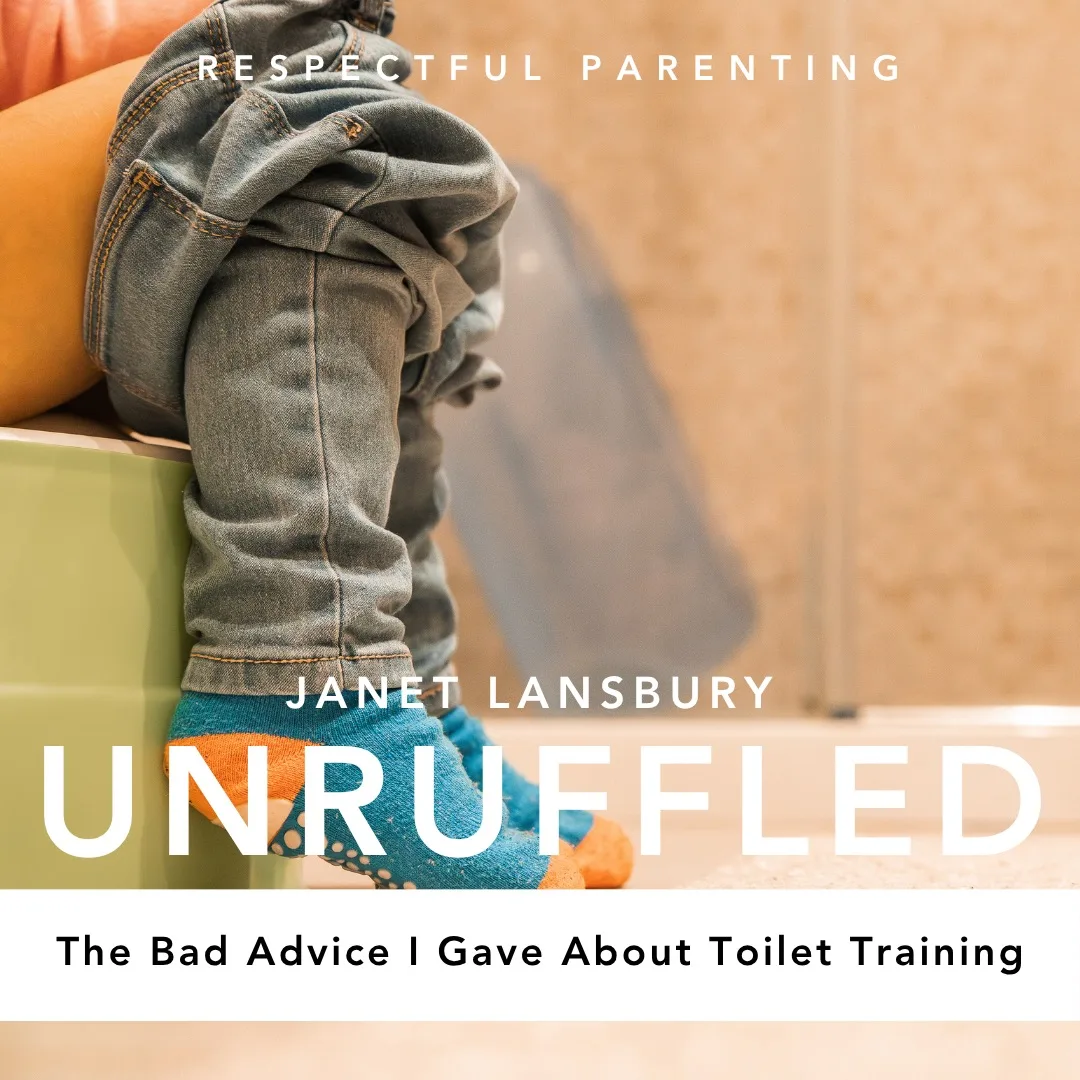
In a candid reflection, parenting expert Janet Lansbury has revisited a prior piece of advice she offered regarding toilet training, acknowledging that her guidance may have been misapplied and ultimately unhelpful to a family facing a prolonged developmental challenge with their daughter. The situation, detailed in a recent episode of her podcast "Unruffled," highlights the complexities of child-led approaches and the critical importance of parental intuition in navigating parenting advice.
The initial consultation occurred approximately a year prior, during which Lansbury addressed a parent’s concerns about their three-and-a-half-year-old daughter’s apparent lack of motivation for toilet learning. The child, despite exhibiting signs of readiness, was reportedly "absolutely set on being in diapers ‘forever’" and actively avoided any interaction with the potty. Lansbury’s advice at the time, rooted in her philosophy of child-led development, centered on three key remedies: trusting the child’s innate abilities and motivation, establishing reasonable boundaries, and welcoming the child’s feelings, particularly uncomfortable ones.
However, a recent update from the parent has revealed that it was not Lansbury’s original advice that ultimately led to success, but rather a significant departure from it. The parent reported that after a four-year struggle, her daughter, on the cusp of her fourth birthday, finally achieved toilet training not through a child-led approach, but by the parents implementing a firm, decisive shift in strategy. This turnaround has prompted Lansbury to re-examine her own guidance and its effectiveness in this specific context.
The Initial Consultation and Lansbury’s Philosophy
Lansbury’s foundational belief, as espoused in her work, is that children are inherently motivated to learn and develop. Her preferred method of toilet learning, therefore, emphasizes allowing the child to lead the process. This approach, she argues, offers children a precious opportunity for autonomous achievement, a chance to master a skill through their own volition with parental support. While acknowledging that parent-led methods can also be successful for many children, Lansbury champions the child-led path for its potential to foster a sense of agency and intrinsic motivation.
In the original "Unruffled" episode, titled "When Kids Don’t Seem Motivated (to Potty, Crawl, or Create)," Lansbury addressed three distinct cases where children appeared to lack motivation for developmental milestones. The toilet training case was one of these, and her advice focused on helping children "get unstuck" by connecting with their natural drive.
The three core principles she offered were:
- Trust: A genuine belief in the child’s natural abilities, motivation, and inner direction, coupled with ample opportunities for practice.
- Reasonable Boundaries: Recognizing that parental boundaries, when appropriately set, can sometimes be the missing piece when a child appears stuck.
- Welcoming Feelings: Creating a safe space for children to express uncomfortable emotions such as frustration, uncertainty, or the feeling of not succeeding, without the parent feeling compelled to immediately fix or alleviate them.
The Parent’s Struggle and Evolving Perspective
The parent in question initially noticed signs of readiness in her daughter around the age of two. These included a dislike for diaper changes, body awareness, and verbal cues indicating when she needed to go. The child also showed interest in potty books and role-played with stuffed animals about using the potty. However, an early attempt at a popular, intensive potty training method resulted in significant distress and physical resistance from the child.
Following this, the parents shifted to a more relaxed, child-led approach, waiting for their daughter to express readiness. This involved low-pressure mentions of the potty and allowing the child to observe and engage with the concept at her own pace. Despite this seemingly patient approach, the child remained firmly entrenched in diapers, expressing a desire to wear them "forever." This persistence led the parent to question whether a purely child-led approach was sufficient for her daughter, especially considering the child’s generally fearful and avoidant tendencies in other areas.
The parent articulated a conflict between the "let-her-lead" philosophy and her experience with her daughter in other contexts. She described needing to act as a "wise guide," acknowledging her daughter’s fears but gently encouraging her to engage with activities nonetheless. This approach, she noted, had led to her daughter successfully navigating various challenges and enjoying new experiences. The prolonged reliance on diapers felt incongruous with her daughter’s overall capabilities and seemed to be enabling a "phobia."
The parent’s concerns were echoed by her pediatrician and a child therapist, who suggested a more directive approach, stating it was time to inform the child, "This is what we’re doing now." This led to another attempt where the child willingly chose a potty and underwear, but anxiety resurfaced as soon as she felt the urge to urinate, resulting in accidents. Ultimately, the parents reverted to pull-ups, telling their daughter, "You do it when you’re ready."
Six months later, despite friends being potty-trained and continued role-playing with toys, the daughter remained resistant, explicitly stating she would "never" use the potty. It was at this juncture that the parent reached out to Lansbury for guidance.
Lansbury’s Initial Feedback and the Parent’s Update
In the original podcast episode, Lansbury provided feedback to the parent, emphasizing the importance of clarity and consistency. She suggested that the child’s strong declarations might be a reaction to perceived parental pressure or mixed messages, where the child senses the parent’s underlying desire for her to use the potty, even while ostensibly offering choice. Lansbury recommended a decisive commitment to either a full trust approach or a more directive one, but stressed the importance of the parent being genuinely convinced in her chosen path. She also advised against constant reminders and encouraged trusting the child’s play with stuffed animals as a sign of her working through her own anxieties.
The significant development came with the parent’s recent update. After Lansbury’s advice, the parent continued to struggle. However, as the daughter neared her fourth birthday, the parents made a firm decision: four years old would be the absolute limit for diaper use. They adopted a "no choice anymore" stance, which, while initially "grueling" and met with intense fear and resistance, ultimately led to a breakthrough. Within a week, the daughter had no accidents and was willingly using the toilet.
The parent expressed a sense of regret for not trusting her initial instincts sooner, believing her daughter was a "scared kid who needed help doing something she was fully capable of." She concluded that potty training, for her child, was not a natural developmental milestone to be waited for, but rather a phobia that required a "strong and firm push," akin to getting vaccines rather than learning to walk. She felt her daughter had "needed this" and was now proud of herself, exhibiting more age-appropriate behavior.
Re-evaluation of Lansbury’s Advice
This successful outcome, achieved by diverging from Lansbury’s child-led recommendations, prompted a thorough re-evaluation by Lansbury herself. She acknowledged the parent’s update with gratitude and expressed sincere apologies if her advice had inadvertently led the family astray.
Lansbury’s analysis highlighted a critical point: her previous advice, while advocating for a clear choice between child-led trust or a more directive approach, had leaned towards encouraging the parent to fully embrace the trust and child-led path. However, she now recognizes that this recommendation was not a good fit for this particular parent. The parent’s own internal doubts and anxieties, which she herself identified as being an "anxious overthinker," meant she was not genuinely positioned to fully embrace a purely trust-based approach.
"I feel bad that then I recommended her to trust her child," Lansbury stated. "Because, as I said in the beginning of this episode today, I believe that’s preferable if we can do it… However, this was not good advice for this parent because it was suggesting that she stretch to a belief system that she absolutely was not in."
Lansbury explained that children are highly attuned to parental emotions and underlying beliefs. When a parent conveys a message that they do not fully believe in their gut, it creates "mixed messaging" for the child, leading to confusion, anxiety, and potential resistance. In this case, despite the parent’s efforts to appear fully accepting, her underlying doubts likely transmitted to her daughter, hindering progress.
The parent’s update confirmed this, as she noted, "I tried my best to implement your suggestions. Still, there was no movement toward interest in the potty on her part… No loosening of resistance, not even an inch." Lansbury interpreted this lack of loosened resistance as evidence that the child was indeed encountering something to resist, implying that the parent’s underlying pressure, however subtle, was still present.
The Nuance of Parental Instinct and Advice Resonance
Lansbury’s re-evaluation underscores a vital principle in parenting advice: it must resonate with a parent’s core instincts and beliefs. She emphasized that while research and expert opinions can offer valuable perspectives, they are only effective if they feel right to the individual parent.
"Whatever parenting advice you’re getting from anywhere, it’s got to resonate with your instincts," Lansbury explained. "If parenting advice from anybody about any aspect of parenting doesn’t feel like that to us, it’s never going to work because it’s not right for us."
She contrasted this with the parent’s successful approach, which involved "a hundred percent certainty." This certainty, Lansbury posited, stemmed from the parent’s own internal conviction that it was time, regardless of the child’s immediate interest. This conviction, she suggested, was what the child ultimately needed to see.
Lansbury acknowledged that her initial advice, while well-intentioned and aligned with her personal philosophy, did not account for the specific emotional landscape and ingrained tendencies of this particular parent. She conceded that the parent’s innate understanding of her child, and her own internal compass, ultimately guided her to the correct solution for her family.
Broader Implications for Parenting Advice
This experience serves as a potent reminder for both parents seeking advice and professionals offering it. For parents, it highlights the importance of discerning which advice genuinely aligns with their own intuition and that of their child, rather than blindly following external recommendations. For professionals, it underscores the need for a nuanced understanding of individual family dynamics and the potential for advice to be unhelpful if it asks parents to adopt a belief system they do not genuinely hold.
Lansbury concluded by reiterating her support for the parent’s successful outcome and her daughter’s evident relief and pride. She stressed that the most effective parenting is that which is authentic to the individual parent, rooted in their own convictions and instincts, even when those convictions may differ from prevailing expert opinions or popular methodologies. The "Unruffled" podcast episode, now retitled "The Bad Advice I Gave About Toilet Training," serves as a lesson in humility and a testament to the power of parental self-trust.
