

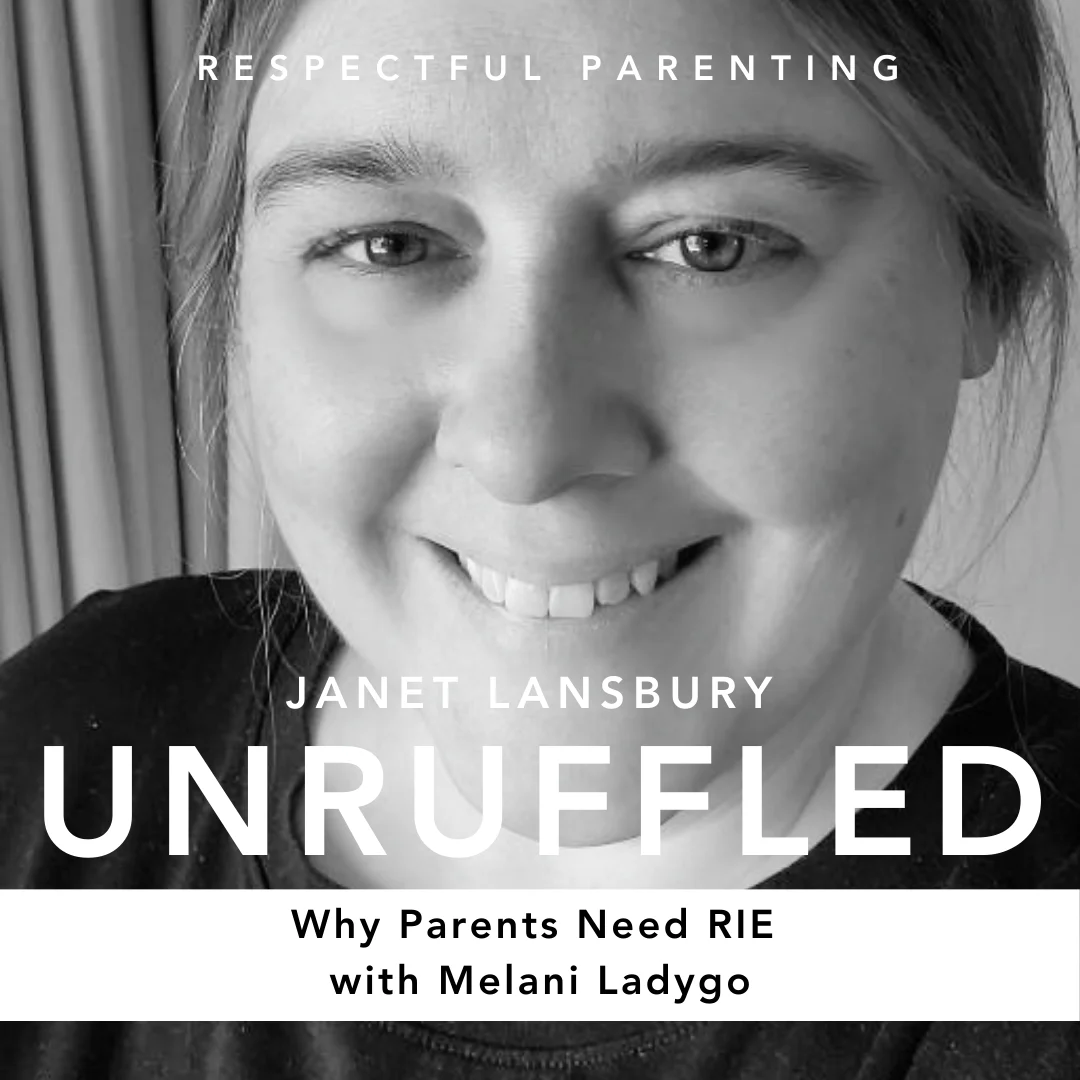
In a recent insightful discussion on the "Unruffled" podcast, Janet Lansbury, a prominent advocate for respectful parenting, engaged in a comprehensive exploration of the RIE (Resources for Infant Educarers) approach with Melani Ladygo, the Executive Director of RIE. The conversation, which delved into the core principles and profound impact of RIE on parenting and early childhood education, highlighted the philosophy’s ability to foster respectful, reciprocal relationships between caregivers and infants, often challenging conventional parenting paradigms.
Understanding RIE: Beyond the "What" to the "Why"
The RIE approach, often met with curiosity or even skepticism due to its nuanced nature, aims to redefine how parents and professionals interact with babies and toddlers. Melani Ladygo articulated that RIE is fundamentally about providing resources for "infant educarers"—individuals who both care for and educate young children. This dual role, she explained, emphasizes a holistic approach where nurturing and learning are intrinsically linked from birth.
Janet Lansbury, whose own journey with RIE began over three decades ago, shared a personal anecdote that resonated deeply with the core of the philosophy. Her initial RIE class with her three-month-old infant opened her eyes to the complex inner world of a baby, revealing a level of thought and awareness she hadn’t previously considered. This realization shifted her perspective from simply stimulating an infant to genuinely discovering and bonding with a distinct individual. "I wanted to know more about what’s going on inside the mind of this person," Lansbury recalled, underscoring the RIE tenet of recognizing infants as complete people from birth.
Ladygo elaborated on this, defining RIE as an organization that equips parents and professionals to cultivate "respectful, reciprocal relationships" with children aged zero to two. This means fostering a dynamic where curiosity about the child’s experience is paramount, and interactions are not about imposing external expectations but allowing the child’s own unfolding to be observed and appreciated. This reciprocal nature, she stressed, can begin from the earliest moments of life, laying a foundation of trust and mutual understanding.
The Genesis of RIE: A Legacy of Respect
The RIE philosophy traces its roots back to Magda Gerber, an infant expert and founder of the organization. Gerber’s work was deeply influenced by her own experiences and observations, leading her to advocate for a fundamental respect for infants as capable individuals with their own thoughts, feelings, and abilities. Lansbury, who trained directly with Gerber, spoke of the profound impact of these early experiences, highlighting the privilege of witnessing Gerber’s approach firsthand.
Melani Ladygo’s own path to RIE was similarly transformative. Her initial exposure came through a child development course that ignited her interest in the intricacies of brain development in infants. She recounted how learning that babies are not simply miniature adults, but individuals whose brains develop and change significantly, profoundly impacted her understanding of their behavior and the parent-child relationship. This realization fueled her desire to share this knowledge, leading her to pursue further education and eventually work in a RIE-influenced childcare center.
It was within this childcare setting that Ladygo experienced firsthand the practical application of RIE principles. She described a pivotal moment where she intervened to help a baby climb a slide, only to be gently guided by a teacher to observe the baby’s own efforts and potential for self-discovery. This experience, which emphasized allowing children to navigate challenges independently and trust in their capabilities, was a cornerstone in her understanding of RIE. "How do you think she’s going to feel the next time she tries to go up that slide and you aren’t there? She didn’t know you were helping her, so she thought she did it by herself, but she really did it with you," the teacher’s words, as recalled by Ladygo, encapsulate the RIE focus on fostering genuine competence and self-efficacy.
RIE’s Impact: Empowering Parents, Nurturing Children
A central theme of the discussion was how RIE benefits not only children but also parents themselves. Lansbury articulated that by seeing the person within their baby, parents are freed from the pressure of performing a "perfect parent" role. Instead, they can embrace their authentic selves, fostering a more genuine and comfortable connection with their child. This shift alleviates the burden of constantly trying to "quiet them down" or "jack them up to get excited," allowing for more natural and easeful interactions.
This perspective resonates with the idea of RIE as a pathway to self-discovery for parents. By relinquishing the perceived need to constantly intervene or direct their child’s experiences, parents can observe and appreciate their child’s capabilities. This observation process, as Ladygo explained, builds a "muscle of trust" between parent and child. Witnessing a child grapple with a task, even if they don’t immediately succeed, fosters confidence in their abilities and allows the parent to relax and trust the process. This, in turn, creates a baseline of peacefulness and confidence that permeates the parent-child relationship.
The RIE approach also redefines our understanding of happiness and well-being for infants. Instead of focusing on constant external stimulation or the avoidance of any struggle, RIE embraces the idea that developmental progress, even through challenges, is inherently positive. Being allowed to explore, to experience difficulty, and to work through it independently is seen as a crucial aspect of a child’s growth. This perspective offers a powerful counterpoint to the often-anxious parenting styles prevalent today, which can inadvertently project worry and stress onto children.
Navigating Challenges with RIE Principles
The conversation acknowledged that implementing RIE principles is not always easy. Human relationships are inherently complex, and parents and children alike experience fatigue, overwhelm, and moments where connection falters. However, the RIE framework provides a foundation for navigating these difficulties with greater awareness and intention.
One key RIE practice discussed is the ability to pause and choose between reacting and responding. This pause allows parents to move beyond ingrained, often unhelpful, reactions and to engage more thoughtfully with their child’s behavior. Ladygo shared an anecdote about a mother struggling with her daughter’s assertive refusal to share a rocking boat. The mother’s discomfort stemmed from her own upbringing, where she felt compelled to always give up what she wanted. RIE provided her with the insight to validate her daughter’s need for personal space and ownership, while also encouraging the child to observe the impact of her actions on others. This balanced approach, Ladygo noted, fosters both self-care and empathy.
Lansbury further emphasized the importance of authenticity in these challenging moments. She shared her practice of acknowledging when a situation is a "disaster" or when "we are just not working together." This honest admission, rather than forcing a positive facade, can be a powerful reset for both parent and child, creating an opening for reconnection and a more authentic interaction. This echoes Magda Gerber’s philosophy of allowing parents to be their genuine selves, even when tired or grumpy, fostering a more honest and trusting relationship.
Fostering Social Intelligence Through RIE
A significant implication of the RIE approach is its profound impact on a child’s social intelligence. By allowing children to navigate conflicts and negotiate relationships with minimal adult intervention, RIE encourages them to develop their own problem-solving skills and to understand the dynamics of human interaction.
The example of children in a RIE-influenced childcare program transitioning to various school settings highlighted this benefit. Regardless of the educational environment, these children were consistently praised by educators for their strong social skills. This underscores the idea that mastering the "social pieces" of relating to others is a fundamental prerequisite for academic success and overall well-being. RIE, by focusing on respectful, reciprocal relationships from birth, equips children with the foundational tools for empathy, negotiation, and collaboration.
The RIE Conference: A Gateway to Deeper Understanding
For those interested in learning more about RIE, the upcoming RIE Conference, themed around play and featuring keynote speaker Peter Gray, offers a valuable opportunity. Lansbury highlighted the conference as a "banquet" for parents and professionals, providing a diverse array of workshops and insights into applying RIE principles in various contexts. The discount code "Unruffled" offers a tangible incentive for attendees.
Ladygo described the conference as a "smorgasbord" of RIE applications, showcasing how the work can be integrated into classrooms, conflict resolution, and documentation standards. The emphasis on play, a natural avenue for social exploration, aligns perfectly with RIE’s core tenets. The inclusion of Peter Gray, an expert on the evolutionary basis of play and its importance for child development, promises to offer a robust exploration of how RIE principles can be extended to older children, revealing a consistent thread of respect and autonomy across developmental stages.
Conclusion: A Continuous Journey of Respect and Connection
The conversation between Janet Lansbury and Melani Ladygo served as a compelling testament to the enduring relevance and transformative power of the RIE approach. By championing a philosophy of deep respect for infants as capable individuals, RIE offers parents a pathway to more authentic, peaceful, and fulfilling relationships with their children. It is a journey that not only nurtures the child but also enriches the parent, fostering a sense of self and connection that extends far beyond the early years of childhood. The emphasis on observation, trust, and allowing children to experience their own developmental journey, even through challenges, is a radical yet profoundly simple approach that holds the key to raising confident, resilient, and socially intelligent individuals.
