

Toddler night wakings represent a significant challenge for parents, often characterized by prolonged crying spells that are difficult to quell and longer-lasting than those experienced with infants. A primary culprit identified by pediatric sleep experts is the establishment of inappropriate sleep onset associations, a behavioral issue that typically responds well to structured sleep training interventions.
Consider the common scenario within the Smith household: 14-month-old Jimmy. Since infancy, his parents have consistently rocked him to sleep each night around 8 PM before placing him in his crib. While they seek a moment of relaxation, a pervasive dread of impending awakenings looms. As they settle into bed near 11 PM, Jimmy’s cries begin. Parents rush to his room, offering back rubs in an attempt to lull him back to sleep. These awakenings recur at intervals of approximately every hour to an hour and a half throughout the night. By the time Jimmy rises at 5:30 AM, he is noticeably irritable, and his parents are profoundly exhausted, lacking the luxury of restorative naps. Jimmy’s persistent night wakings are attributed to the development of inappropriate sleep onset associations, a widely recognized primary cause of frequent nocturnal awakenings in toddlers.
While sleep onset associations are a prevalent factor, it is crucial to acknowledge that numerous other conditions can precipitate crying and screaming in toddlers during the night. A thorough evaluation is often necessary to pinpoint the precise cause, and it is not uncommon for children to experience multiple sleep disturbances concurrently. Parents struggling to identify the root of their child’s sleep issues are strongly advised to consult with their pediatrician for professional guidance.
The phenomenon of inappropriate sleep onset associations typically affects children between the ages of six months and three years, though it can extend to younger or older age groups. The core issue lies in a child’s dependence on parental presence or specific rituals to initiate sleep. Consequently, when they naturally awaken during the night, they are unable to transition back to sleep independently and signal their need for assistance. Parents often perceive these awakenings as the primary problem, when in reality, they are a symptom of an underdeveloped ability to self-soothe and fall asleep independently.
In essence, if a child requires parental intervention to fall asleep at bedtime and subsequently needs the same assistance to return to sleep during nocturnal awakenings, they are likely experiencing a sleep onset association. The solution involves teaching the child to fall asleep without external aids, a process commonly referred to as sleep training.
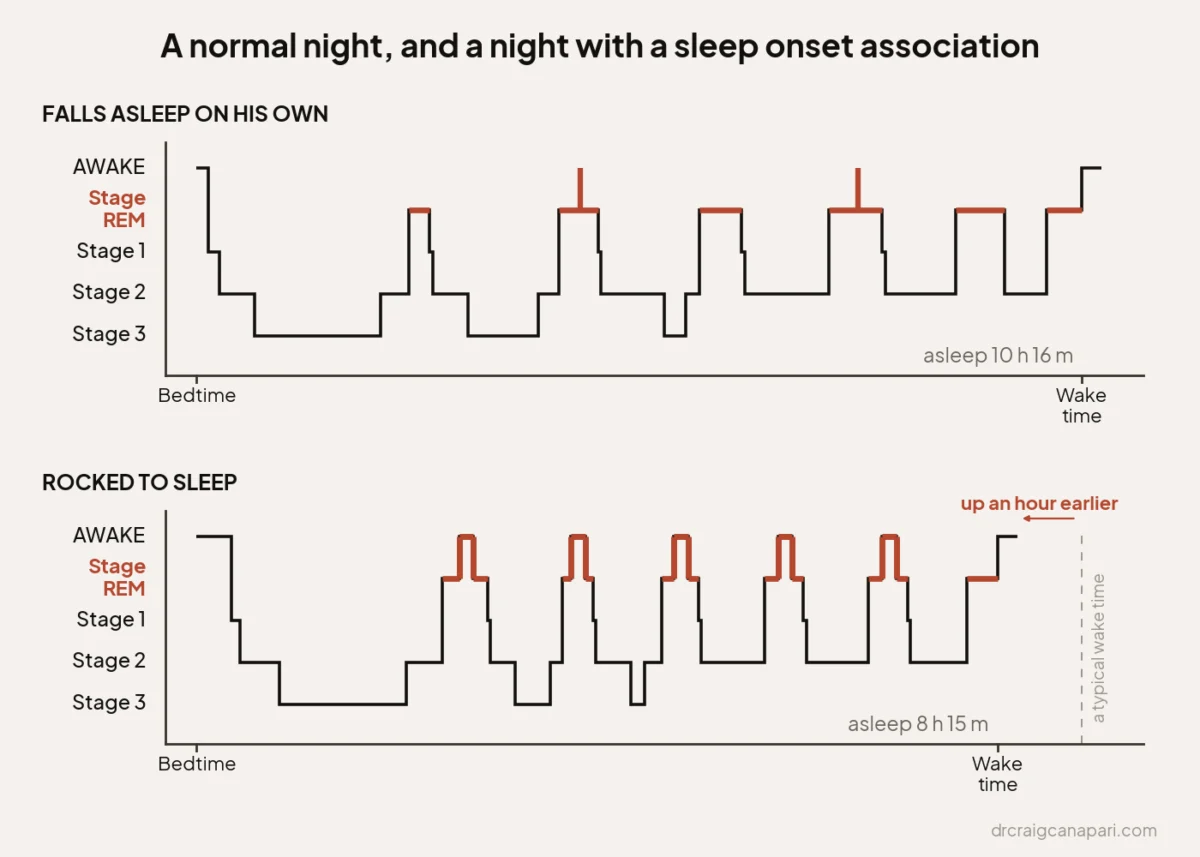
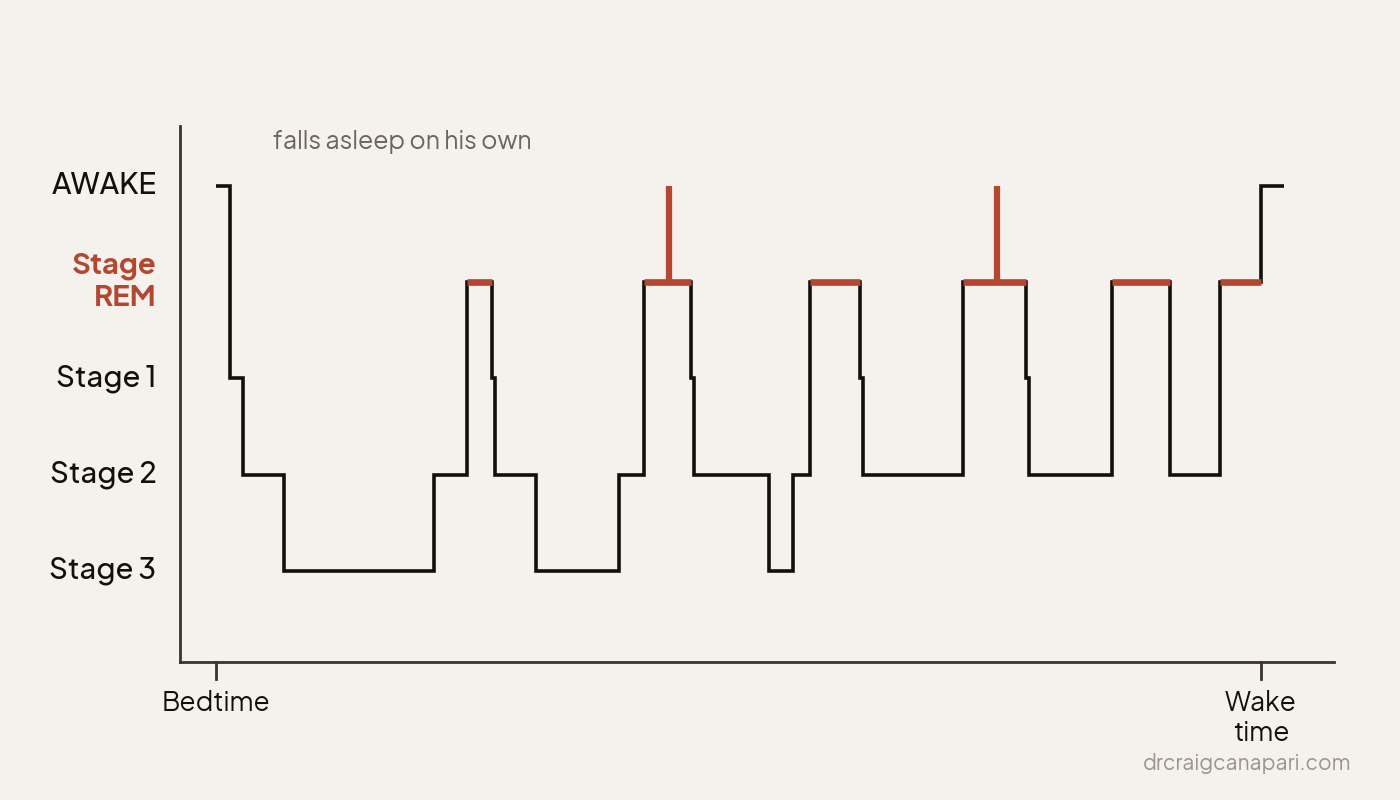
To illustrate this concept, let’s examine the physiological patterns of sleep. A hypnogram, a graph depicting sleep stages throughout the night, reveals that a typically developing child who falls asleep independently experiences a prolonged period of deep sleep in the early part of the night. As the night progresses, sleep cycles shift towards more REM (Rapid Eye Movement) sleep, often associated with dreaming. While brief awakenings can occur, particularly after REM sleep, children accustomed to falling asleep on their own do not typically vocalize or seek parental attention during these brief moments of arousal.
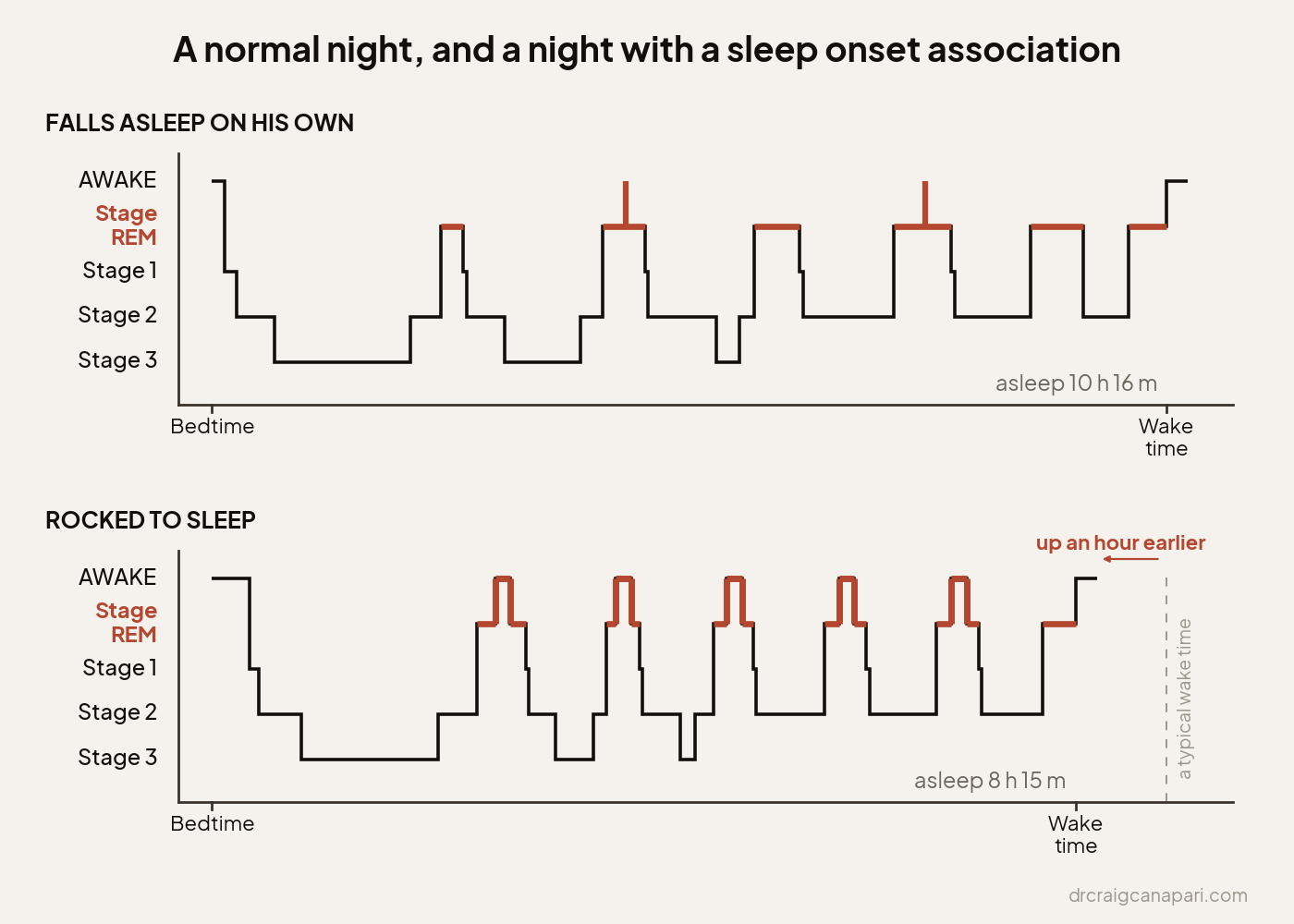
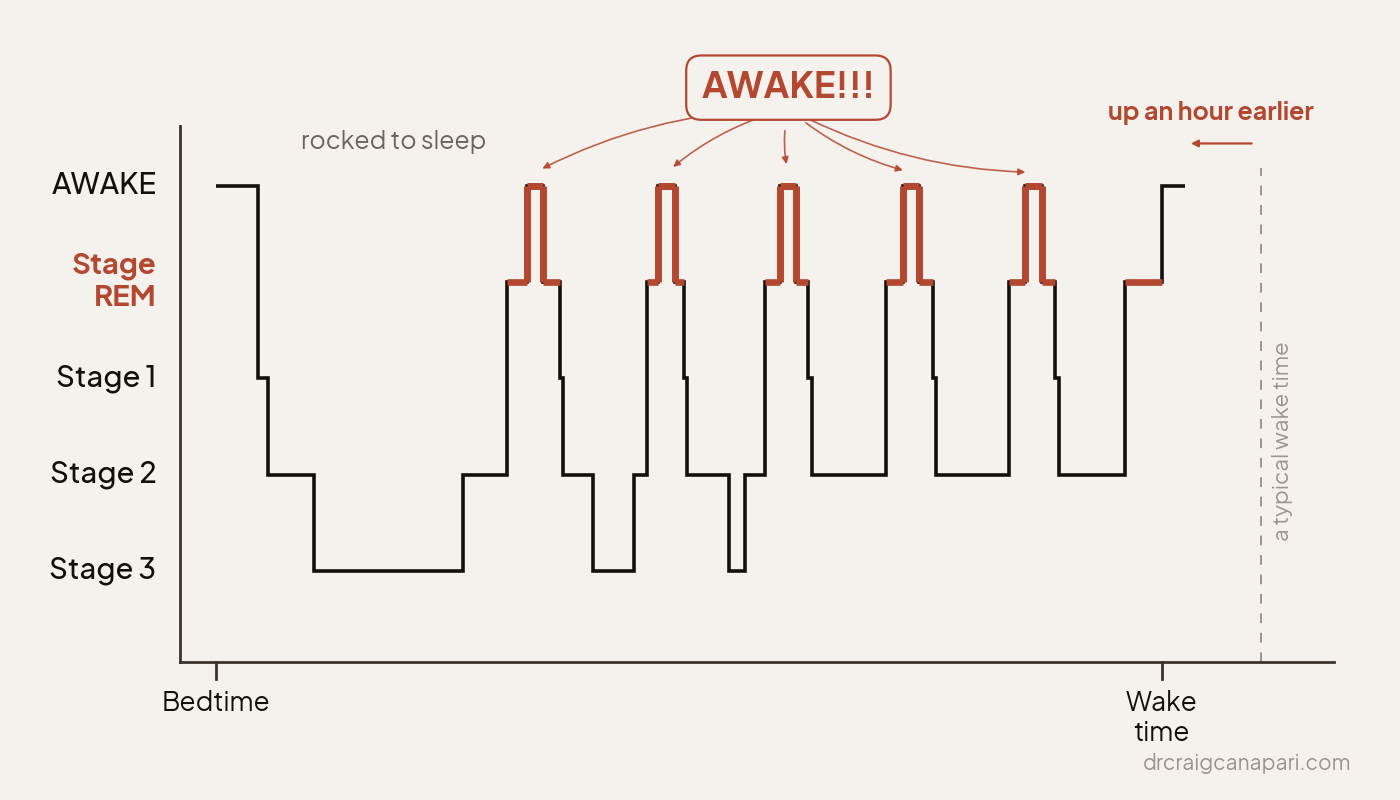
In contrast, a child who relies on parental presence to fall asleep—whether through being held, rocked, nursed, or even pacified with a pacifier that may fall out—will require these same conditions to resume sleep when they naturally awaken. If a child falls asleep in their parent’s arms, they will likely need to be held again each time they wake. This creates a cycle of frequent night wakings. Furthermore, this dependency can lead to earlier morning awakenings, as exhausted parents may bring their child into their own bed, inadvertently establishing another sleep onset association. This pattern is a significant contributor to early morning awakenings.
The divergence in sleep patterns can be starkly visualized by comparing hypnograms. A child who self-soothes generally falls asleep more quickly, experiences fewer and shorter awakenings, and achieves a longer overall sleep duration. Conversely, a child with sleep onset associations often takes longer to fall asleep, experiences multiple full awakenings throughout the night, and tends to wake earlier in the morning, often resulting in reduced total sleep time.
Common sleep onset associations can include being rocked, fed (breast or bottle), held, having a back rubbed, or using a pacifier. Dr. Richard Ferber, a prominent figure in pediatric sleep science, used a relatable analogy: Imagine waking up and finding your pillow or blanket missing. You would naturally seek them out, perhaps feeling anxious about their absence. Similarly, a child who associates sleep with a specific comfort object or ritual will feel a similar need for that association when they awaken.
The fundamental approach to resolving inappropriate sleep onset associations is to empower the child to fall asleep independently. This often necessitates a period of sleep training, employing various established methods tailored to the child’s age and temperament.
It is important to differentiate sleep onset associations from separation anxiety, although they can sometimes co-exist. Separation anxiety is characterized by distress specifically related to a parent’s absence, often focused on one parent. Accommodations made to assuage this anxiety, such as allowing persistent co-sleeping, can inadvertently perpetuate the problem.
Historically, these sleep issues were categorized under "behavioral insomnia of childhood," with subtypes including sleep onset association disorder and limit-setting disorder, often manifesting as "curtain calls" where a child repeatedly leaves their room. In contemporary diagnostic frameworks, particularly when persistent for three months or more, these are often grouped under chronic insomnia.
Night Terrors: A Distinct Cause of Nocturnal Distress
Another significant cause of night wakings, characterized by intense crying and screaming that is unresponsive to parental comfort, is night terrors. These episodes are classified as NREM parasomnias, occurring during non-REM sleep stages. Night terrors are relatively common in toddlers, affecting a substantial proportion of this age group.
Unlike sleep onset associations, which stem from a learned dependency on external cues, night terrors are distinct physiological events. They typically occur during the deep, non-REM sleep phase, often in the first half of the night. The defining characteristic of a night terror is the child’s inconsolability; no amount of soothing will typically stop the crying. These episodes can last from 10 to 40 minutes. While distressing for parents, night terrors are generally benign and self-limiting, usually occurring infrequently and resolving on their own. The primary concern during a night terror is ensuring the child’s safety, as they may thrash or even attempt to move while asleep.
Temporary Disruptions to Good Sleepers
Beyond persistent behavioral patterns, several transient factors can temporarily disrupt a child’s sleep, leading to night wakings. The key is to manage these disruptions without establishing new sleep onset associations.
Sleep Regressions: Developmental Milestones and Sleep Disruptions
The term "sleep regression" is often used to describe periods when a previously good sleeper begins to experience frequent night wakings. While the concept of predictable, age-based regressions is debated among researchers who observe a steady decline in night wakings over time, significant developmental milestones can indeed trigger short-term sleep disturbances. These often coincide with major advancements such as walking, potty training, or the transition to fewer naps.
- 12-15 Months: Associated with the development of independent walking and increased mobility.
- 15-18 Months: Often linked to the transition from two naps to one, increased awareness of separation, and the eruption of first molars.
- 18-24 Months: Characterized by the emergence of autonomy, limit-testing, and the physical possibility of climbing out of a crib.
- 2-3 Years: May involve the transition from a crib to a bed, potty training, the eruption of second molars, and the burgeoning of imagination, which can lead to night fears.
- 3-3.5 Years: Often related to nap cessation and increased prominence of night fears, potentially exacerbated by the start of preschool and new separation anxieties.
Beyond these age-related milestones, other common disruptors include illness, travel, schedule changes, the arrival of a new sibling, or a household move. While these disruptions are typically temporary, a parental response that creates new sleep associations (e.g., frequent rocking) can prolong the sleep difficulties.
Illness and Teething
Acute illnesses, such as colds or ear infections, commonly disrupt sleep due to discomfort like nasal congestion or pain, which can be exacerbated by lying down. During such times, providing comfort and care is paramount, with a caveat to avoid creating new sleep dependencies. Teething, while often blamed for sleep problems, typically causes only localized, mild, and short-lived irritability, usually lasting only a night or two around the time a tooth erupts. It does not typically cause fever, and persistent symptoms should be evaluated by a pediatrician.
The Impact of a New Sibling
The arrival of a new baby can understandably disrupt a toddler’s sleep patterns. Sharing a room with an infant can be particularly challenging, as a crying baby might awaken a toddler. Utilizing a sound machine, with careful attention to volume and placement, can be helpful. The stress of a new sibling can also lead to temporary sleep disturbances, usually resolving within a week. Dedicating individual quality time to the toddler can help them feel secure during this significant family transition.
Medical Disorders as Underlying Causes
In some instances, persistent night wakings may signal an underlying medical disorder. Chronic conditions such as asthma, which can cause nighttime coughing, or acid reflux, leading to abdominal pain or vomiting, require medical attention. Obstructive sleep apnea, often characterized by snoring, is another common condition that significantly disrupts sleep quality and can manifest through frequent awakenings.
Schedule and Environmental Factors
Structural issues related to a child’s schedule or sleep environment can also contribute to night wakings.
Hunger and Night Feeds
Toddlers generally do not require nighttime feedings unless there is a specific medical indication. The persistence of night feeds, whether by bottle or breast, is a frequent cause of ongoing awakenings. Gradually weaning these feeds can often lead to significant improvements in sleep.
Excessive Time in Bed
The phenomenon of "too much time in bed syndrome" occurs when a child’s sleep schedule remains unchanged as they grow, despite a decrease in their actual sleep needs. For instance, a toddler who previously slept 12 hours overnight and took a nap may no longer require that duration of sleep. Extending bedtime or shortening nap duration can help realign sleep schedules and reduce night wakings. Understanding a child’s current sleep requirements is crucial; resources detailing age-appropriate sleep needs can guide parents.
Environmental Disturbances
The sleep environment plays a critical role. Electronic devices emitting light or sound, external noise pollution from neighbors or traffic, or disruptions caused by a sibling sharing a room can all contribute to night wakings. In cases of room-sharing, one child’s awakening can easily trigger another’s, necessitating careful management strategies.
In summary, toddler night wakings are a common and often distressing issue for parents. While inappropriate sleep onset associations are a primary driver, requiring targeted sleep training, other factors such as night terrors, developmental milestones, illness, and environmental influences must also be considered. A systematic approach, often in consultation with a pediatrician, is essential to accurately diagnose the cause and implement effective strategies to restore peaceful sleep for both children and their families.
