

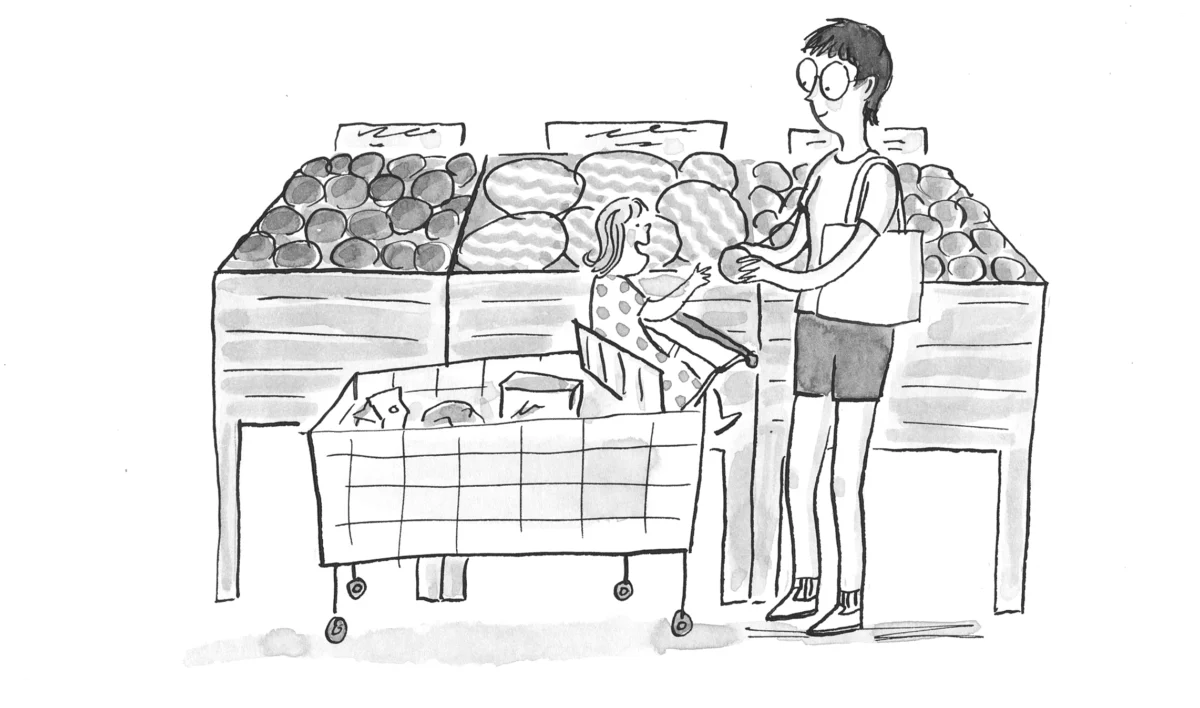
The landscape of modern American parenting is undergoing a subtle yet significant shift as families move away from the isolation of the "delivery economy" and back into the communal sphere of public errands. This transition is particularly pronounced for parents of multiples—twins, triplets, and higher-order births—who are increasingly documenting the logistical and emotional complexities of navigating the world with more than one child of the same age. Recent discourse among parenting communities, sparked in part by the relatable illustrations of artist Hallie Bateman and shared through digital forums like Cup of Jo, has highlighted a phenomenon where the once-dreaded grocery run is being reframed as a vital tool for child development and parental mental health.
The Logistical Realities of Raising Multiples
For the average parent, a trip to the supermarket is a chore; for a parent of triplets or twins, it is a high-stakes tactical operation. Historically, parents of multiples have reported a period of "survival mode" during the first two to three years of their children’s lives. During this phase, many families rely heavily on grocery delivery services and curbside pickup to avoid the physical impossibility of managing multiple toddlers in a space designed for single-child families.
The logistical hurdles are formidable. A standard grocery cart is equipped with one or two child seats. For a parent of triplets, this necessitates the use of two carts—one for the children and one for the groceries—requiring two adults to be present. The "six-hand" problem, a term coined by parents to describe the reach of three toddlers in a snack aisle, often leads to overstimulation for the children and acute stress for the caregivers. Consequently, many families of multiples do not attempt full-scale public errands until the children reach school age, or they utilize a "divide and conquer" strategy where each parent takes one child, effectively turning a family chore into two separate "solo dates."
A Chronology of Parental Engagement: From Pandemic Isolation to Public Re-entry
The timeline for public engagement has been further complicated by the global COVID-19 pandemic. Children born between 2017 and 2021 experienced a fractured introduction to societal norms.
- The Infancy Phase (0–12 Months): For many, this period was characterized by "baby-wearing" and limited outings. The use of ring slings and carriers allowed parents to keep infants close, but the onset of the pandemic in 2020 abruptly halted these early socialization efforts.
- The Delivery Era (2020–2022): Families became reliant on services like Instacart and Aldi pickup. For children born during this window, the grocery store became a foreign environment. When re-entry finally occurred, parents reported that children were often overwhelmed by the sensory input of a supermarket, with some even expressing confusion at the concept of a checkout conveyor belt, perceiving it as a mechanism for "taking their things."
- The "Solo Date" Transition (Age 2–4): As children reach toddlerhood, parents of multiples often begin "splits." On a rotating basis, one parent takes one child on an errand while the other remains at home. This 1:1 ratio is frequently described by parents as a "vacation" or a "spa day," as the cognitive load of managing one child is exponentially lower than managing two or three.
- The School-Age Integration (Age 5+): By the time children enter kindergarten, the "survival mode" typically wanes, allowing for more traditional family outings.
The Psychological Weight of the "Solo" Transition
While the logistical ease of taking one child to the store is undeniable, the emotional experience for the parent is complex. Clinical observations and anecdotal evidence suggest that parents of multiples often experience a form of "phantom limb" syndrome when separated from their full brood. Even as they enjoy the relative peace of a single-child outing, many report an intense longing for the missing siblings and a compulsive need to identify themselves as a "multiple parent" to strangers.
This behavior, often referred to as "claiming veteran status," involves parents informing cashiers or fellow shoppers that the child with them is actually a twin or triplet. Psychologists suggest this is a defense mechanism and a way to validate the immense labor of their daily lives. By signaling their status as a parent of multiples, they are reclaiming an identity that is often invisible when they are only seen with one child.
Conversely, some parents experience acute separation anxiety when attempting to shop alone for the first time in years. The transition from being "touched out" and constantly needed to being entirely alone in a public space can trigger feelings of disorientation. In some cases, this manifests as an inability to make simple decisions, such as choosing produce, due to the sudden absence of the "autopilot" mode required for high-stress parenting.
Supporting Data: The Rising Prevalence of Multiples and Modern Stress
According to the Centers for Disease Control and Prevention (CDC), while the overall birth rate has seen fluctuations, the twin birth rate remains a significant factor in American demographics, hovering around 31 per 1,000 live births. The demands on these families are unique. A study published in the Journal of Family Psychology indicates that parents of multiples report higher levels of parenting stress and a greater risk for postpartum anxiety (PPA) compared to parents of singletons.
The "errand as a vacation" sentiment is a direct byproduct of this heightened stress. When a parent of twins describes a trip to the dentist or a solo flight as a "luxury," it highlights a deficit in "me-time" that is systemic among caregivers of young children. The data suggests that small, frequent intervals of 1:1 time or solo errands can act as a pressure valve, reducing the overall risk of burnout.
The "Oh Honey" Factor: Community Dynamics and Public Support
A recurring theme in the narrative of parenting in public is the role of the "community elder." Many parents report that their most meaningful support comes from older generations who observe their struggles in the grocery store. The "Oh Honey" phenomenon—where an older woman offers a brief word of encouragement or a "we’ve all been there" nod—serves as a vital form of social validation.
Retailers have also begun to recognize these needs. Costco, in particular, has been lauded by the parenting community for its infrastructure. The warehouse club’s carts are uniquely designed with two child seats, and the spacious checkout areas provide a lower-stress environment than the narrow, candy-lined aisles of traditional supermarkets. This "Costco effect" has made the retailer a preferred destination for families of multiples, who view the 1:1.5-hour shopping trip as a manageable outing rather than a logistical nightmare.
Developmental Implications of the "Boring" Errand
Child development experts argue that the move away from screen-based distractions during errands is beneficial for cognitive growth. The "boring" grocery run provides a wealth of sensory information and social learning opportunities:
- Observation: Without a tablet or phone, children are forced to observe their surroundings, learning how food is categorized and how money is exchanged.
- Socialization: Errands provide a platform for children to interact with community members, from the "social kid" who greets every passerby to the "helper" who learns the value of service.
- Narrative Language: Parents who "narrate" their shopping—explaining why they are choosing a specific eggplant or how the scale works—are providing essential language development cues.
Even "spicy" or difficult moments in public are being reframed as learning experiences. Dealing with a tantrum in a produce aisle, while stressful, teaches children (and parents) how to navigate emotional regulation in a social context.
Broader Impact and Policy Implications
The collective experiences of these families suggest a need for more "family-friendly" urban and retail design. The fact that a parent of triplets feels they must use two carts highlights a gap in accessibility. As the "delivery-first" model of the pandemic era fades, there is a growing demand for public spaces that accommodate the reality of modern family structures.
Furthermore, the prevalence of parental anxiety associated with public re-entry underscores the need for better postpartum mental health support. Recognizing that anxiety can manifest as an inability to perform routine tasks, such as grocery shopping, is a crucial step in normalizing the struggles of early parenthood.
In conclusion, the simple act of taking a child to the grocery store is far more than a domestic chore. For the parent of multiples, it is a milestone of autonomy, a tool for child development, and a bridge back to the community. Whether it is a "hero’s journey" with four children in a Costco cart or a "spa day" with a single twin at Trader Joe’s, these errands represent the reclaiming of a public life that is both exhausting and deeply rewarding. As society continues to evolve post-pandemic, the visibility of these families in everyday spaces serves as a reminder of the resilience of caregivers and the importance of a supportive, observant community.
