

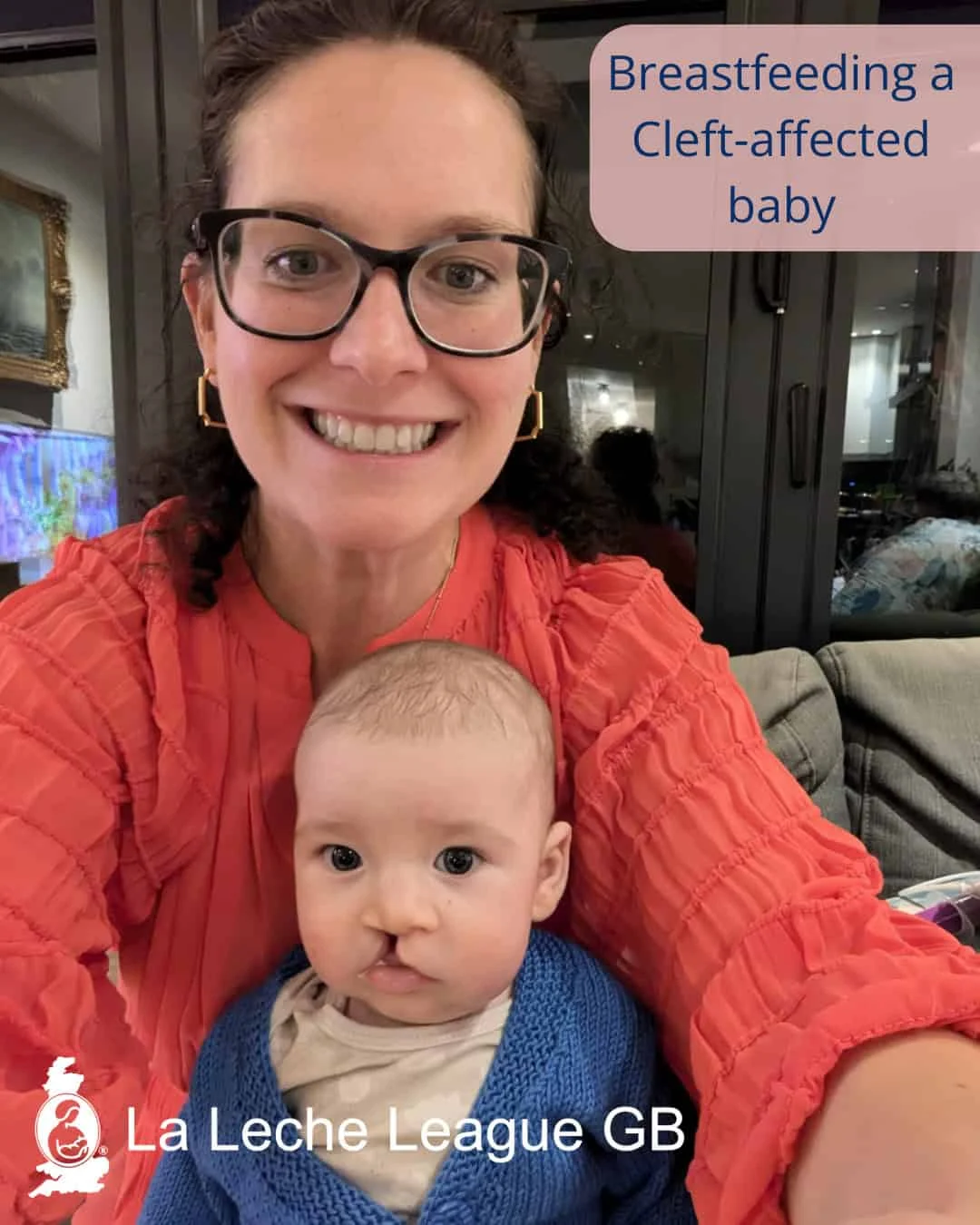
The journey of breastfeeding, often celebrated as a natural bonding experience, can present unforeseen complexities, especially when a newborn faces medical challenges. Sarah Muir-Little’s experience with her son, Russell, born with a cleft lip and palate, highlights a compelling narrative of determination, adaptation, and the pursuit of a personalized feeding approach against conventional wisdom. Her story underscores the vital role of parental advocacy, the evolving landscape of medical support, and the profound emotional significance of breastfeeding for many mothers.
Understanding Cleft Lip and Palate: A Medical Overview
Cleft lip and palate are among the most common birth anomalies, affecting approximately 1 in 700 babies globally. This condition occurs when the structures forming the baby’s upper lip or the roof of the mouth (palate) do not fully fuse during early fetal development. The severity can vary, ranging from a minor notch in the lip to a complete separation extending into the nose and palate.
Medically, cleft lip and palate are categorized based on their presentation:
- Cleft lip: Affects the upper lip, with or without involvement of the gum line. Babies with isolated cleft lip often can breastfeed, sometimes with minor adaptations.
- Cleft palate: Involves the roof of the mouth. This can be a soft palate cleft, hard palate cleft, or both. A baby with a cleft palate typically cannot create the necessary suction to breastfeed effectively, as the opening prevents the formation of a vacuum within the mouth. This usually necessitates alternative feeding methods until surgical repair.
- Cleft lip and palate: A combination of both conditions, as in Russell’s case, presenting significant feeding challenges.
The primary medical interventions for cleft lip and palate involve a series of surgeries. Typically, lip repair occurs around three to six months of age, followed by palate repair between nine and eighteen months. Further surgeries may be required later in childhood to address speech, dental, or aesthetic concerns. Organizations like the Cleft Lip and Palate Association (CLAPA) in the UK play a crucial role in providing comprehensive support and information to affected families, advocating for integrated care and empowering parents with choices.
Antenatal Diagnosis and the Initial Emotional Impact
For Sarah Muir-Little, the news of Russell’s cleft lip and palate came during a routine 20-week ultrasound, a moment usually filled with anticipation and joy. This diagnosis, delivered after an already stressful period involving her father-in-law’s critical illness, plunged the family into emotional turmoil. The sonographer’s query, "Have you heard of a cleft lip?", quickly transitioned to a midwife’s stark pronouncement: "You wouldn’t be able to breastfeed." This initial, definitive statement, while common in some medical circles, immediately set the stage for Sarah’s subsequent "battle."
The emotional impact of this news was profound. Sarah had recently weaned her toddler in preparation for nursing her new baby, and breastfeeding held deep personal significance for her, intertwined with her identity as a mother. The prospect of losing this experience triggered a sense of grief. However, a specialist nurse later offered a glimmer of hope, clarifying that while direct breastfeeding might be challenging, a "breastfeeding journey" of some form was still possible, albeit potentially different from her previous experience. The uncertainty surrounding the palate’s involvement, which could only be confirmed after birth, added another layer of anxiety.
Pioneering Adaptive Feeding Methods
Undeterred by the initial advice, Sarah embarked on extensive research, delving into resources from CLAPA, La Leche League, and other sources to find examples of successful breastfeeding after palate surgery. She found a scarcity of such narratives but gleaned two critical insights: the importance of establishing a robust milk supply and exploring alternative feeding methods that allowed for feeding at the breast.
Having successfully breastfed her toddler, Sarah was confident in her ability to produce sufficient milk, despite past difficulties with pumping. Her previous experience of hand expressing small amounts of milk to build a freezer stash, though laborious, had equipped her with the foundational knowledge of milk production. She resolved to master pumping more effectively to meet Russell’s needs.
The second challenge involved finding a practical way to deliver milk at the breast without suction. Sarah investigated nursing supplementers, devices designed to deliver milk via a thin tube while the baby is latched. She procured two different systems available in the UK: one gravity-fed, offering a slow flow, and another with a squeezable bottle for controlled milk delivery. Neither system felt intuitively right, especially when trying to combine it with standard feeding positions like the "dancer hold," a technique often recommended for babies with low muscle tone or prematurity, where the parent’s hand supports the baby’s jaw and breast. The dancer hold, while effective for some, felt cumbersome to Sarah when attempting to manage a supplementer and a newborn.
Russell’s Arrival and Ingenious Adaptations
Upon Russell’s birth, the family immediately began feeding him expressed colostrum using a syringe, combined with a finger in his mouth to encourage a sucking reflex. Their plan was to transition to feeding at the breast with a supplementer once Sarah’s milk supply increased. A fortuitous discovery occurred when syringes they had ordered, though unsuitable for direct feeding, perfectly fitted the supplementer tube. Resourcefully, Sarah adapted larger syringes from the labour ward by drilling holes in their screw-on caps, creating a functional, albeit unconventional, milk reservoir for the supplementer tube. This ingenuity highlighted the urgent need for flexible solutions when standard equipment falls short. It’s crucial, however, to always adhere to safety guidelines for any feeding tools, ensuring caps are removed if feeding directly from a syringe to prevent choking hazards and that feeding speed is carefully monitored.

The practical application of the supplementer presented its own set of hurdles. Traditional advice suggests either inserting the tube after the baby latches or taping it to the breast pre-latch. Given Russell’s fragile latch due to the lack of suction, the former was impractical. The latter, taping the tube, also proved challenging due to the small size of a newborn’s mouth and the potential for the tube to interfere with the latch. After much trial and error, involving various tapes and positions that caused distress to both mother and baby, Sarah found a method: taping the tube very close to the nipple. This, while effective in getting the tube into Russell’s mouth, often compromised the latch and resulted in significant milk loss.
Despite these difficulties and receiving limited practical help from some healthcare professionals—some expressing concerns about aspiration—Sarah’s determination remained unwavering. After a week of navigating the high of a home birth and the frustrations of feeding, she established a system that, while imperfect, allowed for a consistent and appropriately paced milk delivery.
Navigating Positioning and External Perceptions
The "dancer hold" continued to be a source of stress for Sarah and Russell. After consulting with a specialist at Great Ormond Street Children’s Hospital, they decided to revert to the cradle hold, a position Sarah was familiar with and that felt more natural. While this might have led to more milk leakage from Russell’s cleft, the priority was to ensure calm and relaxed feeding sessions for both mother and baby. Rather than focusing on techniques like plugging the cleft with the breast or keeping the cleft side up, their focus remained on achieving a deep latch in a comfortable cradle position. This often meant ending feeds with both of them quite wet from spilled milk, a testament to the perseverance required.
Over time, their feeding technique evolved. Sarah learned to pace the milk delivery via the syringe, pausing when Russell paused, ensuring the flow was neither too slow to frustrate him nor too fast to overwhelm him. This symbiotic learning process strengthened their feeding dynamic.
The unique nature of their adaptive breastfeeding journey often elicited varied reactions from others. Some friends, initially questioning the effort involved in bridging the gap to potential post-surgery breastfeeding, later understood its value, affirming that Sarah was "already breastfeeding." Others, witnessing them feed, mistakenly assumed that the initial worries about breastfeeding had simply "not come to fruition," unaware of the intricate method employed. These affirmations were deeply gratifying.
However, Sarah also encountered less supportive comments, notably from a pediatrician who expressed reservations about their method, citing the "safe and effective" nature of specialized cleft bottles. Such remarks, especially from healthcare professionals, were hurtful and required considerable resilience to brush off. Yet, Sarah’s conviction in their chosen path, supported by Russell’s healthy weight gain and apparent enjoyment of feeding at the breast, remained steadfast. She acknowledged the supplementer as a necessary tool, not a preference, celebrating the benefits of their unique breastfeeding bond.
Evolution of Feeding and Surgical Milestones
As Russell grew, his feeding habits continued to adapt. Around ten weeks old, he became more sensitive to the tape used for the supplementer tube. This prompted Sarah to experiment with taping the tube further from the nipple, and eventually, to forgo tape altogether, requiring greater coordination but proving more manageable as both mother and baby became more adept.
Throughout this period, there were moments of regression and frustration, where Russell would refuse to feed or become upset. In these instances, Sarah consciously reminded herself that Russell was primarily a baby, and his cleft was a secondary factor. Often, the issues were common baby behaviors, such as distraction around three months of age, rather than cleft-related complications.
The first major milestone in Russell’s medical journey was the surgery to reconstruct his lip and hard palate. Post-surgery, while recovering from morphine, Russell initially only accepted bottles, perhaps associating them with the difficult days of recovery. However, once he resumed feeding with the supplementer, he rejected bottles, potentially finding the supplementer less effort. This period, requiring Sarah to express milk and manage all feedings, was physically and emotionally exhausting. Throughout this demanding time, the unwavering support of her husband, who managed bottle washing, night feeds while Sarah pumped, and provided crucial reassurance, was indispensable. Their journey was a true partnership, built on teamwork and shared determination.
The Breakthrough: Direct Breastfeeding After Palate Repair
The most significant turning point arrived just before Russell’s first birthday when he underwent palate surgery. Following the surgeon’s advice to avoid suction for a month post-operation, Sarah soon observed Russell instinctively attempting to suck for the first time. Four weeks later, a remarkable breakthrough occurred: he learned to use a straw, and the very next day, he began to suck and swallow directly at the breast.
This marked the beginning of a gradual transition. The supplementer, which had been an integral part of their daily routine for 15 months, was used less and less as Russell developed his ability to take more milk independently. Consequently, Sarah was finally able to stop daily pumping, a testament to the long and arduous journey she had undertaken.
While Russell’s latch initially wasn’t "typical," it was effective, and he was content. He now breastfeeds once or twice a day, a profound achievement that once seemed unattainable. Sarah’s story stands as a powerful testament to the fact that breastfeeding journeys can take many forms, demanding flexibility, innovation, and unwavering parental love. It challenges rigid medical guidelines, highlighting the importance of individualized care plans that honor parental choices and the unique needs of each child. Sarah and Russell’s ongoing journey exemplifies resilience, celebrating every milestone as a bonus for Russell’s health and their irreplaceable bond.
