

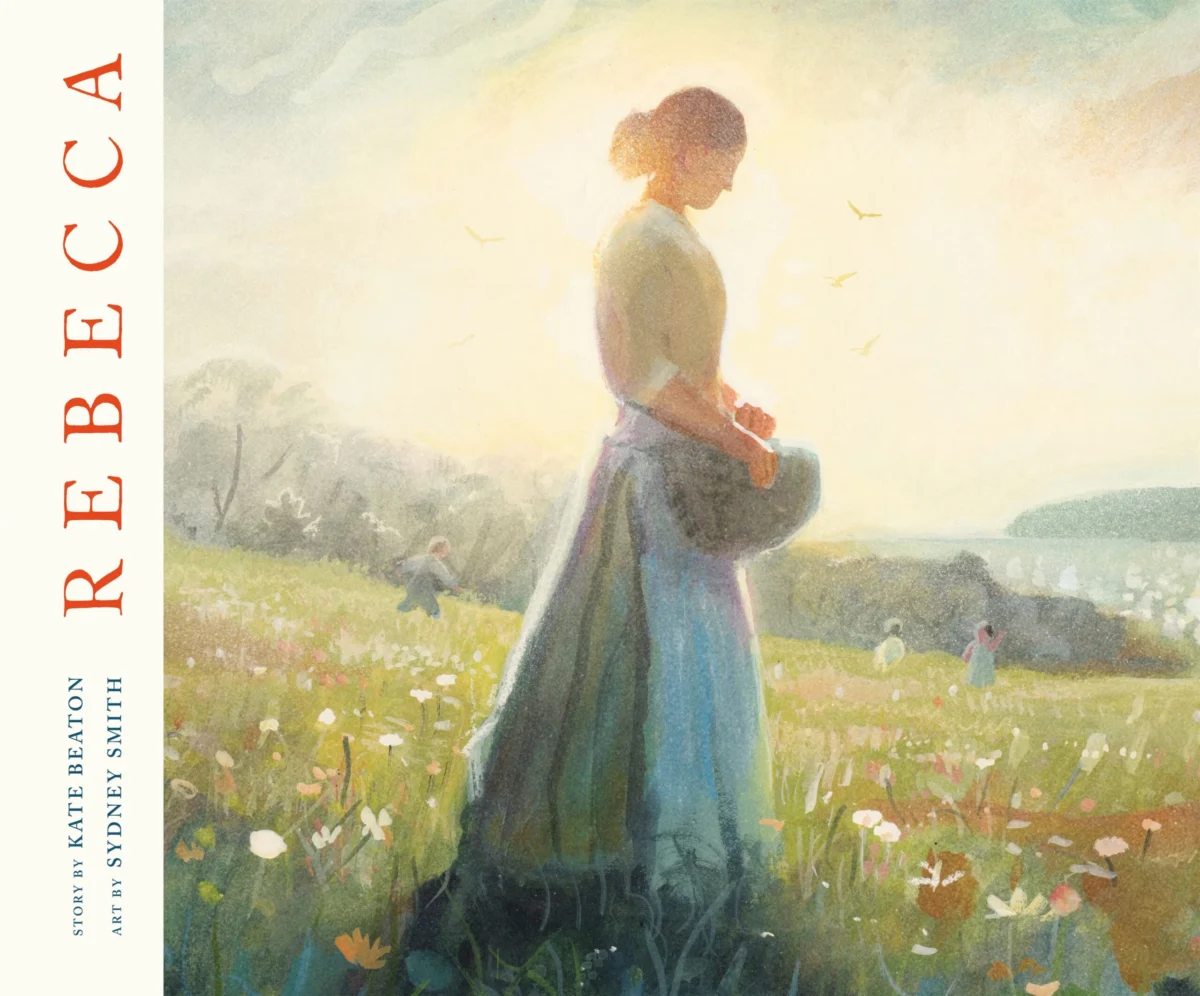
The release of Rebecca, the latest work by award-winning Canadian author and illustrator Kate Beaton, marks a significant departure from traditional children’s literature by addressing themes of profound loss, historical resilience, and the continuity of familial names. Beaton, widely recognized for her satirical webcomic Hark! A Vagrant and her critically acclaimed graphic memoir Ducks: Two Years in the Oil Sands, has crafted a narrative that serves as both a historical tribute and a personal catharsis. The book’s origins are rooted in a series of life-altering events, including the death of the author’s sister and the subsequent birth of her children, set against the rugged backdrop of Cape Breton, Nova Scotia.
Biographical Background and Career Trajectory
Kate Beaton’s ascent in the literary world began with the 2007 launch of Hark! A Vagrant, a webcomic that utilized sharp wit to lampoon historical and literary figures. The series was eventually collected into two New York Times bestselling volumes: Hark! A Vagrant and Step Aside, Pops. However, it was her 2022 graphic memoir, Ducks: Two Years in the Oil Sands, that solidified her status as a major contemporary voice. Ducks explored the environmental and human costs of the Alberta oil sands, earning a place on former President Barack Obama’s favorite books of the year list and being named a New York Times Notable Book.
Beaton’s work has frequently navigated the tension between humor and gravity. With Rebecca, she shifts focus toward the domestic and the ancestral, exploring how the weight of the past informs the present. The author continues to reside in Cape Breton, a location that serves as more than just a setting for her work; it is a repository of the genealogical history that fuels her latest narrative.
A Chronology of Personal and Familial Loss
The catalyst for Rebecca was the three-year illness and eventual death of Beaton’s older sister, Becky. Diagnosed with aggressive cervical cancer, Becky’s struggle became a defining period for the Beaton family. According to the author, this period created a "bifurcation" in her life, separating her existence into two distinct eras: the time before the illness and the time after the loss.
Becky Beaton passed away on May 14, 2018. The impact of sibling loss, particularly in adulthood, is a subject often overshadowed by parental or spousal grief in clinical literature. However, psychologists note that the loss of a sibling can lead to a significant "identity crisis," as siblings serve as keepers of shared history and foundational social anchors.
The timing of Beaton’s subsequent transition into motherhood added a layer of emotional complexity to her grieving process. In May 2019, nearly one year to the day after her sister’s death, Beaton went into labor. Her daughter was born on May 13, 2019, narrowly avoiding a birth date that would have coincided with the anniversary of Becky’s passing. Beaton describes this period as becoming a mother "in the shadow of my greatest sorrow," a sentiment that characterizes the duality of joy and mourning explored in her new book.
Historical Context: The 18th-Century Rebecca
To process her grief without addressing her sister’s death directly, Beaton turned to her family’s genealogical records. The protagonist of her new book is based on Rebecca Lombard Smith, Beaton’s great-great-great-great-grandmother.
The historical Rebecca was an 18th-century resident of Port Hood Island, located off the shore of Cape Breton. In March 1789, her husband, Captain David Smith, a prominent whaling captain, perished after falling through ice near the island. While local histories frequently centered on the dramatic nature of the Captain’s death, Beaton found herself drawn to the widow’s narrative. Left with six sons and one daughter, and pregnant with her final child at the time of her husband’s death, Rebecca Lombard Smith managed to raise her family in isolation.
Beaton’s research into the Smith family revealed a lineage of resilience. Despite the harsh conditions of 18th-century maritime life, all of Rebecca’s children survived to adulthood. Beaton notes that her own branch of the family descends from Rebecca’s daughter, emphasizing a matrilineal connection that preserved the name "Rebecca" through subsequent generations.
Supporting Data: Cervical Cancer and Sibling Grief
The personal tragedy underlying Beaton’s work reflects broader public health challenges. Cervical cancer, the disease that claimed Becky Beaton’s life, remains a significant concern globally. According to the World Health Organization (WHO), cervical cancer is the fourth most common cancer in women worldwide. While screening and vaccination (HPV) have significantly reduced mortality rates in developed nations, aggressive forms of the disease still pose a lethal threat.

Furthermore, Beaton’s description of "living with grief" aligns with the "Continuing Bonds" theory in bereavement psychology. This theory suggests that healthy mourning does not involve "moving on" or achieving "closure," but rather integrating the deceased into the survivor’s ongoing life. Beaton’s creative process—writing the book line-by-line while soothing her infants to sleep—exemplifies this integration of memory and current reality.
Official Responses and Industry Reception
The publication of Rebecca by Roaring Brook Press (an imprint of Macmillan) has sparked discussion within the children’s book industry regarding the "rules" of the genre. Connie Hsu, the publishing director at Roaring Brook Press, acknowledged the unconventional nature of Beaton’s manuscript.
"My initial reaction to Rebecca was awe," Hsu stated. "My brain began to think about all the usual ‘rules’ about picture book publishing. Here, the main protagonist is an adult, the book is about loss, and two people die in the book! But I just had to publish it."
Industry analysts suggest that Rebecca fits into a growing trend of "bibliotherapy" for children—books that use sophisticated narratives to help young readers understand complex emotional realities like death and historical hardship. By featuring an adult protagonist who survives tragedy, the book offers a model of resilience that differs from more common child-centric stories.
Site-Specific Inspiration: Port Hood and the Old Protestant Graveyard
The physical landscape of Cape Breton played a vital role in the book’s development. During her early years of motherhood, Beaton frequently walked to the Old Protestant Graveyard in Port Hood, where Rebecca Lombard Smith is buried.
The inscription on the gravestone is notable for its personal touch, listing the names of three of her sons: Lewis, Parker, and David. Beaton observed that this level of detail was unusual for the era, interpreting it as a lasting testament to the affection the children held for their mother. This physical connection to the past—walking the same shores and visiting the same sites as her ancestor—provided the grounding Beaton needed to translate her personal grief into a universal story of survival.
Broader Impact and Implications
Rebecca serves as a case study in how personal trauma can be transmuted into art that honors both individual and collective history. For Beaton, the project was a necessity for her own psychological well-being, allowing her to "write the grief out" of herself.
The book’s release has broader implications for how families discuss legacy and naming traditions. In many cultures, naming a child after a deceased relative is a way to ensure the continuity of the spirit. Beaton’s exploration of the names "Becky" and "Katie" (Kathryn) highlights how these linguistic ties connect women across centuries, creating a sense of belonging that transcends the finality of death.
As a literary work, Rebecca challenges the boundaries of the picture book format. It suggests that children are capable of engaging with stories of loss and that historical narratives are most effective when they focus on the quiet strength of those who remain, rather than just the dramatic ends of those who depart.
Conclusion
With the release of Rebecca, Kate Beaton reaffirms her position as an author capable of navigating the most difficult aspects of the human experience with grace and historical rigor. By weaving together the 18th-century struggle of Rebecca Lombard Smith with the 21st-century loss of her sister, Beaton has created a work that addresses the cyclical nature of life, death, and the enduring power of maternal strength. The book stands as a tribute to the "Rebeccas" of the past and a beacon of hope for those navigating the "second life" that follows profound loss.
