

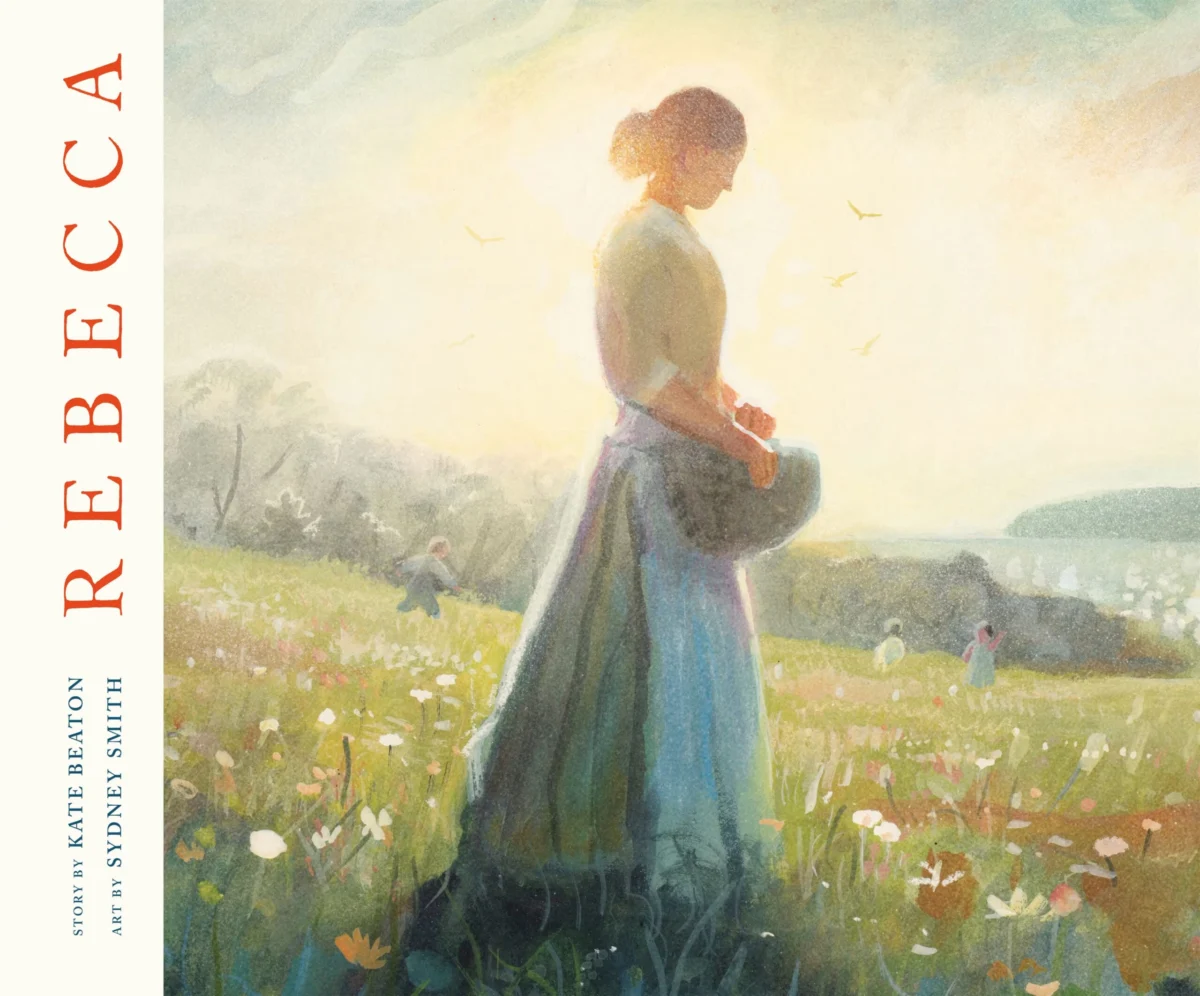
Renowned Canadian cartoonist and author Kate Beaton, widely recognized for her New York Times-bestselling graphic memoir Ducks: Two Years in the Oil Sands and the popular webcomic series Hark! A Vagrant, has released her latest project, a children’s picture book titled Rebecca. The publication of this work marks a significant milestone in Beaton’s career, transitioning from the sharp wit of historical parody and the heavy industrial critique of her previous memoirs to a poignant exploration of ancestral resilience, personal loss, and the cyclical nature of life. The book, published by Roaring Brook Press, arrives as both a tribute to a historical ancestor and a deeply personal response to the death of the author’s sister, Becky, who passed away in 2018.
The Intersection of Personal Tragedy and Creative Output
The genesis of Rebecca is inextricably linked to a period of profound personal upheaval for Beaton. In 2015, her older sister, Becky, was diagnosed with aggressive cervical cancer. The subsequent three years were defined by a grueling medical battle that Beaton describes as a "bifurcation" of her life—a distinct separation between the person she was before the illness and the person she became after. Becky Beaton died on May 14, 2018. This loss occurred during a transformative era for the author, who found herself navigating the depths of grief while simultaneously entering a new chapter of life: motherhood.
In May 2019, nearly one year to the day after her sister’s passing, Beaton gave birth to her first child. The timing was a source of significant emotional complexity; the author recalls praying that her daughter would not be born on the anniversary of Becky’s death, seeking to spare the child the "weight of all that grief." Her daughter was born on May 13, just hours before the anniversary. This intersection of life and death serves as the emotional foundation for Rebecca, a book that Beaton notes was written "line by line" in her head during the quiet hours spent putting her children to sleep.
Historical Context: The Life of Rebecca Lombard Smith
While the book is informed by Beaton’s contemporary grief, its narrative focus is historical. Beaton turned to her family genealogy to find a story that could carry the weight of her emotions without addressing her sister’s death directly. She settled on the story of her great-great-great-great-grandmother, Rebecca Lombard Smith.
The historical Rebecca was born in Truro, Massachusetts, and eventually settled on Port Hood Island, off the coast of Cape Breton, Nova Scotia. Her life was marked by a catastrophic event in March 1789, when her husband, Captain David Smith, a prominent whaling captain, perished after falling through the ice near the island. At the time of his death, Rebecca was pregnant with their last child.
Historical accounts of the Smith family often center on the tragic demise of the Captain, yet Beaton’s work shifts the lens toward Rebecca’s survival. Left alone on a remote island with seven children, Rebecca Lombard Smith managed to raise her family to adulthood. She lived until 1821, reaching the age of 76—surviving her husband by more than three decades. Beaton’s research into this lineage revealed that while the male lines of the family were well-documented, the strength of the matriarchal line was what resonated most with her own family’s experience of endurance.
Chronology of Key Events
The following timeline illustrates the sequence of events leading to the publication of Rebecca:
- March 1789: Captain David Smith dies on the ice at Port Hood; Rebecca Lombard Smith is left to raise seven children alone.
- November 1821: Rebecca Lombard Smith dies at age 76 and is buried in the Old Protestant Graveyard in Port Hood.
- 2015: Becky Beaton is diagnosed with aggressive cervical cancer.
- May 14, 2018: Becky Beaton passes away.
- May 13, 2019: Kate Beaton gives birth to her first daughter, a day before the first anniversary of her sister’s death.
- 2022: Beaton’s graphic memoir Ducks is released to critical acclaim, eventually appearing on Barack Obama’s "Favorite Books of the Year" list.
- September 2024: Rebecca is published by Roaring Brook Press.
Supporting Data and Industry Trends
The publication of Rebecca comes at a time when the children’s literature market is increasingly open to "heavy" or "complex" themes. Traditionally, picture books have avoided the topics of death and terminal illness, but recent years have seen a shift toward using the medium to help children—and parents—process difficult emotions.
According to data from the Cooperative Children’s Book Center (CCBC), there has been a steady increase in books that address social-emotional learning (SEL), including themes of grief and loss. Beaton’s work enters this space not as a didactic tool, but as a narrative of resilience.

Furthermore, the backdrop of the book—cervical cancer—highlights a significant public health issue. According to the World Health Organization (WHO), cervical cancer is the fourth most common cancer in women globally. In Canada, where Beaton resides, approximately 1,500 women are diagnosed annually. The aggressive nature of the disease, as experienced by the Beaton family, underscores the importance of screening and the profound impact the illness has on family structures.
Official Responses and Editorial Perspective
The decision to publish Rebecca was met with initial hesitation due to its unconventional structure for a children’s book. Connie Hsu, the Publishing Director of Roaring Brook Press, noted that the book breaks several industry "rules."
"My initial reaction to Rebecca was awe," Hsu stated. "My brain began to think about all the usual ‘rules’ about picture book publishing. Here, the main protagonist is an adult, the book is about loss, and two people die in the book! But I just had to publish it."
Hsu’s comments reflect a broader trend in the publishing industry where the pedigree of the author—in this case, a New York Times bestseller and a winner of the Canada Reads competition—allows for greater creative risk-taking. The book’s focus on an adult protagonist is particularly rare in the picture book format, which typically prioritizes child-aged characters to ensure relatability for the primary audience. However, the universal themes of maternal strength and the "hum" of a sleeping child provide a bridge for young readers.
Broader Impact and Implications
The release of Rebecca signifies a deepening of Kate Beaton’s role as a chronicler of Atlantic Canadian history and identity. By bringing the story of Rebecca Lombard Smith to a modern audience, Beaton is engaging in a form of "archival recovery," highlighting the often-overlooked lives of women in 18th-century maritime history.
The book also serves as a case study in the "graphic medicine" movement—a field that explores the use of comics and illustrated narratives in healthcare and personal healing. While Rebecca is a picture book rather than a comic, it utilizes the same synthesis of image and text to communicate the "unspeakable" aspects of grief.
From a literary standpoint, the work reinforces Beaton’s versatility. Having conquered the world of webcomics and long-form graphic memoirs, her foray into children’s literature suggests a desire to explore how foundational stories are passed down through generations. The book suggests that names are not merely identifiers but are vessels for history, carrying the "strength of the women who carried them before."
Analysis of Themes: Grief as a Constant
Beaton’s analysis of her own grief provides a sobering look at the reality of long-term loss. She posits that grief does not have a definitive conclusion but instead "makes a space in your life and lives with you day to day." This perspective is reflected in the book’s ending, which, unlike the tragic conclusion of her sister’s battle with cancer, offers a sense of hope through survival.
By walking the same paths in Port Hood that her ancestor walked, and visiting the Old Protestant Graveyard where the 18th-century Rebecca is buried, Beaton bridges the gap between the past and the present. The inscription on the historical Rebecca’s headstone—noting her husband’s death and the names of the sons who erected the monument—serves as a tangible link to a legacy of love and remembrance.
In conclusion, Rebecca is more than a children’s book; it is a multi-generational narrative that explores the endurance of the human spirit in the face of tragedy. It stands as a testament to the idea that while individuals may pass away, their stories—and the strength they exhibited—continue to resonate through the names and lives of those who follow. For Kate Beaton, the work is a necessary "writing out" of a grief that remains an open wound, transformed into a gem-like narrative for a new generation.
