

Published November 2025. Reviewed by Craig Canapari, MD.
The annual holiday season, a time for cherished family gatherings and festive celebrations, often brings with it a unique set of challenges for parents, particularly concerning their children’s sleep. As travel plans are made and routines are inevitably disrupted, a pervasive anxiety can settle in for many guardians, centered on the fear of prolonged sleep regressions and sleepless nights. However, pediatric sleep medicine expert Dr. Craig Canapari, drawing on over two decades of professional experience and eighteen years as a parent, asserts that much of this apprehension is often misplaced. The key, he explains, lies not in rigidly replicating home routines, but in understanding the remarkable resilience of children and managing parental expectations.
Dr. Canapari’s insights, compiled from direct questions submitted by his email list subscribers, aim to demystify the complexities of holiday sleep. He acknowledges the understandable stress parents experience when transitioning from established sleep training successes or consistent bedtime routines to the often chaotic environment of extended family visits, shared sleeping spaces, and altered schedules. The expectation of disaster, he argues, is frequently amplified by parental worry rather than the actual sleep disruption itself.
A Personal Journey Through Sleep Disruptions
Dr. Canapari’s perspective is deeply informed by his own experiences, including a period where his eldest son would experience a night terror every night they slept in a new location. This personal struggle, he admits, was a significant challenge to his credibility as a sleep expert, especially when the screams echoed through unfamiliar houses, waking other family members. His own childhood history of poor sleep and his adult struggles with insomnia, even during significant life events like his son’s departure for college, underscore his empathy for parental anxieties. He recalls the intense pressure he used to place on himself to perfectly replicate every element of his sons’ sleep routines while traveling, a pursuit that ultimately amplified stress.
This past week, Dr. Canapari posed a question to his newsletter subscribers: "What are your biggest worries about Thanksgiving travel and your children’s sleep?" The responses, he found, were remarkably consistent, echoing the very concerns he himself had grappled with. This shared experience forms the bedrock of his advice, offering practical strategies grounded in real-world parental challenges.
The Cornerstone of Holiday Sleep: The Bedtime Routine
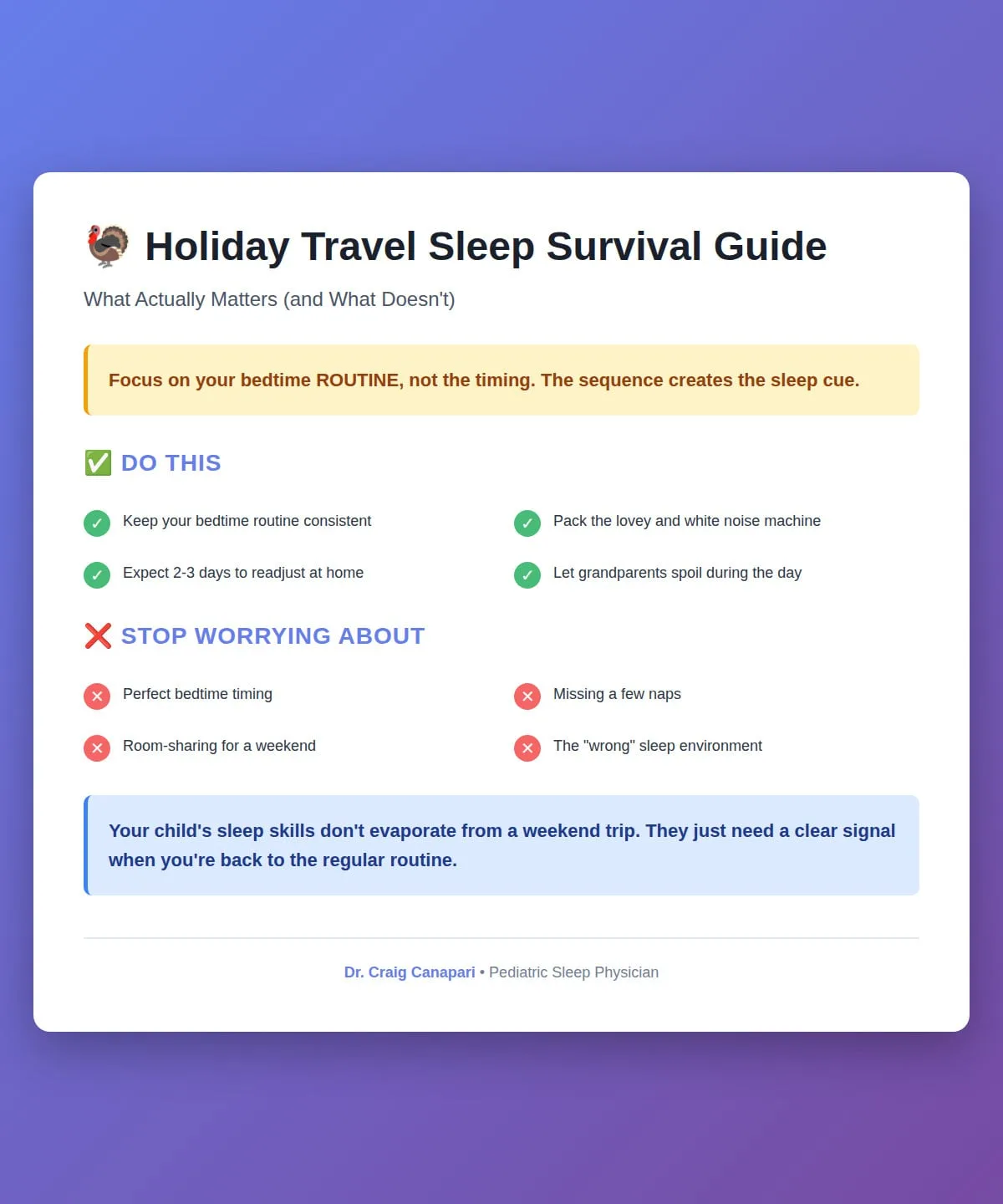
Before delving into specific scenarios, Dr. Canapari emphasizes a singular, foundational principle: focus on maintaining the sequence of your bedtime routine, not necessarily its precise timing. For instance, if a child’s home routine involves a bath, followed by a book, and then bed, this sequence should be replicated even if it occurs later than usual, perhaps at 9 PM instead of 7:30 PM. The consistent order of events serves as a powerful sleep cue for children, signaling that it is time to wind down. This predictability, he notes, not only benefits the child but also offers a calming anchor for parents amidst the holiday flux.
Addressing Common Parental Concerns
Dr. Canapari systematically addresses a range of questions submitted by parents, offering evidence-based guidance for each.
Sharing a Room with Multiple Children
Christina, a parent concerned about her baby and toddler sharing a room for the first time, highlights a common dilemma. Her toddler has a history of "playing" with the baby, necessitating close supervision. Dr. Canapari proposes a staged bedtime approach as a solution. This involves putting the younger child to bed first, ensuring they are settled, before attending to the older child. This sequential method minimizes the opportunity for interaction and potential disruption. He also notes that if a toddler or preschooler is not napping, they might naturally fall asleep earlier than an infant. Crucially, he advises that if there are genuine safety concerns, constant vigilance is paramount.
For situations where the toddler is likely to wake the baby, Dr. Canapari suggests practical measures such as a portable white noise machine to create a consistent auditory environment. He also recommends a "sleep tent" or a separate sleeping space, if feasible, to provide a visual separation. His advice against practicing room-sharing at home before the trip is pragmatic: "Don’t create a new problem trying to prevent a hypothetical one."
Sleep-Trained Babies at Grandparents’ Homes
Lashay expresses anxiety about her 9-month-old, recently sleep-trained using the Ferber method, staying with her parents for two weeks. Her concern centers on the possibility of her baby crying for extended periods and the potential discomfort for her parents. Dr. Canapari reassures parents that a sleep-trained baby often retains these skills in unfamiliar environments, viewing any subsequent crying as a temporary adjustment.
He outlines what to expect: initial fussiness or brief crying spells as the baby acclimates to the new surroundings, potentially longer intervals of wakefulness compared to home, and the possibility of early morning waking due to shifts in environmental cues. His advice for managing parental expectations, particularly with grandparents, is direct: "Before you arrive, have this conversation: ‘She might cry for 10-15 minutes at bedtime while she adjusts. This is normal and she’s not in distress. We’ll be right outside the door, but we’re not going to pick her up unless something is wrong. If you hear crying, please don’t knock on the door or come in—that will make it harder for everyone.’" He suggests using him as a buffer if necessary: "Our pediatric sleep doctor said this is normal adjustment and we should stick to our routine."
Navigating Bedtime During Road Travel
Sarah faces the challenge of driving home at bedtime, with both children typically asleep before 9 PM. Her concern is whether to implement a modified routine before the car journey or wait until arrival. Dr. Canapari advocates for a proactive approach.
Before the drive: He recommends completing a brief, consistent bedtime routine at the departure location, even if it’s just pajamas and a quick story. This signals the transition to sleep.
In the car: He advises minimizing stimulation. Dimming lights, playing calming music, and ensuring a comfortable temperature can aid sleep. For younger children, a portable sound machine can be beneficial.
When you arrive home: Upon reaching home, he suggests a minimal transition. Gently move the children to their beds, avoiding any prolonged wakefulness. The following morning, he advises allowing them to sleep in for an hour or so, enabling parents to also catch a few extra moments of rest.
Extended Vacations and Hyperactivity
Lisa’s concern about her children (ages 4 and 7) becoming hyperactive and staying up late during a 2.5-week trip to Hawaii is a common issue during longer holidays. Dr. Canapari acknowledges that for extended stays, survival mode transitions to a need for structured intervention. He explains that this behavior is often a combination of excitement and the "circadian ‘forbidden zone’," a period where children may struggle to fall asleep due to being overtired and exposed to light later than usual.
The vacation sleep schedule: He recommends establishing a designated "vacation bedtime" that is later than their usual time, perhaps an hour or two, but still within reason. He also suggests a wind-down period, starting the vacation bedtime routine, and encouraging quiet activities like reading or drawing. The key phrase to employ is: "Vacation bedtime starts now. You don’t have to sleep, but you do have to stay in your bed quietly."
Regarding Hawaii specifically, he notes that the 2-hour time difference can be advantageous, as their 8:30 PM Hawaii time aligns with 10:30 PM body time, making them naturally tired. However, he cautions that a similar adjustment period will be necessary upon returning home.
The Nap Disruption on Return Journeys
Evan’s concern about nap disruptions on the drive home from Thanksgiving, impacting their usual early bedtimes and potentially leading to earlier wake-ups, is a valid one. Dr. Canapari identifies this as a real problem and agrees that premature bedtimes can sometimes backfire.
The fix: He advises prioritizing a nap, even if it’s shorter than usual, either before leaving or during the drive. If a nap is missed, he suggests maintaining a slightly later bedtime than usual that evening, rather than an excessively early one. This strategy aims to avoid triggering a 4:30 AM wake-up, prioritizing a single slightly difficult evening over multiple challenging mornings.
Time Zone Travel Challenges
Jamie and Christina’s shared concern about time zone changes, including red-eye flights and significant differences, highlights a more complex aspect of holiday travel. Dr. Canapari acknowledges that time zone travel is indeed more challenging than local trips.
For flights that leave after bedtime: He suggests attempting to maintain the home bedtime routine as much as possible before boarding. Once on the plane, creating a sleep-conducive environment with blankets, eye masks, and a familiar comfort object is key.
The 3-hour rule: For travel across three or more time zones, he recommends allocating 3-5 days for adjustment upon arrival and a similar period for readjustment upon returning home, especially if aiming to align with local time. The principle of reversing the same strategies is advised for the return journey.
Time Zone Notes: Dr. Canapari elaborates on the nuances of time zone travel. For short trips (3-4 days), maintaining the home schedule is often more feasible, particularly when traveling with the nuclear family. Controlling light exposure through blackout curtains is crucial in either scenario. Traveling east is generally easier, allowing for later evenings and potentially more morning sleep if light is managed. Traveling west can be more challenging for younger children, as it requires staying up later. He offers a practical tip for west-bound travel: gradually shifting bedtime later by 30-60 minutes each day in the week prior. Upon returning home, children typically adjust relatively quickly, though some initial adjustment may be necessary. He also addresses a concerning report from Christina, whose 1-year-old took two months to recover sleep-wise after a trip, suggesting that persistent issues might stem from factors beyond simple time zone shifts, such as significant routine disruptions. He advises consulting a pediatrician or sleep specialist if sleep issues persist for more than a week or two post-travel.
Theme Park Sleep Chaos
Sonya’s question about managing sleep during holiday trips to theme parks like Disney, anticipating overstimulation from lights, people, and noise, is a common concern. Dr. Canapari acknowledges that theme parks are significant sleep disruptors, but manageable for short trips.
Disney survival strategy: He advises accepting that some disruption is inevitable. Prioritizing naps, even if they occur in a stroller or on transport, is crucial. He recommends implementing a consistent bedtime routine upon returning to the accommodation, even if it’s later than usual. He also suggests utilizing a portable sound machine and blackout curtains to create a familiar sleep environment.
Transport naps: He encourages parents to embrace these naps, acknowledging that controlling every nap during a theme park visit is not always possible.
Essential Packing for Sleep Success
Based on the range of parental concerns, Dr. Canapari offers a practical packing list:
Essential:
- Familiar Sleep Sack or Blanket: Provides a sense of security and comfort.
- Portable White Noise Machine: Creates a consistent auditory environment, masking unfamiliar sounds.
- Blackout Curtains or Sleep Shades: Essential for controlling light, especially in unfamiliar rooms.
Helpful:
- Child’s Favorite Comfort Object: A stuffed animal or blanket can offer reassurance.
- Travel Crib or Pack N’ Play: Provides a familiar and safe sleep space.
- Portable Night Light: For middle-of-the-night bathroom trips or navigating the room.
- Familiar Pajamas: Reinforces the bedtime routine.
Skip:
- New Toys or Stimulating Activities in Bed: These can detract from the purpose of the sleep space.
- Over-reliance on Screen Time for Soothing: While tempting, it can disrupt sleep patterns.
Three Areas of Parental Over-Worry
Dr. Canapari identifies three common areas where parents often expend excessive worry:
- Room-sharing for a Weekend: While it can cause temporary disruptions, the long-term impact of a few nights of shared sleeping arrangements is minimal. Parents are advised not to create larger problems by stressing over minor ones.
- Missing Naps: A few shortened or skipped naps will not permanently damage a child’s sleep. The solution is a slightly earlier bedtime that night.
- The "Wrong" Sleep Environment: Issues like too much light, noise, or suboptimal temperature are often overcome by children’s adaptability. While portable solutions like sound machines and blackout curtains can help, catastrophizing is unnecessary.
Pre-Travel, During Travel, and Post-Travel Strategies
Dr. Canapari outlines a comprehensive approach to managing sleep during and after holiday travel:
Before you leave:
- Reinforce Routines: Ensure consistent bedtime routines in the days leading up to travel.
- Pack Smart: Gather all essential sleep items.
- Communicate Expectations: Discuss the travel plan with older children.
While you’re there:
- Prioritize the Routine: Focus on the sequence of bath-book-bed, even if the timing shifts.
- Control Light: Utilize blackout curtains to create a dark sleep environment.
- Embrace Naps: Allow for naps whenever possible, even if they are shorter.
- Be Flexible: Accept that perfect sleep is unlikely; aim for manageable sleep.
When you get home:
- Re-establish Home Routine: Immediately revert to your established bedtime and morning routines.
- Maintain Consistent Wake Times: Encourage waking at the usual time to re-regulate the body clock.
- Be Patient: Allow a day or two for a full return to normal sleep patterns.
The True Survival Strategy
The ultimate objective during holiday travel is not flawless sleep, but rather the maintenance of sufficient structure to facilitate a swift return to normal routines upon returning home. Dr. Canapari uses the analogy of dietary habits: indulging in pie for a few days doesn’t negate the ability to eat vegetables; it simply requires a brief period of readjustment. Similarly, a child’s sleep skills do not vanish due to a temporary change in environment; they merely require a clear signal that the regular routine has resumed.
When to Seek Professional Guidance
While most sleep disruptions during the holidays are temporary, Dr. Canapari advises parents to consult their pediatrician or a sleep specialist in the following circumstances:
- Persistent Sleep Difficulties: If sleep issues continue for more than two weeks after returning home.
- Significant Behavioral Changes: If the child exhibits extreme irritability, anxiety, or changes in appetite related to sleep.
- Concerns about Underlying Medical Conditions: If there are any suspicions of medical issues affecting sleep.
A Final Thought on Parental Resilience
Dr. Canapari concludes with a reassuring message: a child’s struggles with travel sleep are not a reflection of parenting failures or ineffective sleep training. Children adapt at different rates, and both ease and difficulty in adapting are normal. He shares a poignant reflection from his own journey, now with a college-aged son and a high schooler, recalling the "chaos and fun" of holidays with young children with fondness. He urges parents not to be overly critical of themselves, emphasizing that they are doing their best. The overarching message is one of embracing the holiday season, confident that sleep patterns will ultimately re-stabilize.
Related Articles:
- Understanding and Managing Night Terrors in Children
- The Science of Sleep Training: Methods and Efficacy
- Navigating Jet Lag: Strategies for Family Travel
- Creating a Sleep-Conducive Environment for Toddlers
- The Impact of Screen Time on Children’s Sleep
Need more help? Sign up for my Sleep Training Mini-Kit in the box below.
Wave Goodbye to Sleepless Nights
Struggling with your child’s sleep? My FREE Sleep Training Mini Course is your lifeline. Learn actionable steps to improve your family’s sleep quality. Subscribe today and say hello to better nights!
