

Published November 2025. Reviewed by Craig Canapari, MD.
The holiday season, a time for family gatherings and cherished traditions, often brings a unique set of challenges for parents, particularly concerning their children’s sleep. While many parents anticipate significant disruptions to established sleep routines, expert analysis suggests that children possess a remarkable capacity for resilience. The prevailing narrative often emphasizes the anxieties surrounding travel-induced sleep disturbances, yet a closer examination reveals that the true impact is frequently overstated, with parental stress playing a more significant role than the actual disruptions themselves. This comprehensive guide, drawing on over two decades of pediatric sleep medicine and parental experience, aims to demystify holiday sleep challenges and offer practical strategies for navigating them effectively.
Navigating the Landscape of Holiday Sleep Disruptions
The common parental concern revolves around the potential derailment of hard-won sleep training, consistent bedtimes, and established routines. The prospect of sharing cramped accommodations, navigating unfamiliar environments, and managing the demands of multiple young children can understandably trigger apprehension. However, Dr. Craig Canapari, a leading pediatric sleep physician, emphasizes that short-term deviations from routine are rarely detrimental to a child’s overall sleep health.
"Kids are surprisingly resilient when it comes to short-term disruptions," Dr. Canapari notes. "It’s our anxiety about those disruptions that creates most of the problems." This perspective shifts the focus from attempting to replicate home routines perfectly to embracing flexibility while maintaining core elements of the bedtime ritual.
A Personal Account: When Expertise Meets Parental Reality
Dr. Canapari himself has experienced the anxieties of travel-induced sleep issues firsthand. He recounts a personal struggle with his eldest son, who would experience night terrors during every overnight stay in a new location. The resulting disruption to the entire household underscored the emotional toll these situations can take and the pressure felt by those in the sleep profession.
"Nothing makes you lose credit as a ‘sleep expert’ when you can’t get your child to stop screaming in the middle of the night," he candidly admits. His past tendency to meticulously try and replicate every element of his sons’ sleep routines at home often exacerbated stress, turning what should have been enjoyable family time into a source of anxiety. This personal journey informed his professional approach, leading him to a more pragmatic and less rigid philosophy regarding travel sleep.
The Cornerstone of Sleep Consistency: The Bedtime Routine
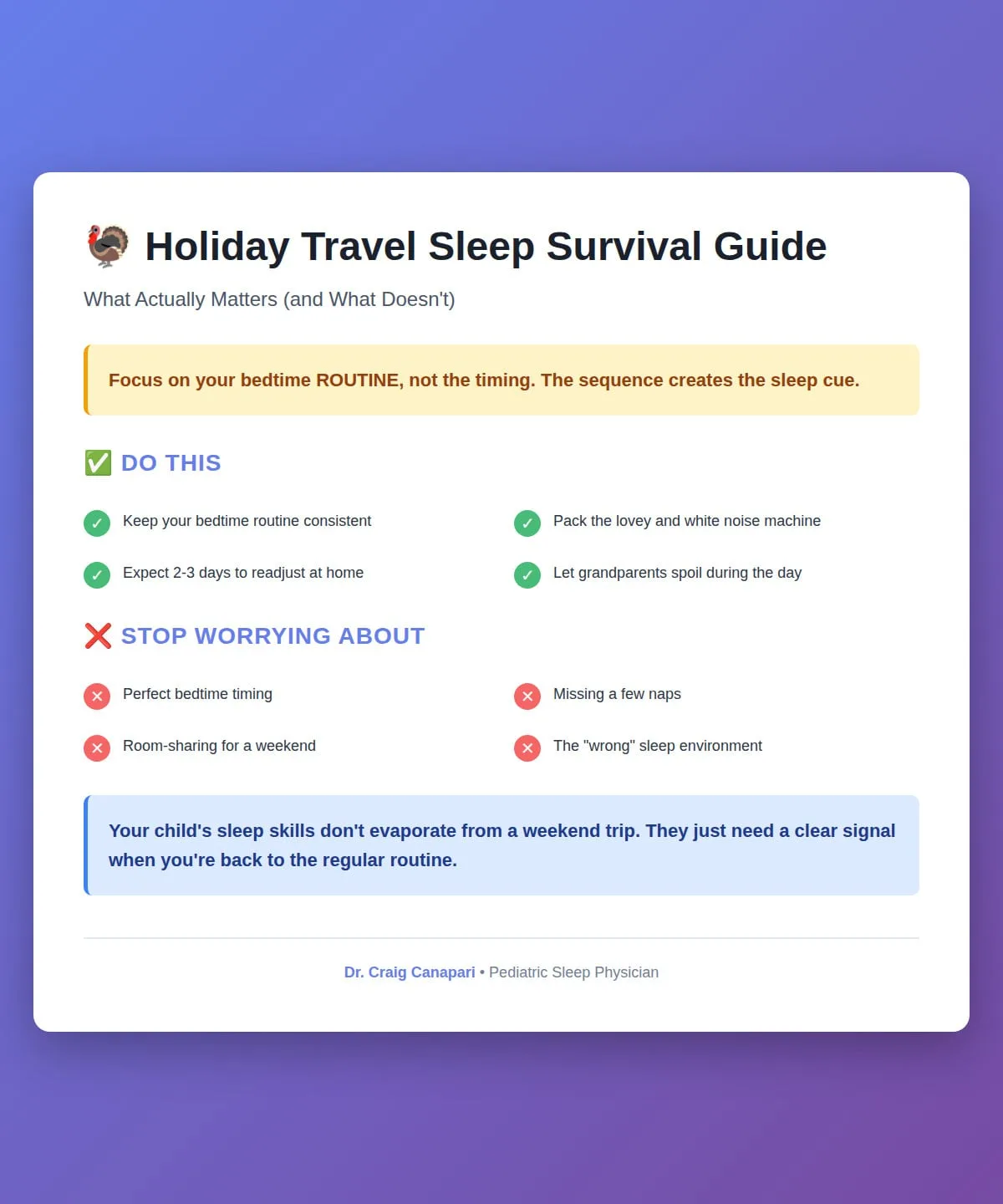
The single most crucial element for maintaining sleep during travel, according to Dr. Canapari, is the bedtime routine. While the exact timing may need to be flexible, the sequence of events leading up to sleep serves as a powerful cue for children.
"Focus on maintaining your bedtime routine. Not the timing. The routine itself," he advises. Whether the home routine involves a bath followed by a book, or pajamas, teeth brushing, and three stories, replicating this sequence in the new environment signals to the child that it is time to wind down. This consistency, even if occurring later than usual, provides a sense of predictability and calm for both the child and the parent.
Addressing Common Parental Concerns: Expert Insights and Strategies
Through his extensive work with families and direct engagement with his subscriber base, Dr. Canapari has identified recurring concerns regarding holiday travel and sleep. Here, he addresses some of the most prevalent questions:
Concern: Room Sharing with Multiple Children
Scenario: A parent expresses anxiety about having two young children, who have not previously shared a room, sleeping in the same space. One child tends to "play" with the other, necessitating close supervision.
Expert Analysis and Strategy: This is a valid concern, particularly when safety is a consideration. Dr. Canapari suggests a staged bedtime approach. This involves putting the younger child to bed first, allowing them to settle before introducing the older child. For infants and toddlers, this might mean ensuring the older child is engaged in a quiet activity or has a clear understanding of the need for quiet.
If the older child is likely to disturb the younger one, strategies such as using a white noise machine to mask sounds, or even a portable playard or crib for the younger child within the shared room to create a designated safe space, can be employed. The key is to manage the environment and expectations to minimize disruptions.
Concern: Sleep-Trained Baby at Grandparents’ House
Scenario: A parent has recently sleep-trained their baby and is concerned about regressions during an extended stay with grandparents. They worry about the baby crying throughout the night and the potential impact on their parents’ perception.
Expert Analysis and Strategy: Dr. Canapari reassures parents that a well-sleep-trained baby is likely to maintain their skills in a new environment. The disruption is temporary. He advises that it’s common for sleep-trained babies to experience a short period of adjustment, perhaps 10-15 minutes of crying, as they acclimate.
Communication with Grandparents: Proactive communication is crucial. Parents should explain to their grandparents that crying is a normal part of the adjustment process and that they will not be intervening unless there is a genuine issue. Framing this as advice from a pediatrician can lend authority to the parent’s approach.
Concern: Driving Home at Bedtime
Scenario: A family must drive home during their children’s usual bedtime, anticipating a late arrival.
Expert Analysis and Strategy: This situation requires a two-pronged approach: preparation before the drive and management during and after.
- Before the Drive: A brief, modified bedtime routine should be conducted before entering the car. This could include pajamas and a quick story to signal the transition to sleep.
- In the Car: The goal is to facilitate sleep. Dimming the car lights, using a familiar blanket or lovey, and playing calming music can help.
- Upon Arrival: The primary objective is to get the child into their own bed as quickly and smoothly as possible. Avoid extensive wakefulness. A brief, familiar bedtime routine at home, even if late, can help signal the end of the day.
The following morning, Dr. Canapari suggests allowing for a slight extension of wake-up time, if possible, to compensate for the disrupted sleep.
Concern: Hyperactivity and Late Nights on Extended Vacations
Scenario: Children become overly excited and stay up much later than usual during extended trips, leading to exhaustion for both the children and parents.
Expert Analysis and Strategy: For vacations longer than five to six days, a more structured approach is necessary. While some initial excitement is to be expected, prolonged deviations can disrupt the child’s natural circadian rhythm.
The Vacation Sleep Schedule: Dr. Canapari recommends establishing a consistent bedtime, even if it’s later than the home schedule. The phrase, "Vacation bedtime starts now. You don’t have to sleep, but you do have to stay in your bed quietly," can be effective in setting boundaries. This allows children a period of quiet downtime in their room, even if they aren’t immediately asleep.
For destinations with significant time zone differences, such as Hawaii, Dr. Canapari notes that the time difference can actually be beneficial initially, as the later body clock can align with the local evening. However, he cautions that consistent adherence to a modified routine is still key.
Concern: Nap Disruptions During Day Trips
Scenario: A day trip to a family gathering results in skipped or shortened naps, leading to concerns about early wake-ups due to overtiredness.
Expert Analysis and Strategy: Dr. Canapari acknowledges the challenge of maintaining naps during daytime excursions. He advises against an overly early bedtime in response to a missed nap, as this can paradoxically lead to earlier wake-ups.
Instead, he suggests:
- Prioritizing a nap: If possible, try to facilitate a nap in the car or a quiet space at the destination.
- Maintaining the bedtime routine: Even if naps were inconsistent, a solid bedtime routine at home signals the end of the day.
- Allowing for flexibility the next morning: A slightly later wake-up can help mitigate the effects of a disrupted day.
Concern: Time Zone Changes and Jet Lag
Scenario: Parents are worried about the significant impact of time zone changes, particularly on red-eye flights or trips involving substantial time differences.
Expert Analysis and Strategy: Time zone travel is inherently more challenging than local travel. Dr. Canapari outlines strategies for managing these shifts:
- For flights after bedtime: Keeping children awake until their normal bedtime at home before boarding can help them sleep for a portion of the flight. Once on the plane, creating a dark and quiet sleep environment is crucial.
- The 3-Hour Rule: For changes of three or more time zones, expect a corresponding adjustment period of three to five days upon arrival and a similar period upon return.
- Traveling East vs. West: Traveling east often makes it easier to stay up later, while traveling west can be more challenging for younger children, as it requires them to fall asleep earlier than their internal clock dictates.
- Controlling Light Exposure: Blackout curtains are essential for managing light exposure, helping children sleep later when traveling east and fall asleep earlier when traveling west.
Dr. Canapari also addresses unusual cases where a child takes an extended period to readjust after travel, suggesting that this may indicate other underlying issues beyond simple jet lag.
Concern: Theme Park Sleep Chaos
Scenario: Parents anticipate significant sleep disruption due to the stimulating environment of theme parks like Disney.
Expert Analysis and Strategy: Theme parks are acknowledged as prime sleep disruptors, but for short trips, this is often manageable.
Disney Survival Strategy:
- Embrace naps: Allow for naps in strollers or designated quiet areas.
- Maintain the routine: Even a modified routine in the hotel room can provide a sense of normalcy.
- Utilize quiet time: Encourage downtime in the hotel room before bed to help children decompress.
- Manage expectations: Recognize that sleep will likely be less than ideal, and focus on enjoying the experience.
Essential Packing for Sleep Success
Based on common travel challenges, Dr. Canapari recommends a curated packing list to support sleep:
- Essential:
- Familiar lovey or blanket
- White noise machine (portable)
- Blackout curtains (travel versions)
- Helpful:
- Child’s own pillow
- Comfortable sleepwear
- Favorite bedtime books
- Skip:
- Toys that encourage active play before bed
- Excessive electronics in the sleep space
Three Key Areas for Parental Peace of Mind
Dr. Canapari identifies three common parental worries that can be largely alleviated:
- Room-sharing for a weekend: While not ideal for long-term, short-term room-sharing is unlikely to cause lasting sleep damage.
- Missing naps: A few missed or shortened naps are not catastrophic. The focus should be on ensuring an earlier bedtime that night and moving forward.
- The "wrong" sleep environment: Children are adaptable. While a conducive environment is helpful, minor deviations in light, sound, or temperature are usually overcome with time.
Pre-Travel, During Travel, and Post-Travel Strategies
A structured approach to travel sleep can be broken down into three phases:
- Before You Leave:
- Reinforce good sleep habits in the weeks leading up to travel.
- Pack essential sleep items.
- Discuss expectations with children and other family members.
- While You’re There:
- Prioritize the bedtime routine.
- Be flexible with timing.
- Maximize natural light exposure during the day.
- Minimize screen time before bed.
- When You Get Home:
- Immediately resume your normal sleep schedule.
- Maintain consistency with routines.
- Be patient, as a full return to normalcy may take a day or two.
The Real Survival Strategy: Resilience and Readjustment
The ultimate goal during holiday travel is not perfect sleep, but rather the ability to quickly return to established routines upon arriving home. Dr. Canapari likens this to dietary habits: consuming rich foods for a few days doesn’t erase the body’s ability to process healthy ones. Similarly, a child’s sleep skills are not lost due to temporary environmental changes. They simply require a clear signal that the normal routine has resumed.
When to Seek Professional Guidance
While most travel-related sleep disruptions are temporary, there are instances when professional intervention may be warranted. Parents should consult their pediatrician or a sleep specialist if:
- Sleep issues persist for more than two weeks after returning home.
- The child exhibits significant changes in behavior or mood related to sleep.
- There are underlying medical conditions that may be affecting sleep.
A Final Word of Encouragement
Dr. Canapari concludes with a message of reassurance for parents. The ability of a child to adapt to new sleep environments varies, and neither easy adaptation nor struggle is a reflection of parental failure. He shares a personal perspective from his own family, where children have transitioned into adulthood, and fondly remembers the "chaos and fun of holidays with little kids." The overarching sentiment is to embrace the present, manage expectations, and trust that with consistent effort, sleep routines will eventually normalize. The holiday season, with all its joys and minor sleep challenges, is a temporary chapter that ultimately contributes to cherished family memories.
Related Articles
- [Link to Article 1 on Sleep Training Methods]
- [Link to Article 2 on Managing Bedtime Battles]
- [Link to Article 3 on the Impact of Screen Time on Sleep]
- [Link to Article 4 on Creating a Sleep-Conducive Environment]
- [Link to Article 5 on Understanding Sleep Cycles in Children]
Need More Help?
Sign up for the Sleep Training Mini-Kit for actionable steps to improve your family’s sleep quality. This free resource offers practical guidance for parents struggling with their child’s sleep, promising better nights and a more rested family.
