

Originally published November 2025. Last reviewed/updated by Craig Canapari, MD in December 2025.
Nap transitions represent a complex and often bewildering phase for parents, pediatricians, and sleep consultants alike. Predicting when a child will relinquish a nap and navigating the often-turbulent period of transition can be a significant challenge. A burgeoning field of research and practical advice has emerged to demystify these developmental shifts, as evidenced by the surprising virality of a recent social media excerpt from the Sleep Edit podcast.
A Viral Phenomenon: The Unexpected Reach of Sleep Science
Dr. Craig Canapari, a pediatrician and host of the Sleep Edit podcast, shared a brief excerpt from an episode dedicated to napping, and its impact on social media platforms was unprecedented. This particular segment, focusing on the neurological underpinnings of nap transitions, resonated deeply with a broad audience, amassing hundreds of thousands of views across Instagram and TikTok within a short period. The engagement far surpassed that of previous content, underscoring the widespread parental concern and curiosity surrounding children’s sleep patterns.
The overwhelming response, with over 60 comments on a single Instagram post, indicated that the topic of naps and their connection to brain development had struck a significant chord. At its core, the viral content summarized research from the University of Massachusetts (UMass) proposing a hypothesis linking the maturation of the hippocampus—a brain region critical for memory formation—to the process of nap transitions. The intuitive appeal of this concept, suggesting that changing sleep needs are a natural consequence of a developing brain, likely contributed to its widespread dissemination.
Parental Insights: The Real-World Echo of Scientific Inquiry
The influx of comments following the discussion on hippocampal development provided a rich tapestry of parental experiences, questions, and even humor, solidifying nap transitions as a nearly universal challenge in early childhood. Several recurring themes emerged from these discussions, offering valuable insights into the practical realities faced by families.
The Spark of Curiosity
A dominant sentiment was one of profound curiosity and a dawning realization. Many parents expressed surprise and intrigue at the direct link between naps and cognitive development. Comments such as, "So interesting! I never thought naps could be linked to brain development," and "Makes total sense once you think about memory consolidation," highlighted a natural inclination among parents to connect observable behaviors at home with scientific understanding. This curiosity serves as a crucial bridge, facilitating the adoption of evidence-based practices.
Navigating the "Sleep Math" Dilemma
Beyond initial curiosity, many parents delved into the intricate "sleep math" that defines nap transitions. The comments often reflected the frustrating dichotomy of this phase:
- "If my three-year-old naps, bedtime is a disaster. If he skips it, he’s cranky for three hours – there’s no winning."
- "We’re in the weird in-between: my son still needs a nap, but it ruins bedtime every single night."
These anecdotes perfectly encapsulate the "uneasy phase" where a child’s need for rest begins to wane, but their internal clock has not yet fully adjusted. Dr. Canapari often explains to parents that children do not simply "decide" to stop napping. Instead, there is frequently a period of resistance, where a nap might be needed but resisted, or naps are inconsistently taken (e.g., at daycare but not on weekends). This inconsistency is a hallmark of the transition period.
Individual Trajectories: Recognizing Variability
A consistent reminder from parents was the inherent variability in developmental timelines. Anecdotal evidence highlighted a wide spectrum of nap cessation:
- "My daughter stopped napping right after turning two and her memory is incredible."
- "Our son gave up naps around 2½ and he’s seven now – super mature and focused."
While these personal accounts might seem to contradict the general findings of the UMass study, they actually serve to emphasize the natural variation in brain development. The maturation of neural systems is not a synchronized event; it unfolds at different paces for each child, and these individual differences are perfectly normal.
Seeking Clarity and Understanding
A segment of the parent community sought further clarification on the implications of nap cessation:
- "Does dropping naps that young affect other parts of growth?"
- "Are we talking about dropping all naps or just cutting from three to two?"
These questions underscore the need for clear, evidence-based explanations. The research primarily focuses on the transition from multiple naps to one, and subsequently, from one nap to none. It does not suggest that parents should proactively alter their child’s established sleep schedule based on this information alone. The goal is to understand the underlying developmental processes.
Creative Solutions and Practical Adaptations
The comments section also became a hub for sharing innovative strategies and workarounds developed by parents:
- "Daycare still makes them nap, and bedtime is chaos – what should I ask the teacher to do?"
- "We switched to quiet time instead of naps – books and soft music. It’s been a game-changer."
These practical adaptations demonstrate the ingenuity of parents in balancing scientific understanding with the demands of daily life. The ultimate aim is not to "win" the nap battle but to ensure adequate rest and maintain family equilibrium.

A Touch of Humor
Among the practical advice and earnest inquiries, a particularly memorable comment offered a lighthearted perspective: "I guess my husband’s hippocampus is still developing!" This humorous observation, while not scientific, perfectly captures the shared understanding and relatable challenges that come with discussing child development.
The Scientific Foundation: A Deeper Dive into the UMass Study
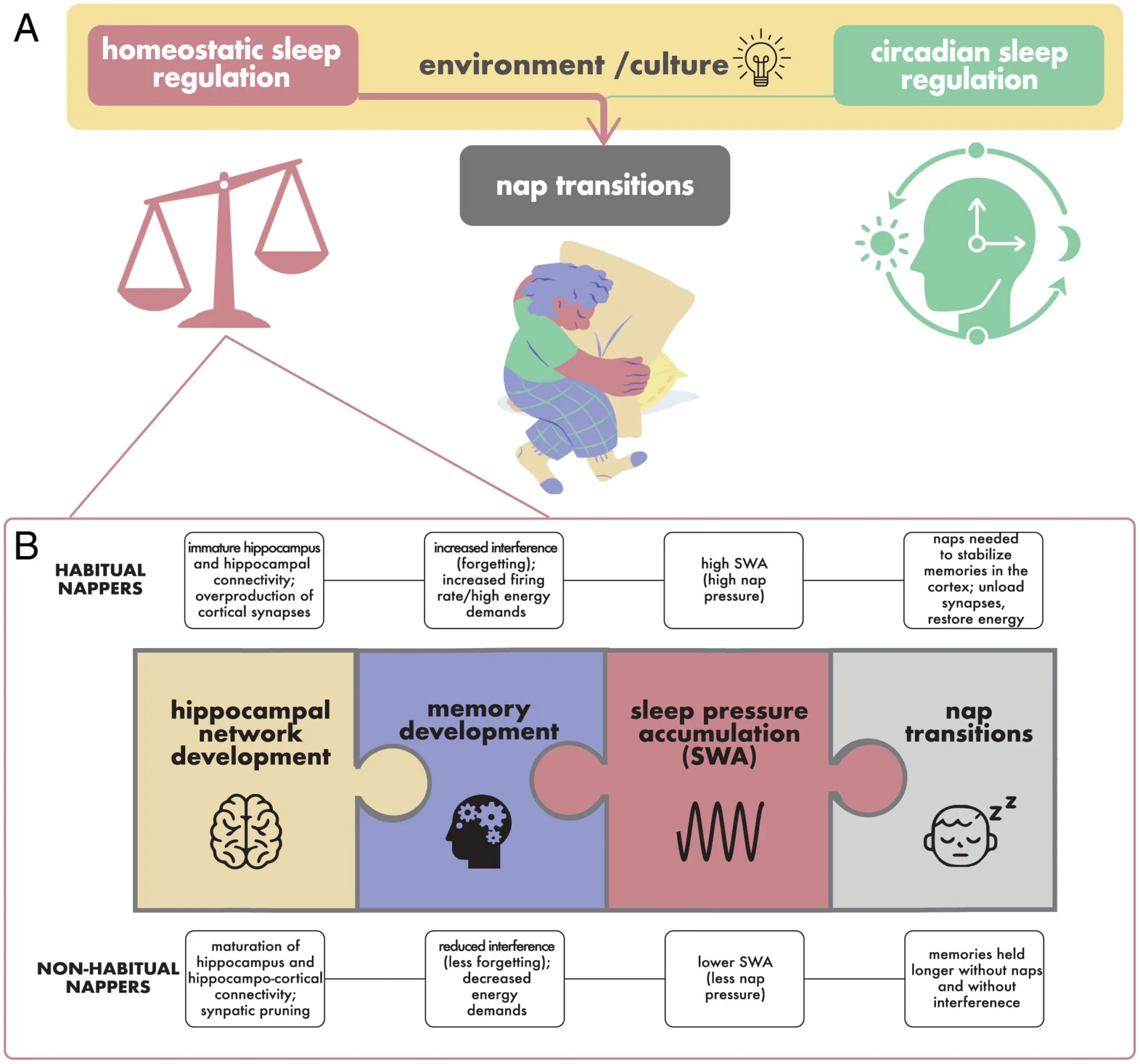
The discussion was prompted by a "perspective" piece published in the Proceedings of the National Academy of Sciences of the United States of America (PNAS) by Spencer and Riggins (2022). This article, rather than presenting new experimental data, synthesizes existing research to propose a novel model linking brain development, particularly the hippocampus, to the timing of nap transitions in early childhood.
The authors begin by outlining the two primary biological drives governing sleep-wake cycles: sleep drive and the circadian clock. Sleep drive, the increasing physiological need for sleep that accumulates with prolonged wakefulness, is understood to build more rapidly in infants and at a slower rate as children mature. This explains the typical progression from multiple naps in newborns to fewer naps in toddlers and preschoolers. However, the exact timing of nap transitions—from three to two naps, two to one, or the complete cessation of naps—remains largely unpredictable.
The study highlights the wide age ranges associated with these transitions:
| Nap Transition | Typical Age Range | Description |
|---|---|---|
| 3 naps → 2 naps | 6–9 months | Morning, midday, and late afternoon naps consolidate to two (morning and afternoon) naps. |
| 2 naps → 1 nap | 12–18 months | Morning nap drops; most children nap only in the afternoon. |
| 1 nap → no naps | 3–5 years | Afternoon nap gradually ceases; most children stop napping by age 5. |
The UMass perspective proposes that the maturation of the hippocampus plays a crucial role in this process. As the hippocampus becomes more efficient at consolidating memories, the brain’s need for frequent naps to "offload" new information may decrease. The hippocampus, a seahorse-shaped structure deep within the brain, is integral to memory formation, particularly emotional memories.
The authors posit that early childhood is characterized by a unique developmental challenge: a massive influx of new information to be learned by neural systems that are still under construction. This period sees a high production of synapses—connections between neurons—which peaks in early childhood. This process of synaptic pruning, where less relevant connections are eliminated to strengthen important ones, is crucial for cognitive development.
According to Spencer and Riggins, naps serve as a critical mechanism to manage the demands on this developing brain. They suggest that sleep, particularly slow-wave sleep (SWS) characterized by deep rest, helps to alleviate the "space and energy challenges" associated with this rapid synaptic growth. In essence, naps may facilitate the unloading of synapses across the cortex, making way for new learning and consolidating existing information.
A particularly compelling point made in the perspective is the link between naps and the processing of emotional memories. Slow-wave activity during naps has been shown to predict the consolidation of memories for emotional faces and can reduce emotional attention bias in young children. This suggests that napping helps to decrease the emotional load on the brain.
The authors propose that this mechanism offers a potential explanation for the common phenomenon of the "witching hour"—the period of intense fussiness and dysregulation often observed in children at the end of the day if they have not napped. If children are unable to process the emotional experiences of the morning through napping, they may become more reactive to stimuli, leading to increased emotional dysregulation.
Translating Science into Practical Guidance
It is crucial to clarify what the UMass study does not suggest:
- It does not advocate for altering a child’s established sleep schedule based solely on this research. The findings are descriptive and explanatory, not prescriptive.
- It does not imply that children who stop napping early are inherently more advanced or that those who nap longer have developmental delays. Individual rates of maturation are highly variable.
- It does not suggest that external interventions are necessary to force nap cessation or continuation. The process is largely driven by internal biological changes.
For parents grappling with nap transitions, several evidence-based strategies can be beneficial:
- Maintain a consistent bedtime routine. A predictable wind-down period can signal to the body that it’s time to sleep, regardless of nap status.
- Observe your child’s cues. Look for signs of overtiredness or readiness to drop a nap, but also be mindful of the "uneasy phase" where naps might be resisted but still beneficial.
- Consider "quiet time" as an alternative. If a child is refusing to sleep, a designated period of quiet, independent activity can still provide a restorative break.
- Consult with a pediatrician or sleep consultant. For persistent sleep challenges, professional guidance can offer tailored strategies.
The Enduring Message: Embracing Developmental Journeys
The broader takeaway from the research and the widespread parental engagement is that every child’s developmental timeline is unique. Nap transitions are a natural part of this journey, not a measure of parental success or failure. Comparing a child’s nap habits to those of their peers can lead to unnecessary anxiety. Similarly, parents may experience guilt when naps disappear earlier than expected, but this is a common and typically non-concerning developmental shift.
The conversation around nap transitions highlights the powerful intersection of scientific discovery and everyday parenting. By understanding the biological underpinnings of sleep, parents can approach these developmental phases with greater insight and less stress, ultimately fostering healthier sleep habits and supporting their child’s overall well-being.
For further exploration of nap transitions and the science of sleep, viewers are encouraged to consult Episode 15 of The Sleep Edit podcast, which features visual aids on its YouTube version, or Dr. Canapari’s blog post dedicated to nap problems.
