

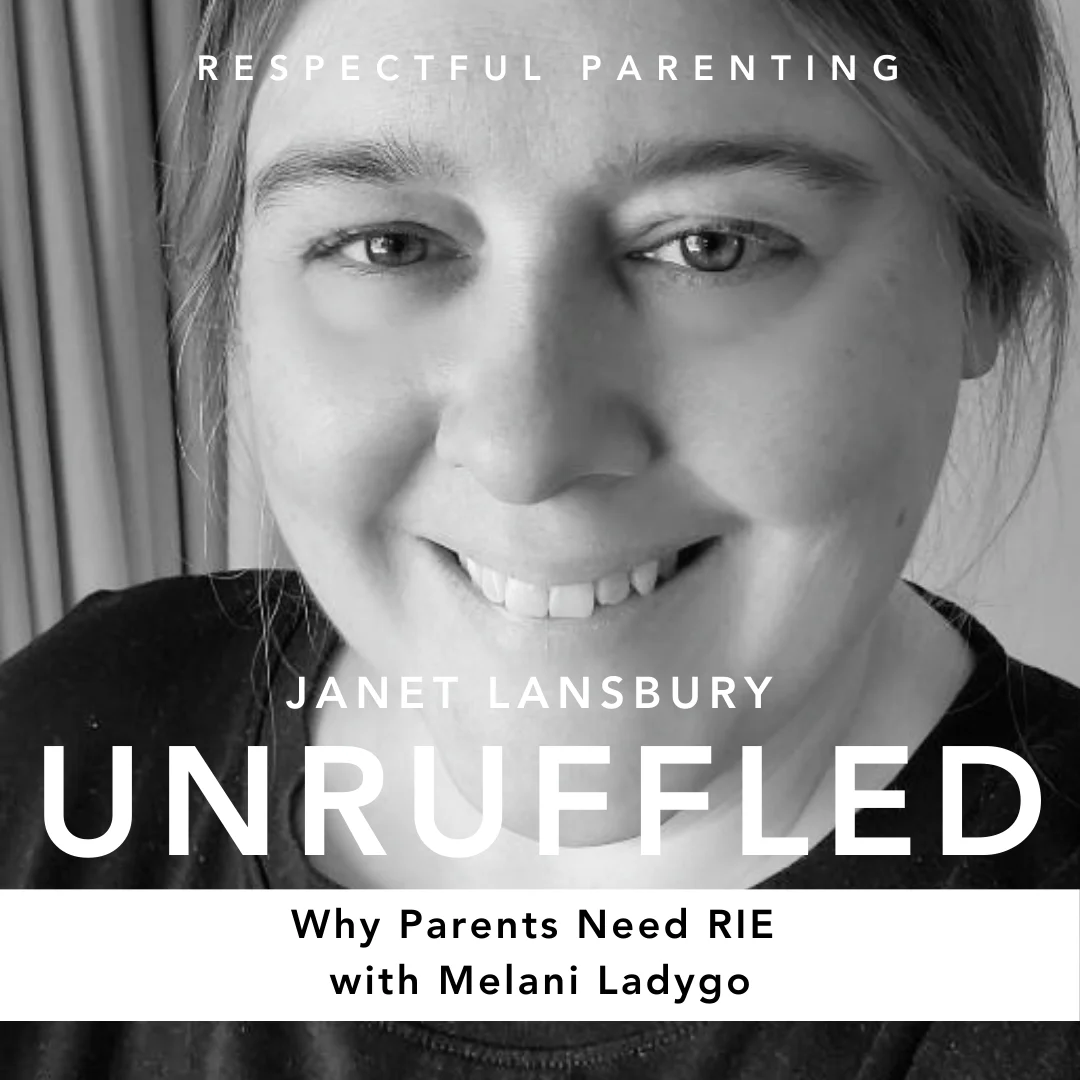
A recent podcast episode featuring Janet Lansbury and Melani Ladygo, Executive Director of Resources for Infant Educarers (RIE), delved into the core principles and profound impact of the RIE approach on parenting and early childhood education. The discussion, hosted on Lansbury’s "Unruffled" podcast, aimed to demystify RIE, a philosophy inspired by infant expert Magda Gerber, which emphasizes respectful, reciprocal relationships with infants and toddlers. Ladygo and Lansbury articulated the philosophy’s capacity to foster genuine connection, trust, and an understanding of the infant’s inherent personhood, offering insights into its practical application and transformative benefits for both children and their caregivers.
Understanding the RIE Philosophy: A Resource for "Educarers"
The RIE approach, pronounced "rye," is not merely a set of techniques but a fundamental shift in perspective regarding infants and toddlers. The organization’s name, Resources for Infant Educarers, encapsulates its mission: to provide support and guidance for individuals who "care while they educate and educate while they care." This dual focus highlights the RIE belief that caregiving is an inherently educational process, and education should be delivered with the utmost care and respect.
Melani Ladygo, who has been deeply involved with RIE for many years, shared her initial challenge in articulating the RIE philosophy concisely. "I really think it was the years that I spent working in the office as the person who would answer the phone… And I really got practice in talking to people about it and saying what it is. It kind of changes every time, depending on who I’m talking to, but essentially RIE is an organization that teaches parents and professionals how to have respectful, reciprocal relationships with babies and toddlers, children zero to two."
Janet Lansbury, a long-time advocate and practitioner of RIE, echoed this sentiment, emphasizing the philosophy’s ability to reveal the infant as a complete person from birth. "I originally thought, before I discovered this approach, I thought that bond and respect was something that happens later, when they’re talking and you can do things together and play together… But then what RIE taught me… was that she had all these thoughts and all of these ideas and all this stuff going on inside her that I had not realized could possibly exist in a baby." This realization, Lansbury noted, transformed her perception and desire to truly "discover that person and get to know her and bond with her."
The Genesis of RIE: A Response to Conventional Child-Rearing
The RIE philosophy emerged in the mid-20th century as a direct response to prevailing child-rearing practices that often viewed infants as passive recipients of care rather than active participants in their own development. Magda Gerber, an Austrian-born infant specialist, developed the RIE approach based on her observations and experiences. Having trained with Dr. Emmi Pikler in Hungary, Gerber was influenced by Pikler’s emphasis on respecting the infant’s autonomy and the importance of a secure attachment relationship.
The RIE approach is rooted in several core principles:
- Basic Trust: Believing in the infant’s innate competence and ability to learn and develop.
- Respect: Treating infants as whole individuals with unique thoughts, feelings, and needs.
- Authenticity: Allowing infants to experience and express their true selves without unnecessary intervention or distraction.
- Observation: Paying close attention to the infant’s cues and communications to understand their perspective.
- Communication: Engaging in clear, honest, and respectful communication with infants, even before they can speak.
- Free Play: Providing an environment that allows for self-directed exploration and learning, free from adult direction.
- Safe Limits: Establishing clear and consistent boundaries that protect the child while respecting their autonomy.
Melani Ladygo’s Journey: From Child Development to RIE
Ladygo’s personal journey into the world of RIE began with an interest in child development, particularly the burgeoning understanding of brain development in infants. "I first started being interested in young babies because I took a child development course and I learned about brain development," she explained. This academic curiosity led her to a childcare center that was heavily influenced by RIE principles.
"I walked into this room with 12 babies and felt peaceful, and it was kind of surprising to me how peaceful it felt," Ladygo recalled. She described a pivotal moment where a teacher gently corrected her impulse to "help" a baby climb a slide by placing her hands under its feet. The teacher’s insightful question, "how do you think she’s going to feel the next time she tries to go up that slide and you aren’t there?" prompted Ladygo to consider the infant’s perspective and the importance of allowing children to experience their own efforts and successes. This experience ignited her curiosity about the RIE approach, ultimately leading her to formal training.
The Transformative Impact on Parents: Beyond Child-Rearing
A central theme of the podcast was the profound benefit of the RIE approach not just for children, but for parents themselves. Lansbury articulated this shift: "This is for parents. This sounds like we’re talking about how to do the best thing for babies, but what this is really about, and why I share it so passionately, is for us."
By recognizing and respecting the infant as a person, parents are also given permission to be their authentic selves. The pressure to be a "perfect parent" often portrayed in media or social platforms diminishes, replaced by a more genuine and comfortable engagement. This can alleviate significant pressure and exhaustion.
"When we see the person in our baby, then we get to be seen by them as ourselves," Lansbury stated. "We get to be ourselves. We don’t have to say the right things and do the right things and be this perfect parent… We get to be a whole person too in the way that we engage with our baby and have boundaries."
This perspective shift can transform the daily experience of parenting from a series of demanding tasks into a more fulfilling and enriching relationship. The RIE approach encourages parents to step back, observe, and trust their child’s capabilities, thereby reducing the perceived burden of constant intervention. As Ladygo observed, "It so, so does [take a load off]. When I first started working at that childcare center, I was only working six hours a day… but it felt so good to be in the classroom. It felt so good to be with children in that way."
Cultivating Trust and Resilience: A Foundation for Life
One of the most significant gifts of the RIE approach, according to both Lansbury and Ladygo, is the cultivation of trust between parent and child, and the development of resilience in the child. This is achieved by allowing children to navigate challenges and experience their own efforts, rather than having them immediately "rescued" or overly assisted.
Ladygo described a RIE parent-infant class where active toddlers were in a confined space due to rain. Despite the seemingly chaotic environment, the parents remained remarkably calm and relaxed. Observers were struck by the parents’ confidence in their children’s abilities. Ladygo explained that this confidence is not innate but developed through a process of observing children as they struggle, attempt new things, and learn to self-regulate. "The more you start to see how capable they are, the more you can relax and have that trust."
This trust-building process extends far beyond infancy, equipping children with the emotional and psychological tools to face life’s inevitable difficulties. Lansbury noted, "It takes us all the way through life with our child. I could say with children as adults, it takes you all the way through the college applications and the career decisions and the disappointments and the heartbreak of relationships." By experiencing their struggles with parental support and acknowledgment, children learn that life isn’t always easy, but they have the capacity to endure and overcome.
The Power of Authentic Connection and Boundaries
The RIE philosophy champions authenticity in relationships, including the parent-child dynamic. This means allowing for genuine emotions, both positive and negative, without judgment or the need to "fix" them.
"When you said free to be ourselves, I think about the reflection a lot of parents have about the impulses that come up for themselves," Ladygo remarked. "And the thing that RIE gives you is the opportunity to pause and choose, do you want to react or respond?" This pause allows for conscious choice, moving away from knee-jerk reactions shaped by upbringing or societal expectations.
The podcast also touched upon the importance of setting and maintaining boundaries within this framework of authenticity. Ladygo shared an anecdote about a mother struggling with her strong-willed daughter who insisted on being alone in a rocking boat. The mother’s initial reaction was to try and persuade her daughter to share, reflecting a common parental impulse. However, through the lens of RIE, the mother came to understand the validity of her daughter’s desire for autonomy and the importance of her child learning to assert her needs.
Lansbury elaborated on the RIE approach to conflict resolution, emphasizing neutrality and allowing children to experience the natural consequences of their actions, while ensuring safety. "I would still allow the children to decide for themselves if they want to go up against that. And if they do, I’m not going to let her push them off, I’m going to have my hand there so she can’t hurt them or physically keep them from getting in. For me, the idea is that, Yes, your point of view is valid, and so are these other children that want to get on. I’m not going to help them on, I’m not going to help you hold onto it, but I’m going to allow the children and you to figure that out, with me there keeping everybody safe." This approach, they suggested, fosters genuine social intelligence and empathy.
The RIE Conference: A Hub for Learning and Community
The discussion concluded with an announcement about the upcoming 36th Annual RIE Conference, themed "Nature’s Path for Play: Creating Conditions for Authentic Playfulness." The conference, taking place online, offers a significant opportunity for parents and early childhood professionals to deepen their understanding and application of RIE principles.
"Unlike our courses, where we’re going to teach you exactly what the approach is, what happens at the conference is you get to really see all the many, many different ways that this work can be applied," Ladygo explained. The conference features workshops on topics such as integrating free play with documentation standards, conflict resolution through play, and the role of authentic playfulness in child development, with keynote speaker Peter Gray.
Lansbury highlighted the conference as a "banquet" of knowledge, offering insights into how RIE can be applied in various settings, from classrooms to home environments. The conference also emphasizes the importance of community, providing a space for like-minded individuals to connect and share their experiences, a sentiment particularly relevant in an era where genuine human connection can be challenging to find.
The RIE approach, as presented in this podcast episode, offers a powerful framework for parents and educators seeking to foster deeper, more respectful relationships with young children. By emphasizing trust, authenticity, and observation, it empowers caregivers to see infants and toddlers as capable individuals, leading to more peaceful and fulfilling interactions for all involved.
