

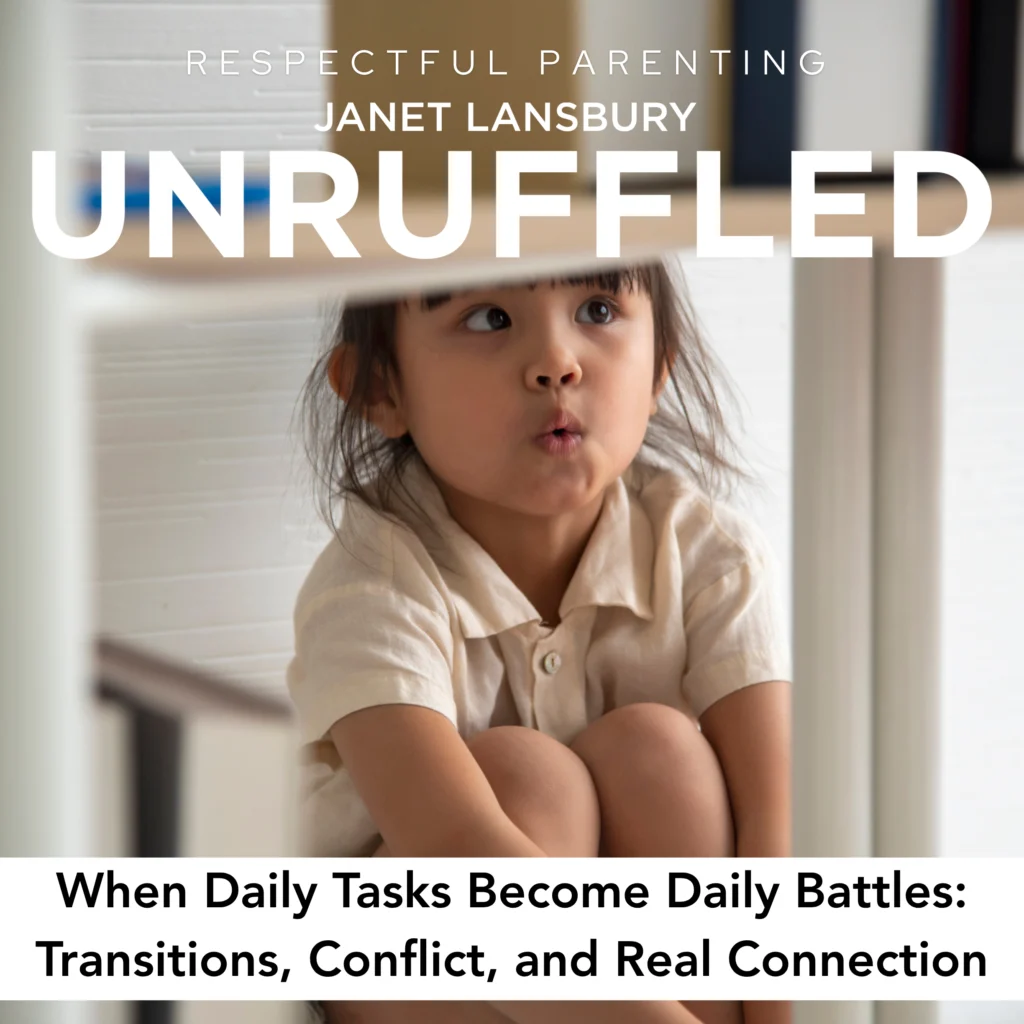
A poignant exchange between a concerned single mother and renowned parenting expert Janet Lansbury has illuminated the pervasive challenges many families face when routine daily tasks devolve into protracted struggles. The mother, seeking guidance on her five-year-old daughter’s persistent resistance to getting dressed, hair brushing, bathing, and teeth brushing, articulated a common parental dilemma: how to maintain a connected and respectful relationship while navigating necessary, yet often contentious, daily routines. Lansbury’s insightful response, disseminated through her popular podcast “Unruffled,” offers a profound reframing of these conflicts, emphasizing the power of authentic connection over behavioral strategies.
The initial query, shared via Facebook messages, detailed a mother’s frustration. Her daughter, a “sweet, affectionate, social butterfly” described as “beautifully bossy,” has consistently resisted these fundamental self-care routines since the age of three. The parent’s attempts to elicit cooperation—employing timers, countdowns, reward charts, playful games, and even punishments—have proven largely ineffective, often culminating in hour-long battles that leave both mother and child exhausted and the tasks incomplete. This parent, a single mother working long hours with limited support, expressed a deep desire to foster a secure and connected family life, particularly given the inherent inconsistencies introduced by co-parenting arrangements. She noted her daughter’s upcoming transition to first grade, a significant life event that, coupled with the complexities of her parents’ separation, could exacerbate feelings of instability.
Lansbury, recognizing the universality of this parental struggle, chose to address the situation on her podcast, highlighting the critical role of perspective in navigating such challenges. The core of her advice centers on understanding what true connection entails, especially amidst conflict, and re-evaluating the efficacy of common parenting strategies.
The Parent’s Perspective: Seeking Balance in Connection and Boundaries
The mother’s detailed follow-up communication to Lansbury provided crucial context for the expert’s response. She defined "less pressure, more connection, acceptance, and leadership" as feeling confident in her parental role while operating as a unified team with her daughter. Her aim is to communicate respectfully, ensuring her daughter’s voice is heard, thereby teaching her self-worth and fostering confidence. However, she acknowledged the inherent tension between this ideal and the reality of life’s demands, which necessitate engagement with difficult, uncomfortable, or non-negotiable tasks.
Her reflections on her own upbringing as a millennial, where parenting often involved suppressing uncomfortable emotions and focusing on behavior modification, are particularly insightful. While acknowledging the love present in her childhood, she recognized a behavioral-centric approach to resolving struggles. She aspires to provide her daughter with a different internal narrative—one that is encouraging and compassionate, even when faced with adversity. Yet, the daily transitions often trigger patterns she actively seeks to avoid, leading to a recurring sense of being “stuck.” This internal conflict prompts her to question whether an overemphasis on connection might inadvertently impede her daughter’s growth, and how to discern when a child needs support versus when a parent must assert a firmer boundary.
Lansbury’s Analysis: Deconstructing the "Battles"
Janet Lansbury’s response posits that the parent’s well-intentioned strategies, while common, may inadvertently obstruct the very connection they aim to foster. She argues that external fixes like timers, countdowns, and reward charts, while seemingly practical, bypass the opportunity for genuine, person-to-person connection. These methods, in her view, act as distractions from the deeper emotional work required.
Lansbury emphasizes that a child’s resistance to tasks like getting dressed or brushing teeth is rarely about the inherent unpleasantness of the task itself. Instead, it often serves as an outward manifestation of deeper feelings related to transitions, instability, or the need for emotional containment. The child, in essence, is signaling, "I need to be a mess during transitions. Can you gather me through these overwhelmed feelings? Can you remain confident in the face of my distress?"
The Role of Transitions in Child Development
Child development experts consistently highlight the significant impact of transitions on young children. These periods, whether moving from one activity to another, changing caregivers, or adapting to new environments, can be sources of anxiety and require significant emotional regulation skills. For children experiencing parental separation, the inherent instability of moving between two homes and two lives adds another layer of complexity. Lansbury acknowledges this, noting that a child’s resistance during transitions is a normal developmental response, especially when combined with life changes like parental divorce or the impending start of school.
The parent’s description of her daughter as a “social butterfly” and “beautifully bossy” entering first grade suggests a child who is generally adaptable and confident in her external interactions. Lansbury interprets this as a testament to the parent’s existing ability to foster connection and trust, indicating that the foundational elements for navigating these challenges are already in place.
Re-evaluating Parenting Strategies: Connection Over Control
Lansbury critiques common strategies, particularly punishments and reward charts, as counterproductive to genuine connection. Punishments, she argues, directly undermine the parent-child bond. Reward charts, while seemingly positive, can create a transactional dynamic where the child feels manipulated rather than understood. Games, while potentially useful, are most effective when they stem from the parent’s genuine sense of calm and control, not from a place of desperation.
The underlying message of these external strategies, Lansbury suggests, can be interpreted by the child as: "I am not comfortable with you expressing your overwhelmed feelings during these simple transitions. I need to make this go smoothly, rather than allowing you to feel your emotions." This, she posits, reinforces a pattern of suppressing difficult feelings, a cycle the parent herself is trying to break from her own upbringing.
The Power of Authentic Leadership and "Messy Connection"
Lansbury advocates for a parenting approach grounded in authenticity and confident leadership. This involves acknowledging the child’s feelings directly and honestly, even when they are negative. Phrases like, "I see you don’t want to get dressed right now. This is a big old drag. You don’t like this," coupled with an invitation to express those feelings ("Cry about it with me and let me help you pick up the pieces here"), are presented as more effective than attempts to bypass or fix the child’s emotional state.
This approach, termed "messy connection," embraces the idea that true connection is not about avoiding conflict or discomfort, but about being present and supportive through it. It means allowing the child to be overwhelmed while the parent remains a calm, confident leader. This doesn’t negate the need for boundaries; rather, it redefines how boundaries are held. Instead of a rigid, forceful boundary, it’s a flexible yet firm commitment to guiding the child through the task while validating their feelings.
Addressing the Parent’s Questions: Support vs. Boundaries
Lansbury directly addresses the parent’s core questions:
-
When does a child need more support moving through discomfort versus when a parent needs to hold a firmer boundary? Lansbury clarifies that for caregiving activities and personal tasks, the concept of a "firm boundary" needs to be nuanced. It’s not about forcing compliance but about a collaborative approach. The firmness lies in the parent’s unwavering confidence and commitment to guiding the child, while simultaneously acknowledging and validating the child’s struggle. Support is provided by allowing the child to express their discomfort fully, knowing the parent is there to contain those feelings without being overwhelmed herself.
-
Is it possible to be so focused on staying connected and respectful that we inadvertently get stuck in a pattern that isn’t helping our child grow? Lansbury agrees this is possible if connection is narrowly defined as moments of laughter or avoiding discomfort. True connection, she asserts, is when both parent and child can be their authentic selves, allowing for the full spectrum of emotions. This includes allowing a child to be a "mess" during transitions, knowing that the parent’s consistent, confident leadership provides the safety and structure for growth.
Implications and Broader Impact
This exchange highlights a critical paradigm shift in modern parenting discourse: moving away from behavior-focused interventions towards an understanding of child-led emotional expression as a vital component of healthy development. The parent’s reflective nature and her openness to reconsidering her strategies are indicative of a growing awareness among parents seeking to foster deeper, more resilient relationships with their children.
The implications of Lansbury’s advice extend beyond individual families. It suggests a societal need to re-evaluate our collective understanding of "discipline" and "cooperation." By emphasizing emotional validation and authentic presence, parents can equip children with crucial life skills—resilience, self-awareness, and the ability to navigate challenges with confidence. This approach, while demanding of the parent’s emotional presence, promises to yield more profound and lasting benefits for both the child’s development and the strength of the parent-child bond. The parent’s experience, though challenging, serves as a powerful case study demonstrating that even in the throes of daily battles, genuine connection can be the most effective tool for fostering growth and harmony.
