

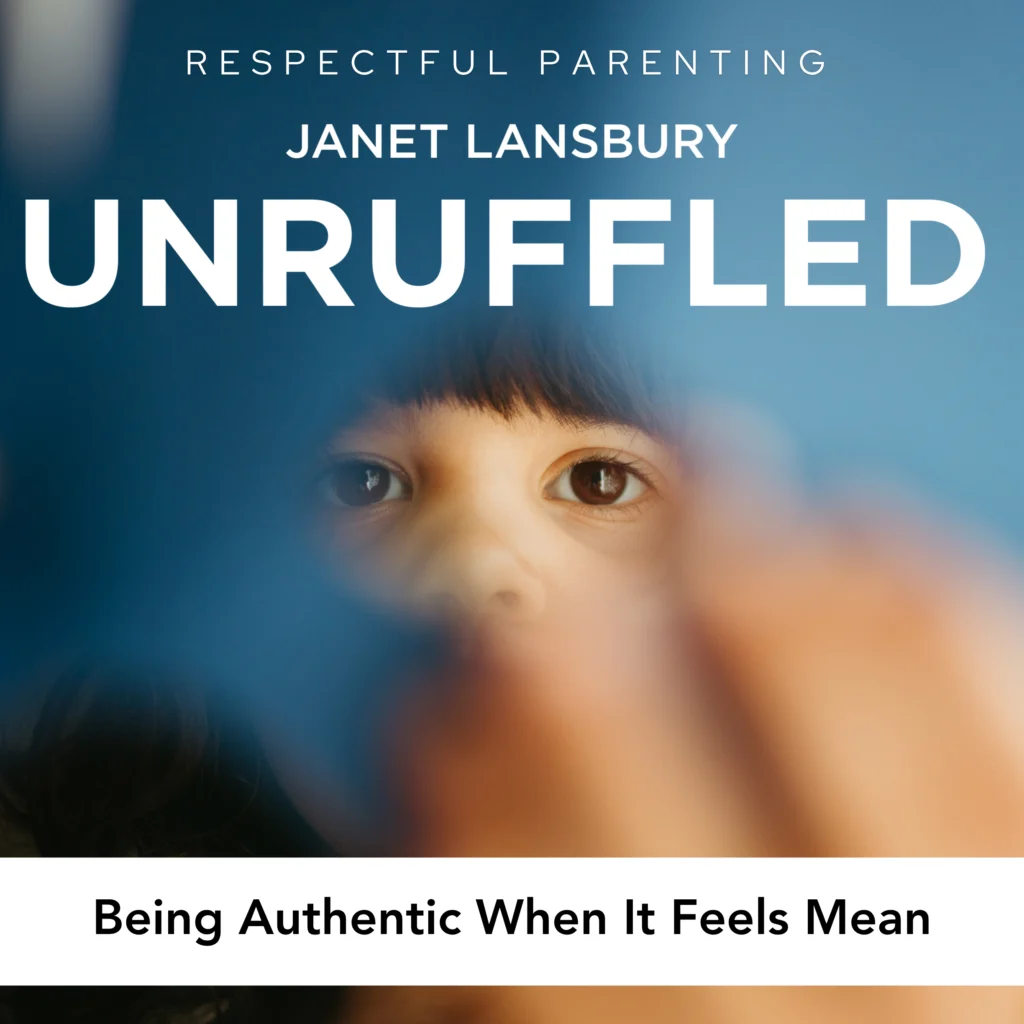
A recent discussion on Janet Lansbury’s "Unruffled" podcast, titled "Being Authentic When It Feels Mean," has ignited a conversation among parents regarding the delicate balance between expressing genuine emotions and protecting their children’s emotional well-being. The podcast, which centers on an email from a parent struggling with her feelings of annoyance and anger towards her three-year-old son’s behavior, delves into the complexities of parental authenticity and its impact on young children. Lansbury’s insights highlight the importance of understanding a child’s underlying needs and developmental stage to foster a more connected and confident parent-child relationship.
The core of the discussion revolves around a parent’s dilemma: how to be truthful about her feelings, even when those feelings are negative, without making her child feel rejected or unloved. The parent, who has been actively working on processing her emotions in therapy, expresses concern that her readily available feelings of anger and annoyance, particularly when her son engages in disruptive behavior like throwing objects, might be damaging. She questions whether it is appropriate to decline a hug when she is feeling irritated, and if saying "I don’t really want to hug you right now because I’m annoyed with you" is a valid and authentic response.
Understanding Parental Emotional Expression
Lansbury acknowledges the common experience of parents who were raised in environments where expressing emotions was discouraged. This upbringing can lead to a lifelong struggle to identify and allow one’s own feelings, often resulting in the suppression of emotions or the reliance on "crutch emotions" like anger to mask deeper, more vulnerable feelings such as fear or sadness. The parent in question recognizes this pattern in herself, noting that her anger often serves as a shield, preventing her from confronting underlying discomfort.
The podcast emphasizes that this internal struggle is not uncommon. Many adults find themselves grappling with the emotional legacy of their own childhoods. Research in developmental psychology consistently shows that early experiences with emotional regulation, particularly within the parent-child dyad, significantly shape an individual’s capacity for emotional intelligence throughout life. When parents are encouraged to express their emotions healthily, children learn to do the same, developing resilience and a robust sense of self-worth. Conversely, when emotions are suppressed or met with disapproval, children may internalize the message that certain feelings are unacceptable, leading to difficulties in emotional expression and regulation later in life.
The Child’s Perspective: Beyond Annoyance
A pivotal aspect of Lansbury’s advice focuses on reframing the child’s behavior from the parent’s perspective. The parent describes her three-year-old son’s act of throwing items she has just tidied as "for fun." Lansbury challenges this interpretation, asserting that young children, especially those with a younger sibling, are highly attuned to their parents’ moods and actions. The behavior, she suggests, is not necessarily an act of malicious fun but rather a "reach-out" or an unconscious signal for help.
Lansbury posits that such behaviors often stem from underlying anxieties or unmet needs. In this case, the introduction of a nine-month-old sibling can create significant insecurity for a three-year-old. The older child may feel a loss of parental attention and affection, leading to feelings of fear and a desperate attempt to regain that lost connection. The disruptive behavior, therefore, becomes a way for the child to communicate distress and a plea for the parent’s attention and guidance, even if it manifests in an annoying or challenging manner.
This perspective aligns with attachment theory, which suggests that a child’s behavior is often a communication of their internal state and their need for secure attachment. When a child acts out, it can be a signal that their emotional needs are not being met, or that they are struggling to cope with a new or overwhelming situation. Understanding this underlying vulnerability can shift a parent’s emotional response from annoyance to empathy and a desire to support the child.
Authenticity vs. Over-Explanation
The parent’s initial response to her son’s behavior involves a detailed explanation: "I won’t let you throw these things around because I’ve just been tidying them and I want the house neat. I’m going to move them away from you." Lansbury argues that such extensive verbalizations are often unnecessary and counterproductive. Children at this age already understand basic rules and boundaries. The prolonged explanations can inadvertently give undue attention to the behavior, increasing parental impatience and making it harder to connect with the child.
Lansbury advocates for a more concise and action-oriented approach. Instead of lengthy explanations, a simple, firm statement followed by a gentle redirection or removal of the object is more effective. For example, "I can’t let you throw these. Let’s put them away" followed by the action of moving the items. This approach respects the child’s understanding while setting a clear boundary without over-engaging in a power struggle or a lengthy discourse.
Navigating the Hug Dilemma: Boundaries and Connection
The most poignant part of the discussion centers on the request for a hug. The parent, still feeling annoyed, is hesitant to offer a hug, questioning the authenticity of doing so when she doesn’t feel like it. She fears that refusing the hug will convey that she only loves her son when he is "good," potentially damaging his sense of security and his understanding of consent.
Lansbury validates the parent’s instinct not to force a hug when she is not feeling it. She emphasizes that authenticity in this context means aligning one’s outward actions with one’s inner feelings, but not necessarily unloading all inner feelings onto the child. Instead of a forced, inauthentic hug, Lansbury suggests a more honest and respectful approach: "I’m not going to hug right now, sweetie, but I love you. I’m going to hug you when I can." This statement acknowledges the child’s need for connection while respecting the parent’s current emotional state and reassuring the child of her enduring love.
This approach offers several benefits:
- Honesty without Overwhelm: It communicates the parent’s boundary without burdening the child with adult emotional turmoil.
- Respect for Bodily Autonomy: It models that it is acceptable to decline physical affection when not feeling inclined, a crucial lesson in consent.
- Reassurance of Love: It explicitly states love, mitigating the fear of rejection.
- Postponement of Connection: It offers the possibility of reconnection at a later time, reinforcing that the parent-child bond is resilient.
Lansbury further elaborates that children often seek hugs not just for comfort but also as a way to repair a perceived rift or to soothe their own anxieties. Understanding this underlying need can help the parent approach the situation with more empathy, even when she is feeling annoyed.
The Broader Implications for Parenting
The discussion highlights several key takeaways for parents:
- Emotional Literacy: Parents are encouraged to acknowledge and process their own emotions, understanding that feeling annoyed or angry is a normal part of parenting. The goal is not to eliminate these feelings but to manage them constructively.
- Child Development Understanding: Recognizing that disruptive behavior often stems from underlying emotional needs, developmental transitions (like the arrival of a sibling), or unmet communication attempts is crucial. This understanding shifts the focus from the behavior itself to the child’s internal experience.
- Authenticity Redefined: True authenticity with children doesn’t mean sharing every fleeting emotion. It means being genuine in our interactions, setting respectful boundaries, and ensuring our actions align with our core values of love and care, even when we’re not feeling perfectly happy.
- Repair and Reconnection: The parent-child relationship is not damaged by a temporary moment of parental annoyance, especially if it is handled with honesty and followed by repair. The ability to later reconnect and offer affection reinforces the child’s security.
The podcast episode serves as a valuable resource for parents seeking to navigate the often-challenging terrain of emotional expression in parenting. By offering a nuanced perspective on authenticity, child development, and effective communication, Janet Lansbury empowers parents to build stronger, more resilient relationships with their children, grounded in understanding and mutual respect. The conversation underscores that while parenting can be demanding, fostering a genuine connection requires both self-awareness and a deep empathy for the child’s world.
