

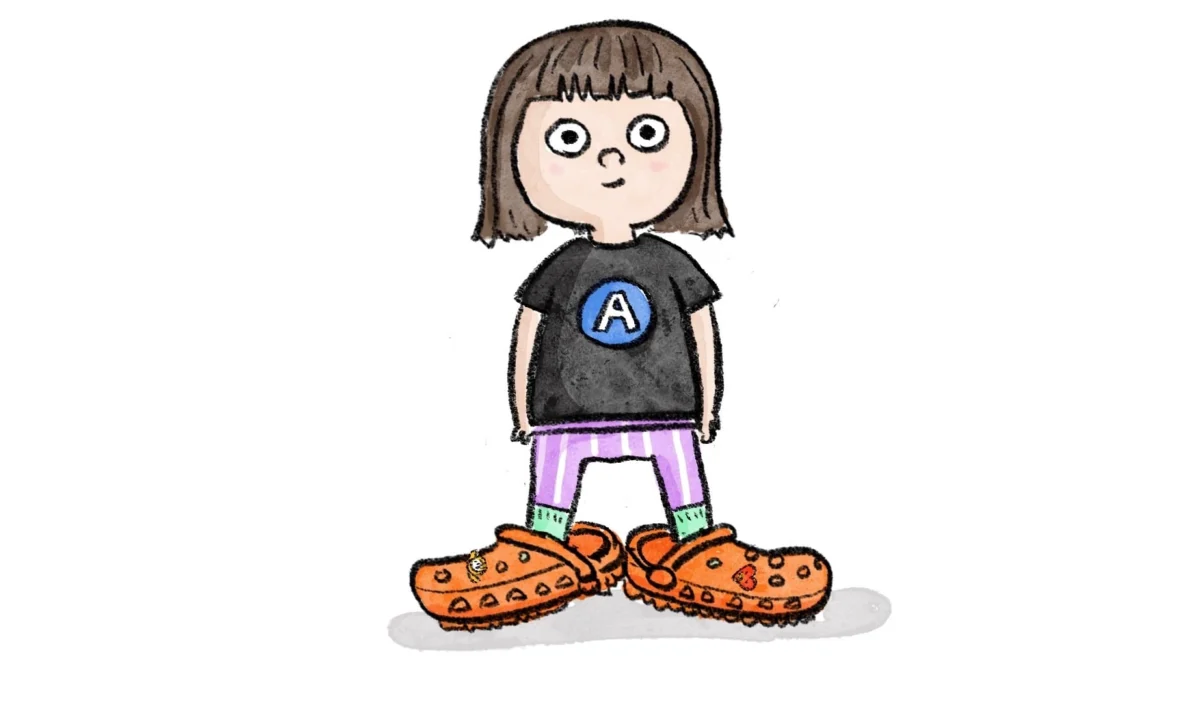
The intersection of child development, geriatric care, and modern parenting philosophy has recently come under intense scrutiny as educators and healthcare professionals observe a rising trend in what experts call the do-for culture. This societal shift, characterized by an increasing need for quick fixes and a frictionless existence, has sparked a profound dialogue among parents and caregivers regarding the necessity of allowing individuals to struggle through tasks to build long-term resilience. The conversation, catalyzed by the poignant and often humorous creative works of artist Ruth, highlights a growing awareness that the act of stepping back may be the most significant intervention a caregiver can provide.
Central to this discourse is the tension between the efficiency of the caregiver and the dignity of the individual. Whether a parent is waiting for a toddler to tie their own shoes or a daughter is assisting an aging parent with dementia, the impulse to intervene is often driven by a desire to reduce discomfort or save time. However, developmental psychologists and occupational therapists argue that these moments of struggle are the primary engines of cognitive and emotional growth. By examining the nuances of autonomy across the lifespan, from potty training to elder care, a clearer picture emerges of how patience serves as a cornerstone for psychological health.
The Developmental Significance of Physical Problem-Solving
In the field of pediatric occupational therapy, the relationship between physical mastery and mental acuity is well-documented. One of the most influential figures in this field, A. Jean Ayres, who developed the theory of sensory integration, famously posited that if an individual can solve a problem with their body, they can solve a problem with their mind. This principle suggests that the physical struggle of navigating the environment—such as learning to use a spoon, buttoning a shirt, or mastering the coordination required for piano practice—is a prerequisite for complex cognitive functions.
When a child is allowed to struggle with a physical task, they are engaging in a process of trial and error that strengthens neural pathways associated with executive function. These functions include working memory, flexible thinking, and self-control. When a caregiver intervenes too quickly to provide a quick fix, they effectively short-circuit this neurological development. The result, as noted by child behavior specialists, is a generation of young people with a lower tolerance for frustration and diminished problem-solving skills.
The Impact of Do-For Culture on Frustration Tolerance
The rise of the do-for culture is not merely a parenting trend but a reflection of a broader societal shift toward immediate gratification. In an era of on-demand services and algorithmic efficiency, the concept of "waiting" or "struggling" has become increasingly foreign. For children, this manifests in a lack of "grit" or resilience. Behavioral data suggests that children who are shielded from minor frustrations often struggle more significantly when faced with the high-stakes challenges of adolescence and adulthood, such as academic setbacks or social conflicts.
Experts in child behavior emphasize that letting kids struggle through things is essential for building a healthy "frustration threshold." This threshold is the limit of how much stress or difficulty a person can handle before becoming overwhelmed. By practicing on low-stakes tasks, such as putting on a coat or cleaning up a spill, children build the emotional muscle needed for more complex tasks later in life, such as learning to drive or navigating workplace dynamics.
Chronology of Autonomy: From Early Childhood to Adolescence
The journey of fostering independence follows a distinct chronological path, starting with the earliest milestones of toddlerhood.
Early Childhood: The Foundation of "I Do It"
Between the ages of two and four, children enter a phase often characterized by the phrase "I do it!" This period is critical for the development of self-efficacy—the belief in one’s own ability to succeed in specific situations. Potty training, for example, is often the first major exercise in relinquishing parental control and trusting the child’s internal biological and cognitive processes. While the process can be arduous for parents, the pride exhibited by a child who has mastered a task independently is a powerful indicator of healthy psychological development.
Middle Childhood: Skill Acquisition and Empathy
As children move into school age, the focus shifts to more complex skill sets, such as musical instruments or sports. It is during this phase that parents often feel the greatest urge to "facilitate" or "over-function." However, this is also a prime time for parents to model patience. Techniques such as practicing a task with one’s non-dominant hand are recommended by educators to help parents regain empathy for how difficult new skills can be for a developing brain.
Adolescence: The High-Stakes Proving Ground
By the age of 16, the "struggles" of early childhood, such as tying shoes, evolve into high-stakes responsibilities like driving. Parents of teenagers often find that the patience cultivated during the toddler years serves as the foundation for the trust required during the teenage years. The ability to step back and allow a teenager to navigate their own mistakes—within the bounds of safety—is seen as the final stage of preparing them for independent adulthood.
Parallel Dynamics in Geriatric Care and Dementia
The principles of autonomy and dignity are not limited to child development; they are equally critical in the context of elder care, particularly for those navigating neurodegenerative conditions such as dementia. For caregivers of aging parents, the challenge is often "slowing down" to allow the individual to maintain their dignity by performing tasks for themselves, even if those tasks take significantly longer or are done imperfectly.
In geriatric care, the concept of "person-centered care" emphasizes that maintaining a sense of agency is vital for the mental health of seniors. When a caregiver takes over a task that an elderly person is still capable of doing, it can lead to "learned helplessness," where the individual loses the will or perceived ability to care for themselves. This parallel suggests that the "exercise in relinquishing control" is a lifelong requirement for caregivers, regardless of the age of the person they are assisting.
Strategies for Building Caregiver Patience and Empathy
To combat the urge to over-function, experts suggest several practical strategies for parents and caregivers. These are designed to shift the focus from the outcome (the task being finished) to the process (the growth occurring during the task).
- The Non-Dominant Hand Exercise: To understand the frustration of a child or a patient, caregivers are encouraged to perform everyday tasks—like brushing teeth or writing—with their non-dominant hand. This serves as a neurological reminder that coordination and motor planning require significant mental effort.
- The "Done vs. Perfect" Mantra: In professional and domestic settings, adopting the philosophy that "done" is better than "perfect" can reduce the pressure to intervene. Allowing a child to fold laundry poorly or a co-worker to complete a project in their own style fosters a sense of ownership and accomplishment.
- Scheduled Practice: Caregivers are advised to have children "practice" tasks when there is no time pressure. For example, practicing shoe-tying on a weekend rather than when rushing out the door for school allows for a stress-free environment where struggle is welcomed.
Broader Implications and Societal Analysis
The long-term implications of the do-for culture extend into the workforce and mental health sectors. Human resource professionals have noted that younger employees often require more frequent feedback and have more difficulty navigating ambiguous or difficult tasks without direct supervision. This is frequently traced back to a lack of independent problem-solving opportunities during their formative years.
Furthermore, there is a statistical correlation between over-parenting (or "helicopter parenting") and increased rates of anxiety and depression in college-aged students. When individuals are not allowed to experience and overcome discomfort in childhood, they often lack the coping mechanisms required for adult life.
In conclusion, the collective wisdom of parents, educators, and healthcare professionals suggests that the "bitter roots" of watching a loved one struggle often yield the "sweet fruit" of a resilient, capable, and dignified individual. The act of stepping back is not an act of neglect, but a sophisticated form of support. As society continues to grapple with the demands of a fast-paced world, the deliberate choice to slow down and allow for the struggle remains a vital component of human development and compassionate caregiving. The "plaque" for success, as some parents humorously suggest, belongs not just to the one who completes the task, but to the caregiver who had the patience to let them do it.
