

Published November 2025. Reviewed by Craig Canapari, MD.
The holiday season, a time for cherished family gatherings and joyous celebrations, often brings with it a pervasive parental anxiety: the disruption of a child’s carefully established sleep schedule. For parents who have invested significant effort into sleep training, establishing consistent bedtime routines, and achieving predictable sleep patterns, the prospect of navigating unfamiliar environments and altered schedules can feel like a looming disaster. However, pediatric sleep medicine experts and seasoned parents alike are increasingly emphasizing a crucial perspective: children are remarkably resilient to short-term sleep disruptions, and parental anxiety often amplifies these perceived challenges more than the disruptions themselves. This comprehensive guide aims to demystify holiday sleep concerns, drawing on expert insights and addressing common parental worries with practical, evidence-based strategies.
The Expert’s Own Sleep Struggles: A Personal Perspective
Dr. Craig Canapari, a pediatric sleep medicine physician with over two decades of experience, offers a candid personal account that resonates with many parents. He recounts his own struggles with his eldest son, who experienced nightly night terrors when sleeping in new environments. The disruptive nature of these episodes, waking the entire household and undermining his professional credibility as a "sleep expert," underscored the profound impact of travel on a child’s sleep, and the anxiety it can induce in parents. Dr. Canapari admits to a personal history of insomnia, particularly during transitional periods, a trait that intensified his efforts to meticulously replicate his children’s sleep routines while traveling. This meticulous, yet ultimately counterproductive, approach amplified stress. It was through surveying his email subscribers about their Thanksgiving travel sleep concerns that he recognized the universality of these anxieties, many mirroring his own past worries.
The Foundational Principle: Routine Over Timing
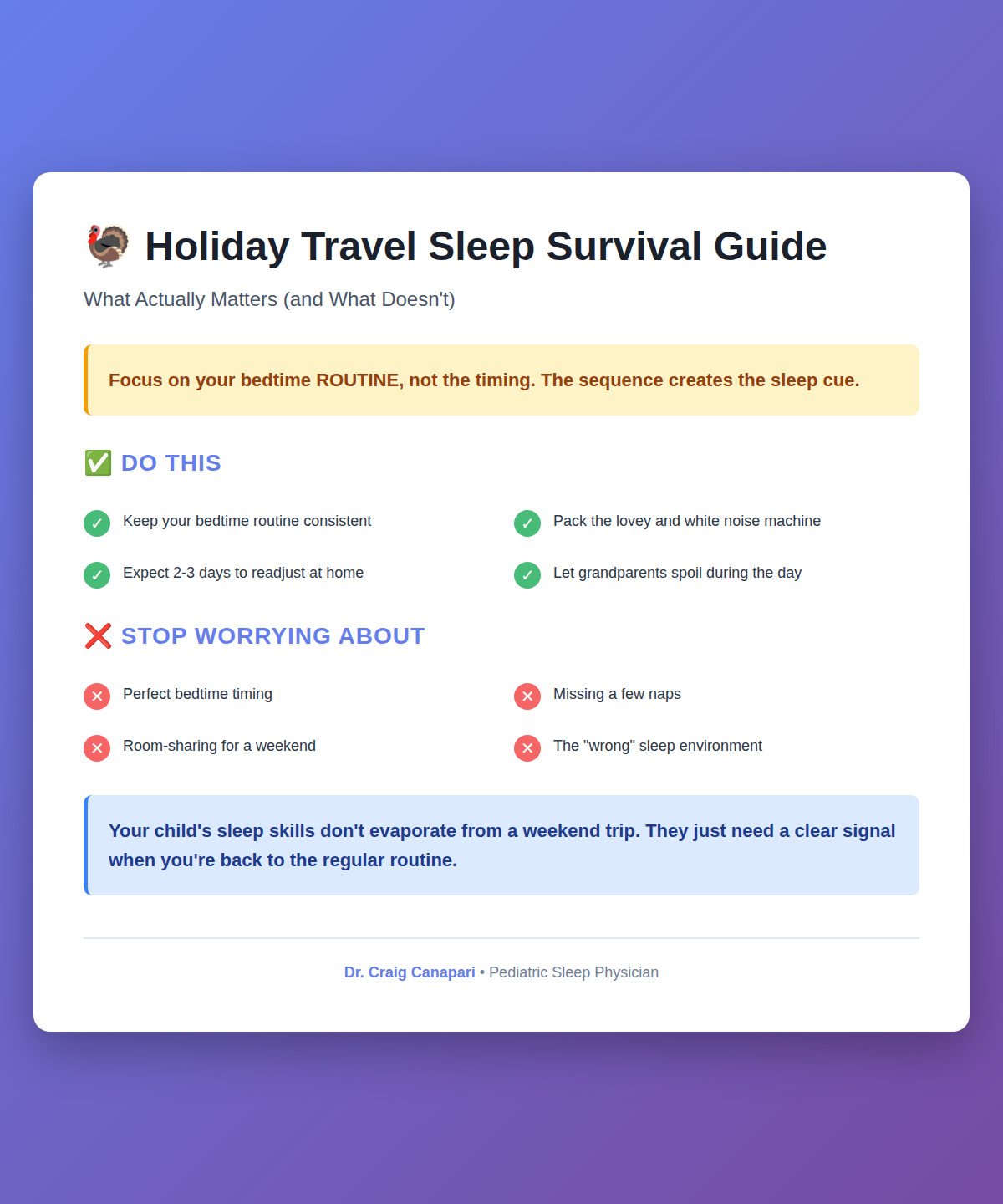
At the heart of navigating holiday sleep disruptions lies a fundamental shift in focus. Experts strongly advocate for prioritizing the maintenance of the bedtime routine itself, rather than its precise timing. While a consistent schedule is beneficial, the sequence of events—bath, book, bed, or pajamas, teeth brushing, stories, lights out—serves as a powerful sleep cue. Even if this routine occurs later than usual, for instance, at 9 p.m. instead of 7:30 p.m., the predictability of the sequence can significantly signal to a child that it is time to wind down. This consistent ritual provides a sense of security and familiarity, not only for the child but also for the parent, thereby mitigating anxiety.
Addressing Common Parental Concerns
The influx of questions from parents preparing for holiday travel reveals a shared set of anxieties. Let’s explore some of the most frequently asked questions and the expert-backed solutions.
Sharing a Room with Multiple Children: Strategies for Harmony
A frequent concern for families involves room-sharing with children who have not previously slept together, particularly when one child might disrupt the other’s sleep. Christina’s question exemplifies this: "I’m concerned about room sharing with both kids; we currently share a room with the baby, but the baby and the toddler have never slept in the same room together. The toddler likes to ‘play’ with the baby and we need to really keep an eye on him."
The recommended approach for such situations is a staged bedtime strategy. This involves putting the younger child (the baby, in this case) to bed first, ensuring they are settled and asleep. Once the infant is asleep, the older child (the toddler) can be brought into the room. This minimizes the opportunity for the toddler to engage in disruptive play before falling asleep. If the toddler’s presence is likely to wake the baby, a brief period of parental supervision may be necessary. While practicing this at home might seem prudent, experts advise against creating unnecessary stress by simulating a problem that may not materialize. The focus should remain on managing the situation as it arises. In instances where a toddler or preschooler does not nap, they might naturally fall asleep earlier than an infant, requiring careful observation for safety.
Sleep-Trained Infants at Grandparents’ Homes: Maintaining Skills
For parents who have recently completed sleep training, the prospect of their baby crying all night at a relative’s house is a significant worry. Lashay’s question reflects this: "We just sleep trained our 9-month-old using Ferber last month. We’re staying at Grandma and Grandpa’s for 2 weeks. What if she wakes up every hour crying? What do I say to my parents who are hearing their granddaughter cry?"
Research and clinical experience indicate that a sleep-trained infant typically maintains their learned skills in new environments. While temporary disruptions are expected, the foundational sleep habits are usually robust. Parents can expect a period of adjustment, possibly involving a few more night wakings or a slightly later bedtime. To manage this, open communication with grandparents is key. A pre-trip conversation outlining expectations – that the baby might cry for a short period as she adjusts, that this is normal and not indicative of distress, and that parental intervention will be limited unless necessary – can preempt misunderstandings. Framing this as a recommendation from a pediatric sleep doctor can also help in navigating potential pushback from well-meaning relatives.
Driving Home at Bedtime: Navigating the Transition
The common scenario of driving home during a child’s usual bedtime presents a unique challenge. Sarah asks, "We’re leaving at 7:30pm and won’t be home until 10pm. Both kids go to sleep before 9pm every night. Should I do a modified routine before we get in the car, or wait until we get home?"
The optimal strategy involves a two-pronged approach: a brief, modified routine before departure and a return to the full routine upon arrival home. Before getting into the car, a quick version of the bedtime routine, such as putting on pajamas and reading a short book, can signal the transition to sleep. In the car, creating a calm environment with dim lighting and quiet music can encourage sleep. Upon arriving home, a brief, calming wind-down period before the child is placed in their crib or bed is recommended, even if they have fallen asleep in the car. This helps to transition them back to their sleep space. The following morning, it is generally advisable to allow children to wake at their usual time, with the option of a slight extension if needed for parental rest.
Extended Vacations and Hyperactivity: Balancing Fun and Structure
For longer trips, such as a 2.5-week vacation in Hawaii, maintaining some semblance of structure becomes essential to avoid exhaustion. Lisa’s concern highlights this: "My kids (4 & 7) get really hyper and excited on trips and usually share a room/bed. They stay up really late. It’s fun for a few days but when we travel for longer than 5-6 days it gets exhausting."
While a few nights of extended bedtime are acceptable, for longer durations, a modified vacation sleep schedule is advisable. This might involve setting a consistent "vacation bedtime" that is slightly later than usual but still provides adequate sleep. The key is to communicate this expectation clearly to the children, using phrases like, "Vacation bedtime starts now. You don’t have to sleep, but you do have to stay in your bed quietly." The significant time difference in Hawaii (a 2-hour difference, with the body’s time zone being 2 hours later than local time) can actually be beneficial, as children will naturally feel more tired at the local bedtime. For travel to Hawaii, leveraging the time difference and potentially shifting bedtime slightly later in anticipation of evening activities can be effective.
The Drive Home Nap Disaster: Preserving Sleep Quality
Evan’s question addresses a common concern about the impact of travel on daytime naps: "Our Thanksgiving is 1.5 hours away and starts at 12:30pm. We’ll be home for bedtime but naps will be a mess. Early bedtimes when they skip naps only make our early wake-ups worse."
Evan has correctly identified a potential pitfall: early bedtimes after skipped naps can sometimes lead to even earlier wake-ups. The recommended solution is to prioritize a nap if at all possible, even if it’s shorter than usual. If a nap is missed, focus on a consistent bedtime upon returning home. The rationale is that a slightly later bedtime on one night is preferable to multiple nights of very early wake-ups. This approach aims to balance the immediate need for rest with the long-term goal of maintaining a stable wake-up time.
Navigating Time Zone Changes: A Deeper Dive
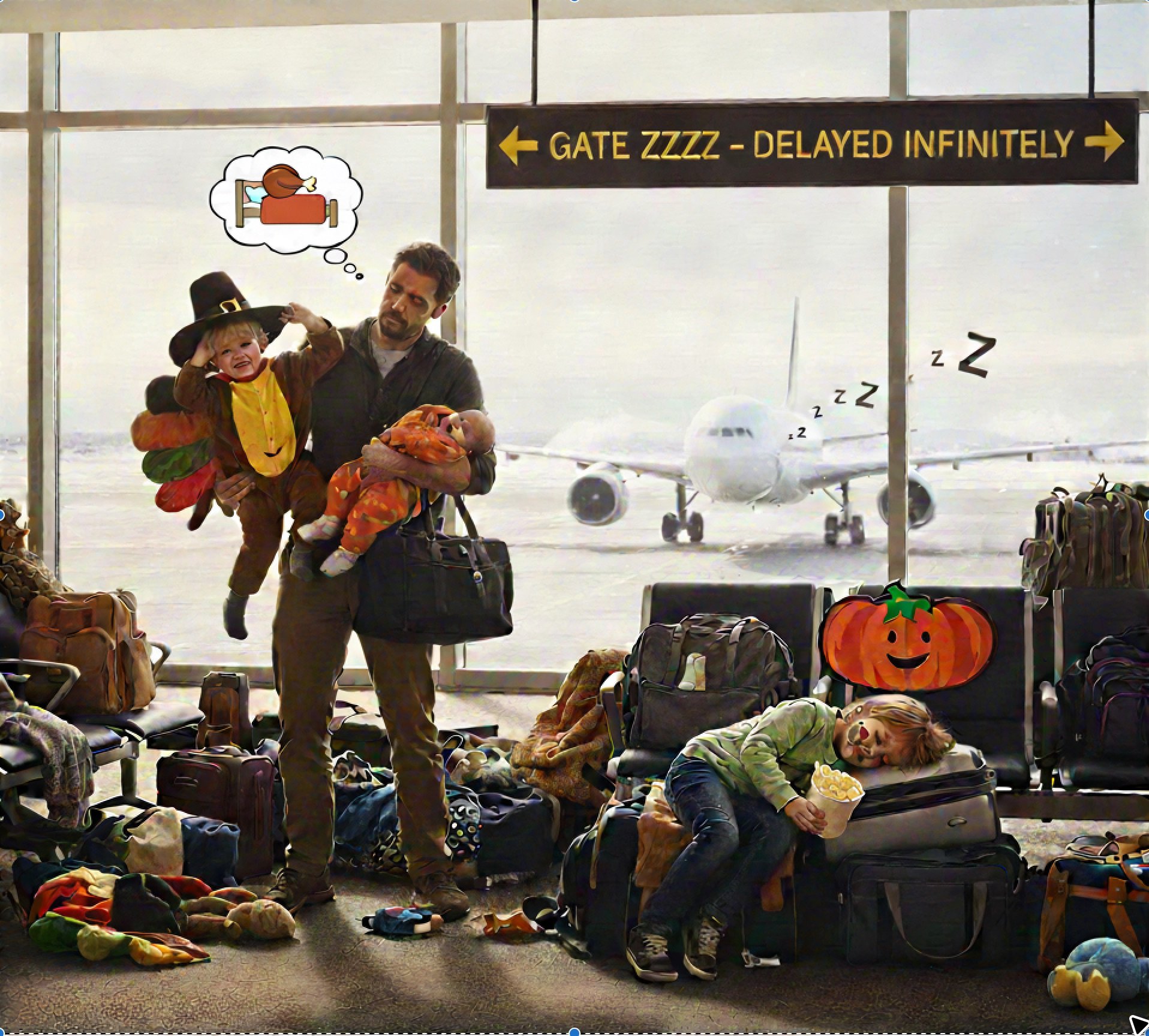
Time zone changes, particularly those involving red-eye flights or significant differences (3+ hours), present a more substantial challenge than local travel. Jamie and Christina’s shared concern about time zone shifts is a valid one.
For flights departing after a child’s usual bedtime, it’s advisable to follow the home bedtime routine before boarding. Once on the plane, create a sleep-conducive environment by dimming lights and minimizing distractions. Upon arrival, immediately expose the child to daylight to help reset their internal clock. For significant time zone changes (3+ hours), experts recommend a 3-5 day adjustment period both at the destination and upon return. This means gradually shifting bedtime and wake times by 30-60 minutes each day leading up to travel.
When traveling east, the adjustment is often easier, as it aligns with a tendency for children to wake earlier. Traveling west can be more challenging, as it requires pushing bedtimes later. In these instances, incremental adjustments to bedtime in the week prior to travel can be beneficial. For shorter trips (3-4 days or less), maintaining the home schedule is often more manageable, especially if traveling with immediate family. Blackout curtains are invaluable for controlling light exposure in either direction.
Upon returning home, children will generally adjust relatively quickly, but a short period of residual adjustment is normal. If a child experiences persistent sleep difficulties for more than a week or two after travel, it may indicate an underlying issue beyond a simple time zone adjustment, and consulting a pediatrician or sleep specialist is recommended.
Theme Parks and Sleep: Survival Strategies
Theme parks, with their sensory overload, represent a significant sleep disruptor. Sonya’s question encapsulates this: "Tips on sleep during holiday Disney trips would be great. Would they get all overstimulated from the lights, people, noise? What about during transport—car/plane?"
For short trips to theme parks, a "Disney survival strategy" is often employed. This involves accepting that sleep will be disrupted and focusing on short-term solutions. This may include allowing naps in strollers or during transport, even if they are not ideal. Establishing a clear, albeit potentially later, bedtime upon returning to the hotel is crucial. The key is to acknowledge the temporary nature of the disruption and prioritize getting back on track upon returning home. Transport naps should be embraced rather than resisted, as controlling every nap during a theme park visit is often unrealistic.
Essential Packing for Holiday Sleep Success
Based on the common concerns and expert advice, a curated packing list can significantly ease the transition to new sleep environments.
Essential Items:
- Familiar Comfort Item: A favorite blanket, stuffed animal, or pacifier can provide immense comfort and familiarity.
- Portable White Noise Machine: This can mask unfamiliar sounds and create a consistent auditory environment, similar to home.
- Blackout Curtains or Travel Blackout Blinds: Crucial for controlling light exposure, especially in unfamiliar rooms that may not have adequate darkness.
Helpful Additions:
- Portable Crib or Pack ‘n Play: If the accommodation does not provide a safe sleep space for your child.
- Child’s Own Pajamas: The familiar feel and scent can be reassuring.
- Snacks: For pre-bedtime hunger or if the sleep routine is delayed.
- Books from Home: Familiar stories can be a calming part of the bedtime routine.
Items to Reconsider Skipping:
- Overly Stimulating Toys: Avoid bringing toys that might increase excitement close to bedtime.
- New, Unfamiliar Items: Stick to items your child already knows and loves.
Three Areas of Parental Anxiety to Reframe
Several common parental worries about holiday sleep can be reframed with a more relaxed and realistic perspective:
- Room-Sharing for a Weekend: While not ideal for long-term sleep, sharing a room for a few days is unlikely to cause lasting damage. The disruption is temporary, and the stress associated with it often exacerbates the problem.
- Missing Naps: A few shortened or skipped naps will not permanently derail a child’s sleep habits. The key is to implement an earlier bedtime on the night following a missed nap and then resume the regular schedule.
- The "Wrong" Sleep Environment: Children are adaptable. While an ideal sleep environment is beneficial, a slightly too bright or too loud room will not fundamentally break a child’s sleep skills. Utilizing tools like sound machines and blackout curtains can mitigate these concerns.
A Three-Phase Approach to Holiday Sleep Management
A structured approach can help parents navigate the holiday period with greater confidence:
Before You Leave:
- Communicate Expectations: Discuss sleep plans with travel companions or hosts.
- Pack Smart: Ensure you have essential sleep aids.
- Maintain Routine: Stick to the established bedtime routine in the days leading up to travel.
While You’re There:
- Prioritize the Routine: Focus on the sequence of events, not the exact timing.
- Be Flexible, Not Rigid: Allow for minor deviations and prioritize connection.
- Manage Light Exposure: Utilize blackout curtains and natural light strategically.
When You Get Home:
- Resume Home Schedule Immediately: The first night back is crucial for reinforcing established patterns.
- Be Patient: Allow a day or two for full adjustment.
- Reinforce Familiarity: Return to the usual sleep environment and cues.
The Ultimate Survival Strategy: Resilience and Re-adjustment
The overarching goal during holiday travel is not to achieve perfect sleep, but to maintain enough structure to facilitate a swift return to the regular routine upon arriving home. Just as a few days of indulging in holiday treats do not permanently derail a healthy diet, a temporary disruption in sleep does not erase a child’s learned sleep skills. The analogy holds true: the body, and in this case, a child’s sleep patterns, requires a brief period to readjust. The key is to provide clear signals that the familiar routine has resumed.
When to Seek Professional Guidance
While most holiday sleep disruptions are temporary, there are instances when professional intervention is warranted. Parents should consult their pediatrician or a sleep specialist if:
- A child experiences prolonged or significant changes in sleep patterns that persist for more than a week or two after returning home.
- Sleep disturbances are accompanied by other concerning symptoms, such as significant changes in appetite, mood, or behavior.
- Parents feel overwhelmed or unable to manage the sleep challenges effectively.
A Final Word of Encouragement
It is essential to recognize that a child’s adaptability to new sleep environments varies. Some children readily adjust, while others require more time and support. Neither scenario reflects a parental failure or a flaw in sleep training. As children grow and family dynamics evolve, the unique challenges and joys of holiday sleep evolve as well. The memories of shared laughter, family traditions, and even the occasional midnight awakenings often become cherished anecdotes. The focus should remain on enjoying the present moments, with the understanding that sleep patterns are dynamic and will ultimately re-stabilize with consistent effort. The holiday season is a time for connection and celebration, and the sleep disruptions, while sometimes stressful, are a temporary chapter in the broader narrative of a child’s development and family life.