

Published November 2025. Reviewed by Craig Canapari, MD.
The holiday season, a time often associated with joy and family gatherings, can also bring significant disruptions to children’s sleep schedules. While parents meticulously work to establish and maintain healthy sleep habits throughout the year, the prospect of travel can trigger considerable anxiety. However, pediatric sleep medicine expert Dr. Craig Canapari suggests that many parental concerns surrounding holiday travel and sleep are often overblown, emphasizing the remarkable resilience of children and the critical role of parental mindset in managing these temporary disruptions.
Dr. Canapari, a pediatrician with 21 years of experience in sleep medicine and 18 years as a parent himself, acknowledges the understandable apprehension parents feel when facing potential sleep challenges. The scenario of sharing a cramped space with multiple children, pets, and the inevitable early morning demands is a common source of stress. Yet, his extensive professional and personal experience points to a powerful truth: children are remarkably adaptable to short-term deviations from their routines. It is often the parental anxiety surrounding these disruptions that magnifies the problem, rather than the disruptions themselves.
This article aims to address common parental concerns regarding holiday travel and children’s sleep, drawing on questions submitted by Dr. Canapari’s newsletter subscribers. By demystifying these anxieties and offering practical strategies, parents can navigate the holiday season with greater confidence and less stress.
Navigating Sleep Disruptions: A Pediatrician’s Personal Perspective
Dr. Canapari offers a candid personal anecdote to illustrate the challenges and anxieties that even sleep experts can face. His oldest son, as a child, experienced night terrors every single night when sleeping in a new environment. This meant that during family visits to grandparents, the entire household would be awakened by his son’s screams. The experience was deeply unsettling and, as Dr. Canapari humorously notes, severely undermined his credibility as a "sleep expert" when he was unable to calm his own child.
These experiences were not isolated. Dr. Canapari himself admits to being a poor sleeper as a child, and these transitional periods, such as the night before school or the first night of a vacation, would often lead to sleepless nights for him. He recounts experiencing similar insomnia even when his older son transitioned to college. His personal inclination was to meticulously replicate every aspect of his sons’ sleep routines when traveling, a practice that ultimately amplified stress rather than alleviating it.
Last week, Dr. Canapari polled his newsletter subscribers about their specific anxieties regarding Thanksgiving travel and sleep. The responses revealed a recurring theme: a shared concern about the same issues he himself had once grappled with. This realization prompted him to address these common worries head-on, offering guidance rooted in his extensive experience.
The Cornerstone of Travel Sleep: Consistency in Routine, Not Timing
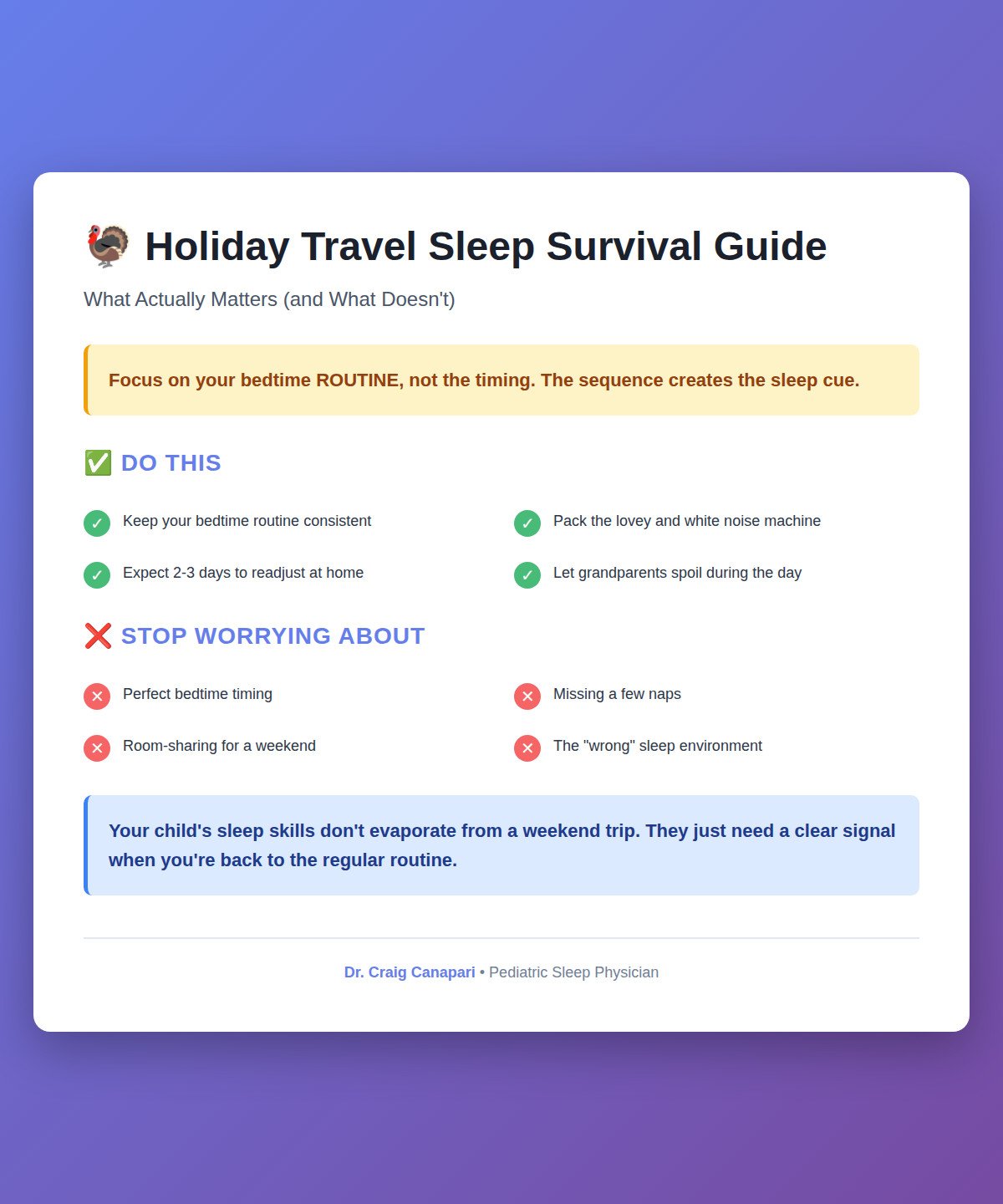
Before delving into specific scenarios, Dr. Canapari highlights the single most important factor in maintaining sleep stability during travel: focus on maintaining the bedtime routine itself, rather than the exact timing.
A consistent sequence of activities signals to a child that it is time to wind down and prepare for sleep. Whether the home routine involves a bath followed by a book, or pajamas, teeth brushing, and then stories, replicating this sequence, even if it occurs later than usual, provides a crucial cue. For example, if a child’s usual bedtime is 7:30 PM but during travel it becomes 9:00 PM, the consistent bath-book-bed sequence still serves as a powerful sleep indicator. This flexibility in timing, Dr. Canapari emphasizes, is acceptable for short periods and can actually help calm both the child and the parent.
Addressing Common Parental Concerns: Q&A with Dr. Canapari
The following section addresses specific questions submitted by parents, offering Dr. Canapari’s expert advice.
Concern 1: Room Sharing with Multiple Children for the First Time
Question from Christina: "I’m concerned about room sharing with both kids; we currently share a room with the baby, but the baby and the toddler have never slept in the same room together. The toddler likes to ‘play’ with the baby and we need to really keep an eye on him."
Dr. Canapari’s Response: This is a frequent and valid concern. The most effective strategy here is a staged bedtime approach.
- Infant Bedtime First: If the baby is significantly younger and has a much earlier bedtime, establish their routine and put them to sleep first.
- Toddler in Separate Space (if possible): If the toddler can be settled in a separate, quiet space (even if it’s just a different corner of the same room with a screen or gate), this can help.
- Toddler’s Routine: Once the baby is asleep, begin the toddler’s bedtime routine. The goal is to transition them to sleep as calmly and quietly as possible.
- Monitor Closely: Given the safety concern of the toddler "playing" with the baby, close supervision is essential. This might involve an adult staying in the room until the toddler is asleep, or utilizing a baby monitor with visual capabilities.
It is important to note that in some cases, a toddler or preschooler who is not napping might naturally go to sleep later than an infant. The primary concern is safety.
Regarding practicing at home: Dr. Canapari advises against attempting to simulate this scenario at home beforehand. "Don’t create a new problem trying to prevent a hypothetical one," he states. The stress of attempting to practice may be more detrimental than the actual experience.
Concern 2: Sleep-Trained Baby at Grandparents’ House
Question from Lashay: "We just sleep trained our 9-month-old using Ferber last month. We’re staying at Grandma and Grandpa’s for 2 weeks. What if she wakes up every hour crying? What do I say to my parents who are hearing their granddaughter cry?"
Dr. Canapari’s Response: Congratulations on successful sleep training; it’s a significant achievement. A crucial point to understand is that a sleep-trained baby generally maintains those skills in new environments. The key is recognizing that any crying is likely a temporary disruption, not a complete regression.
What to expect:
- Initial Adjustment: The baby might wake up more frequently in the first few nights as they adjust to the new surroundings and schedule. This is normal.
- Brief Crying Spells: Expect short periods of crying, which are the baby’s way of self-soothing and readjusting. This is not indicative of distress.
- Reassurance: For parents, it can be reassuring to know that the sleep training methods they used at home are still effective.
Communicating with Grandparents: Proactive communication is vital. Before arriving, have a conversation: "She might cry for 10-15 minutes at bedtime while she adjusts. This is normal and she’s not in distress. We’ll be right outside the door, but we’re not going to pick her up unless something is wrong. If you hear crying, please don’t knock on the door or come in—that will make it harder for everyone."
If grandparents express concern or push back, Dr. Canapari suggests using him as a reference: "Our pediatric sleep doctor said this is normal adjustment and we should stick to our routine." This external validation can help ease their worries.
Concern 3: Driving Home at Bedtime
Question from Sarah: "We’re leaving at 7:30 PM and won’t be home until 10 PM. Both kids go to sleep before 9 PM every night. Should I do a modified routine before we get in the car, or wait until we get home?"
Dr. Canapari’s Response: This is a common dilemma, and a strategic approach is best.
Before the drive:
- Early Start: Begin the bedtime routine earlier than usual to allow ample time for all steps before departure. This might include a slightly earlier bath or more focused story time.
- Calm Atmosphere: Create a calm environment at home before getting into the car. Avoid overstimulating activities.
- Pajamas On: Have children dressed in their pajamas before leaving.
In the car:
- Quiet Environment: Keep the car environment calm and conducive to sleep. Dim the lights if possible and minimize noise.
- Comfortable Setup: Ensure children are as comfortable as possible for napping.
- Expect a "Car Nap": Acknowledge that this will likely be a car nap, which may be lighter and shorter than their usual sleep.
When you arrive home:
- Minimal Disruption: Once home, aim for a low-key transition. Avoid a lengthy, elaborate routine.
- Bed Directly: If they are already drowsy or asleep in the car, gently transfer them to their beds.
- Shortened Routine: If they are awake, perform a very brief, familiar routine (e.g., a quick story or song) and then place them in their cribs or beds.
The next morning: Dr. Canapari notes that most young children have relatively fixed wake times. It’s generally acceptable to allow them to sleep in a little the following day, perhaps an hour or so, to help them catch up on any lost sleep.
Concern 4: Hyperactivity and Late Nights on Extended Vacations
Question from Lisa: "My kids (4 & 7) get really hyper and excited on trips and usually share a room/bed. They stay up really late. It’s fun for a few days but when we travel for longer than 5-6 days it gets exhausting. We’re going to Hawaii for 2.5 weeks."
Dr. Canapari’s Response: A 2.5-week trip, especially to a destination like Hawaii, requires more than just a survival strategy; it necessitates establishing some structure. While a few days of "goofiness" are part of the travel experience, extended periods of late nights can indeed become exhausting. This phenomenon is often a combination of excitement and the "circadian ‘forbidden zone’," which occurs when children stay up significantly later than their usual bedtime.
The vacation sleep schedule:
- Prioritize Bedtime Routine: Even on vacation, maintain a consistent bedtime routine. The sequence of bath, pajamas, and stories should be preserved.
- Establish a "Vacation Bedtime": While the exact time may shift, set a clear "vacation bedtime." This doesn’t mean the child must fall asleep instantly.
- Quiet Time in Bed: Introduce the concept of "Vacation bedtime starts now. You don’t have to sleep, but you do have to stay in your bed quietly." This sets an expectation for downtime and rest, even if sleep doesn’t immediately follow.
- Utilize Darkness: Ensure the room is as dark as possible. Blackout curtains are invaluable for creating a sleep-conducive environment, especially in places with different light cycles.
Hawaii Specifics: The 2-hour time difference to Hawaii can be advantageous. An 8:30 PM bedtime in Hawaii translates to a 10:30 PM body time for a child accustomed to a 7:30 PM bedtime at home, meaning they will naturally be tired. However, the flip side is that they will likely adjust to a later schedule. Dr. Canapari notes that for such extended trips, some gradual adjustment to the local time, particularly with light exposure, can be beneficial.
Concern 5: The Drive Home Nap Disaster
Question from Evan: "Our Thanksgiving is 1.5 hours away and starts at 12:30 PM. We’ll be home for bedtime but naps will be a mess. Early bedtimes when they skip naps only make our early wake-ups worse."
Dr. Canapari’s Response: This is a keen observation. The concern that early bedtimes after skipped naps can lead to even earlier wake-ups is accurate.
The Fix:
- Prioritize the Nap (if possible): Given the mid-day start time, attempt to get a nap in before leaving. This might involve a slightly earlier wake-up at home to ensure adequate sleep before the event.
- Car Nap Strategy: If a nap at home isn’t feasible, aim for a car nap during the drive. This might mean timing the departure to coincide with a typical nap window.
- Don’t Force an Early Bedtime: If naps are significantly disrupted, resist the urge to put the child to bed extremely early. This can indeed trigger an even earlier wake-up. Instead, stick to their normal bedtime routine, even if they seem overtired.
- Embrace a Slightly Later Evening: Accept that the evening might be a bit more challenging. The focus is on preventing a cascade of early wake-ups.
- The Next Morning: Allow for a slightly later wake-up if possible, but don’t be surprised if their natural wake time prevails.
Why not do early bedtime? For children who already wake at 6 AM, an excessively early bedtime can sometimes lead to a 4:30 AM wake-up. It is generally preferable to have one slightly cranky evening rather than several very early mornings.
Concern 6: Time Zone Changes and Red-Eye Flights
Questions from Jamie and Christina: Both parents expressed concerns about time zone changes, including red-eye flights and 3-hour differences.
Dr. Canapari’s Response: Time zone travel is genuinely more challenging than a short drive. However, strategic planning can mitigate the impact.
For flights that leave after bedtime:
- Pre-Flight Routine: Begin the bedtime routine at home as usual.
- Boarding: Board the plane after the routine is complete.
- Minimize Stimulation: Once on board, create a sleep-conducive environment. Dim the cabin lights if possible, use a comfortable travel pillow, and a blanket.
- White Noise: Utilize a portable white noise machine or headphones with calming sounds.
- Avoid Screens: Limit screen time, as the blue light can interfere with melatonin production.
- Expect Travel Sleep: Understand that sleep on a plane is often lighter and more fragmented than sleep in a crib or bed.
The 3-hour rule: When crossing three or more time zones, Dr. Canapari recommends planning for 3-5 days of adjustment upon arrival and a similar period upon returning home. This adjustment period is contingent on actively trying to shift to the local time.
Returning home: The principles are reversed. Expect a similar adjustment period, but in the opposite direction.
Time Zone Notes: Eastbound vs. Westbound Travel
-
Short Trips (3-4 days or less): It is often best to stick to your home schedule as much as possible, especially if traveling with a nuclear family. This is more challenging when visiting relatives who may have different schedules.
-
Controlling Light: Blackout curtains are exceptionally useful regardless of direction, helping to regulate sleep cycles.
-
Traveling East: This is generally easier for children. For example, traveling from California to Connecticut (a 3-hour difference) means a 7 PM bedtime at home becomes a 10 PM bedtime in Connecticut. This can allow for later dinners and potentially more morning sleep. While perfect adherence to local time is unlikely, children’s sleep schedules will eventually adjust to light changes. For younger children who may become overtired due to disrupted naps, they might fall asleep closer to the local time. Blackout curtains are crucial for blocking early morning light, preventing children from waking at 6 AM local time when their body thinks it’s only 3 AM.
-
Traveling West: This is often easier for adults and teenagers, as it aligns with a natural tendency to stay up later and sleep in. For younger children, it can be more challenging. Reversing the California to Connecticut example, traveling from CT to CA means a 7 PM bedtime at home becomes a 4 PM bedtime in California. This can make it difficult to participate in evening activities. If evening activities are planned, Dr. Canapari suggests gradually shifting the child’s bedtime 30-60 minutes later each day for a week prior to departure. Blackout curtains are essential for blocking late evening light, helping children fall asleep at 7 PM local time when their internal clock might still perceive it as daytime.
-
Upon Return: Children typically adjust relatively easily when returning home, but some adjustment period is expected.
Persistent Sleep Issues Post-Travel: Christina noted that her one-year-old took two months to get back on track after a previous trip. Dr. Canapari considers this unusual and suggests that another underlying issue might have been present. Time zone adjustments typically resolve within a few days, with a general guideline of one day of adjustment per hour of time zone change. More commonly, persistent sleep problems after travel can stem from significant routine adjustments, such as sharing a bed with a toddler and then experiencing disruptions upon returning home. If sleep issues persist for more than a week or two post-travel, consulting a pediatrician or sleep expert is recommended.
Concern 7: Disney and Theme Park Sleep Chaos
Question from Sonya: "Tips on sleep during holiday Disney trips would be great. Would they get all overstimulated from the lights, people, noise? What about during transport—car/plane?"
Dr. Canapari’s Response: Theme parks are indeed potent sleep disruptors, but for short trips, this is manageable.
Disney Survival Strategy:
- Embrace the Flexibility: Accept that sleep will be different. The goal is survival and enjoyment, not perfect sleep.
- Maintain Bedtime Routine (Simplified): Even with exhaustion, try to implement a simplified version of the bedtime routine. A quick bath, a story, and pajamas can still signal winding down.
- Darkness is Key: Utilize blackout curtains or makeshift solutions (like taping trash bags to windows) to create a dark sleep environment in the hotel room.
- White Noise Machine: A sound machine can help mask unfamiliar noises and create a consistent sleep soundscape.
- Don’t Over-Schedule: While it’s tempting to do everything, try to build in some downtime. This might mean a mid-day break at the hotel or a less packed itinerary.
- Prioritize Sleep for Younger Children: If you have very young children, consider skipping some activities to ensure they get adequate rest. Overtired children become more prone to meltdowns and less able to enjoy the experience.
Transport Naps: Dr. Canapari’s advice is simple: "Let them happen. Don’t fight it. You can’t control every nap on a Disney trip." These naps, however brief or interrupted, are crucial for preventing complete exhaustion.
Essential Packing for Travel Sleep Success
Based on the common concerns, Dr. Canapari outlines a pragmatic packing list for parents focused on sleep.
Essential:
- Blackout Curtains/Portable Blackout Blinds: Crucial for controlling light in unfamiliar rooms.
- White Noise Machine: Creates a consistent and comforting sound environment.
- Familiar Sleep Sack or Blanket: A comfort item from home can aid in the transition.
- Comfortable Pajamas: Familiar clothing can contribute to a sense of normalcy.
Helpful:
- Portable Crib or Playard: If your child is used to their own sleep space.
- Travel-Sized Toiletries: Including items for the bedtime routine (e.g., baby wash).
- Night Light: A dim, warm-toned night light can be helpful if the room is completely dark.
- Familiar Bedding: If space allows, bringing a small favorite pillow or blanket.
- Baby Monitor: For peace of mind, especially when sharing rooms or if you need to step away briefly.
Skip:
- Overly Complex Sleep Aids: Avoid introducing new or complicated sleep devices that may cause more stress.
- Toys That Stimulate: Focus on quiet, calming activities before bed.
Three Things Parents Can Stop Worrying About
Dr. Canapari identifies three common anxieties that parents can largely let go of during holiday travel:
- Room-Sharing for a Weekend: While it can disrupt sleep, a few days of shared sleeping arrangements are unlikely to cause lasting damage. The stress of worrying about it can be more detrimental.
- Missing Naps: A few shortened or skipped naps will not permanently derail a child’s sleep. The solution is often an earlier bedtime that night and then moving on.
- The "Wrong" Sleep Environment: Whether a room is too bright, too loud, or at an imperfect temperature, children are adaptable. While bringing a sound machine and blackout curtains can help, catastrophizing about minor environmental deviations is unnecessary.
Pre-Travel, During, and Post-Travel Strategies
A structured approach to travel sleep involves preparation, mindful management during the trip, and a return to normalcy upon arrival home.
Before you leave:
- Discuss Expectations: Talk to your children (age-appropriately) about the travel and the routine.
- Pack Smart: Ensure you have essential sleep aids.
- Get Adequate Rest: Try to ensure everyone is well-rested before the journey begins.
While you’re there:
- Prioritize the Routine: Stick to the consistent sequence of bedtime activities.
- Be Flexible with Timing: Allow for slight shifts in bedtime.
- Embrace Naps (When Possible): Utilize travel time or quiet moments for naps.
- Control Light: Use blackout curtains to create a dark sleep environment.
- Stay Calm: Your own anxiety can be contagious.
When you get home:
- Resume Normal Routine Immediately: The first night back, implement your regular bedtime routine and schedule.
- Expect a Short Adjustment: Children may need a day or two to fully readjust.
- Be Patient: Don’t expect perfection on the first night back.
The Real Survival Strategy: Resilience and Return to Routine
The ultimate goal of holiday travel sleep management is not to achieve perfect sleep during the festivities, but rather to maintain enough structure to facilitate a swift return to normal routines upon arrival home.
Dr. Canapari uses the analogy of diet: eating pie for three days doesn’t mean one forgets how to eat vegetables. The body simply needs a short period to readjust. Similarly, a child’s sleep skills do not vanish due to a temporary change in environment. They simply require a clear signal that the regular routine has resumed.
When to Actually Worry: Red Flags for Parents
While most travel-related sleep disruptions are temporary, certain situations warrant professional attention. Parents should consult their pediatrician or a sleep specialist if:
- Persistent Changes: Sleep issues persist for more than two weeks after returning home.
- Significant Behavioral Shifts: The child exhibits major changes in mood, appetite, or energy levels that are not resolving.
- Concerns About Underlying Issues: Parents have ongoing concerns about their child’s overall health and well-being related to sleep.
A Final Thought on Holiday Sleep
Dr. Canapari concludes with a message of reassurance: if a child struggles with travel sleep, it is not a reflection of parenting failures or inadequate sleep training. Children have varying temperaments and adapt differently to new environments. Both ease and difficulty are normal.
He shares a poignant reflection: with sons now in college and high school, he finds himself reminiscing about the chaotic, laughter-filled holidays with young children, including the quirky sleep arrangements and midnight awakenings. His advice to parents is to embrace the present, to not be overly critical of themselves, and to recognize that the sleep will ultimately sort itself out. The joy and connection of the holiday season are paramount, and the sleep challenges are a temporary phase.
Enjoy the holidays; the sleep will find its rhythm again.