

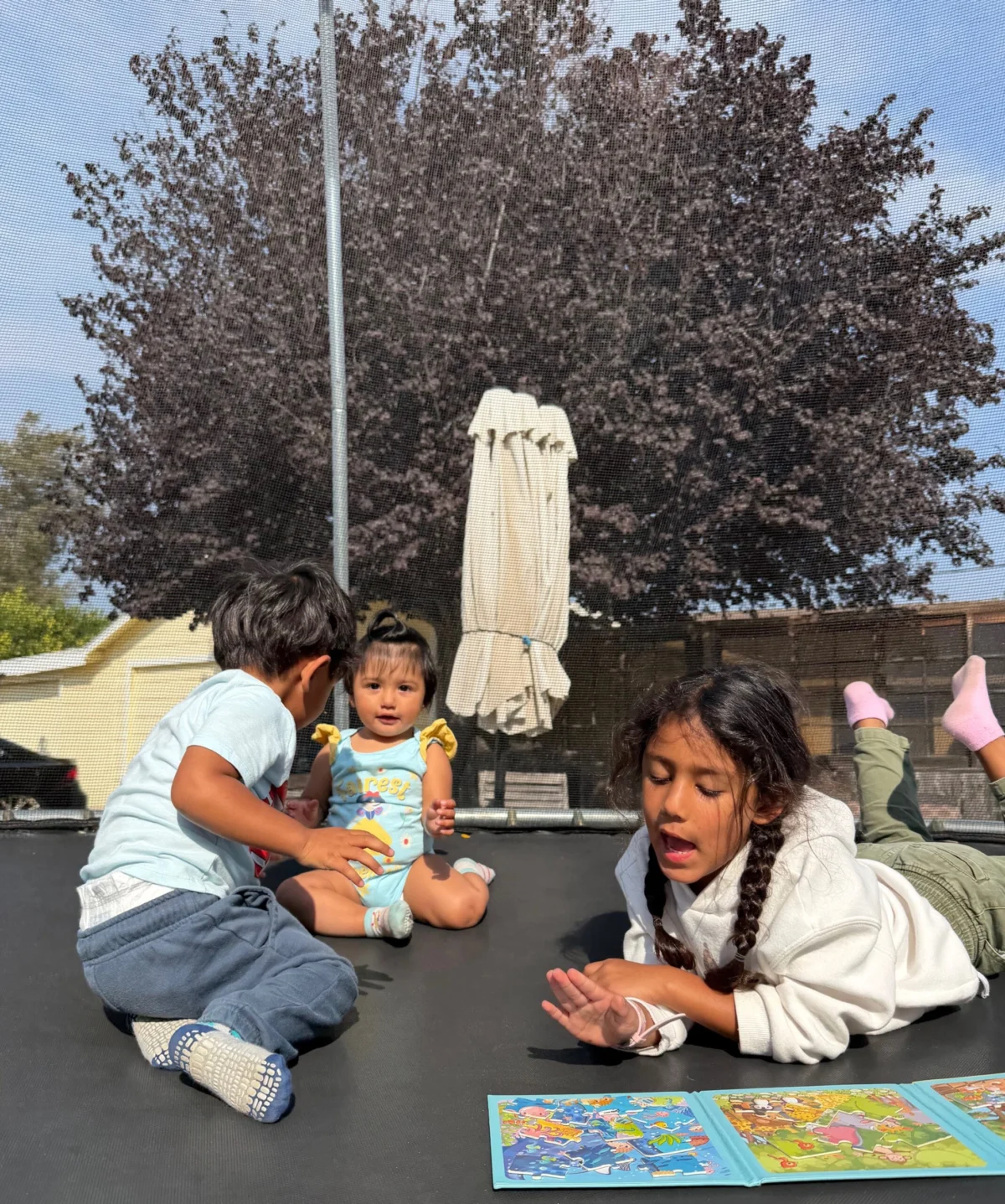
The practice of sharing personal anecdotes from one’s own childhood with the next generation serves as a critical pillar in the construction of family identity and the psychological development of children. This phenomenon was recently highlighted through a domestic account involving a mother and her three children, which underscores the broader societal shift toward using "family lore" as a tool for emotional bonding and resilience-building. The account centers on a specific incident—colloquially referred to as "the bathing suit down the toilet story"—which illustrates the intersection of early childhood problem-solving, social norm acquisition, and the enduring power of oral tradition within the family unit.
Analysis of the Primary Incident and Family Context
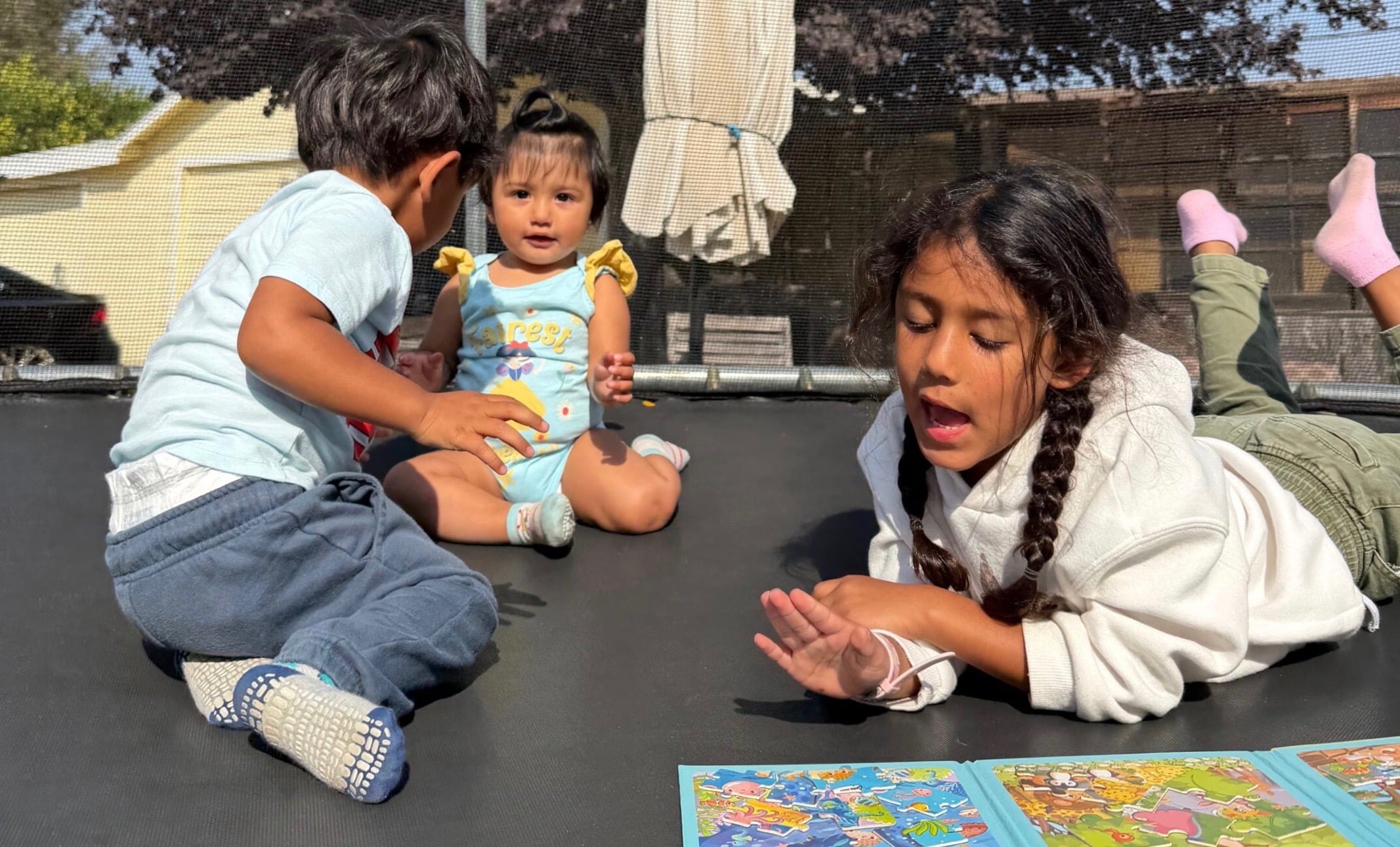
The narrative involves a parent, identified as Jannelley, who recounted a formative experience to her five-year-old daughter, Ella, while the family was engaged in recreational activity on a backyard trampoline. The story dates back approximately three decades to a family gathering at a residential property featuring a swimming pool. At the age of four, the subject faced a recurring logistical challenge common to early childhood: the conflict between physiological needs and the desire for uninterrupted play.
According to the account, the subject experienced repeated interruptions to her activities—specifically swimming with cousins and participating in pool games—due to the necessity of using the restroom. The physical discomfort of removing and reapplying a wet, cold, one-piece sequined swimsuit presented a significant barrier to her efficiency. In an attempt to streamline the process and maximize her time in the water, the four-year-old subject opted for a radical solution. After using the facilities, she discarded the garment directly into the toilet and attempted to return to the pool area completely unclothed, operating under the assumption that her speed would render her lack of attire unnoticeable to the adult observers.
The immediate reaction from the family members present was one of surprise and corrective intervention. A teenage cousin, Lupe, first identified the anomaly, followed by the subject’s mother, who promptly provided a towel and terminated the day’s swimming activities. Despite the social consequences and the cessation of play, the subject reported a sense of "pride and fascination" at having independently solved a complex problem.
Chronology of Narrative Transmission
The timeline of this specific piece of family lore can be divided into three distinct phases: the original event, the period of archival memory, and the modern-day resurgence.
- The Original Event (Circa 1990s): The incident occurs during a family barbecue. It is characterized by a child’s attempt at autonomy and a subsequent clash with social norms regarding public nudity and property care (the disposal of clothing in plumbing).
- The Archival Phase: The memory remains dormant or is shared only occasionally among adult relatives as a humorous anecdote of "naughty" or "logical" childhood behavior.
- The Modern-Day Resurgence (September 2026): While playing on a trampoline with her three children—Ella, Emiliano, and Evelynn—Jannelley is prompted by her daughter to share a story from her youth. The "bathing suit" story is selected, leading to a significant emotional response (laughter and engagement) from the children.
Since this reintroduction, the story has transitioned from a personal memory into "family lore," with the five-year-old daughter requesting nightly retellings. This transition marks the point where a private memory becomes a shared cultural asset within the household.
Supporting Data: The Psychological Impact of Family Narratives
Research in the field of developmental psychology suggests that the retelling of such stories is far more than mere entertainment. A landmark study conducted by Dr. Marshall Duke and Dr. Robyn Fivush at Emory University introduced the "Do You Know?" scale, which measured how much children knew about their family history. The researchers found that children who had a robust knowledge of their family’s past—including the "oscillating" narratives of both success and humorous failure—exhibited significantly higher levels of emotional resilience and self-esteem.
According to the data, children who hear stories of their parents’ childhood mishaps develop a "stronger sense of control over their lives" and a "higher degree of family cohesion." By hearing about a parent’s embarrassing or illogical moments, such as throwing a swimsuit in a toilet, children learn that:
- Mistakes are a universal part of the human experience.
- Parents were once children who faced similar frustrations.
- Social transgressions can be recovered from and eventually transformed into humor.
The Emory University study concluded that the "intergenerational self"—the sense of being part of a larger family story—is one of the most reliable predictors of a child’s psychological health.
Intergenerational Communication and Shared Vulnerability
In the context of modern parenting, the sharing of "vulnerability-based lore" represents a departure from more traditional, authoritative models of child-rearing. Historically, parental figures often maintained a distance that emphasized perfection and adherence to rules. However, contemporary journalistic and psychological analysis suggests that "humanizing" the parent through humorous stories of failure fosters a safer environment for children to report their own mistakes.
When Jannelley shared her story, she was not merely recounting a fact; she was demonstrating a form of "prosocial vulnerability." The reaction of the children—specifically the five-year-old rolling on the trampoline in laughter—indicates a release of tension. The child recognizes the absurdity of the parent’s past action, which levels the emotional playing field and strengthens the bond between the two generations.
Expert Perspectives and Inferred Reactions
While no formal statement was issued by developmental boards regarding this specific trampoline incident, educational consultants often categorize these interactions as "informal learning moments." Experts in early childhood education argue that stories involving "the logic of a child" (such as removing a wet suit to save time) help current children process their own developing logic.
"When a child hears that their mother once walked out of a bathroom naked because she was in a hurry to swim, it validates the child’s own impulsive nature while also reinforcing the boundaries that were eventually set by the grandmother in the story," notes a hypothetical analysis based on standard pediatric advice. "It teaches the consequence of the action—the end of pool time—without the weight of shame."
Furthermore, the role of the teenage cousin, Lupe, and the mother in the original story provides a framework for how social structures operate. The children listening to the story learn about the roles of different family members in maintaining order, all within the safe confines of a humorous anecdote.
Broader Implications for Social Connectivity
The resurgence of oral storytelling in the digital age is a notable counter-trend to the prevalence of screen-based entertainment. The backyard trampoline setting serves as a physical site for what sociologists call "thick description" of family life. In an era where much of a child’s intake is curated by algorithms, the "lore" provided by a parent is unique, unrepeatable, and tailored specifically to the listener.
The "bathing suit down the toilet" story also touches on themes of:
- Autonomy vs. Shame: The subject’s transition from feeling "big girl" pride to being wrapped in a towel by her mother.
- Problem Solving: The creative, albeit flawed, logic used by children to navigate physical discomfort.
- Narrative Ownership: How a child (Ella) claims a story as her favorite, thereby integrating her mother’s past into her own present identity.
Conclusion
The account of Jannelley’s childhood mishap and its subsequent reception by her children provides a micro-study of the essential role that family narratives play in domestic life. By documenting and sharing these "best pieces of childhood lore," parents contribute to a reservoir of resilience and identity that supports a child’s emotional growth. As the five-year-old Ella continues to request the retelling of the incident, the story moves beyond its original context of a 1990s pool party and becomes a permanent fixture in the family’s collective memory, illustrating that the most effective lessons are often those wrapped in laughter and shared vulnerability.
The enduring appeal of such stories suggests that for the modern family, the most valuable "content" is not found on a screen, but in the honest, humorous, and occasionally messy archives of their own history. Through the simple act of storytelling on a trampoline, a parent can bridge the gap between generations, turning a long-ago plumbing mishap into a foundational stone of family unity.
