

Autism Spectrum Disorder (ASD), commonly referred to as autism, is a lifelong neurodevelopmental difference characterized by diverse ways of experiencing the world, communicating, and interacting socially. As a spectrum condition, autism presents uniquely in each individual, with varying abilities and challenges that can fluctuate depending on environmental factors and specific situations. Individuals on the autism spectrum are often described as neurodivergent, a term that acknowledges neurological differences as natural variations of the human brain, rather than deficits. This understanding is crucial when addressing specific life stages and experiences, such as parenthood and breastfeeding, where neurodivergent individuals may encounter distinct challenges and possess unique strengths. Many autistic women choose to have children and breastfeed, and a significant number of breastfed children are also autistic or neurodivergent, necessitating a nuanced approach to support and care.
Understanding Autism: A Brief Overview and Evolving Perspectives
Historically, autism was often misunderstood and misdiagnosed, particularly in women and girls, leading to a skewed perception of its prevalence and presentation. Early diagnostic criteria, largely based on observations in males, often overlooked the subtle or "masking" behaviors common in autistic females who learn to camouflage their autistic traits to fit into neurotypical society. This historical bias contributes to the current statistics, which estimate that while 0.82% of the population of England are formally diagnosed as autistic, a staggering proportion – up to 72% of the autistic population in England – are believed to be undiagnosed. This significant diagnostic gap has profound implications for accessing appropriate healthcare and support services, including maternity and breastfeeding care.
The journey towards a more inclusive understanding of autism has been gradual. The Diagnostic and Statistical Manual of Mental Disorders (DSM), for example, has seen several revisions, moving from distinct categories like Asperger’s Syndrome and autistic disorder to a unified "Autism Spectrum Disorder" in DSM-5 (2013). This shift aimed to better reflect the spectrum nature of the condition, though debates continue regarding its application. Simultaneously, the rise of the neurodiversity movement has championed the idea that neurological differences, including autism, ADHD, dyslexia, and others, are natural and valuable forms of human variation. This perspective advocates for acceptance, accommodation, and support tailored to individual needs, rather than focusing solely on "curing" or "fixing" differences. For autistic parents and parents of autistic children, this paradigm shift is vital, fostering environments where their unique experiences are acknowledged and celebrated, rather than pathologized.
Breastfeeding for Autistic Parents: Strengths and Support Needs
The decision to breastfeed is a deeply personal one, and for autistic women and parents, it can be accompanied by a unique set of considerations. While there may be additional challenges, many autistic parents also discover profound strengths and positive aspects during their breastfeeding journey.
The Positives and Empowerment of Breastfeeding
For many autistic women, breastfeeding offers a period of calm and quiet that is deeply cherished. The act itself can provide a predictable, repetitive rhythm, which can be soothing and regulating in a world often perceived as chaotic or overwhelming. It offers a protected time to sit, rest, and connect with their baby, fostering a sense of empowerment and agency. This structured, intimate interaction can be a welcome respite from external sensory input and social demands.

Furthermore, autistic individuals often excel at in-depth research and independent information gathering, a trait that can be immensely beneficial when preparing for and engaging in breastfeeding. Those who plan to breastfeed may meticulously educate themselves on the physiological processes, latch techniques, milk supply management, and potential challenges. This determination and knowledge base can lead to high rates of success and perseverance, even in the face of difficulties. Their commitment, once a decision is made, is often unwavering, driven by a deep understanding and belief in the benefits of breastfeeding.
Navigating Communication Differences in Maternity Care
One of the primary areas where autistic parents may require tailored support is in communication. Autistic people may experience communication differences that are situational, meaning their ability to verbally communicate can vary significantly depending on their environment, stress levels, or sensory load. In high-stress situations, such as hospital settings or during medical appointments, an autistic person might become non-verbal or struggle to articulate their needs effectively, a phenomenon sometimes referred to as "autistic shutdown" or "selective mutism."
Healthcare providers and support services must therefore adopt flexible and diverse communication methods. This includes offering the option to communicate via writing or typing on a phone, using picture cards, visual aids, or even sign language, if applicable. Clear, direct, and unambiguous language is crucial, avoiding jargon, implied meanings, or overly subtle social cues that can be difficult for autistic individuals to interpret. Written information, pre-appointment guides with photos of the location, and clear expectations for interactions can significantly reduce anxiety and improve access to care.
Addressing Sensory Differences
Sensory differences are a hallmark of autism and can profoundly impact the breastfeeding experience. Autistic individuals may experience senses (smell, taste, touch, sight, sound) with heightened intensity (hypersensitivity) or reduced perception (hyposensitivity).
- Touch: Some autistic parents may find the sensation of a baby suckling, or even skin-to-skin contact, overwhelming or dysregulating. Others might find it comforting. The feeling of milk let-down, nipple sensations, or the texture of nursing bras and pads can also be highly impactful.
- Sound: A baby’s cries, suckling noises, or the general hubbub of a busy maternity ward or support group can be intensely distracting or distressing.
- Smell: The natural scent of breast milk, baby, or even hospital disinfectants can be overwhelming.
- Sight: Bright lights, cluttered environments, or too much visual stimulation can cause sensory overload.
- Interoception: Difficulties with interoception – the ability to perceive internal bodily states like hunger, thirst, or fullness – can make it challenging to recognize early hunger cues from their baby or even their own need for hydration and nourishment while breastfeeding.
To mitigate these challenges, support persons should prioritize creating a calm, low-sensory environment. This might involve dimming lights, reducing noise, ensuring comfortable clothing, and offering quiet, private spaces for feeding. Understanding and validating these sensory experiences, rather than dismissing them, is vital for building trust and providing effective support.
Psychological Impact and Accessing Support
The postpartum period is a vulnerable time for any parent, but for autistic women, it can carry additional psychological burdens. Rates of Post-Traumatic Stress Disorder (PTSD) are notably higher in the autistic community compared to neurotypical people, often stemming from negative experiences within healthcare settings, where their needs may not have been met or understood. Feelings of a lack of control over their own bodies and experiences after giving birth can exacerbate these vulnerabilities.

Many autistic mothers also report a lack of social support and significant challenges in seeking assistance from mainstream maternity services. Anxiety related to attending public groups, navigating complex phone calls, or interacting with unfamiliar professionals can create substantial barriers. This can prevent access to crucial local breastfeeding support groups or national helplines. Recognizing this, organizations like La Leche League Great Britain (LLLGB) offer alternative communication channels, such as written help forms, to ensure more equitable access to support.
Key Considerations for Supporting Autistic Parents to Breastfeed:
- Individualized Approach: Always assume individual differences. What works for one autistic person may not work for another.
- Clear and Direct Communication: Use precise language, avoid euphemisms, and offer information in multiple formats (written, visual). Confirm understanding.
- Sensory Environment: Be mindful of light, sound, smell, and touch. Offer quiet, private spaces. Ask about sensory preferences.
- Flexible Support Methods: Offer alternatives to group settings (one-on-one, online, written communication).
- Trauma-Informed Care: Recognize potential past negative healthcare experiences and strive to create a safe, respectful, and empowering environment.
- Patience and Space: Allow extra time for processing information and responding. Respect boundaries.
- Empowerment: Focus on the parent’s strengths and autonomy. Support their choices without judgment.
Breastfeeding an Autistic Child: Unique Dynamics and Support
While many adults remain undiagnosed, autism diagnosis rates in children have been steadily increasing due to improved awareness, evolving diagnostic criteria, and broader screening efforts. This means that parents are increasingly navigating the early years, including breastfeeding, with an understanding or suspicion that their child is neurodivergent. The World Health Organization (WHO) recommends breastfeeding for two years and beyond, with the natural age of weaning estimated between 2.5 and 7 years. For an autistic or suspected neurodivergent child, breastfeeding may hold particular significance and necessitate additional support and considerations.
Sensory Differences in Autistic Children and Feeding Patterns
Just like autistic adults, autistic children process sensory input differently. This can manifest as heightened sensitivity (hypersensitivity) or reduced sensitivity (hyposensitivity) to various stimuli, profoundly influencing their feeding behaviors.
- Sensory Seeking: Some autistic children may seek sensory input, leading to frequent breastfeeding. The oral stimulation, the rhythmic suckling, the close physical contact, and the consistent taste and temperature of breast milk can be highly regulating and comforting, especially when feeling overwhelmed by other sensory input in their environment (e.g., a busy, loud, or unfamiliar place). Breastfeeding can serve as a primary co-regulation tool, helping the child manage their emotions and sensory experiences.
- Sensory Avoiding: Conversely, sensory differences can also mean a child wants to breastfeed less often or struggles to feed in certain situations. They might be sensitive to the temperature of the room, the texture of a parent’s clothing, specific smells, or even the position in which they are held. If a child is struggling with overwhelming sensory input, feeding may become difficult or even impossible. In such cases, modifying the environment to reduce or avoid the distressing sensory input (e.g., moving to a quieter room, adjusting lighting, changing positions) can be crucial.
"High Needs" Babies and Intense Attachment
Many babies and young children are described as "high needs," characterized by an intense desire for closeness to their primary caregiver, frequent feeding, and difficulty being put down. While this behavior is normal and expected for many infants, it can be particularly intense and prolonged in neurodivergent children. Their need for co-regulation, predictability, and deep connection can manifest as a persistent demand for physical proximity and breastfeeding.
For parents of high-needs autistic children, self-care becomes paramount. The constant demands can be exhausting, physically and emotionally. Establishing a robust support system of family, friends, and like-minded communities (such as other parents of neurodivergent children) is essential. These networks can provide practical help, emotional validation, and a sense of belonging, mitigating feelings of isolation that can often accompany parenting a neurodivergent child.

Navigating Feeding Patterns, Boundaries, and Weaning
The journey of breastfeeding an autistic child often extends into toddlerhood and beyond, bringing with it specific considerations regarding feeding patterns, setting boundaries, and eventual weaning. Many parents of autistic toddlers find frequent feeding challenging and express a need for increased information and support regarding weaning.
Weaning can be particularly complex with autistic children due to several factors:
- Sensory Issues with Solids: Children with sensory differences may struggle to transition to solid foods due to aversions to specific textures, tastes, smells, or even the visual appearance of certain foods. This can lead to a limited diet, making continued breastfeeding vital for nutritional intake. Sometimes, these difficulties only emerge or intensify as the child gets older, leading to an increase in breastfeeding as a primary source of nourishment and comfort.
- Communication Challenges: Explaining the concept of weaning or setting boundaries can be difficult when communication is non-verbal or atypical.
- Co-regulation: As mentioned, breastfeeding often serves as a primary tool for autistic children to regulate their emotions and sensory input. Removing this source of comfort can be highly distressing if not managed sensitively.
- Interoception Difficulties: Autistic children with interoception difficulties may struggle to recognize when they are hungry, thirsty, or full, making responsive feeding and traditional weaning cues less straightforward.
Many mothers continue to breastfeed until their child naturally outgrows the need ("self-weaning"), responding to their child’s cues ("on demand"). Others may choose to set gentle boundaries to manage the frequency or duration of feeds, or to limit where and when breastfeeding occurs. Some parents may decide to stop breastfeeding altogether.
Continuing to breastfeed into toddlerhood and beyond offers numerous benefits for both the child and mother, including sustained nutritional intake (especially important if the child has a limited diet), immune support, and emotional comfort.
Strategies for Setting Boundaries and Weaning an Autistic Child:
If a mother chooses to set boundaries or limit breastfeeding, especially when communication issues are involved, several options can be explored:
- Visual Schedules and Social Stories: Use visual aids, picture cards, or simple social stories to explain changes in feeding routines. For example, a picture sequence showing "breastfeeding time" followed by "play time" or "snack time."
- Gradual Reduction: Implement changes slowly and predictably. For instance, reducing the length of feeds or eliminating one feed at a time.
- Offer Alternatives: Replace breastfeeding with other forms of comfort, connection, or nutrition, such as cuddles, stories, water, or preferred solid snacks.
- Distraction Techniques: Engage the child in a favorite activity or toy when they request to nurse at an undesirable time.
- Designated Feeding Spots/Times: Limit breastfeeding to specific chairs, rooms, or times of day, creating predictability.
- "Don’t Ask, Don’t Offer": A gentle approach where the parent doesn’t offer the breast but will nurse if the child requests, gradually reducing opportunities.
- Communication Strategies: For older children, use clear, simple language to explain boundaries, even if they cannot respond verbally. Acknowledge their feelings.
- Support from a Leader: A La Leche League Leader or other qualified lactation consultant can provide individualized support and information on gentle weaning strategies tailored to the child’s developmental stage and sensory profile.
Broader Implications and the Future of Neurodiversity-Affirming Care
The experiences of autistic parents and parents of autistic children highlight a critical need for neurodiversity-affirming care models within maternal and child health services. This requires comprehensive training for healthcare professionals – midwives, obstetricians, lactation consultants, and pediatricians – to understand the nuances of autism, recognize masking, and implement flexible, person-centered approaches. Policy changes are needed to fund accessible support services, including sensory-friendly clinics, diverse communication options, and peer support networks specifically for neurodivergent families.

Further research is essential to deepen our understanding of the physiological and psychological aspects of breastfeeding for autistic individuals, both parents and children. This includes studies on sensory processing during lactation, the impact of interoception difficulties on feeding cues, and the long-term benefits of extended breastfeeding for neurodivergent children. Critically, these research efforts must actively involve autistic voices and experiences to ensure relevance and authenticity.
The journey of breastfeeding for autistic parents and children is rich with unique experiences, challenges, and profound strengths. By embracing a neurodiversity-affirming perspective, providing individualized, flexible, and understanding support, and continually learning from the autistic community, we can ensure that every family has the opportunity to achieve their breastfeeding goals in a way that honors their unique neurotype.
Written by Emily Lunny, November 2023. Review due November 2026.
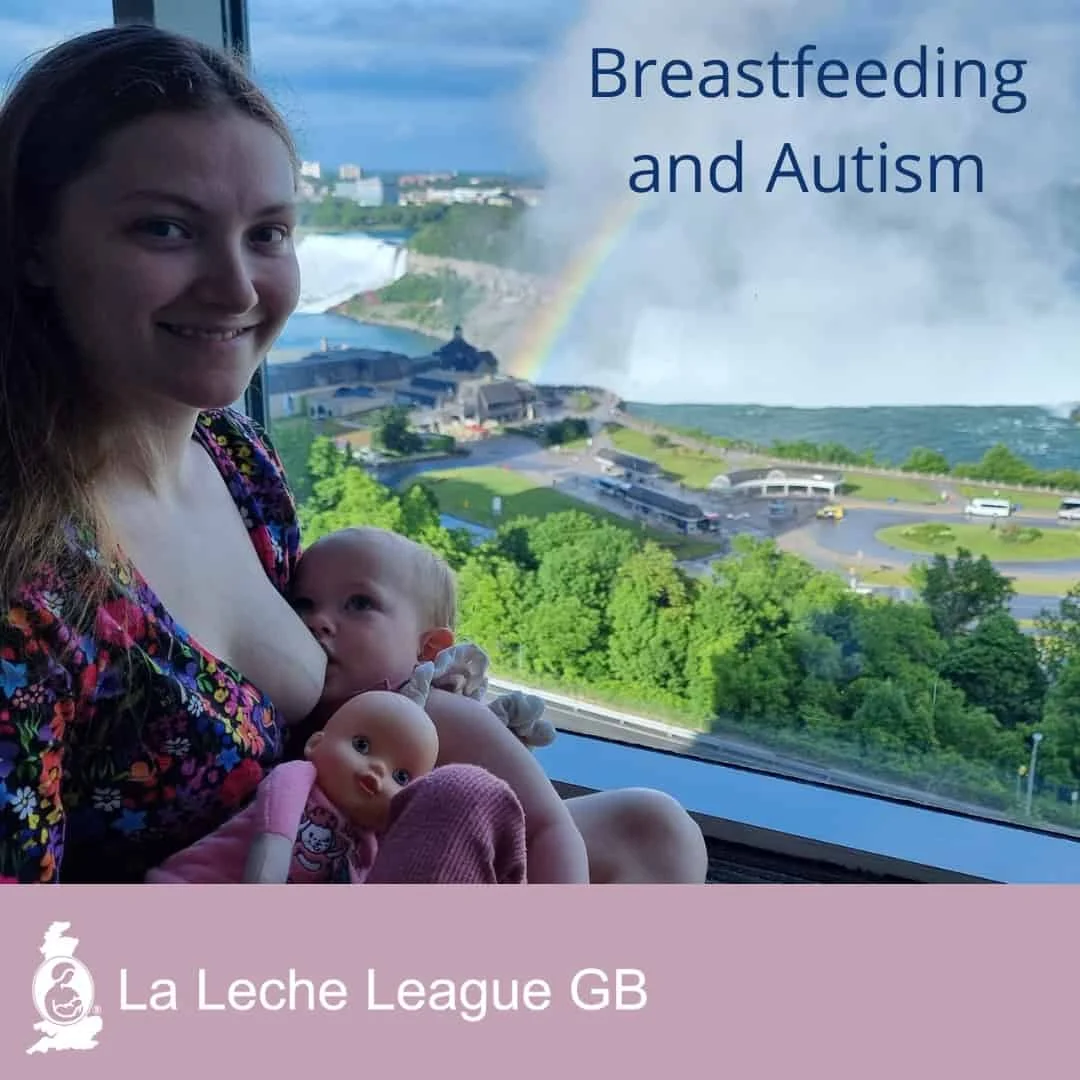
Photos courtesy of Sophie Burrows and Emily Lunny.
Further Reading
- Dysphoric Milk Ejection Reflex (D-MER)
- Still Nursing after 1 year
- Supporting a breastfeeding mother
- Weaning from the breast
Online Information
- Maternity Autism Research Group (MARG)
References
[1] O’Nions, E. et al., 2023
[2] Hampton, S. et al., 2021
[3] Hampton, S. et al., 2021
[4] Grant, A. et al. 2022
[5] Rumball, F., Happé, F. and Grey, N., 2020
[6] Grant, A. et al., 2022
[7] Crane, L. et al., 2018
[8] Dettwyler, K.A., 1999
Copyright LLLGB 2023
