

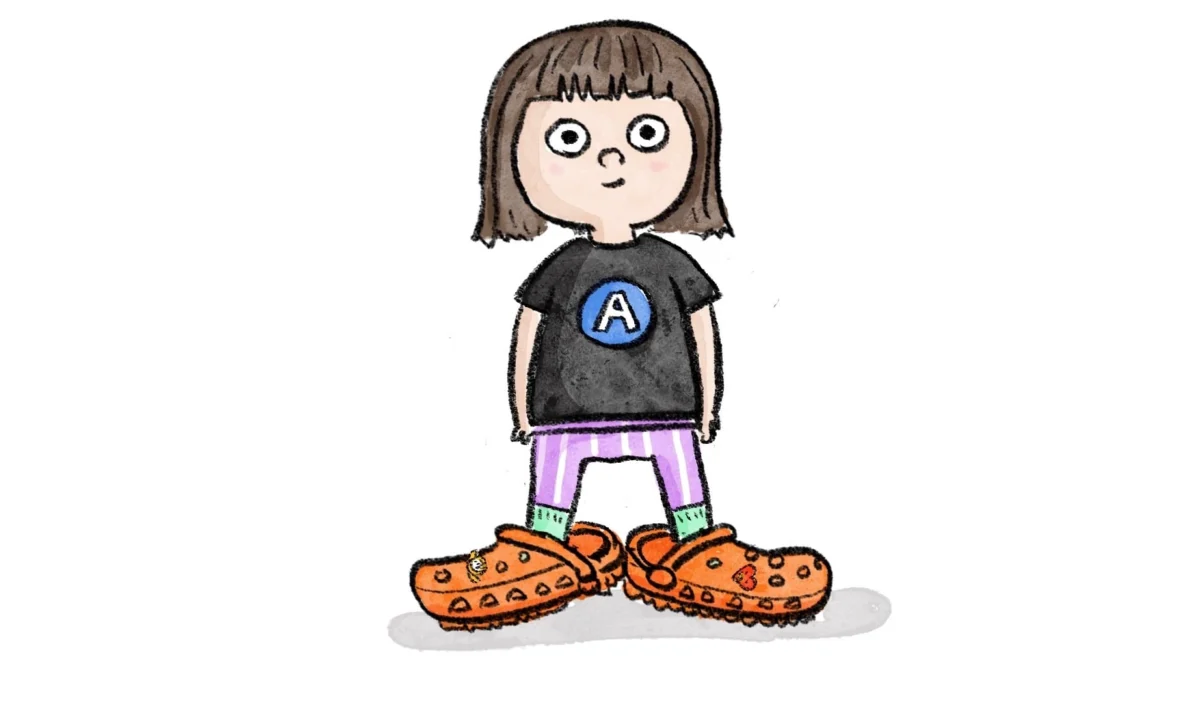
In the final week of June 2026, a series of digital illustrations by the acclaimed artist Ruth sparked a profound international conversation regarding the delicate balance between caregiving efficiency and the preservation of human dignity. The artwork, which depicts the quiet, often grueling moments of waiting for a child to complete a mundane task, has resonated across a diverse demographic, from parents of toddlers to adults navigating the complexities of geriatric care. This cultural moment highlights a growing resistance to the modern "frictionless" lifestyle, suggesting a shift toward valuing "productive struggle" as a cornerstone of psychological development and emotional resilience.
The Catalyst: A Visual Narrative of Restraint
The illustrations at the center of this movement focus on the internal struggle of the caregiver. One frame depicts a parent standing over a child attempting to tie their own shoes—a task that, in the fast-paced environment of 2026, often feels like an obstacle to be bypassed. Ruth’s work captures the minute physical and emotional cues of this tension: the checked impulse to reach out and finish the knot, the deep breath of the waiting adult, and the eventual radiance of the child upon achieving success.
Public reaction was immediate and deeply personal. Within forty-eight hours of the comic’s release, thousands of caregivers shared testimonials regarding their own experiences with "stepping back." The discourse moved beyond simple parenting advice, evolving into a broader analysis of how society treats those in states of dependency, whether due to age, illness, or developmental stages.
Chronology of a Digital Phenomenon
The timeline of the conversation suggests a rapid synthesis of community experience and professional insight:
- June 25, 2026: Ruth publishes the comic series on major social platforms and her personal archive.
- June 26, 2026: The artwork goes viral, particularly among "Sandwich Generation" caregivers who are simultaneously raising children and caring for aging parents.
- June 27, 2026: Behavioral therapists and pediatric occupational therapists begin weighing in, connecting the artwork to the "Self-Determination Theory" (SDT) of psychology.
- June 28–30, 2026: Community-led "empathy hacks," such as the "non-dominant hand challenge," gain traction as practical applications of the comic’s message.
By the end of the month, the dialogue had transitioned from a social media trend to a focal point for editorial pieces in major parenting and health publications, signaling a shift in the zeitgeist regarding the "do-for" culture of the mid-2020s.
The Psychological Underpinnings of Productive Struggle
Experts in child development have long advocated for the importance of allowing children to navigate obstacles independently. Kat, a behavioral specialist contributing to the discussion, noted that the current "do-for" culture—driven by an increasing societal need for quick fixes—has inadvertently contributed to lower frustration tolerance in younger generations.
"When we remove every friction point from a child’s life, we are essentially depriving them of the opportunity to develop problem-solving neurons," Kat stated. "The struggle is where the learning happens."
This sentiment is backed by the work of Jean Ayres, the pioneer of sensory integration therapy. Ayres’ famous axiom, "If you can solve a problem with your body, you can solve a problem with your mind," has been frequently cited during this discourse. The theory suggests that the physical act of struggling with a zipper, a spoon, or a toy builds the cognitive scaffolding necessary for complex abstract thinking later in life.
Quantitative and Qualitative Impact on Caregiving
While the emotional impact of Ruth’s work is subjective, the data regarding caregiving stress is well-documented. According to 2025 data from the Global Institute for Family Wellness, 68% of parents reported feeling "constant time-pressure," leading to a tendency to perform tasks for their children to save time. However, the same study found that children whose parents allowed them more autonomy in daily routines showed a 22% higher rate of "executive function" proficiency by age seven.
The June 2026 discussion also highlighted the "Sandwich Generation" struggle. One participant, Sar, related the comic’s message to her experience with a mother suffering from dementia. "Children and folks with poor health certainly deserve their dignity, but it can feel tough to slow down and let them have it," Sar noted. This highlights a critical intersection in caregiving: the realization that patience is not merely a virtue but a form of respect for the individual’s agency.
The Empathy Hack: The Non-Dominant Hand Method
One of the most significant practical outcomes of this viral event is the rise of the "Nathalie Method," named after a community member who shared her technique for building empathy. To combat the frustration of watching a child or a person with limited mobility perform a task slowly, Nathalie suggested performing the same task with one’s non-dominant hand.
"I’d later do that task—brushing teeth, whisking eggs—with my non-dominant hand to remind myself that it’s hard," she explained. This simple exercise serves as a physiological reminder of the difficulty of motor coordination, effectively bridging the empathy gap between the highly capable caregiver and the developing or declining dependent.
The technique has since been adopted by several early childhood education centers as a training tool for teachers, providing a tangible way to recalibrate expectations and foster a more patient classroom environment.
Broader Implications for Modern Society
The resonance of Ruth’s artwork suggests a growing fatigue with the "frictionless existence" promised by 21st-century technology. In an era of instant delivery and automated services, the slow, manual process of learning a skill stands as an anomaly.
1. Shift in Parenting Paradigms
The "Helicopter" and "Snowplow" parenting styles of the early 2000s, characterized by the removal of all obstacles, are being replaced by a "Scaffolding" approach. In this model, the caregiver provides the support necessary for the child to succeed but does not perform the task for them. This transition is seen as essential for preparing the next generation for the complexities of a rapidly changing workforce.
2. Dignity in Geriatric Care
The conversation has also prompted a re-evaluation of how elderly care is administered. By emphasizing "done is better than perfect," caregivers are encouraged to allow aging individuals to maintain their routines—such as dressing or feeding themselves—even if it takes significantly longer. This preservation of autonomy is linked to better mental health outcomes and a slower rate of cognitive decline in seniors.
3. Professional and Corporate Applications
The principles of "relinquishing control and trusting" are finding their way into corporate leadership. Managers have noted that the "urge to jump in and facilitate challenges" is a common trait among high-functioning leaders that can stifle employee growth. The "Ruth Effect" is being cited in management seminars as a lesson in the necessity of allowing subordinates to work through the discomfort of a challenge to achieve true professional development.
Conclusion: The Fruit of Patience
The viral response to Ruth’s illustrations serves as a reminder that the most profound moments of growth often occur in the quiet, frustrating intervals of a busy day. By reframing the "wait" not as a waste of time but as a gift of autonomy, the community has articulated a new standard for caregiving in the modern age.
As one parent, jdp, observed, the lessons learned at the toddler stage—such as the patience required to let a child tie their own shoes—are "great proving grounds" for the more significant challenges of the future, such as teaching a teenager to drive or supporting an adult child through a career change.
The consensus emerging from this June 2026 cultural event is clear: while the roots of patience and the allowance of struggle may be bitter and time-consuming, the fruit—independence, confidence, and mutual respect—is undeniably sweet. The legacy of this discussion will likely be a renewed commitment to "stepping back," ensuring that those under our care are given the space to prove to themselves that they are capable, one slow, difficult, and ultimately triumphant step at a time.
