

Originally published November 2025. Last reviewed/updated by Craig Canapari, MD in December 2025.
Nap transitions, the often-unpredictable shifts in a child’s sleep schedule as they age, represent a significant challenge for parents, pediatricians, and sleep consultants alike. The inherent difficulty in forecasting when a child will outgrow a nap, and the often-tumultuous nature of these transitions, has given rise to an entire industry dedicated to understanding and managing nap timing. It was against this backdrop of established parental and professional concern that a brief excerpt from a podcast episode on napping recently achieved unexpected virality on social media platforms, underscoring the profound impact of sleep development on young children and their families.
A Social Media Phenomenon Unveiling Sleep Science
The excerpt, a short video clip from the "Sleep Edit" podcast episode focused on napping, shared via the platform of Dr. Craig Canapari, a pediatrician and sleep specialist, far surpassed the engagement of other content Dr. Canapari typically shares. As of November 2, 2025, the reel had garnered over 185,000 views on Instagram, 117,000 on TikTok, and a notable 1,100 views on YouTube, a platform Dr. Canapari humorously referred to as his least frequented social media channel. This exceptional reach, accompanied by over 60 comments on the Instagram post alone, indicated that the topic of naps and their connection to brain development had resonated deeply with a broad audience.
The core of the viral content was a concise summary of research from the University of Massachusetts (UMass) proposing a link between nap transitions and the maturation of the hippocampus, a crucial brain region responsible for memory formation. The intuitive appeal of this hypothesis – that changing sleep needs are intrinsically tied to cognitive development – immediately struck a chord with parents and caregivers, sparking widespread discussion and a desire for further understanding.
Parental Voices: From Curiosity to the Realities of Sleep Math
The response to the shared research was overwhelmingly engaged, with dozens of parents and clinicians contributing their experiences, posing questions, and injecting a dose of humor into the comments section. This collective outpouring confirmed nap transitions as a near-universal sleep dilemma in early childhood. Several recurring themes emerged from these discussions, highlighting the multifaceted nature of this developmental stage.
The Spark of Curiosity
A significant portion of the commentary expressed a newfound fascination with the scientific underpinnings of napping. Phrases like "So interesting! I never thought naps could be linked to brain development" and "Makes total sense once you think about memory consolidation" were common, demonstrating a natural inclination for parents to connect observed home behaviors with scientific inquiry. This curiosity serves as a vital bridge, facilitating the integration of sleep science into everyday parenting practices.
Navigating the "Sleep Math"
Many parents articulated the complex arithmetic of nap transitions, particularly during the transitional phases. Comments such as, "If my three-year-old naps, bedtime is a disaster. If he skips it, he’s cranky for three hours – there’s no winning," and "We’re in the weird in-between: my son still needs a nap, but it ruins bedtime every single night," captured the precarious balance families often face. These sentiments reflect the challenging period where a child’s evolving internal clock conflicts with their continued need for rest. Dr. Canapari often advises parents that children do not abruptly cease napping; rather, there’s a prolonged phase where they may simultaneously need and resist naps, or exhibit different napping behaviors in different environments (e.g., napping at daycare but refusing on weekends).
Acknowledging Individual Trajectories
Another prominent theme was the recognition that each child’s developmental path is unique. Anecdotes like, "My daughter stopped napping right after turning two and her memory is incredible," and "Our son gave up naps around 2½ and he’s seven now – super mature and focused," were frequently shared. While these individual experiences might seem to diverge from study findings, they effectively underscore the inherent variability in brain development, illustrating that the process of synaptic maturation and nap cessation is not a synchronized event across all children.
The Quest for Clarity
A number of parents sought further clarification on the implications of the research. Questions such as, "Does dropping naps that young affect other parts of growth?" and "Are we talking about dropping all naps or just cutting from three to two?" highlighted the need for precise, evidence-based explanations. The authors’ focus was primarily on the transition from two naps to one, with no indication that parents should alter their child’s current sleep schedule. The research does not suggest that early nap cessation negatively impacts other developmental domains; rather, it points to the hippocampus’s role in this specific transition.
Innovative Workarounds
The discussion also revealed a wealth of practical, creative solutions employed by parents. Examples included asking daycare providers to adjust nap durations or implementing "quiet time" with books and soft music as an alternative to traditional naps. These strategies demonstrate a pragmatic approach to sleep management, prioritizing adequate rest and maintaining family well-being over rigid adherence to a specific nap structure.
A Touch of Humor
Among the insightful observations, a particularly memorable comment injected levity into the complex scientific discussion: "I guess my husband’s hippocampus is still developing!" This lighthearted remark underscored the relatable and often humorous challenges that parents navigate in understanding child development.

The Scientific Foundation: Unpacking the UMass Study
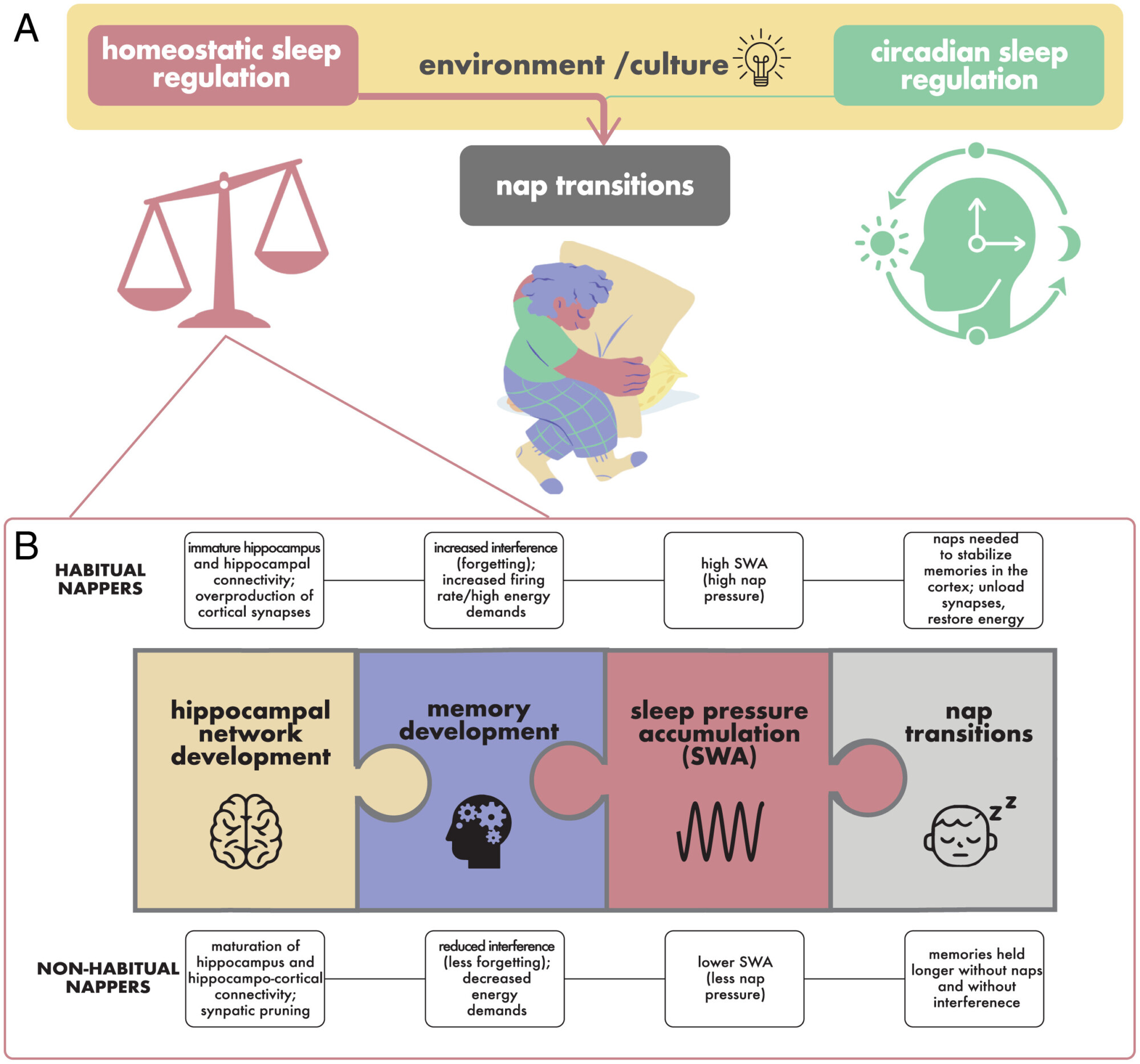
The research that ignited this widespread conversation is a "perspective" piece titled "Contributions of Memory and Brain Development to the Bioregulation of Naps and Nap Transitions in Early Childhood," authored by Spencer and Riggins and published in the Proceedings of the National Academy of Sciences of the United States of America in 2022. This article does not present new experimental data but rather synthesizes existing research to propose a novel model explaining how brain development influences nap timing.
The authors begin by outlining the two primary biological drivers of sleep-wake timing: sleep drive and the circadian clock. Sleep drive, a measure of how tired an individual is, accumulates with prolonged wakefulness. Infants and young children experience a more rapid accumulation of sleep drive compared to older children and adults. This physiological difference explains why newborns nap multiple times daily, one-year-olds typically require two naps, and three-year-olds often consolidate to a single nap.
However, the precise timing of nap transitions – moving from three naps to two, two to one, or ceasing naps altogether – remains unpredictable. The study highlights the broad age ranges associated with these transitions:
- 3 naps → 2 naps: Typically occurs between 6-9 months, consolidating morning, midday, and late afternoon naps into morning and afternoon sessions.
- 2 naps → 1 nap: Generally observed between 12-18 months, with the morning nap being dropped and most children napping only in the afternoon.
- 1 nap → no naps: Usually occurs between 3-5 years, with the afternoon nap gradually ceasing, and most children no longer napping by age five.
The UMass study posits that the maturation of the hippocampus plays a significant role in this gradual reduction of nap frequency. As the hippocampus becomes more efficient at processing and storing memories, the brain may require fewer naps to consolidate new information. The hippocampus, a seahorse-shaped structure located deep within the brain, is integral to forming new memories, particularly those with an emotional component.
The authors articulate a compelling hypothesis: "A unique problem exists early in human development; there is a massive amount of information that must be learned, yet the neural systems that support learning are still under construction." During early childhood, the brain undergoes rapid synaptogenesis, the formation of connections between neurons. This process leads to an overproduction of synapses, which are subsequently refined through synaptic pruning. The UMass perspective suggests that naps serve as a critical mechanism to manage the cognitive load imposed by this intense learning period on an immature brain.
"Naps provide a solution to what is essentially a memory problem; high learning demands on an immature system create an overproduction of synapses that reaches its peak in early childhood," the authors explain. "Sleep has been argued to help meet space and energy challenges associated with development. Thus, we posit that early childhood is a time of competing demands of learning, which loads the brain (the hippocampus in particular), and sleeping, which may unload synapses across the cortex."
A particularly insightful passage from the study connects slow-wave activity (SWA), characteristic of deep sleep, to the consolidation of emotional memories. The authors note, "Interestingly, SWA in children’s naps predicts the overnap protection of memory for emotional faces… and also, predicts reductions in the emotional attention bias following a nap in young children. We posit that consolidation of emotional memories from the morning decreases emotional load, and as a result, children are less reactive to emotional stimuli thereafter. This provides a potential explanation of the oft observed phenomena that habitually napping children are emotionally dysregulated at the end of the day if they do not nap (the ‘witching hour’)." This offers a scientific rationale for the intense emotional dysregulation often observed in children who miss a nap, as their brains may not have had sufficient opportunity to process the emotional experiences of the day.
Translating Science into Daily Practice
It is crucial to emphasize that the UMass study and its subsequent social media dissemination do not advocate for specific changes to a child’s established sleep schedule. The research highlights a developmental correlation, not a prescriptive guideline. The core message is that children mature at individual rates, and the process of nap transition is a testament to their evolving cognitive abilities.
For parents navigating nap challenges, established best practices remain relevant. These include:
- Consistency: Maintaining a predictable bedtime routine.
- Optimizing Sleep Environment: Ensuring a dark, quiet, and cool sleep space.
- Age-Appropriate Wake Windows: Understanding the recommended periods of wakefulness between sleep sessions.
- Patience and Flexibility: Recognizing that nap transitions are gradual and require adaptation.
The Broader Implications: Embracing Developmental Timelines
The widespread engagement with this research underscores a fundamental truth: every child’s developmental timeline is unique. Nap transitions are not indicators of parental success or failure but rather natural milestones in a child’s growth. Judging a child’s sleep habits against those of their peers can lead to unnecessary parental anxiety. Similarly, parents who observe their children dropping naps earlier than expected should not feel concerned; this is a common, albeit sometimes frustrating, aspect of development.
The conversation sparked by this viral social media content serves as a powerful reminder of the intricate connection between a child’s developing brain and their sleep patterns. By understanding the scientific underpinnings of these transitions, parents can approach nap changes with greater insight, patience, and confidence, ultimately fostering healthier sleep habits and supporting their child’s overall well-being.
For further exploration of nap transitions and the science of sleep, viewers are encouraged to consult Episode 15 of The Sleep Edit podcast, which includes helpful visual aids on its YouTube version, or Dr. Canapari’s blog post dedicated to nap problems.