

Originally published November 2025. Last reviewed/updated by Craig Canapari, MD in December 2025.
Nap transitions, the often-unpredictable shifts in a child’s sleep patterns, represent a significant challenge for parents, pediatricians, and sleep consultants alike. The inherent difficulty in forecasting when a child will cease napping, coupled with the frequently tumultuous nature of these transitions, has fostered a dedicated industry focused on deciphering nap timing and its associated developmental markers. Despite this established expertise, a recent social media phenomenon surrounding a short educational reel has underscored the profound parental interest and the surprising scientific underpinnings of this common childhood milestone.
A Viral Moment: Unpacking the Science of Sleep and Memory
A concise video excerpt from the "Sleep Edit" podcast’s episode on napping unexpectedly achieved remarkable virality across social media platforms in late 2025. While Dr. Craig Canapari, MD, regularly shares podcast snippets, this particular reel significantly outperformed all previous content. As of early November 2025, the video had garnered hundreds of thousands of views across Instagram and TikTok, with a substantial 1.1 million views on YouTube, prompting a call for increased engagement from the platform’s audience. The overwhelming response, evidenced by over 60 comments on the Instagram post alone, highlighted the resonant nature of the topic: the intricate connection between naps and early brain development.
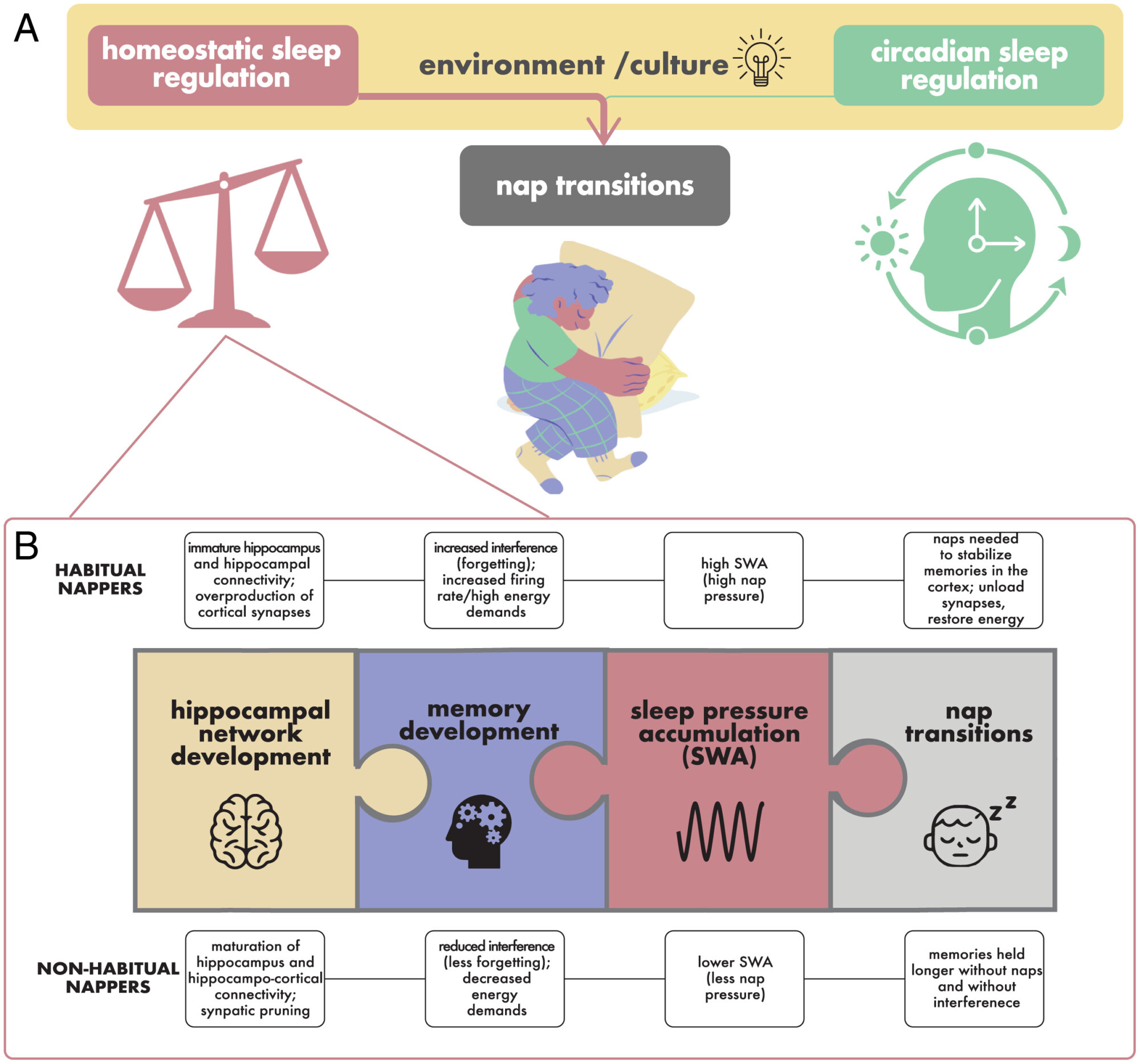
At its core, the viral reel briefly summarized a hypothesis originating from the University of Massachusetts. This research proposed that the maturation of the hippocampus, a crucial brain structure associated with memory formation, plays a pivotal role in nap transitions. The intuitive appeal of this theory – that evolving cognitive abilities directly influence sleep needs – resonated deeply with a broad audience.
Parental Perspectives: The Real-World Sleep Equation
The revelation that nap transitions might be linked to hippocampal development ignited a vibrant discussion in the comments sections of social media posts. Parents and clinicians shared a wealth of anecdotal evidence, posed probing questions, and injected humor into the conversation, reinforcing the notion that nap transitions are arguably the most universal sleep dilemma of early childhood. Several recurring themes emerged from these interactions, illuminating the multifaceted parental experience.
The Spark of Curiosity
A primary driver of engagement was a genuine sense of curiosity. Many users expressed surprise and interest in the newfound scientific link: "So interesting! I never thought naps could be linked to brain development," one commenter noted. Another observed, "Makes total sense once you think about memory consolidation." This inherent curiosity serves as a powerful gateway for scientific understanding, demonstrating how readily parents connect their home-based observations with academic research.
The Unyielding Reality of Sleep Math
Beyond initial curiosity, the comments quickly delved into the practical, often frustrating, realities of managing nap schedules. Parents described their struggles with the "in-between" phases of nap transitions: "If my three-year-old naps, bedtime is a disaster. If he skips it, he’s cranky for three hours – there’s no winning," articulated one parent. Another shared, "We’re in the weird in-between: my son still needs a nap, but it ruins bedtime every single night." These sentiments perfectly encapsulate the challenging period when a child still requires rest, but their internal biological clock is recalibrating. Dr. Canapari frequently advises parents that children do not unilaterally decide to stop napping; rather, there’s an extended phase where they might need naps but resist them, or nap inconsistently across different environments (e.g., daycare versus weekends).
Individual Journeys: Embracing Variability
A significant theme was the acknowledgment of individual developmental trajectories. Parents shared instances of early nap cessation: "My daughter stopped napping right after turning two and her memory is incredible," one user reported. Another stated, "Our son gave up naps around 2½ and he’s seven now – super mature and focused." These personal accounts, while not negating the scientific findings, powerfully illustrate the natural variability in child development. Brain maturation, including the processes influencing sleep needs, does not follow a rigid, universal timeline.
The Quest for Clarity
Some parents sought further clarification on the implications of nap transitions. Questions such as, "Does dropping naps that young affect other parts of growth?" and "Are we talking about dropping all naps or just cutting from three to two?" highlight a desire for nuanced understanding. The research primarily focused on the transition from multiple naps to one, not necessarily the complete cessation of naps. The authors emphasized that there is no indication that parents should proactively alter their child’s sleep schedule based on this research; rather, it offers a framework for understanding existing changes.
Innovative Solutions and Practical Adaptations
The discussion also showcased parents’ ingenuity in navigating nap challenges. One common scenario involved daycare mandates: "Daycare still makes them nap, and bedtime is chaos – what should I ask the teacher to do?" Others found success with modified rest periods: "We switched to quiet time instead of naps – books and soft music. It’s been a game-changer." These practical adaptations underscore the paramount goal: ensuring adequate rest and maintaining family equilibrium, rather than rigidly adhering to a "nap battle."
A Touch of Humor

The thread concluded with a lighthearted observation that perfectly captured the shared experience: "I guess my husband’s hippocampus is still developing!" This playful comment served as a reminder of the shared human experience and the often-humorous struggles associated with early childhood.
The Scientific Foundation: Rethinking Sleep and Memory
The research that fueled this viral discussion, "Contributions of Memory and Brain Development to the Bioregulation of Naps and Nap Transitions in Early Childhood," authored by Spencer and Riggins and published in the Proceedings of the National Academy of Sciences (PNAS) in 2022, is a "perspective" piece. It synthesizes existing research rather than presenting new experimental data, proposing a novel model for how brain development influences nap timing.
The authors begin by outlining the fundamental drivers of sleep-wake timing: sleep drive and the circadian clock. Sleep drive, the physiological need for sleep that accumulates with wakefulness, is understood to build more rapidly in infants, with the rate of accumulation slowing as children mature. This developmental shift explains the progression from multiple naps in newborns to fewer naps in toddlers and preschoolers. However, the precise timing of nap transitions – moving from three to two naps, two to one, or eliminating naps altogether – remains notoriously unpredictable.
The typical age ranges for these transitions, as outlined by the researchers, demonstrate significant variability:
- 3 naps → 2 naps: Typically observed between 6–9 months, consolidating morning, midday, and late afternoon naps into two distinct periods.
- 2 naps → 1 nap: Usually occurs between 12–18 months, with the morning nap being dropped in favor of an afternoon rest.
- 1 nap → no naps: Commonly observed between 3–5 years, with the afternoon nap gradually disappearing, most children ceasing naps by age five.
The PNAS paper posits that the maturation of the hippocampus is directly associated with a slower accumulation of sleep drive. As the hippocampus becomes more efficient at memory consolidation, the brain may require fewer naps to process and "offload" new information. The hippocampus, a seahorse-shaped structure deep within the brain, is fundamental to memory formation, particularly for emotional experiences.
The authors highlight a unique challenge in early human development: the immense volume of information to be learned by neural systems that are still under construction. Synaptic pruning, the process by which the brain eliminates less-used neural connections to strengthen important ones, is ongoing. However, in early childhood, there is an overproduction of synapses, peaking during this period. This high density of connections creates a significant cognitive load.
The perspective suggests that naps serve as a crucial mechanism to alleviate this load. "Sleep has been argued to help meet space and energy challenges associated with development," the authors state, proposing that "early childhood is a time of competing demands of learning, which loads the brain (the hippocampus in particular), and sleeping, which may unload synapses across the cortex."
A particularly insightful aspect of the research focuses on slow-wave activity (SWA), characteristic of deep sleep, and its role in consolidating emotional memories. The study notes that SWA in children’s naps predicts enhanced memory for emotional faces and a reduced emotional attention bias post-nap. This consolidation of emotional memories is theorized to decrease emotional load, making children less reactive to subsequent stimuli. This provides a potential explanation for the common phenomenon of children becoming dysregulated and experiencing an "witching hour" at the end of the day if they miss their nap, as they have not had the opportunity to process morning emotions.
Translating Science into Everyday Parenting Strategies
While the research offers a compelling explanation for nap transitions, it is crucial to interpret its implications within the context of daily family life. The study does not advocate for any specific changes to a child’s established sleep schedule. Instead, it emphasizes:
- Individualized Development: Every child matures at their own pace. What is typical for one child may not be for another.
- Nap Transitions as Developmental Stages: These shifts are natural developmental processes, not indicators of parental success or failure.
- No Need for Premature Intervention: Parents should not feel pressured to eliminate naps prematurely or to enforce napping if their child has naturally outgrown it.
- Focus on Overall Sleep Hygiene: Prioritizing consistent bedtime routines, age-appropriate sleep durations, and a conducive sleep environment remains paramount.
For parents navigating the complexities of nap transitions, seeking professional guidance from pediatricians or certified sleep consultants can provide tailored strategies. These experts can help families understand their child’s specific needs and develop plans to manage sleep challenges effectively.
The Enduring Significance of Nap Transitions
The overarching message from both the scientific community and parental experience is that nap transitions are a testament to a child’s developmental journey. These periods are not moral victories but rather indicators of cognitive and neurological growth. Judging a child’s sleep by comparison to peers is counterproductive; similarly, parental guilt over early nap cessation should be mitigated by understanding that it is a common and not typically concerning developmental occurrence.
For families currently experiencing nap transitions, sharing successful strategies and engaging in open dialogue is invaluable. Platforms like Instagram, TikTok, and YouTube provide forums for parents to connect, offer support, and learn from one another. Further exploration of nap transitions and sleep science can be found in resources such as Episode 15 of "The Sleep Edit" podcast, particularly its YouTube version which features helpful visual aids, and Dr. Canapari’s blog post dedicated to nap problems.
References for Nap Table:
[1] Salzarulo, P. A. (2001). Sleep patterns in the infant. Sleep Medicine Reviews, 5(5), 395-401.
[2] Jenni, O. G., & Leumann, E. P. (2002). Ontogeny and possible function of the 24-hour sleep-wake cycle in human infants. Developmental Psychobiology, 41(1), 101-111.
[3] Iglowstein, I., Jenni, O. G., & Largo, R. H. (2003). Really still tired? The relationship between sleep duration and daytime sleepiness in healthy children. Pediatrics, 111(5), e591-e596.
[4] Gradisar, M., Jackson, K., Spurrier, N. J., Gibson, J., Whitham, J., Williams, N., … & Wake, M. (2011). The effectiveness of a family-centred sleep intervention for infants in the Australian context. Sleep Medicine, 12(7), 651-657.
[5] Sadeh, A. (2011). Sleep in early childhood: development, consequences, and interventions. Pediatric Clinics of North America, 58(3), 659-670.
[6] Mindell, J. A., & Williamson, A. A. (2018). Benefits of a behavioral sleep intervention for parents of young children. Sleep Medicine Reviews, 38, 131-141.
Wave Goodbye to Sleepless Nights
Struggling with your child’s sleep? My FREE Sleep Training Mini Course is your lifeline. Learn actionable steps to improve your family’s sleep quality. Subscribe today and say hello to better nights!