

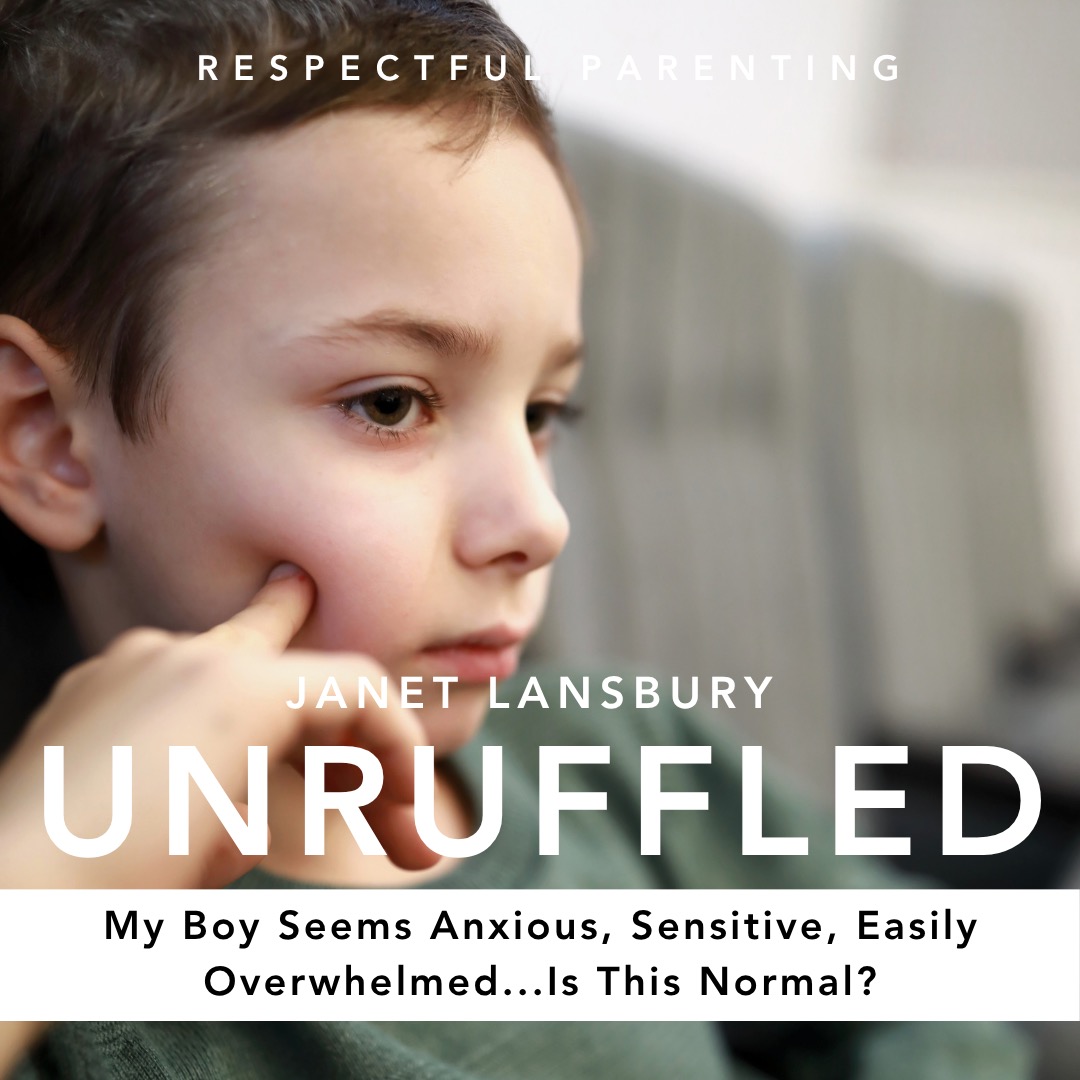
A recent discussion hosted by child development advocate Janet Lansbury sheds light on the concerns of parents grappling with children who exhibit heightened anxiety, sensitivity, and a tendency to become easily overwhelmed in social settings. The podcast episode, titled "My Boy Seems Anxious, Sensitive, Easily Overwhelmed… Is This Normal?", features Lansbury addressing queries from three distinct parents, each expressing worry that their child’s temperament might be atypical, especially when compared to their peers. The parents’ sentiments range from profound confusion and frustration to feelings of shame, stemming from the perceived inability to fully engage in shared enjoyable activities with their children. Lansbury’s response aims to provide encouragement, validation, and practical guidance rooted in her extensive experience with early childhood development.
Understanding Temperament: A Spectrum of Sensitivity
Lansbury begins by acknowledging the commonality of this particular temperament, even if it appears less prevalent. She notes that terms like "reserved," "introverted," "slow to warm," or "shy" are often used to describe these children, though she expresses a personal aversion to the term "shy," recalling its use in a disapproving manner during her own childhood. The core message conveyed is that such a temperament is not a deficiency or a cause for shame. Instead, children with these traits often thrive in one-on-one interactions, in smaller social doses, or in situations where they feel a sense of control. However, environments perceived as unmanageable or overwhelming can lead to distress and exhaustion.
The podcast highlights that parents seeking advice are often driven by a desire to understand if their child’s behavior is "normal" and if they need to intervene or alter their parenting approach. Lansbury emphasizes that her primary goal is to encourage these parents to trust, accept, and consequently support their children’s inherent nature. She identifies common obstacles that prevent parents from achieving this supportive stance.
Case Study 1: The Three-Year-Old’s Overwhelm
One parent writes about her three-year-old son, who is described as independent and comfortable playing alone. Even when with friends, he often withdraws to pursue his own activities. The parent recounts specific instances illustrating his sensitivity: during his birthday party, a loud "Happy birthday!" chorus caused him to bury his face and bite her shoulder, prompting a request for quieter singing. He also avoids group activities in situations that involve more than one other child, preferring to hover at the periphery.
The parent details her attempts to support him, such as asking privately if he wants to join or offering to hold his hand while he requests to play. However, she admits to feeling "lost" and experiencing shame when her son retreats from activities she wishes to share with him, like singing and dancing. Her husband’s perspective suggests that the child’s withdrawal is a normal response to dislike, but the parent desires to help her son understand and potentially regulate his feelings of overwhelm.
Lansbury validates the parent’s observations, interpreting the child’s actions as competent self-management for a three-year-old. She views his withdrawal as a reasonable response to feeling overwhelmed or exhausted. The biting incident, while undesirable, is seen as an impulsive reaction to intense overwhelm. Lansbury commends the parent for moderating the birthday singing, viewing it as a helpful adjustment rather than an accommodation that enables negative behavior. She argues that allowing the child to move away when uncomfortable, rather than forcing him to stay, implicitly teaches him that his feelings of overwhelm are acceptable. The parent’s desire to help him "get over" being overwhelmed is cautioned against, as it could send the message that his feelings are not valid. Lansbury suggests focusing on acceptance and maintaining reasonable boundaries, avoiding excessive accommodation that might inadvertently reinforce the behavior.
Case Study 2: The Reserved Four-Year-Old and Playgroup Dynamics
Another parent expresses gratitude for Lansbury’s work, but confesses to feeling "exhausted" and having "lost it." Her four-year-old son has always been reserved. Born during the pandemic, his early social interactions were limited. When relatives attempted to engage with him, he would cry, leading the parent to create distance for his comfort.
To prepare him for kindergarten, he was enrolled in a playgroup. While his socialization improved, he still experienced tears at times, even after a year. His "moving up" pictorial captured him in tears or looking sad, indicating significant anxiety in social situations involving interaction or performance with unfamiliar people.
The parent describes enrolling him in a football class, which he initially enjoyed with his father. However, he became extremely clingy during the sessions, refusing to stay in the group without a parent nearby, even when they were only a short distance away. He was the only child exhibiting this level of distress, with younger children demonstrating greater resilience. This situation exacerbated the parent’s frustration, despite acknowledging his nap time might be a factor. She questions if they are "missing something" and seeks practical advice and encouragement.
Lansbury identifies this child as reserved, sensitive, and easily overwhelmed, not naturally inclined towards large group activities. She views his emotional expression as a positive indicator that helps him process his feelings. Regarding the earlier interactions with relatives, Lansbury suggests that while the parent’s intention was protective, the messaging might have inadvertently conveyed a sense of fragility. She distinguishes between offering space and "rescuing" a child, emphasizing that allowing children to express their discomfort to those encroaching on their space can foster self-reliance.
The playgroup is considered beneficial, and Lansbury sees his crying as a healthy expression of stress or sensitivity. The sad pictorial is interpreted as a reaction to a transition, and she encourages viewing it positively as an outward expression of feelings rather than internalized distress. Lansbury agrees with the parent’s observation of anxiety in social performance settings, but reframes it as a valid characteristic, not a flaw to be fixed. The football class, however, is questioned as potentially unsuitable for a child with this temperament at this age, given the demands of organized sports and group performance.
Lansbury suggests establishing "reasonable boundaries" for both parent and child. This includes not continuing with a class that demands constant parental proximity, which is understandably frustrating and exhausting. She posits that children of this age may not be ready for the complexities of organized sports like football, which involve coordination and group dynamics. The parent’s overwhelm may stem from unrealistic expectations and an attempt to accommodate the child’s needs rather than setting firm boundaries. Lansbury reassures the parent that her child is "doing just fine" and that his sensitivity is a valuable trait. She advises against enrolling him in activities that are likely to cause such distress and suggests offering choices with clear expectations, allowing the child to opt out if the conditions are not conducive to his comfort. She also emphasizes that there is no rush for children to participate in these activities; they can be introduced when the child expresses genuine interest.
Case Study 3: The Near Six-Year-Old’s Anticipatory Sadness
The third parent presents a unique situation involving their nearly six-year-old son’s request for parents to not attend school events. This stems from his anticipation of becoming upset and crying when he realizes they will leave without him at the end. He has been at school for six months, and while initial goodbyes were difficult, he now waves his mother off happily. He enjoyed a full-day school trip with his mother, but shorter events present a different challenge.
During a recent athletics event, he expressed uncertainty about parents attending, fearing he might cry. He later changed his mind, and his parents went. He did indeed cry for five to ten minutes upon seeing them, missing a portion of the event. His parents stayed with him, and once he processed his emotions, he enjoyed the rest of the event and was fine with their departure.
Currently, for ten class swimming lessons where parents are invited to watch, he has repeatedly stated he does not want them to attend, anticipating sadness. The parents have respected his wishes. The parent wonders whether it is better to gently encourage him to face this difficult emotion, process it, and then enjoy the event with them present, or to always respect his choice.
Lansbury views this scenario as a valuable opportunity to observe a child’s emotional processing. She notes that the child’s anticipation of sadness may be a misinterpretation; it could be a profound emotional response to the parents’ presence and the bittersweet realization of their eventual departure. She highlights that the child’s willingness to express these feelings openly is a positive trait.
Lansbury advocates for parents to be brave about their child’s anxieties and vulnerabilities, rather than amplifying them through their own worry. She stresses the importance of normalizing these feelings for oneself and trusting the child. She also emphasizes the necessity of reasonable boundaries. In this case, she suggests that parents have the option to attend if they wish to share the experience with their child. Her approach would be to communicate, "I know you’re afraid you’re going to cry. It’s okay if you cry. I really want to come, and I’m not afraid of you crying. I want you to share that with me." This frames the potential tears not as a problem, but as an expression of love and connection.
Lansbury argues that parents should not let a child’s fear dictate their attendance at events they wish to share. The key is the parent’s attitude towards the crying and the situation. If the parent approaches it with openness and acceptance, without shame or a sense of something being "wrong," the child is less likely to feel afraid of their own emotions. This is not about conditioning the child, but about parents being present and unafraid to witness and support their child’s healthy emotional expressions. By being brave about their child’s vulnerability, parents also alleviate the child’s worry about their parents’ reactions.
Broader Implications and Parental Resilience
Across all three cases, Lansbury consistently reinforces the message of acceptance and trust. She suggests that parents may be projecting their own past experiences of shame or lack of acceptance onto their children. The ability to accept oneself, then one’s child, and to maintain brave boundaries is crucial.
The recurring theme is that children who are more sensitive, anxious, or easily overwhelmed are not flawed. They possess a deep capacity for emotional experience, which, when nurtured with understanding and acceptance, can lead to great strength and self-awareness. The podcast implicitly highlights the societal pressure on children to conform to certain social norms and the challenges parents face when their children deviate from these expectations. Lansbury’s advice encourages a shift in perspective, viewing these temperaments not as challenges to be overcome, but as unique qualities to be understood and supported. The overarching implication is that fostering a child’s innate temperament, rather than trying to force them into a mold, leads to more resilient, confident, and well-adjusted individuals. The article underscores the importance of parental self-acceptance and bravery in navigating the complexities of childhood development.
