

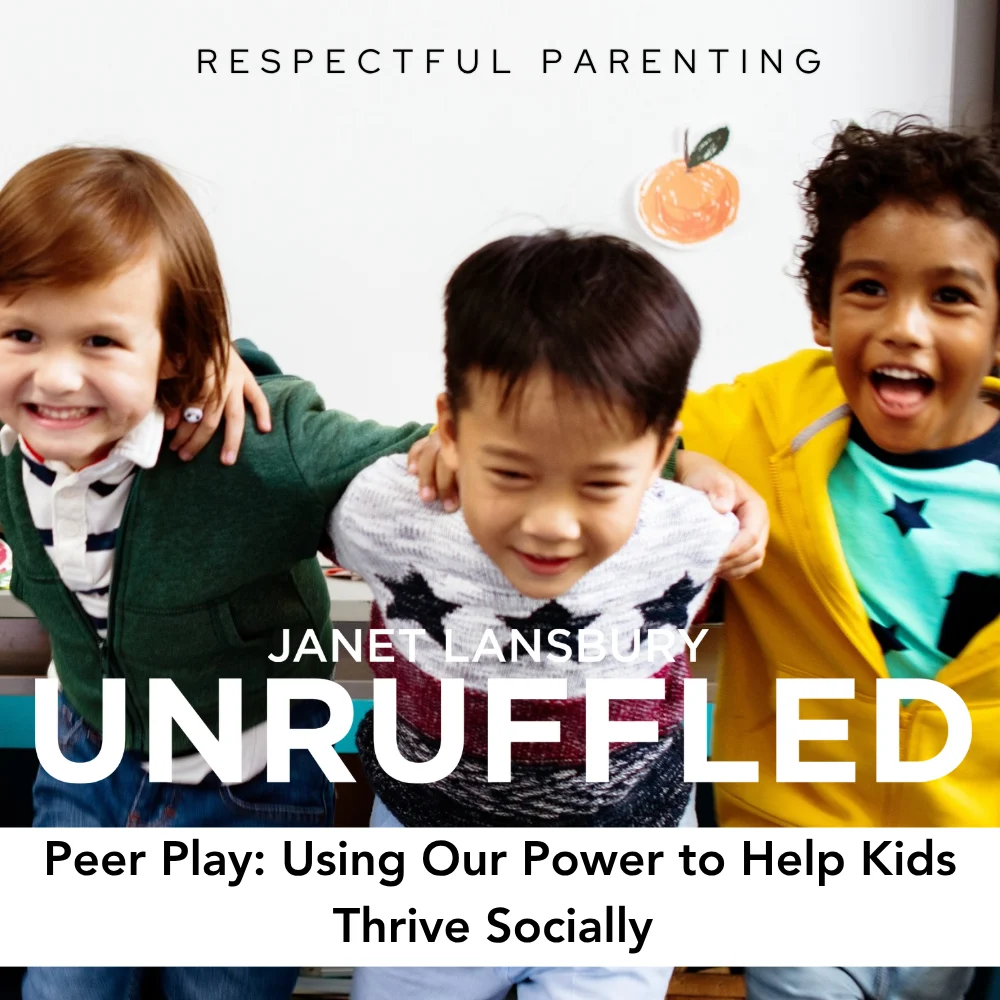
A recent discussion on the "Unruffled" podcast, hosted by early childhood development expert Janet Lansbury, delved into common social challenges faced by young children and the often-overlooked role parents play in these dynamics. Lansbury addressed three distinct scenarios, highlighting how a parent’s approach to boundaries and trust can significantly impact a child’s development of confidence, resilience, and healthy social skills. The podcast, originally published on June 16, 2026, offers insights for parents navigating the complexities of peer interactions and social development in preschool-aged children.
The Challenge of Directed Play and Social Exclusion
Lansbury began by addressing a concern from a parent whose four-year-old daughter exhibited a rigid approach to pretend play. The child, deeply immersed in imaginative worlds, would direct others to follow her exact script, becoming distressed and angry if play deviated even slightly. This behavior, initially manageable with family, had begun to strain her friendships.
"She gets so angry or sad when friends don’t say exactly what she’s asking them to," the parent reported. "Sometimes she can move on and play their games, but very often this ends in tears. I can tell the friends are annoyed or want to play but just don’t understand her very specific directions."
Lansbury emphasized that while a child’s imagination is a valuable asset, the parent’s role is not solely to facilitate play but to model healthy relationship dynamics. She suggested that the child’s insistence on precise control in play might stem from an unmet need for boundaries within her interactions with adults. "It’s one thing with her dad and I, but the problem is with friends," the parent noted. Lansbury posited that if parents don’t establish reasonable limits, children may seek those boundaries from their peers, leading to friction.
The expert explained that children, particularly at age four, often test boundaries as a means of individuation and emotional processing. The parent’s discomfort or struggle to keep up with the child’s exacting demands in play can be a signal for the need for a firmer, yet still respectful, boundary. "When we’re trying to participate with them and then they’re being so exacting and it seems impossible to please them even though we’re playing with them, that’s something to look at," Lansbury advised. She suggested that by setting clear boundaries, parents allow children to experience and process the natural frustrations and disappointments that are integral to social learning, rather than trying to shield them from it.
This approach aligns with research highlighting the importance of "scaffolding" in early childhood development, where adults provide support and structure that allows children to gradually develop independence and self-regulation. When parents consistently provide clear, consistent, and respectful boundaries, children learn to navigate social situations with greater confidence and understanding of others’ perspectives.
Navigating "Bullying" and Group Dynamics
The second scenario discussed involved a parent seeking guidance on how respectful parenting approaches "bullying" and other unkind social dynamics among young children. Her four-and-a-half-year-old daughter was frequently excluded by a group of older preschoolers at the playground. The older children would playfully taunt her, pretending she was a monster or leaving her out of their games.
"When playing 1:1 she has good friendships with these girls, but she is an easy target in a group dynamic," the parent explained. She mentioned that she generally encouraged her daughter to vent her feelings and offered alternatives when play became unpleasant. However, other parents were also intervening, with one father even mandating that his daughter play with the child in question to avoid leaving.
Lansbury cautioned against labeling such interactions as "bullying" at this young age. She stated, "This word gets thrown around a lot these days, ‘bullying,’ and I don’t think it applies to children this age at all." She clarified that while exclusion and playful teasing can be distressing, they differ from the targeted, pervasive aggression characteristic of true bullying. She attributed the dynamic partly to the age difference, noting that a year’s gap in preschool can represent a significant difference in social-emotional development.
"It makes a lot of sense that these girls kind of feel like they’re on a different wavelength and that their way of playing together could easily exclude somebody younger," Lansbury observed. She advocated for trusting the child’s ability to navigate these situations with parental support, rather than immediate intervention or problem-solving. This involves allowing the child to express her feelings about the exclusion and encouraging her to find her own ways to engage or disengage from the group.
The expert suggested that while parental empathy is crucial, an overemphasis on "fixing" the situation or casting the child as a victim can hinder her development of resilience. Instead, she proposed framing these experiences as valuable learning opportunities. "Rejection, exclusion, as in this second case, failing in our attempts to engage. Those are all important life experiences that children can learn from and build confidence from, if we can see it all as positive learning," Lansbury stated.
This perspective is supported by developmental psychology, which emphasizes that children learn vital social and emotional skills through experiencing a range of interactions, including those that are not entirely positive. The ability to cope with minor setbacks, understand social cues, and develop strategies for inclusion or independent play are all fostered when adults allow children the space to navigate these challenges.
Supporting the Reserved Child: Trust Over Pressure
The podcast concluded with a brief inquiry about helping a reserved three-year-old become more comfortable around others. Lansbury reiterated the core theme: the power of trust and the avoidance of pressure.
"The answer is in trusting them to find their own way to feeling comfortable around other people by not pushing them, by not coaxing them to be comfortable," she explained. Lansbury advised against trying to "fix" a child’s perceived shyness, as this can inadvertently communicate that their natural disposition is problematic.
Instead, she recommended providing a secure base from which the child can explore social situations at her own pace. This means allowing the child to stay close to the parent if she wishes, while maintaining parental boundaries (e.g., not allowing the child to dictate the parent’s every move). "I’ll be here. I’ll be comfortable. I’ll have a boundary. I’ll take care of myself, and I trust you to do what you’re ready to do," Lansbury outlined as a supportive parental stance.
The implication is that by trusting the child’s process and avoiding the urge to manage or accelerate their social development, parents empower their children with self-assurance. This approach recognizes that children develop at different rates and have unique temperaments, and that a child’s comfort and confidence in social settings are best nurtured through patient observation and unwavering belief in their capacity to find their own path.
The Parent’s Influence: Modeling Boundaries and Trust
Throughout the podcast, Lansbury underscored the profound influence parents wield, not just through direct instruction but through their own actions and relational dynamics. She highlighted that a parent’s modeling of kindness, generosity, and graciousness teaches children valuable social lessons. However, she also emphasized that when children exhibit social struggles, parents can often help by examining their own approach to boundaries and their willingness to trust their child’s developmental journey.
The underlying message is that parents have a significant, yet often subtle, power to guide their children’s social growth. This power lies in understanding that many social skills are learned experientially, not through direct teaching. By setting appropriate boundaries, allowing children to navigate challenges, and trusting their inherent capabilities, parents can foster the confidence, resilience, and social competence that will serve them throughout their lives. Lansbury concluded by encouraging parents to be patient with themselves and their children, acknowledging that this journey of respectful parenting is often one of forging new territory.
