

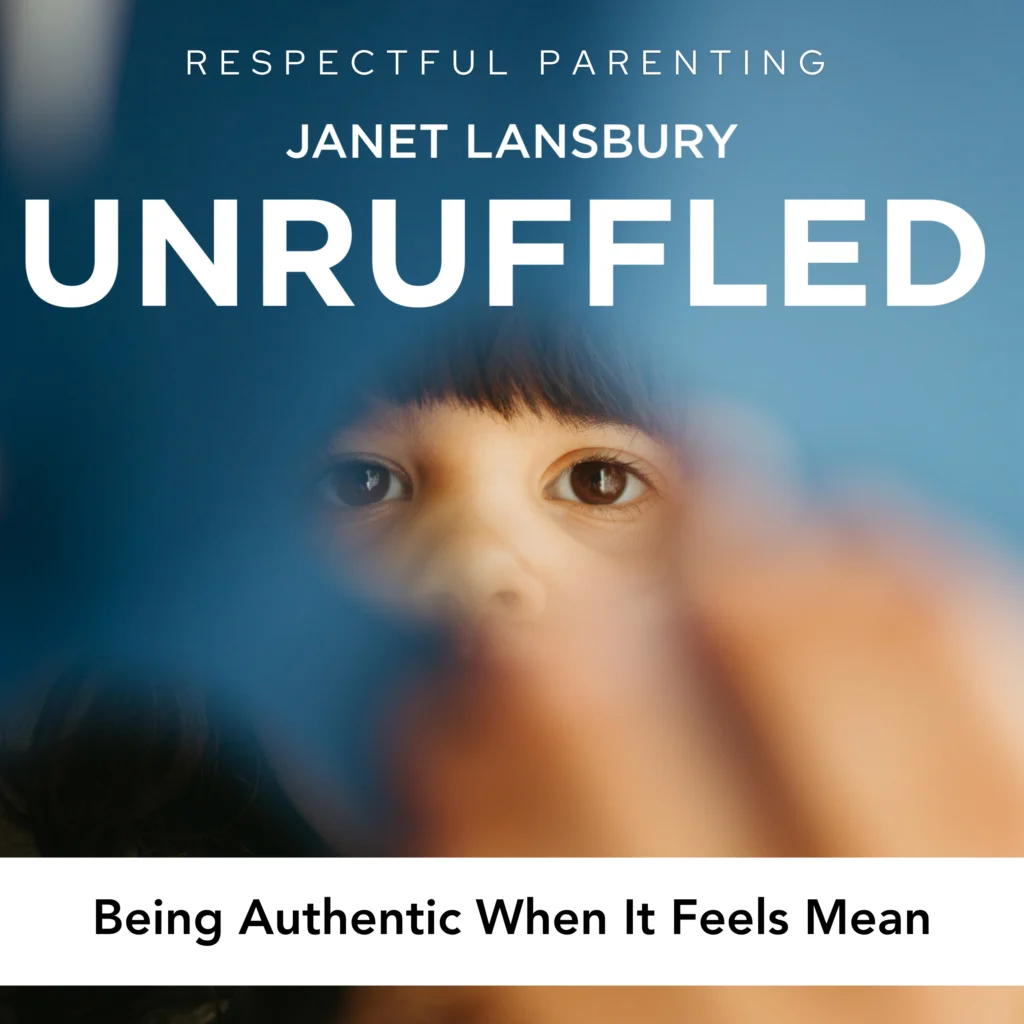
A recent discussion on the widely followed parenting podcast "Unruffled" by Janet Lansbury has ignited a conversation among parents about the delicate balance between expressing genuine emotions and maintaining a positive relationship with young children. The episode, titled "Being Authentic When It Feels Mean," delves into a specific concern raised by a mother who struggles with her own feelings of annoyance and anger towards her three-year-old son’s behavior, and her fear that her authentic reactions might be damaging to their bond. This situation highlights a common parental challenge: navigating personal emotional responses while fostering a secure and trusting environment for children.
The core of the discussion revolves around a parent’s internal conflict. She recognizes her tendency to feel annoyed and angry easily, viewing anger as a "crutch emotion" to avoid deeper feelings. This personal insight, cultivated through her own therapeutic work, leads her to question the impact of these strong emotions on her children. The specific scenario presented involves her three-year-old son engaging in behavior like throwing tidied items, which, while seemingly a bid for attention or a test of boundaries, triggers her annoyance. Her dilemma intensifies when, after setting a boundary, her son seeks a hug, and she finds herself unable to offer one genuinely due to her lingering irritation. She articulates a powerful question: "Is it wrong to say ‘I don’t really want to hug you right now because I’m annoyed with you, I didn’t like it when you threw the things around and made the house untidy?’" This query underscores her desire for authenticity, her concern for her son’s emotional well-being, and her fear of appearing conditional in her affection.
Lansbury’s response, while empathetic, pivots towards understanding the underlying dynamics of child behavior and parental emotional regulation. She emphasizes that children, even at a young age, are highly aware of their parents’ moods and emotional states. The act of throwing tidied items, Lansbury suggests, is not merely a display of defiance or a source of amusement for the child. Instead, it is often a subtle, albeit immature, communication of underlying distress or a need for parental attention. This perspective encourages parents to look beyond the surface behavior and consider the child’s internal world.
Understanding the Child’s Perspective
A significant portion of Lansbury’s analysis focuses on reframing the child’s actions. She posits that children do not intentionally seek to provoke annoyance. Instead, behaviors like throwing objects can be manifestations of underlying anxieties, particularly in households with a new sibling. The example provided by the parent mentions a nine-month-old sibling, a common trigger for older children experiencing a shift in parental attention and resources. Lansbury explains that the three-year-old might be unconsciously signaling his own feelings of fear or insecurity related to the new family dynamic. This interpretation suggests that the child’s behavior is not about making the parent annoyed, but rather about seeking a more secure and attentive response from them.
This perspective is supported by developmental psychology research, which indicates that toddlers are highly attuned to their environment and parental emotional cues. Studies on infant perception have shown that babies can differentiate between positive and negative emotional expressions from a very early age, and even prenatally, they can respond to their mother’s stress levels. Therefore, a child’s seemingly "annoying" behavior might be a desperate attempt to elicit a specific response from a parent, hoping to regain a sense of security or connection.
The Parental Struggle: Authenticity vs. Perceived Impact
The parent’s struggle is amplified by her past experiences, where expressing emotions was discouraged. This history has led her to actively embrace emotional awareness and expression. However, she grapples with the fear that her authentic emotional expression, particularly anger, could be detrimental to her children. Lansbury acknowledges this internal conflict, stating that while children can be deeply affected by parental emotions, these ruptures are often mendable. The key, she suggests, lies not in suppressing emotions but in understanding their source and communicating them in age-appropriate ways, while also being mindful of the child’s capacity to process them.
The concept of "authenticity" is central to the discussion. Lansbury argues that true authenticity in parenting involves an alignment between internal feelings and external actions, but it does not necessitate oversharing every raw emotion with a young child. Instead, it means being honest about one’s capacity to connect. When the parent doesn’t feel like hugging, she doesn’t have to force herself. The crucial element is how this boundary is communicated. Instead of a lengthy explanation of her annoyance, a simple and loving statement like, "I’m not going to hug right now, sweetie, but I love you. I’m going to hug you when I can," can be more effective. This approach respects her own emotional state while reassuring the child of her enduring love.
Deconstructing the Interaction: A Chronology of Events
- The Triggering Behavior: The three-year-old son engages in an action that the parent finds annoying, such as throwing tidied items.
- Parental Response (Initial): The parent sets a boundary, stating, "I won’t let you throw these things around because I’ve just been tidying them and I want the house neat. I’m going to move them away from you."
- Child’s Subsequent Action: Shortly after, the child seeks a hug.
- Parent’s Internal Conflict: The parent, still feeling annoyed, struggles with the desire to offer a hug versus her authentic feeling of not wanting to.
- Parent’s Question: She ponders whether to express her annoyance directly to her son or to provide a hug she doesn’t genuinely feel.
Lansbury’s analysis of this sequence suggests that the parent’s initial response, while a boundary, is perhaps too verbose. For a three-year-old, a simple, firm "I can’t let you throw these" and the action of moving the items would suffice. The extensive explanation, while well-intentioned, can sometimes inadvertently give more weight to the child’s behavior than necessary and can drain the parent’s emotional energy, making it harder to respond calmly.
The Implications of Over-Explanation and Conditional Affection
The parent’s concern that her son might feel loved only when he is "good" is a valid one, and it touches upon the broader implications of conditional affection. Lansbury advocates for a parenting approach that disentangles a child’s behavior from their inherent worth or a parent’s love. By offering a hug later, when she is ready, the parent can still convey love and connection without compromising her current emotional needs. This postponement allows for a genuine reconnection when both parties are in a better emotional space, reinforcing the idea that love is constant, even if physical affection needs to be timed.
This nuanced approach also aligns with principles of consent and bodily autonomy, as the parent implicitly models that she has the right to choose when and how she engages in physical affection. However, Lansbury stresses that this boundary setting should not be framed as a punishment or a withdrawal of love, but rather as a natural consequence of her current emotional state, which will pass.
Broader Context: Generational Emotional Patterns
The parent’s self-awareness about her own emotional triggers and her desire to break generational patterns of emotional suppression is a critical element. Many parents today are consciously working to provide their children with a more emotionally validating upbringing than they themselves received. This often involves confronting their own unaddressed emotional baggage. Lansbury’s reassurance that this introspection is "heroic and incredible" validates the parent’s efforts and highlights the long-term benefits of such personal growth for both the parent and the child.
The "No Bad Kids Master Course" and Lansbury’s book, "No Bad Kids," offer further resources for parents seeking to understand child behavior and develop authentic, respectful relationships. These resources emphasize a philosophy of seeing children’s challenging behaviors as communication rather than defiance, and of responding with empathy and clear, consistent boundaries.
Expert Analysis and Future Directions
The discussion on "Unruffled" provides a valuable framework for parents navigating the complex terrain of emotional authenticity. Lansbury’s insights suggest that true authenticity with children is not about unfiltered emotional outbursts, but about a consistent, underlying honesty and respect for both the child’s developmental stage and the parent’s own emotional needs. By understanding the child’s perspective, particularly the anxieties that might fuel their behavior, parents can respond with greater empathy and less personal frustration.
The implication is that by reframing challenging behaviors not as intentional provocations but as bids for connection or expressions of distress, parents can shift their own emotional response from annoyance to a more compassionate understanding. This, in turn, can lead to more effective boundary setting and a stronger, more resilient parent-child relationship, built on a foundation of genuine emotional connection and mutual respect. The ongoing dialogue around these issues underscores the evolving understanding of parenting and the increasing emphasis on emotional intelligence for both caregivers and their children.
