

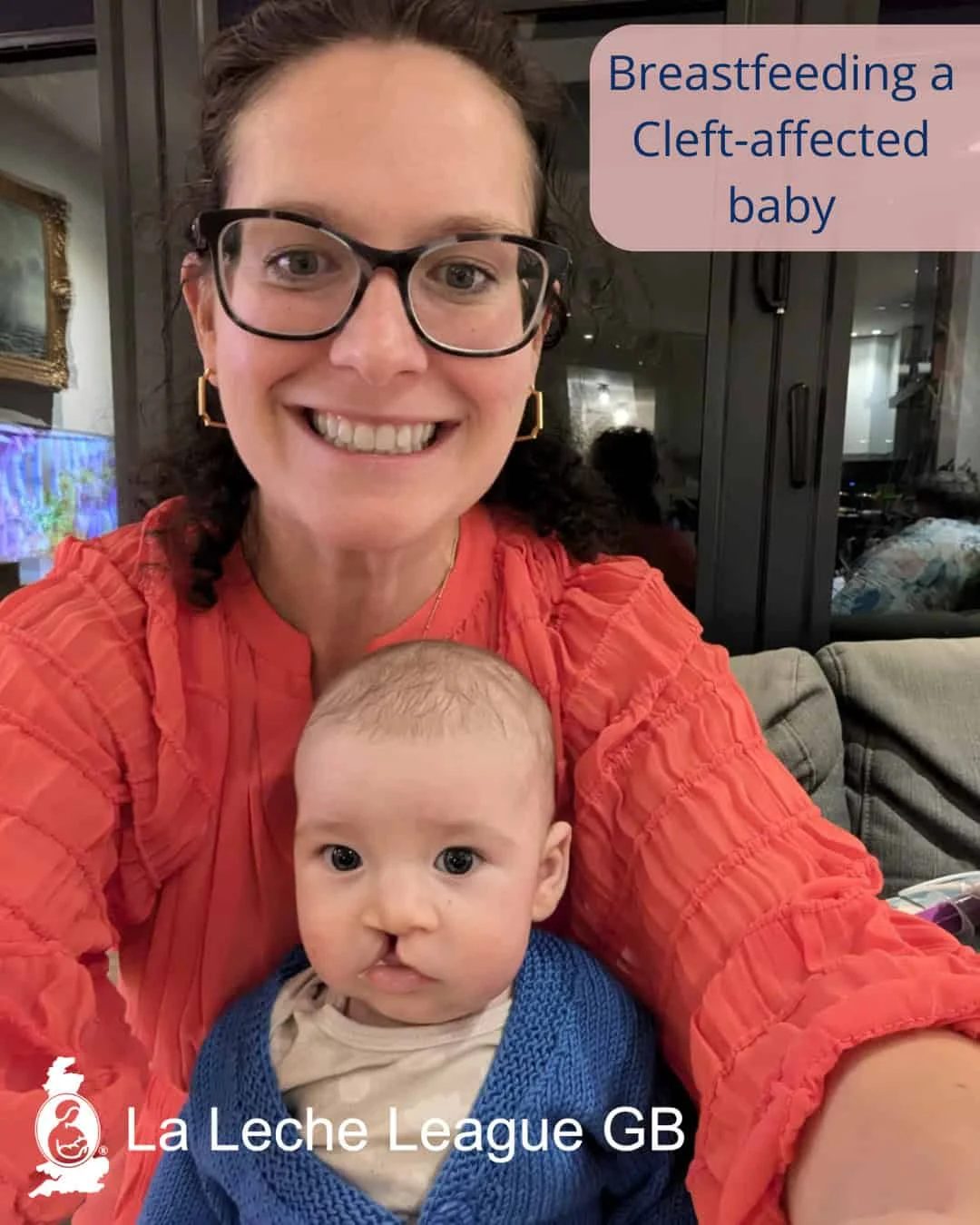
The journey of parenting is often filled with unexpected turns, but for some, the path deviates significantly even before birth. Sarah Muir-Little’s experience with her son, Russell, born with a cleft lip and palate, offers a compelling narrative of determination, innovation, and the power of maternal bond in overcoming significant medical challenges to achieve a deeply personal goal: breastfeeding. Her story, detailed through various stages from antenatal diagnosis to post-surgical success, highlights both the complexities faced by families of cleft-affected infants and the evolving understanding of what constitutes successful infant feeding.
Antenatal Diagnosis and Initial Challenges
The initial weeks of Sarah’s pregnancy with Russell were already emotionally taxing, marked by a serious family health crisis. The traditional excitement of impending parenthood was overshadowed by anxiety. At the 20-week anomaly scan, the couple received what they initially thought was good news – they were expecting a boy. However, this was quickly followed by a question that would reshape their expectations: "Have you heard of a cleft lip?" A midwife then delivered the sobering news that their baby had a cleft lip and palate, which, in their view, meant breastfeeding would be impossible. This pronouncement marked the beginning of Sarah’s personal "battle" to redefine what was possible.
A cleft lip or palate occurs when the structures forming a baby’s upper lip or the roof of their mouth (palate) fail to fuse properly during early fetal development. This congenital condition affects approximately 1 in 700 babies globally, making it one of the most common birth anomalies. While a cleft lip alone often permits breastfeeding with some adaptations, a cleft palate presents a more profound challenge. The intact palate is crucial for creating the suction pressure necessary to draw milk from the breast. Without this seal, a baby cannot effectively feed, making direct breastfeeding highly improbable until surgical repair. The Cleft Lip and Palate Association (CLAPA) in the UK serves as a vital resource, supporting families through diagnosis, treatment, and feeding challenges.
For Sarah, who had only recently weaned her toddler, the idea of not being able to breastfeed her new baby was profoundly distressing. Breastfeeding had been a cornerstone of her identity as a mother, and she describes grieving its perceived loss. However, a specialist nurse provided a glimmer of hope, clarifying that a "breastfeeding journey" of some kind might still be possible, though it would likely differ from her previous experience. The full extent of the cleft, particularly whether the palate was affected, would only be confirmed after birth. If the palate was involved, the lack of suction would indeed make traditional breastfeeding difficult. The nurse also outlined the typical surgical timeline: two operations within the first year to repair the lip and palate, with potential for further procedures later in childhood.
Exploring the Possibilities: Research and Preparation
Driven by a deep desire to provide breast milk and the emotional connection of breastfeeding, Sarah embarked on extensive research. She delved into resources from CLAPA, La Leche League (LLL), and other organizations, seeking examples of successful breastfeeding post-palate surgery. The findings were, initially, disappointingly scarce. However, the limited successful cases she found pointed to two critical factors: maintaining a sufficient milk supply and employing alternative methods to deliver milk while the baby was at the breast.
The first point, maintaining milk supply, seemed within her control. Having adequately supplied her toddler, Sarah felt confident in her body’s capacity. Her previous experience with pumping, though challenging and often inefficient, had taught her valuable lessons about milk expression and storage. She recalled the laborious process of hand-expressing small amounts to build a freezer stash, a testament to her past dedication. With improved knowledge and determination, she believed she could meet the milk demands for Russell.
The second point, alternative milk delivery, required more innovative thinking. Sarah researched various methods, including direct hand expression into the baby’s mouth and the use of nursing supplementers. A nursing supplementer, a device that allows a baby to receive supplementary milk (expressed breast milk or formula) via a thin tube while simultaneously latched at the breast, seemed the more practical long-term solution. Two main systems were available in the UK market for cleft babies. One operated on gravity, offering a slow milk flow, while the other featured a squeezable bottle for controlled delivery. Sarah purchased both to evaluate their suitability.
However, practical application presented immediate hurdles. The gravity-fed system’s slow flow was a concern, while the squeezable bottle, though delivering ample milk with force, proved awkward to hold. Most instructional materials suggested the "dancer hold" for positioning, a technique where the index finger and thumb form a "U" to support the baby’s chin. Practicing with a doll, Sarah found the combination of the dancer hold and managing the supplementer system to be incredibly challenging, almost impossible. The dancer hold is typically recommended for babies with low muscle tone or prematurity, helping them maintain attachment, but integrating a supplementer added significant complexity.
Russell’s Arrival and Innovative Feeding Solutions
Baby Russell arrived, bringing with him the immediate need to establish a feeding routine. Initially, he was fed expressed colostrum via a syringe, with a clean finger offered for sucking encouragement, while Sarah waited for her full milk supply to come in. The plan was to transition to feeding at the breast with a supplementer.
An unexpected serendipity occurred with the feeding syringes. Some syringes Sarah had ordered, though unsuitable for direct feeding due to their ends, perfectly fitted the supplementer tube. Leveraging this discovery, the midwife team sourced larger syringes from the labour ward. With a touch of ingenuity, Sarah modified the screw-on caps of these larger syringes by drilling a snug hole for the supplementer tube, creating a custom, functional system. This improvisation underscores the resourcefulness often required when standard solutions fall short. Safety guidelines were rigorously followed, ensuring caps were removed during direct syringe feeding to prevent choking hazards and that feeding occurred slowly, observing the baby’s comfort.
Integrating the supplementer with direct breastfeeding presented its own set of challenges. Traditional advice suggests either inserting the tube after the baby latches or taping it to the breast before latching. The former was unfeasible due to Russell’s fragile latch, which lacked the suction to hold once released. The latter, taping the tube to the breast, meant a long, potentially cumbersome tube that was difficult to guide into a newborn’s tiny mouth, especially with a baby who might bob on and off the breast. Sarah opted to tape the tube very close to the nipple, ensuring easier access to Russell’s mouth. This required experimentation with different tapes and positions to find one that would withstand moisture and allow for a decent latch, though some milk loss was inevitable. These early feeding attempts were often frustrating, causing upset for both mother and baby, but Sarah’s determination remained unwavering.
Navigating Expert Advice and Parental Instinct

Despite her progress, Sarah sought further assistance. However, many healthcare professionals lacked direct experience with her specific, innovative approach. Some voiced concerns about potential aspiration, highlighting the risks associated with non-standard feeding methods. Such skepticism from medical professionals can be disheartening, but Sarah’s resilience propelled her forward. She had, through trial and error, developed a system that she felt was safe, effective, and capable of delivering adequate milk at a sensible pace.
Positioning was another critical aspect. The recommended dancer hold continued to be a source of stress. Russell struggled to latch in this position, often bobbing on and off. Sarah observed that he calmed and fed well when placed on her other breast (without the taped supplementer) and fed by direct hand expression, confirming his hunger. The challenge was to integrate the supplementer calmly.
After consulting a specialist at Great Ormond Street Children’s Hospital, a renowned center for pediatric care, Sarah decided to revert to the cradle hold, a position she found more natural and familiar from feeding her toddler. While this sometimes resulted in more milk loss around Russell’s cleft, the priority became calm, relaxed feeds and a deep latch. Conventional advice sometimes suggests plugging the cleft with the breast or keeping the cleft side up to minimize milk loss, but Sarah prioritized a peaceful feeding experience for both. In those initial weeks, feeds were messy, but the emotional and nutritional benefits felt profoundly worthwhile.
Over time, Sarah and Russell developed a synchronized feeding rhythm. Sarah manually delivered milk through the syringe, pausing when Russell did, learning to adjust the flow to prevent him from being overwhelmed or frustrated by a slow pace. This attentive, responsive feeding style underscored the deep bond they were forging.
The unique nature of their feeding journey often sparked comment. A friend, initially questioning Sarah’s extensive efforts, later witnessed them feeding and remarked, "I get it: you were already breastfeeding." Another friend, observing them in a restaurant, expressed surprise, believing the worries about Russell not being able to breastfeed had simply vanished. These affirmations of her efforts brought Sarah immense joy and validation.
However, not all feedback was positive. A paediatrician expressed concern, stating that their method was not recommended, citing the safety and effectiveness of specialist cleft bottles. Such comments, especially from healthcare professionals, could be deeply hurtful and required significant resilience to brush off. Yet, Sarah remained confident, observing Russell’s healthy weight gain and his apparent enjoyment of feeding at the breast. While acknowledging the necessity of the supplementer, she cherished the fact that they were breastfeeding to the best of their ability, reaping all its associated benefits.
Evolving Methods and Continued Support
Around ten weeks of age, Russell began to show increased discomfort with the tape. This prompted a further evolution in their feeding technique. Sarah began taping the tube much further from the nipple, eventually progressing to feeding without any tape at all. This untaped method demanded greater coordination but became more manageable as both mother and baby grew accustomed to it.
The journey was not without its regressions. There were moments when Russell would become upset or refuse to feed, making Sarah question their progress. During these times, she reminded herself to prioritize Russell as a baby first, and a baby with a cleft second. Often, the issues were common to all infants, such as becoming easily distracted around three months of age. This perspective helped her navigate temporary setbacks.
The support from her husband was indispensable throughout this arduous process. He took on the monumental tasks of bottle washing, managing night feeds while Sarah pumped, and providing crucial emotional reassurance during difficult times. Their journey was a true partnership, navigating a complex path as a united team. Sarah emphasized that every day they used the supplementer was a bonus for Russell’s health and their bond, making every effort worthwhile. She expressed immense pride in their shared achievements.
A Breakthrough: Direct Breastfeeding Achieved
The most significant milestone arrived just before Russell’s first birthday, when he underwent surgery to reconstruct his lip and hard palate. The immediate post-operative period was challenging. While recovering from morphine, Russell would only feed from a bottle for several days. However, upon resuming the supplementer, he began to reject bottles, perhaps associating them with the discomfort of recovery. While pumping and managing all feeds remained exhausting, Sarah’s dedication persisted.
A month after his palate surgery, the surgeon advised avoiding suction. Yet, almost immediately, Sarah could feel Russell attempting to suck for the very first time. This nascent ability was a profound development. Four weeks later, Russell discovered how to use a straw, and remarkably, the very next day, he began to suck and swallow directly at the breast.
From this pivotal moment, progress was gradual but steady. The supplementer, once a constant necessity, was used less and less as Russell learned to extract more milk independently. After 15 months of daily pumping, Sarah was finally able to stop, marking a monumental achievement.
Russell’s latch, while not always typical, was effective and ensured his contentment. Today, he continues to breastfeed once or twice a day. This outcome, once deemed highly improbable, was never a certainty for Sarah and her husband. Their journey exemplifies how determination, innovation, and a supportive environment can lead to remarkable success, challenging conventional medical expectations and expanding the understanding of what is achievable in complex feeding situations.
Sarah Muir-Little’s experience offers invaluable insights for families and healthcare professionals alike, underscoring the benefits of individualized care, parental empowerment, and the enduring power of the breastfeeding bond for cleft-affected babies. Her story stands as a testament to the resilience of the human spirit and the unwavering love of a mother.
