

Zarina Ayyub’s life story is a powerful testament to resilience, a decades-long journey from a vulnerable young mother navigating a complex landscape of cultural expectations and inadequate medical support to a celebrated advocate for breastfeeding within the South Asian community. Her personal struggle, beginning with the birth of her first child at just 20 years old, has evolved into a formidable mission to empower other mothers, challenging long-held societal norms and illuminating critical gaps in culturally competent healthcare. This narrative not only chronicles Zarina’s pioneering spirit but also casts a broader light on the historical shifts in infant feeding practices in the UK and the unique challenges faced by ethnic minority families.
The Lingering Shadow of Past Practices
Zarina’s own entry into motherhood in Birmingham was marked by profound vulnerability and a stark absence of informed choice. Her first baby, born on November 3rd, after a labour commencing the night before her 20th birthday, weighed a tiny 4 lbs 13 oz. This low birth weight, later attributed to placental insufficiency, immediately led to her daughter being separated and fed formula by tube in a special nursery, while Zarina was left alone, uninformed and scared. This experience was compounded by the intergenerational trauma of her own mother’s breastfeeding journey. Zarina’s mother, a Pakistani immigrant who arrived in England in the late 1960s, was among the first in her community to have children in the UK. She faced immense pressure from her in-laws, who actively discouraged breastfeeding, and in the hospital, was given formula and medication to suppress her milk—a practice tragically common in post-war Britain, where formula feeding was heavily promoted, and breastfeeding support was minimal.
This historical context is crucial. From the 1950s through the 1970s, breastfeeding rates in the UK plummeted, with formula often presented as the modern, scientific, and superior choice. Hospitals frequently separated mothers and babies, and routine formula supplementation was common. Many healthcare professionals lacked comprehensive training in lactation support, leading to widespread struggles and early cessation. For Zarina’s mother, this meant a painful, unfulfilling experience, coupled with the cultural belief prevalent in parts of India that colostrum, the vital first milk, was "dirty." Instead, traditional remedies like cooled boiled water with fennel and other seeds were sometimes given to newborns, intended to clear meconium, inadvertently depriving infants of essential nutrients and antibodies. This deeply rooted misinformation and her mother’s subsequent trauma fueled her fervent advice to Zarina: "Don’t do it, I don’t want to see you in pain."
When Zarina’s daughter was finally brought to her on day three, Zarina was severely engorged. Her baby struggled to latch onto her large, hard breasts. The intervention by a midwife, described as forcefully grasping her breast and pushing the baby on, was traumatic and left Zarina in tears, further solidifying her mother’s fears. This lack of gentle, informed support at a critical juncture is a recurring theme in the history of breastfeeding challenges and underscores the profound need for empathetic, evidence-based care. Data from organisations like the World Health Organisation (WHO) and UNICEF consistently highlight that early skin-to-skin contact, avoidance of early separation, and skilled latch support are foundational to successful breastfeeding initiation. The absence of such support for Zarina mirrored a systemic failing that many mothers, particularly those from minority backgrounds, continued to experience.
Navigating Societal and Familial Pressures
The struggles did not cease upon Zarina’s return home around day five or six. Her nipples were sore, cracked, and bleeding. The first night home was filled with the cries of both mother and baby, as her husband, unfamiliar with Birmingham’s shop hours, struggled to find a working breast pump or a suitable dummy. This early period of intense physical pain and emotional distress is a common reason for early breastfeeding cessation, particularly when combined with a lack of community and familial understanding.
Zarina’s subsequent move to London with her husband, initially living with his extended Pakistani family before securing their own flat, introduced a new set of pressures. While the independence of their own flat was a relief, Zarina felt embarrassed to breastfeed outside the home, leading to social isolation. This sentiment reflects broader societal issues around the visibility and acceptance of public breastfeeding in the UK, although attitudes have slowly improved over the decades. More acutely, her household was a revolving door for relatives and new immigrants, a testament to her husband’s generosity but also a constant demand on Zarina’s time for cooking and cleaning. This created an environment where fitting in responsive breastfeeding, often perceived as ‘sitting idle,’ was incredibly challenging.
The cultural expectations within her husband’s family, and indeed the wider South Asian community, significantly impacted Zarina’s breastfeeding journey. Despite her mother-in-law having breastfed all her sons, she couldn’t comprehend Zarina’s "passion" for breastfeeding. Comparisons were drawn to another daughter-in-law who prioritised a "spotless house" over breastfeeding. In this cultural context, domestic efficiency and contribution to the extended family were often seen as higher virtues than the seemingly "lazy" act of sitting to feed a baby. This perception is not uncommon in many traditional societies where women’s roles are heavily tied to household management and productivity.
Compounding this was pressure from her husband, who, observing Zarina’s naturally small babies (Zarina herself is only five feet tall), worried they were "too skinny" and needed "bottle milk." This reflects a common cultural preference for larger, chubbier babies, often mistakenly equated with better health or nourishment. Such external pressures, often well-intentioned but misinformed, can undermine a mother’s confidence and significantly impact breastfeeding duration. Statistics from Public Health England and other research bodies have highlighted disparities in breastfeeding rates among different ethnic groups in the UK, often citing cultural norms, lack of culturally sensitive support, and intergenerational influences as contributing factors. For example, while initiation rates may be similar, continuation rates can vary significantly, with some South Asian communities showing lower rates of sustained breastfeeding.
Empowerment Through Knowledge and Advocacy
The turning point in Zarina’s journey arrived with her third child. By this time, she had developed an innate understanding of her babies’ need for touch and closeness. However, it was the discovery of "The Womanly Art of Breastfeeding," a seminal text by La Leche League International, that truly empowered her. Reading it "intensively for the whole nine months" of her third pregnancy, Zarina devoured information that challenged the misinformation she had grown up with. She learned that colostrum was not "dirty" but "liquid gold," packed with antibodies, and that relactation was possible even if milk supply diminished. "I felt that now I had all this information, no one was going to mess with me!" she declared, embodying a newfound confidence. This knowledge enabled her to breastfeed her third child for two full years, a monumental achievement against a backdrop of constant criticism.
Her resolve was tested when she developed mastitis a few weeks after her third baby’s birth. Seeking help, she contacted a La Leche League (LLL) Leader and attended a group meeting in Wimbledon. This experience, while providing crucial support for her mastitis, also highlighted the cultural chasm she often faced. As the "only woman wearing shalwar kameez," she felt awkward and embarrassed, finding it tricky to feed in her traditional attire. The discomfort was such that it took her "years to go back to a breastfeeding group." This anecdotal experience underscores a critical issue in healthcare accessibility: even when services exist, cultural sensitivity, visible representation, and comfortable environments are paramount for uptake, particularly among ethnic minority women.
Despite these challenges, Zarina’s innate desire to help others was already evident. Just four weeks after her first child was born, she had helped her husband’s aunt with engorgement, and later supported her younger sister in breastfeeding all her children. These early acts of informal peer support foreshadowed her future path. Crucially, her sister’s success in breastfeeding, coupled with observing Zarina’s "big, happy babies," eventually normalised breastfeeding for her own mother, transforming her initial apprehension into active support for Zarina’s later children. This intergenerational shift highlights the profound impact of positive role models and evidence-based success within families.
Bridging Gaps: From Peer Supporter to Doula
The aspiration to become a formal breastfeeding peer supporter, a seed planted early in her motherhood journey, finally blossomed after the birth of her fifth child. This birth, at 35 weeks, presented its own set of challenges, including severe reflux, and once again, Zarina encountered "poor advice" from a breastfeeding counsellor. This experience reinforced her conviction that accurate, empathetic support was desperately needed. A chance visit to a local breastfeeding café, years after her uncomfortable LLL group experience, proved serendipitous. There, she saw an advertisement for La Leche League’s 12-week peer supporter training course, run by the NHS in her area. "Thank God I came today!" she recalls thinking, feeling a surge of determination to provide proper help to other mothers. Her graduation from the course, marked by the symbolic gift of a pink knitted breast, was a moment of profound personal validation.
For two to three years, Zarina served as a peer supporter, notably as the "only Muslim peer supporter" in her group at the time. She observed that "we very rarely saw any Asian women at the group we ran," reinforcing the idea that shared cultural identity and representation can be crucial for engagement, even when language barriers are absent. While she supported mothers from diverse backgrounds, many of whom "wanted to take me home with them," her presence as a relatable figure for South Asian women was invaluable.
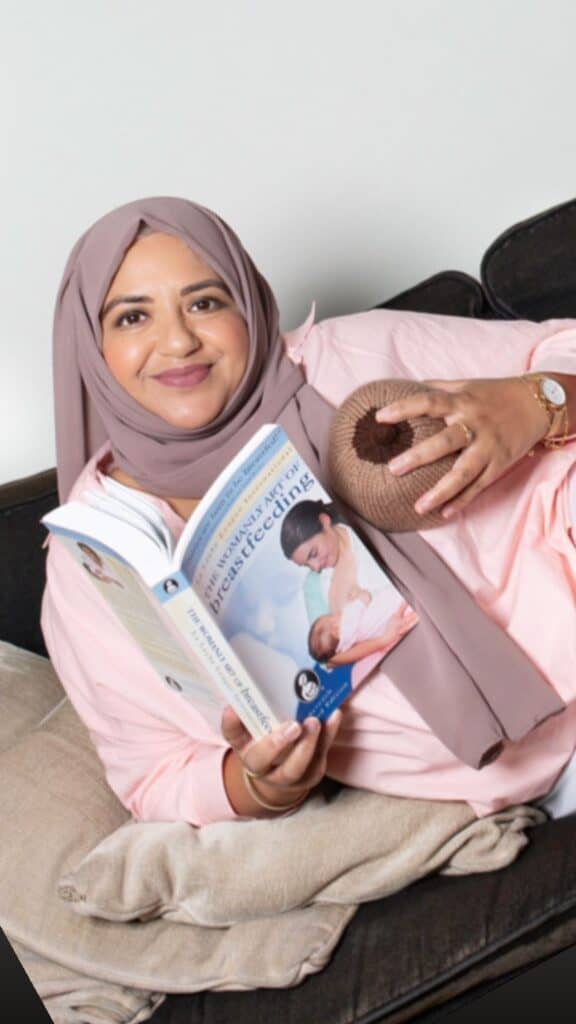
Today, Zarina continues her advocacy as a Doula, supporting mothers through birth and the postnatal period. Her work extends beyond individual support to systemic change. She has collaborated with organisations like The Raham Project in Peterborough and the charity BLISS, participating in projects focused on neonatal intensive care units (NICUs) and premature babies. Sharing her multiple birth stories, particularly the painful memories surrounding her first baby, is a testament to her unwavering commitment to improving maternal and infant care. These collaborations are vital for ensuring that the voices and experiences of diverse communities are heard and integrated into healthcare policy and practice.
A Legacy of Empowerment and Open Dialogue
Zarina’s influence is most powerfully seen in her own family. Her five children, now grown and aged 18 to 34, are living proof of her legacy. Her daughters, living nearby, exemplify a profound generational shift. One daughter has successfully breastfed three children, including tandem feeding and continuing with her youngest at eight months, with the unwavering support of her husband, despite his family’s initial discomfort. This demonstrates how a mother’s determination, combined with an informed partner, can break cycles of cultural resistance.
Zarina’s tireless efforts to foster open dialogue have normalized discussions around breastfeeding, menstruation, and other typically taboo subjects within her family. Her husband, once a source of pressure, now "talks openly about breastfeeding, periods, and so on," a remarkable transformation. This influence has extended to her children’s spouses and friends, creating a ripple effect of acceptance and understanding. Furthermore, her daughters are now exploring options like home births, a "huge miracle" in a community where such choices are traditionally uncommon, showcasing the profound impact of challenging established norms and promoting informed decision-making.
Zarina Ayyub’s call to action is clear: "I want more South Asian women to be open about their experiences." She acknowledges that while it’s easier now, access to breastfeeding support remains lower for Asian women, often due to discomfort with physical exposure in group settings. She critically distinguishes cultural prudishness from religious doctrine, stating, "It’s not religious shame and fear, it’s the culture that has been confused with religion." The Muslim faith, she notes, actually teaches that a baby has a right to be breastfed for as long as they wish, often interpreted as up to two years. By fostering relationships built on trust, breastfeeding supporters can dismantle these culturally imposed barriers and help women embrace breastfeeding as a "normal and natural process" beneficial for both baby and mother.
Her work, and that of many others, continues to highlight the need for culturally competent support services. This includes training healthcare professionals and peer supporters to understand and respect diverse cultural practices, providing private spaces for feeding, and ensuring support materials are available in multiple languages and reflect diverse images. As Zarina discussed in the January 2025 "Breastfeeding Matters LLLGB Podcast" with Maria Yasnova and Sarah Fletcher, the concept of the "first 40 days" or "fourth trimester," deeply rooted in many cultures globally, emphasizes the need for a safe and supportive environment for new mothers. Re-embracing such ancient traditions, while integrating modern, evidence-based practices, offers a holistic path forward.
Towards a Culturally Competent Future for Infant Feeding
Zarina Ayyub’s journey is a microcosm of broader shifts in maternal healthcare and cultural understanding. From facing isolation and misinformation to becoming a beacon of knowledge and support, she has not only transformed her own family’s narrative but has also laid crucial groundwork for future generations of South Asian mothers. Her unwavering commitment to open dialogue, informed choice, and culturally sensitive support serves as a powerful reminder that normalizing breastfeeding requires dismantling systemic barriers, challenging cultural misconceptions, and empowering individual voices. Her legacy is one of courage, compassion, and a tireless pursuit of a future where every mother, regardless of her background, receives the support she deserves to embark on her breastfeeding journey with confidence and dignity.
