


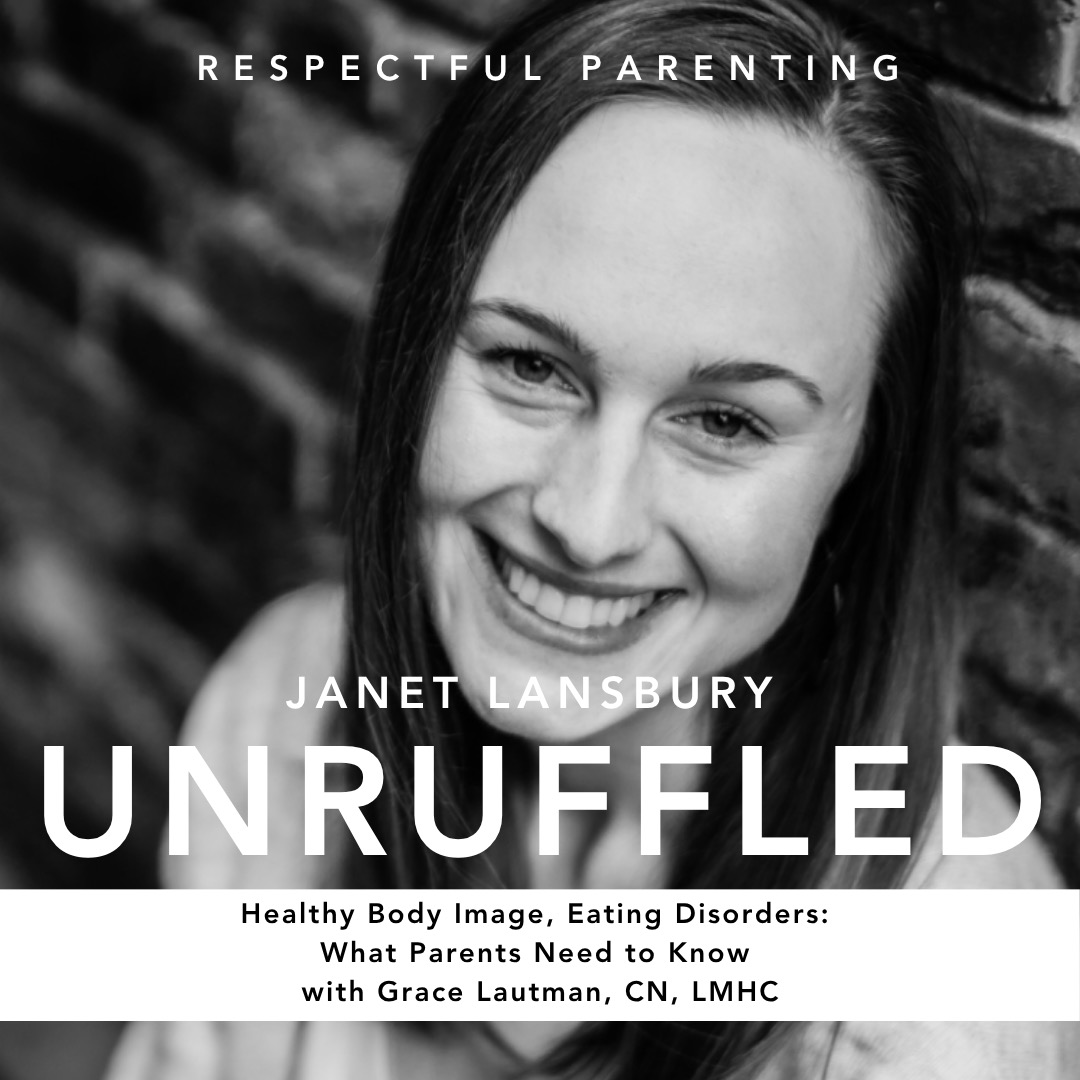
In an increasingly complex world where children are exposed to a barrage of societal messages about body image and food, parents are grappling with how to foster healthy relationships with their bodies and eating habits from an early age. This challenge is amplified by the rising prevalence of eating disorders, which often begin with subtle signs that can be easily overlooked. Janet Lansbury, a respected voice in parenting, recently sat down with Grace Lautman, a licensed mental health counselor (LMHC) and certified nutritionist specializing in eating disorders, to shed light on these critical issues. Their conversation, featured on Lansbury’s podcast “Unruffled,” offered invaluable insights for parents seeking to navigate this sensitive terrain and equip their children with the tools for lifelong well-being.
Understanding the Roots of Eating Disorders
Lautman, whose practice focuses on the prevention and treatment of eating disorders, emphasized that these conditions are not simply a matter of willpower or parental failure. Instead, they are complex illnesses with a significant genetic component intertwined with environmental factors. Research, including twin studies, strongly suggests a biological predisposition, indicating a "brain difference" that can be inherited. However, Lautman stressed that parents are not to blame. "You don’t just cause an eating disorder," she stated, aiming to alleviate parental guilt. "It’s not all your fault. We’re not here to blame parents." This understanding is crucial for fostering a supportive environment where families can address these issues without shame.
The interplay between genetics and environment means that while certain predispositions exist, the family culture surrounding food and body image plays a pivotal role. Lautman highlighted the importance of reducing shame and moving away from blame-based, black-and-white thinking. This nuanced approach, she explained, allows for more compassionate conversations and a healthier family dynamic.
Early Indicators and Preventative Strategies
Identifying early signs of potential eating disorder tendencies in children is paramount. Lautman pointed out that normalizing puberty and the associated physical changes, including weight gain, is a critical preventative measure. Our culture’s fear-based approach to weight, often linked to anxieties about health conditions like diabetes or societal stigma around larger bodies, can create a climate of fear for both parents and children. This fear can lead parents to try and control aspects of their child’s growth that are largely outside of their control, inadvertently fueling anxiety.
Lautman advocates for parents to slow down, normalize these natural processes, and prioritize their relationship with their child. This aligns with Lansbury’s philosophy of focusing on the child’s emotional well-being and staying out of fear-based reactions. When parents project their own anxieties about weight or food onto their children, even with the best intentions, it can be counterproductive. Teens, in particular, are adept at sensing parental unease, and sometimes, comments intended to protect them can inadvertently plant seeds of self-consciousness.
The Nuances of Feeding and Body Image Conversations
The conversation delved into the subtle, yet significant, ways parents influence their children’s relationship with food and their bodies. Lautman used the example of a pediatrician’s visit, where discussions about diet and weight can trigger anxiety. She emphasized the need to critically examine medical advice through the lens of a child growing up in today’s world, bombarded by social media and diet culture messaging.
A key preventative strategy involves reducing shame and blame surrounding eating habits and body changes. Lautman suggested reframing conversations to normalize the natural fluctuations in eating and growth. For instance, instead of focusing on perceived "failures" in vegetable consumption, parents can offer objective information and reassurance, emphasizing that it’s okay and normal for children to navigate these aspects of development.
Fostering "Unruffled" Food Boundaries
The concept of "unruffled food boundaries" emerged as a cornerstone of healthy eating dynamics. Lautman contrasted the intuitive feeding of infancy, where parents meticulously prepare baby food, with the often chaotic reality of feeding older children and teens. The key, she explained, is not to exert rigid control, but to establish clear, consistent, and non-moralistic boundaries around food. This means the parent is responsible for the what, when, and where of meals, while the child is responsible for how much and whether they eat.
This division of responsibility, popularized by experts like Ellyn Satter, is crucial for fostering body autonomy. Parents are encouraged to let go of the need to force, cajole, or bribe their children into eating. Instead, the focus should be on providing nutritious options in a calm and predictable environment. Even when a child refuses to eat, the parent’s role is to acknowledge this without making it a battle. As Lautman illustrated with a personal anecdote about her daughter and a bag of chips at 8:00 AM, sometimes the most effective approach is to meet the moment with curiosity and gentle guidance, rather than immediate prohibition.
The Power of Parental Vulnerability and Self-Reflection
A significant portion of the discussion revolved around the impact of parents’ own relationships with food and body image. Lautman stressed that children are highly perceptive and can sense their parents’ anxieties and insecurities. When parents are open about their own struggles in a vulnerable and honest way, it can be incredibly powerful. Instead of trying to shield their children from perceived negative traits, parents can share their journey of self-discovery and their commitment to doing things differently.
This approach involves acknowledging past mistakes or unlearned behaviors, such as projecting anxieties about weight or appearance. For example, a parent might say, "I realize I’ve been uncomfortable with my body, and I’ve projected that onto you. I’m working on that, and I want you to know that your worth isn’t tied to your appearance." This vulnerability fosters connection and healing, allowing children to see their parents as human beings on their own growth journey.
Body Neutrality Over Body Positivity
In the realm of body image, Lautman suggested that "body neutrality" might be a more accessible and sustainable goal than relentless "body positivity." While positivity is ideal, it can be an elusive and challenging aspiration for many, especially in a culture that bombards individuals with conflicting messages about beauty and body ideals. Body neutrality, on the other hand, focuses on accepting one’s body as it is, acknowledging its changes, and understanding that discomfort is a normal part of the human experience.
This shift in perspective allows for a more compassionate approach when children express negative feelings about their bodies. Instead of immediately countering with reassurances like "No, you’re not fat," parents can gently inquire further, seeking to understand the underlying emotions and experiences. This validates the child’s feelings and opens the door for deeper connection and support, rather than shutting down communication.
Recognizing the Spectrum of Eating Disorders
Lautman clarified that eating disorders exist on a spectrum, ranging from disordered eating behaviors to more severe conditions like anorexia nervosa, bulimia nervosa, and binge eating disorder. Disordered eating can encompass dieting behaviors that are often normalized and even applauded in society. However, when these behaviors escalate to a point where they significantly impact a person’s life, or when there is a distortion of body image (body dysmorphia), it moves into the territory of a clinical eating disorder.
She explained that eating disorders often serve as a maladaptive coping mechanism, an attempt to solve complex problems that feel insurmountable. This can include managing anxiety, perfectionism, neurodivergence, or even trauma. In such cases, the eating disorder, while harmful, might be providing a sense of control or a way to muffle overwhelming emotions or sensory experiences.
When to Seek Professional Help
Lautman emphasized that it is never too early or too late to reach out for professional support. Parents who are feeling uncertain, anxious, or simply want to ensure they are on the right track are encouraged to connect with a specialist. Clear indicators that warrant seeking professional guidance include significant drops in a child’s growth chart trajectory (independent of BMI), marked shifts in eating patterns and mood surrounding food, and noticeable distress related to mealtimes or food-related activities.
For parents seeking immediate resources, Lautman has developed on-demand online courses designed to support families navigating concerns about potential eating disorders and feeding preteens and teens. These resources, along with her active presence on social media (Instagram: honor_nutrition_counseling), offer accessible avenues for information and guidance.
Ultimately, fostering a healthy relationship with food and body image is a continuous journey. By embracing vulnerability, practicing self-reflection, and prioritizing open communication, parents can create an environment that nurtures resilience, self-acceptance, and a lifelong sense of well-being for their children. The insights shared by Lautman and Lansbury offer a beacon of hope and a practical roadmap for navigating these vital aspects of child development.
