

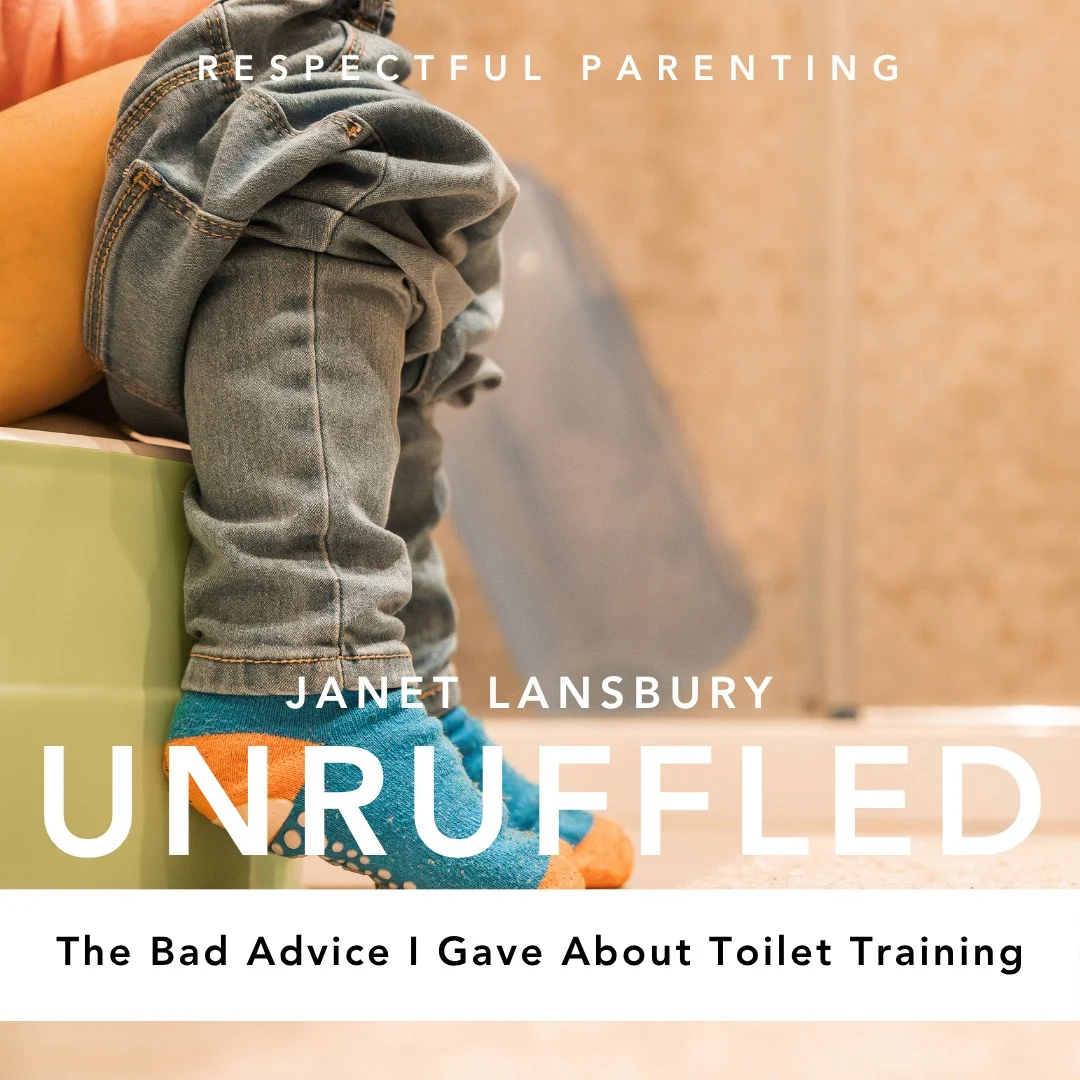
In a candid reflection, early childhood educator and author Janet Lansbury has revisited a piece of advice she provided to a parent struggling with toilet training, acknowledging that her guidance ultimately proved unhelpful. The episode, titled "The Bad Advice I Gave About Toilet Training," details a four-year ordeal that a parent faced with her daughter’s potty training journey. The situation concluded successfully, not through Lansbury’s initial recommendations, but by the parent ultimately diverging from them and implementing a firmer approach. This self-examination offers valuable insights into the nuances of child development, parental intuition, and the effectiveness of different parenting philosophies.
Background: The "Unruffled" Podcast and the Toilet Training Dilemma
Janet Lansbury, known for her podcast "Unruffled" and her advocacy for respectful parenting, typically champions a child-led approach to developmental milestones, including toilet learning. Her philosophy emphasizes trusting a child’s innate motivation and abilities, allowing them to master skills at their own pace with parental support. This approach, she argues, offers children a crucial opportunity for autonomous achievement, a cornerstone of building self-efficacy.
However, the recent update from a parent, featured in Lansbury’s earlier episode "When Kids Don’t Seem Motivated (to Potty, Crawl, or Create)," highlighted a significant disconnect between her advice and the family’s reality. The parent initially sought guidance regarding her daughter, then three-and-a-half years old, who exhibited a strong aversion to the toilet and a firm insistence on remaining in diapers. Despite the child displaying apparent readiness signs—such as hating diaper changes and showing body awareness—she actively resisted any engagement with the potty.
Chronology of the Toilet Training Journey
The parent’s account, shared with Lansbury, outlines a protracted and challenging experience:
- Initial Readiness Signs and Early Attempts (Around Age 2): The daughter showed early indicators of readiness for toilet training, including disliking diaper changes, body awareness, and communicating her needs. She also engaged positively with potty-related books and role-playing with stuffed animals.
- First Potty Training Attempt (Age 2): The family attempted a popular, intensive three-day potty training method. This proved distressing for the child, who exhibited significant fear and physical resistance. The parents subsequently abandoned this approach, opting to wait for the child to express readiness independently.
- Low-Pressure Approach (Ages 2-3): Over the subsequent year, the parents made gentle, low-pressure attempts to introduce the concept of the potty as an option. This involved casual mentions and placing the potty nearby. The child continued to show interest through play with dolls and animals, but no direct engagement with the potty occurred.
- Growing Parental Doubt and External Advice (Around Age 3.5): After a year with no progress, the parent began to doubt the efficacy of a purely child-led approach for her daughter, who was described as fearful and avoidant. This doubt was compounded by her pediatrician and a child therapist who suggested a more direct approach, framing it as a developmental imperative for a three-year-old.
- Second Attempt with a Firmer Stance (Age 3.5): The parents informed their daughter that it was time for underwear. She willingly participated in selecting a potty and underwear. However, upon experiencing the first sensations of needing to urinate, she became highly anxious, refused to use the potty, and had accidents. After two days, the parents reverted to pull-ups, expressing that they knew she could do it if she wanted to, but she wasn’t.
- Continued Resistance and Stagnation (Age 3.5-4): For the following six months, the situation remained unchanged. The child continued to express a firm resolve against using the potty, even as her peers became toilet trained. Play involving potty scenarios persisted, but direct engagement was absent.
- The Breakthrough (Approaching Age 4): As the daughter neared her fourth birthday, the parents, unwilling to have a four-year-old in diapers without developmental disabilities, made a definitive decision to enforce the transition. This involved a "grueling" period of intense fear and resistance from the child. However, after pushing through this initial phase, the daughter achieved success, becoming accident-free and willingly using the toilet.
Lansbury’s Initial Advice: Trust, Boundaries, and Feelings
In the original "Unruffled" episode, Lansbury addressed the parent’s concerns, focusing on her core principles:
- Trust: Genuine trust in the child’s natural abilities and inner direction. This includes providing opportunities for practice.
- Reasonable Boundaries: Identifying and addressing boundaries that might be hindering progress.
- Welcoming Feelings: Allowing children to express and experience uncomfortable emotions like frustration or uncertainty without the parent feeling responsible to immediately fix them.
Lansbury posited that the child’s strong aversion might stem from mixed messages or an underlying anxiety. She suggested that the parent’s own underlying doubts or anxieties could be inadvertently communicated to the child, creating a cycle of uncertainty. Her primary recommendation was for the parent to make a "clear choice one way or the other" and to fully commit to a trust-based approach, believing in the child’s inherent capacity to learn and develop at her own pace. She emphasized that the child’s play with potty toys was a positive sign of her working through her own anxieties, and encouraged the parent to trust this process.
The Parent’s Update: A Shift in Perspective
The parent’s recent update to Lansbury revealed a starkly different outcome. She stated that despite her best efforts to implement Lansbury’s suggestions, there was "no movement toward interest in the potty." The turning point came when, as her daughter approached four, the parent decided that diapers would no longer be an option. This decision, driven by her own internal conviction, led to a challenging but ultimately successful transition.
The parent reflected, "I honestly feel regretful that I didn’t listen to myself… What I saw was a scared kid who needed help doing something she was fully capable of. She was stuck and needed us to see through that." She concluded that for her child, toilet training was not an inherent developmental milestone to be achieved when ready, but rather a "phobia that she wasn’t ever going to overcome without help, aka a strong and firm push." She likened the experience to getting vaccines rather than learning to walk, implying a necessary intervention rather than a purely organic developmental process.
Lansbury’s Analysis: Recognizing the Limits of Advice
Lansbury’s willingness to re-examine her own advice is a hallmark of her approach to parenting and education. She acknowledges the parent’s update with gratitude and a degree of humility, stating, "I’m genuinely thrilled for you and your daughter that you got this result. I imagine you’re greatly relieved, and I’m sincerely sorry if my advice led you astray and away from your instincts."
Her analysis of why her advice was unhelpful centers on several key points:
- Misalignment with Parental Instincts: Lansbury concedes that her advice to fully embrace a child-led approach did not align with the parent’s underlying feelings and instincts. The parent, described as an "anxious overthinker," harbored genuine doubts about her daughter’s ability to spontaneously achieve toilet independence. Lansbury now believes she pushed the parent to adopt a belief system she didn’t truly inhabit, leading to mixed messaging.
- The Nature of "Resistance": Lansbury points out that the parent’s description of her daughter’s behavior as "resistance" implies an underlying pressure or agenda to which the child is reacting. If a child is truly not being pushed, the concept of resistance becomes less applicable. This suggests that even subtle, well-intentioned attempts to guide might be perceived by the child.
- The Role of Parental Anxiety: Lansbury reiterates that children are highly attuned to their parents’ emotional states. The parent’s admitted anxiety likely contributed to the child’s own anxiety surrounding the potty. Lansbury’s initial advice to trust the child’s process might have been difficult to implement when the parent’s own internal state was one of doubt and concern.
- The Importance of "100% Certainty": The parent’s successful approach was characterized by "a hundred percent certainty that it was time despite no interest on her part and that she could do it." Lansbury now recognizes that this unwavering conviction, even if it meant pushing through a child’s reluctance, was the crucial factor. Her previous advice, while advocating for belief, may not have sufficiently emphasized the necessity of absolute parental certainty when that is the chosen path.
Broader Implications for Parenting Advice
This situation underscores a fundamental truth about parenting: advice, however well-intentioned, is not a one-size-fits-all solution. Lansbury’s self-reflection highlights several critical takeaways for parents and advice-givers alike:
- Resonance with Instincts: The most effective parenting advice is that which resonates with a parent’s core instincts and values. While external guidance can offer new perspectives, it must ultimately align with what feels right for the individual parent and child. As Lansbury states, "Whatever parenting advice you’re getting from anywhere, it’s got to resonate with your instincts."
- Understanding the Parent’s Baseline: It is crucial for advisors to understand the parent’s inherent temperament, belief system, and current emotional state. Pushing a parent towards a philosophy that fundamentally clashes with their internal compass is unlikely to be successful and can lead to increased stress and guilt.
- The Nuance of Child-Led vs. Parent-Led: While a child-led approach can be incredibly empowering, there are instances where a more directive approach, grounded in parental confidence and clear boundaries, may be necessary and effective, particularly when dealing with deeply ingrained fears or avoidance. The parent’s ultimate success suggests that for some children, a developmental milestone may require more active parental intervention than simply waiting for readiness.
- The Power of Parental Certainty: The parent’s success hinged on her absolute certainty. This underscores the idea that when a parent is fully convinced of a course of action, that conviction can be a powerful force in guiding a child through challenges. This certainty needs to be genuine and deeply felt, not performative.
- Respecting Individual Journeys: Lansbury emphasizes that each parenting journey is unique. What works for one child and family may not work for another. She concludes by reinforcing the idea that parents should trust their own instincts, as that is ultimately the guiding force that their children are responding to.
Lansbury’s willingness to publicly acknowledge and analyze her "bad advice" serves as a powerful testament to the evolving nature of understanding child development and the importance of humility in offering guidance. Her updated perspective encourages parents to listen to their own inner wisdom, even when it deviates from popular or expert recommendations, and reminds us that successful parenting often involves finding the path that truly resonates with both the parent and the child.
