


The desire for children to cultivate robust and supportive friendships is a universal aspiration for parents. Yet, the reality of childhood social dynamics can be fraught with challenges, leaving parents to navigate the complex terrain of peer interactions. When children experience rejection, exclusion, or unkindness from their peers, the emotional toll can be significant, manifesting as hurt, disappointment, and confusion. This article delves into expert guidance on how parents can effectively support their children through these difficult social experiences, exploring the delicate balance between intervention and allowing children to develop their own coping mechanisms. Drawing on insights from child development expert Janet Lansbury, the piece examines various scenarios involving young children, offering a framework for empowering them to manage challenging peer relationships.
Understanding the Nuances of Childhood Friendships
Childhood friendships, while often portrayed as idyllic, are frequently characterized by evolving dynamics, power struggles, and the testing of social boundaries. For children around the age of five, as highlighted in several case studies, these early social interactions can profoundly shape their understanding of relationships and their own self-worth. The transition from a harmonious play dynamic to one marked by exclusion or unkindness can be particularly distressing for both the child and their parents.
Janet Lansbury, a respected voice in early childhood education and parenting, emphasizes a core principle: "People only have power over us when we give it to them." This foundational idea serves as a guiding light for parents seeking to equip their children with the resilience needed to navigate social challenges. While external authorities like teachers or bosses hold a certain level of power, Lansbury argues that in most interpersonal relationships, individuals possess the agency to determine the influence others have over them. This concept is especially pertinent in today’s interconnected world, where social media and constant comparison can amplify feelings of inadequacy and the fear of missing out (FOMO).
Case Study 1: The Ultimatum and the Silent Treatment
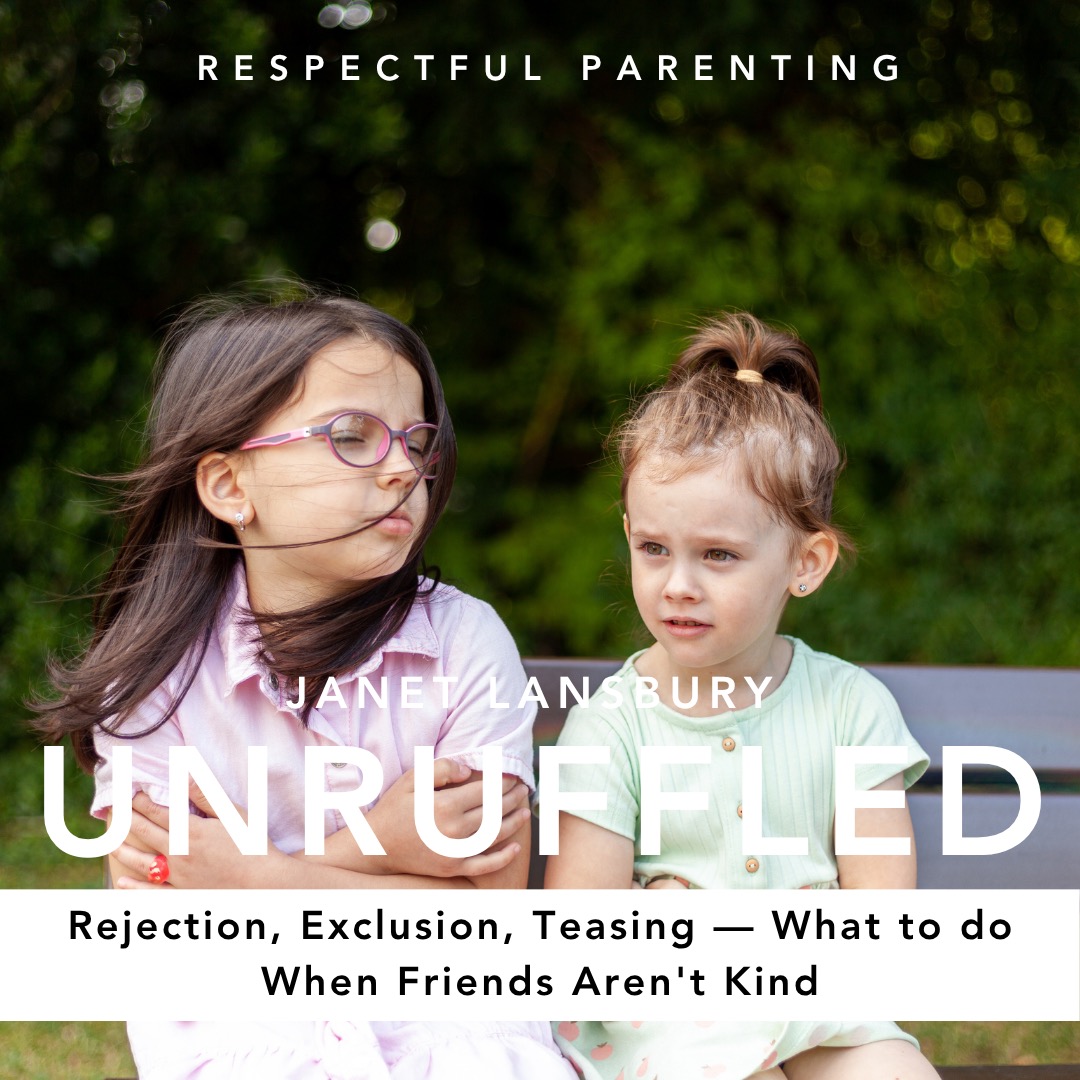
One parent recounts a common scenario involving her five-and-a-half-year-old daughter and a friend. The friendship, initially harmonious, began to feature relational aggression. The friend would issue ultimatums, such as, "If you don’t do X, then I won’t be your friend anymore," or resort to the silent treatment, refusing to acknowledge the child until their departure. This behavior, while recognized as typical in peer interactions, becomes problematic when it consistently leads to distress for the child.
The parent’s concern is palpable, stemming from a childhood where such dynamics were present but lacked adult intervention. The question of how much to involve oneself and what form intervention should take is central. Lansbury’s perspective suggests that while acknowledging the child’s feelings is crucial, over-involvement can inadvertently amplify the power of the other child’s behavior.
Lansbury’s Approach: Instead of trying to mediate or enforce specific interaction rules, such as demanding that children always respond even with a "no," Lansbury advocates for a more detached, supportive role. The parent’s primary function is to validate the child’s emotions—"Yes, I saw that. That hurt your feelings"—without imposing solutions or judgments on the peer’s behavior. This approach aims to prevent the parent’s anxiety from further empowering the situation and allows the child to process their feelings independently. The core message to the child is that they have the agency to choose who they give their power to, and that immature social tactics do not warrant significant attention or emotional investment.
Case Study 2: Neighborhood Exclusion and Social Dynamics
A second case involves a family that recently moved to a new country. Their nearly six-year-old daughter, initially thriving and making numerous friends, suddenly found herself excluded by two sisters in the neighborhood. These sisters actively discouraged other children from playing with the daughter and even directed their younger siblings to avoid her.
The parent grapples with the dilemma of how much to intervene versus allowing her daughter to resolve the situation independently. She has already spoken to the other children’s parents, who are receptive. However, the parent hesitates to "rescue" her daughter, preferring her to develop her own coping strategies, while still ensuring she feels supported at home.
Analysis of Implications: This situation highlights the complexities of social maneuvering among young children. The exclusionary tactics employed by the two sisters can be interpreted as attempts to assert dominance and control within their social group. The parent’s discomfort in interacting with the children exhibiting bullying behavior is understandable, as it clashes with her natural inclination towards inclusivity.
Lansbury’s Guidance: Lansbury reinforces the importance of trusting the child’s ability to manage these situations, with parental support as a backdrop. Rather than directly confronting the children or attempting to orchestrate peace, the focus should remain on empowering the daughter. This includes encouraging her to invite friends who are kind and supportive, thereby reinforcing positive social connections. The message to the daughter should be one of affirmation: "I know they’re trying to do all this stuff. You don’t have to give them power. None of this is a reflection on you; it’s a reflection on their weakness." The parent is advised not to go out of her way to include the exclusionary children, as this could inadvertently validate their behavior. The parent’s instinct to support her daughter by not being overly pleasant to the "bullies" is seen as a valid way to signal solidarity.
Case Study 3: The Inherited Fear of Being "Too Nice"
A poignant case involves a parent who sees her five-year-old daughter as a reflection of her own past experiences. The daughter is described as naive, sweet, thoughtful, and kind, attributes the parent cherishes but also fears will make her a target, as the parent herself was once bullied due to her perceived "niceness." The daughter has already experienced instances of exclusion and being overlooked by friends.
The parent’s internal conflict is evident: she wants to teach her daughter to stand up for herself, but recoils from the idea of encouraging meanness. Her fear of her daughter being taken advantage of in kindergarten is a significant concern.
Lansbury’s Perspective on Strength in Kindness: Lansbury reframes the concept of strength, asserting that cruelty is a sign of weakness, while compassion is a potent force. The daughter’s current behavior—accepting exclusion with sadness but without aggression—is presented not as weakness, but as a form of power. The parent’s own past experiences, while valid and painful, should not dictate the daughter’s future. The key is to distinguish between genuine kindness and allowing oneself to be exploited.
Empowering the Child: The advice here focuses on nurturing the daughter’s inherent strengths. This involves actively encouraging her to connect with other children who appreciate her friendship and offering her opportunities for playdates with positive peer groups. The parent is encouraged to believe in her daughter’s capacity to navigate social challenges, emphasizing that her kindness is a strength, not a vulnerability. The idea of "owning her power" is central, meaning she has the choice to engage with those who reciprocate her positive regard and to disengage from those who do not. The parent’s own anxieties and past traumas are identified as potential barriers to her daughter’s healthy social development, suggesting a need for the parent to address her own self-calming and emotional regulation.
Case Study 4: Bickering Between Close Friends
The final case presents a different dynamic: a five-year-old daughter, an only child, who engages in bickering with her best friend, a behavior that the parent finds triggering. The daughter, described as strong-willed and confident, sometimes says things like, "You’re shy," or "I’m better at X than you," which elicits a negative response from her friend and leads the friend to seek comfort from the parent.
The parent acknowledges her own discomfort and admits to sometimes scolding her daughter, regretting it immediately. She also notes that this behavior is less prevalent when her daughter plays with other children outside of this close friendship, suggesting the dynamic is specific to this particular bond. As an only child, she admits to being less accustomed to managing sibling-like conflict.
Understanding Sibling-Like Conflict: Lansbury posits that the bickering between close friends can be a normal, albeit sometimes challenging, aspect of developing intimacy. It can be a way for children to test boundaries and assert their individuality within a comfortable relationship. The parent’s role is not to eliminate this behavior but to manage her own reactions and support the children in navigating their conflict.
The Parent’s Role in Managing Triggering Behavior: The parent’s self-awareness is highlighted as a strength. Her recognition that the bickering is triggering for her and that her own annoyance might be perceived by her daughter is a crucial insight. Lansbury suggests that instead of intervening with discipline, the parent should focus on supporting the child who is upset. When the friend runs to her, the parent can respond with empathy, reflecting the friend’s feelings: "Oh, what happened? You didn’t like that, huh? That doesn’t feel good." This validates the friend’s emotions without directly criticizing the daughter. The parent is encouraged to trust that the children can learn from these interactions and to avoid taking ownership of their conflict. By stepping back and offering support rather than judgment, the parent can help defuse her own triggering response and allow the children to work through their dynamics. The fact that this behavior is less apparent with other children suggests that the daughter might be unconsciously leveraging the comfort of the close friendship and her mother’s presence to express herself more assertively.
Broader Implications and Expert Consensus
The recurring theme across all these scenarios is the critical role of parental perception and response. Lansbury’s core message—that children possess inherent power and agency, and that adults should avoid inadvertently amplifying negative social behaviors—offers a powerful paradigm shift for parents.
- Data on Childhood Social Development: Research in developmental psychology consistently shows that children’s social skills and emotional regulation develop through interaction and experience. Early childhood is a crucial period for learning to manage conflict, understand social cues, and build resilience. Studies by organizations like the American Psychological Association (APA) indicate that children who are supported in developing these skills tend to have better mental health outcomes and more stable relationships in later life.
- The Power of Modeling: Children learn by observing the adults around them. When parents react with excessive anxiety or anger to peer conflicts, they model a response that can escalate the child’s distress. Conversely, a calm, supportive, and trusting parental demeanor models resilience and self-efficacy.
- Intervention vs. Support: The distinction between direct intervention and supportive presence is paramount. While outright bullying or harm requires immediate intervention, more nuanced social challenges like exclusion or teasing are best navigated by empowering the child to find their own solutions. This builds confidence and problem-solving skills.
- Focus on Agency: The concept of agency—the ability to act independently and make one’s own free choices—is central to Lansbury’s philosophy. By emphasizing that children choose whom they give power to, parents equip them with a powerful tool for self-protection and healthy relationship building.
In conclusion, navigating the complexities of childhood friendships requires a nuanced approach from parents. By understanding the underlying dynamics, trusting in their children’s capabilities, and adopting a supportive, rather than overly interventionist, stance, parents can help their children develop the resilience and social intelligence needed to thrive in their peer interactions. The wisdom shared by experts like Janet Lansbury underscores the profound impact of parental trust and the empowering realization that true strength lies not in aggression, but in the capacity to choose where to direct one’s own power.
