

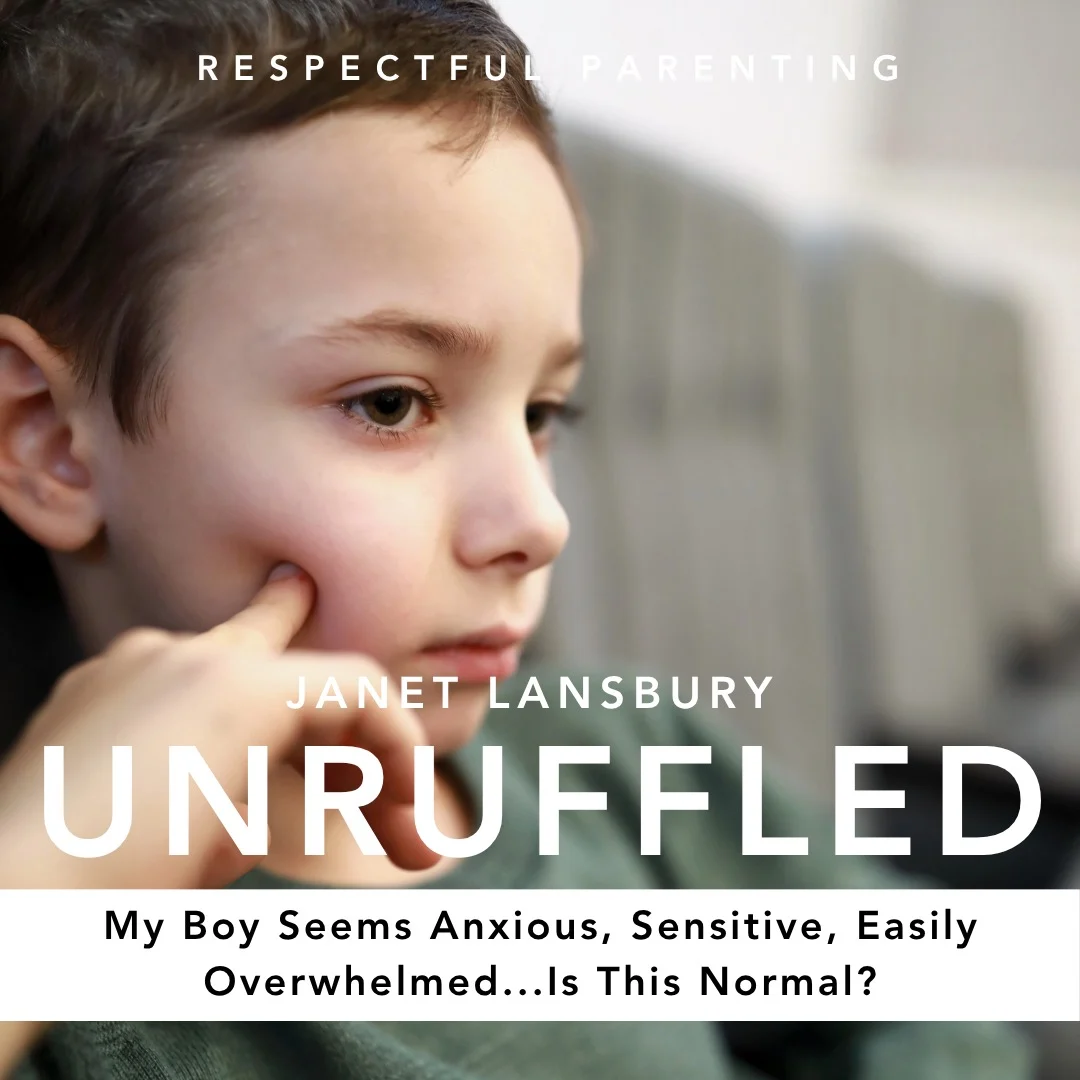
A recent discussion on Janet Lansbury’s "Unruffled" podcast has brought to light a common parental concern: the perceived anxiety, sensitivity, and tendency for children to become easily overwhelmed, particularly in social settings. Lansbury addresses letters from three parents who express worry that their sons’ temperaments may be atypical, especially when contrasted with their peers. The recurring theme is a deep-seated concern, often accompanied by feelings of inadequacy and helplessness, as parents navigate their children’s emotional responses in social and group activities.
Parental Concerns and the Search for Normalcy
The podcast episode, titled "My Boy Seems Anxious, Sensitive, Easily Overwhelmed… Is This Normal?", delves into the experiences of parents who have observed distinct behavioral patterns in their young sons. One parent articulates a profound sense of being "lost" and experiencing "shame" not for their child, but for the perceived inability to engage in enjoyable activities together due to the child’s consistent withdrawal. This sentiment underscores the emotional toll on parents who wish to foster connection and shared experiences but are met with resistance stemming from their child’s internal emotional landscape.
Lansbury’s response aims to provide encouragement and a shift in perspective, reframing these temperaments not as deficiencies, but as variations that require understanding and acceptance rather than correction. The core message revolves around trusting, accepting, and supporting children for who they are, rather than striving to mold them into a perceived norm.
Case Study 1: The Overwhelmed Three-Year-Old
The first parent describes a three-year-old son who, while largely independent and comfortable in solitary play, exhibits significant distress in more stimulating social environments. This was starkly illustrated during his birthday party when the celebratory singing led to him burying his face in his mother’s shoulder and biting her, prompting a need to request quieter singing. Similar reactions were noted in other situations: a reluctance to remain in a pool when additional people joined, and a preference for interacting with only one child at a time, retreating to the periphery when groups formed.
Lansbury interprets these behaviors as clear indicators of overwhelm, emphasizing that the child’s actions, such as moving away or disengaging, are self-regulating mechanisms. The parent’s concern about "ruining" her child is addressed by reassuring her that her acceptance and allowing him to manage his feelings through these withdrawals are, in fact, teaching him that his emotional responses are valid. The advice suggests that instead of trying to force him to overcome his overwhelm, parents can help him navigate it by acknowledging its presence and allowing him space. The incident of biting, while not ideal, is presented as an impulsive reaction to intense overload, rather than a deliberate act of aggression.
Case Study 2: The Reserved Four-Year-Old and the Football Class
The second parent, a first-time mother, expresses exhaustion and a feeling of having "lost it" after years of successfully navigating her son’s reserved temperament. Her four-year-old, born during the pandemic, has consistently shown a preference for less intense social interactions, often crying when unfamiliar relatives attempted close contact. While Lansbury notes that the initial approach of providing space was appropriate, she also suggests that a parent’s mood and underlying anxiety when managing these situations can subtly influence the child’s perception.
The introduction of a playgroup at age four reportedly improved socialization, yet the child still experienced tears during transitions, such as a "moving up pictorial," where his images reflected sadness. The parent’s observation of extreme anxiety in social situations involving interaction or performance with new people is deemed accurate by Lansbury. A more recent challenge arose with a football class, where the child became extremely clingy, crying if his parents did not remain within close proximity. This behavior, occurring while younger children in the group were more adaptable, intensified the parent’s frustration and self-doubt.
Lansbury suggests that football, with its inherent coordination demands and group dynamics, might be an overly challenging environment for a child of this temperament at this age. The emphasis here shifts to the concept of "reasonable boundaries." While trusting the child’s emotional experience is paramount, parents also need to establish boundaries for themselves to avoid exhaustion. This could involve reconsidering participation in activities that consistently lead to such distress for both child and parent, or setting clear expectations about parental involvement, such as sitting at a reasonable distance rather than remaining immediately adjacent. The idea is not to force the child to "get over" their feelings but to create situations that are manageable and supportive of their current developmental stage.
Case Study 3: The Anticipatory Grief of a Nearly Six-Year-Old
The third scenario involves a nearly six-year-old son who proactively requests his parents not attend school events. His reasoning is not a desire for parental absence, but an anticipation of sadness and tears when it is time for his parents to leave. This child, who has acclimated well to morning goodbyes and even enjoyed a full-day school trip, experiences difficulty with shorter events where the departure is more imminent. During an athletics event, he initially expressed uncertainty about his parents attending, then changed his mind, leading to a brief period of crying upon seeing them, followed by enjoyment of the event and a calm departure.
However, for an upcoming 10-class swimming lesson series, he has repeatedly stated he does not want his parents to attend due to the anticipated sadness. The parents have initially respected his wishes. The question posed to Lansbury is whether it is more beneficial to gently encourage him to confront this difficult emotion and process it, or to consistently respect his choice to avoid the situation.
Lansbury’s response highlights the nuanced nature of this situation. She posits that the child’s "sadness" might be a manifestation of deep affection and a desire for constant togetherness, a precious emotion that should be acknowledged. While respecting a child’s choice is important, Lansbury suggests that parents can, with courage and openness, invite their child to experience these emotions in their presence. This involves a boundary of the parents wanting to attend and share the experience, coupled with a reassurance that crying is acceptable and that they are not afraid of his emotions. The crucial element is the parent’s calm and accepting attitude towards the child’s potential tears, thereby normalizing the experience and reducing the child’s fear of his own feelings. This approach, Lansbury explains, is not about conditioning the child but about sharing a desired experience and being present to support their emotional processing.
Broader Implications and Expert Analysis
The recurring thread across all three cases is the validation of sensitive and anxious temperaments as normal variations in childhood development. Lansbury emphasizes that children exhibiting these traits are not inherently flawed but possess unique ways of processing the world. The challenge for parents lies in their own emotional responses – their anxiety about their child’s anxiety, their desire to "fix" the situation, and potential societal pressures to conform.
Supporting Data and Context:
Child development research consistently acknowledges the spectrum of temperaments. Studies on infant temperament, such as those by Chess and Thomas, identified categories like "slow to warm up," which align with the behaviors described. Statistics on childhood anxiety disorders, while distinct from temperament, indicate a growing awareness of emotional challenges in young children. For instance, the Anxiety & Depression Association of America reports that approximately 25% of children aged 13-18 live with an anxiety disorder. While these cases do not necessarily indicate a disorder, they highlight a heightened sensitivity that warrants careful attention.
The increasing pace of modern life, with its emphasis on early academic and extracurricular achievement, may inadvertently place greater pressure on children who are naturally more sensitive. The pandemic’s impact, as noted in the second case, may have also played a role in shaping early socialization experiences for some children, potentially exacerbating pre-existing sensitivities.
Analysis of Implications:
The implications of Lansbury’s advice extend beyond individual families. By reframing these temperaments as normal, she encourages a societal shift away from pathologizing sensitivity. This can lead to:
- Reduced Parental Guilt: Alleviating the shame and self-blame experienced by parents allows for a more supportive and effective approach.
- Enhanced Child Resilience: When children feel their emotions are accepted, they are better equipped to develop healthy coping mechanisms and self-regulation skills.
- Stronger Parent-Child Bonds: Authenticity and acceptance foster deeper trust and connection between parents and children.
- More Inclusive Environments: Understanding and accommodating diverse temperaments can lead to more inclusive playgroups, classrooms, and community activities.
Lansbury’s approach underscores the importance of parental self-acceptance and the courage to maintain personal boundaries while remaining attuned to a child’s emotional needs. The message is one of empowerment for both parent and child, suggesting that by embracing individuality, families can navigate challenges with greater confidence and less distress. The advice, grounded in years of experience and observation, offers a valuable perspective for parents seeking to understand and support their sensitive children in a world that often favors conformity.
