

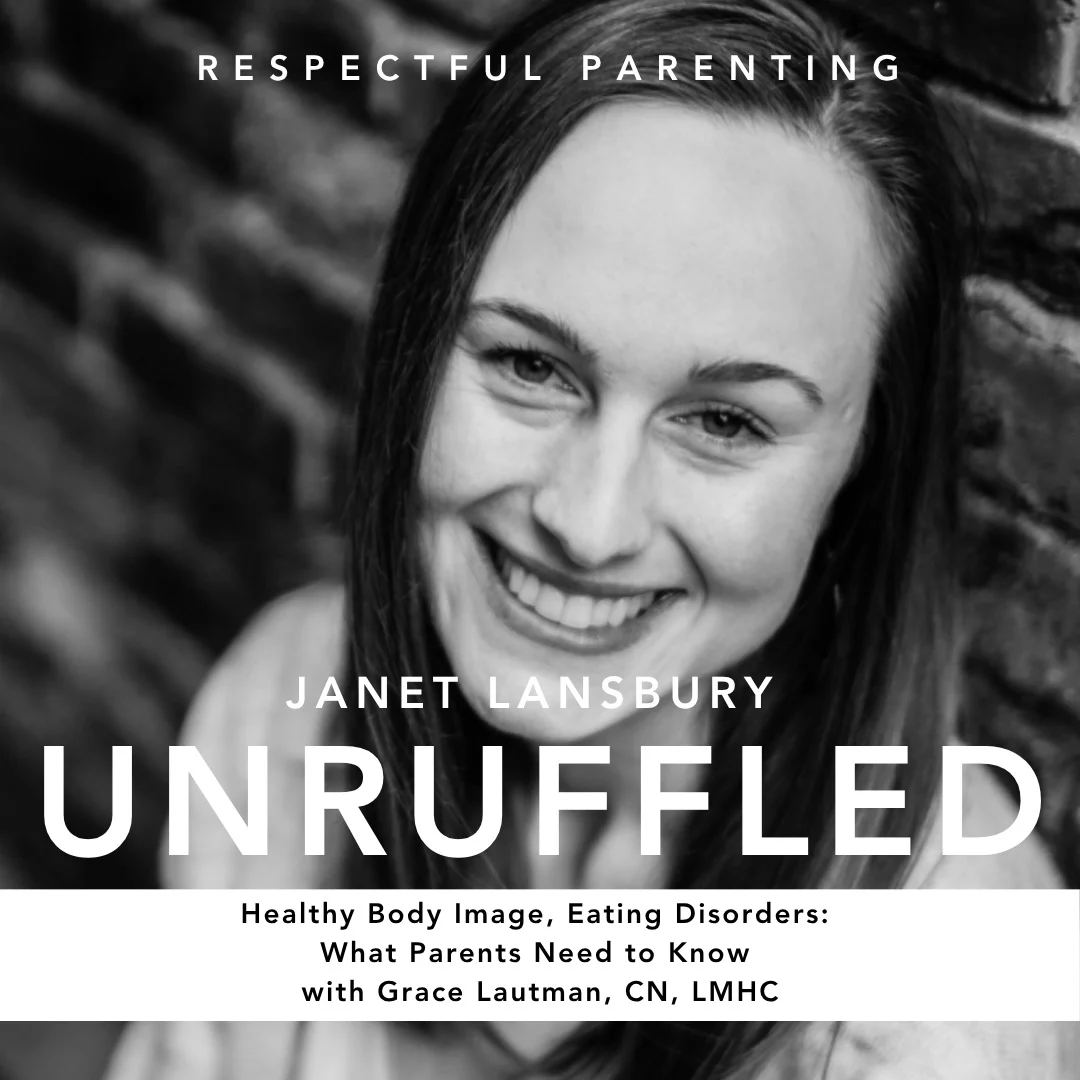
In an increasingly complex world, fostering a healthy relationship with food and body image from an early age is paramount for child development. This critical issue was the focus of a recent discussion featuring Janet Lansbury, a renowned parenting expert, and Grace Lautman, a licensed marriage and family therapist (LMHC) and certified nutritionist specializing in eating disorders. The conversation, hosted on Lansbury’s podcast "Unruffled," offered parents vital insights into the prevention and treatment of eating disorders, emphasizing the profound impact of parental attitudes and early childhood experiences.
Lautman, whose practice at Honor Nutrition Counseling focuses on creating accepting environments for individuals to explore their relationships with food, body, and self, highlighted the intricate interplay between genetics and environment in the development of eating disorders. She stressed that while genetic predispositions play a significant role, parental influence remains a powerful factor in shaping a child’s journey towards a healthy self-perception.
Understanding the Roots of Eating Disorders
"My work primarily is with the prevention and then also the treatment of eating disorders," Lautman explained. "I work with kids as young as about 11, and I work with parents, obviously, because of that, and adults." Her extensive experience reveals that many families seek help when an eating disorder is already present, but a significant portion of her work also involves preventative strategies, particularly with adults who are navigating their own recovery while parenting.
A key takeaway from the discussion is the genetic component of eating disorders. Lautman cited twin studies indicating a strong genetic link, describing it as a "brain difference." This acknowledgment aims to alleviate parental guilt, emphasizing that parents do not solely cause eating disorders. "We’re not here to blame parents for an eating disorder," she asserted, "and that’s a very, very important part because we’re all human trying to navigate through so much in these conversations around food and body with our kids."
This perspective shifts the focus from blame to empowerment, allowing parents to understand their role not as causative agents but as influential figures who can foster a healthier family culture around food and body image. The conversation underscored that while genetics provides a foundation, environmental factors, including familial dynamics and societal pressures, significantly shape how these predispositions manifest.
Early Intervention and Prevention Strategies
The discussion delved into the subtle signs parents might observe in their children that could indicate a predisposition or early stage of disordered eating. Lautman emphasized the importance of normalizing puberty and growth, including natural weight gain, which can often be a source of anxiety for both children and parents due to cultural narratives surrounding weight.
"Part of what happens in those preteen and teen years is that a lot of fat deposits happen, a lot of fat growth and weight growth happens," Lautman noted. "And it can be really, really scary for parents, especially when there’s so much fear around preventing diabetes or being in a bigger body and all this stuff." This fear, she explained, can lead to parental attempts at control, which can inadvertently exacerbate a child’s anxiety.
Lansbury’s emphasis on focusing on the relationship and understanding the child’s internal experience, rather than reacting out of fear, resonated strongly. The conversation highlighted how parental anxiety about a child’s weight or eating habits can be contagious. Teens, in particular, are highly attuned to their parents’ underlying concerns, sometimes internalizing these worries and developing issues they might not have otherwise experienced.
Lautman shared anecdotes of teens who confessed to not worrying about their bodies until comments or anxieties were expressed within their family. This underscores the delicate balance parents must strike: wanting to protect their children from struggles they themselves have faced, but doing so in a way that doesn’t inadvertently create new anxieties.
The Nuances of Parental Influence and "Unruffled" Food Boundaries
A significant portion of the discussion centered on how parents can establish healthy "unruffled" food boundaries. Lautman advocated for a mindful approach to everyday eating interactions, suggesting that seemingly small moments—like a child asking for a cookie—offer opportunities to model a healthy relationship with food. Instead of immediate restrictions or lectures, she proposed responses like, "Oh, that’s not on the menu right now. We’re doing something else. But cookies are so delicious, let’s have some later," or framing dietary restrictions in a neutral, factual manner, especially when dealing with health conditions.
This approach aligns with the principles of Ellyn Satter, a renowned feeding expert, whose "division of responsibility" model was discussed. In this model, parents are responsible for the "what, when, and where" of feeding, while the child is responsible for the "how much and whether." This framework empowers children to develop self-regulation and trust their own bodies, reducing the likelihood of power struggles around food.
Lautman shared a personal anecdote about her own daughter, illustrating how to handle a situation where her child was eating chips at 8 AM. Instead of reacting with alarm, she joined her daughter, enjoyed a chip, and then calmly put them away, reinforcing the idea that food is not inherently "good" or "bad," and that mindful enjoyment is key. This demonstrates how parents can model a balanced relationship with food, even when faced with unconventional choices.
Navigating Body Image and the Shift Towards Neutrality
The conversation also touched upon the prevalent pressure of body positivity. Lautman suggested that for many, striving for "body neutrality" might be a more accessible and realistic goal. This involves acknowledging that bodies change and can sometimes be a source of discomfort, but framing this discomfort as a normal part of the human experience, rather than a personal failing.
"What good body image is actually about—hopefully sometimes you can evaluate it positively. We want that for everybody, that’s nice. But with different body sizes and culturally different messages, that can be a really hard goal for some people, to feel like they can be positive," Lautman explained. The goal, she emphasized, is to help children and adults become comfortable with discomfort, understanding that it is a part of life and not the entirety of their being.
This nuanced approach to body image is crucial, especially when children express negative feelings about their bodies. Instead of simply dismissing these feelings with reassurances like "No, you’re not," Lautman encouraged parents to inquire further: "Tell me more about what’s coming up and what it’s like to be with these friends and your body, their body. I want to hear about it." This validates the child’s experience and opens the door for deeper understanding and support.
When Eating Disorders Serve a Purpose
Lautman further elaborated on the concept of eating disorders as a maladaptive coping mechanism, often an attempt to solve complex internal or external problems. This can include managing anxiety, perfectionism, neurodivergence, or even trauma. In cases where a child’s restrictive eating or extreme pickiness is a way to gain a sense of control or muffle overwhelming emotions, addressing the underlying issues becomes paramount.
"Anorexia is a way oftentimes of muffling a lot of the impacts of perfectionism," Lautman noted. "Whereas binge eating tends to be more of a strategy to numb, get out of an emotion." Understanding these underlying functions is key to helping individuals find healthier ways to cope. This might involve addressing anxiety, trauma, or providing necessary accommodations for neurodivergent individuals, thereby alleviating the need to rely on eating disorder behaviors for regulation.
Recognizing When to Seek Professional Help
The discussion concluded with practical advice for parents on when to seek professional support. Lautman stressed that it’s always beneficial to reach out if parents are feeling concerned or simply want to gain a better understanding. She identified several clear indicators, such as a child significantly dropping off their growth chart (excluding BMI as a sole indicator), a noticeable shift in eating patterns and mood around food, and significant distress associated with meals or food-related activities.
Lautman also shared resources, including on-demand online courses designed to support families navigating potential eating disorders and feeding preteens and teens, available through her website, honornutritioncounseling.com. Her active presence on social media platforms also provides accessible resources for parents seeking guidance.
Ultimately, the conversation with Grace Lautman and Janet Lansbury provided a comprehensive and compassionate roadmap for parents. It emphasized that fostering a healthy relationship with food and body image is an ongoing process, rooted in understanding, open communication, and a willingness to adapt parental approaches as children grow and evolve. By shifting the focus from control and fear to trust and acceptance, parents can empower their children to develop resilience, self-compassion, and a lifelong appreciation for their well-being.
