

Originally published November 2025. Last reviewed/updated by Craig Canapari, MD in December 2025.
The intricate dance of childhood nap transitions has long been a source of perplexity for parents, pediatricians, and sleep consultants alike. Predicting when a child will relinquish a nap, and navigating the often-turbulent phases of this process, remains a significant challenge. A burgeoning field of expertise has emerged, dedicated to deciphering the timing and patterns of these crucial sleep periods. It was with this backdrop of established complexity that a brief social media reel, excerpted from a podcast episode on napping, unexpectedly garnered widespread attention and engagement.
Viral Phenomenon Highlights Universal Parental Concern
The reel, shared from the "Sleep Edit" napping episode, rapidly transcended its intended reach, becoming a viral sensation on social media platforms. While Dr. Craig Canapari frequently shares short clips from his podcast, this particular segment achieved unprecedented traction. As of November 2, 2025, the content had amassed over 185,000 views on Instagram, 117,000 on TikTok, and 1,100 on YouTube, demonstrating a profound resonance with its audience. The overwhelming response, evidenced by over 60 comments on the Instagram post alone, underscored the deeply felt connection parents have to the topic of naps and their perceived link to a child’s cognitive development.
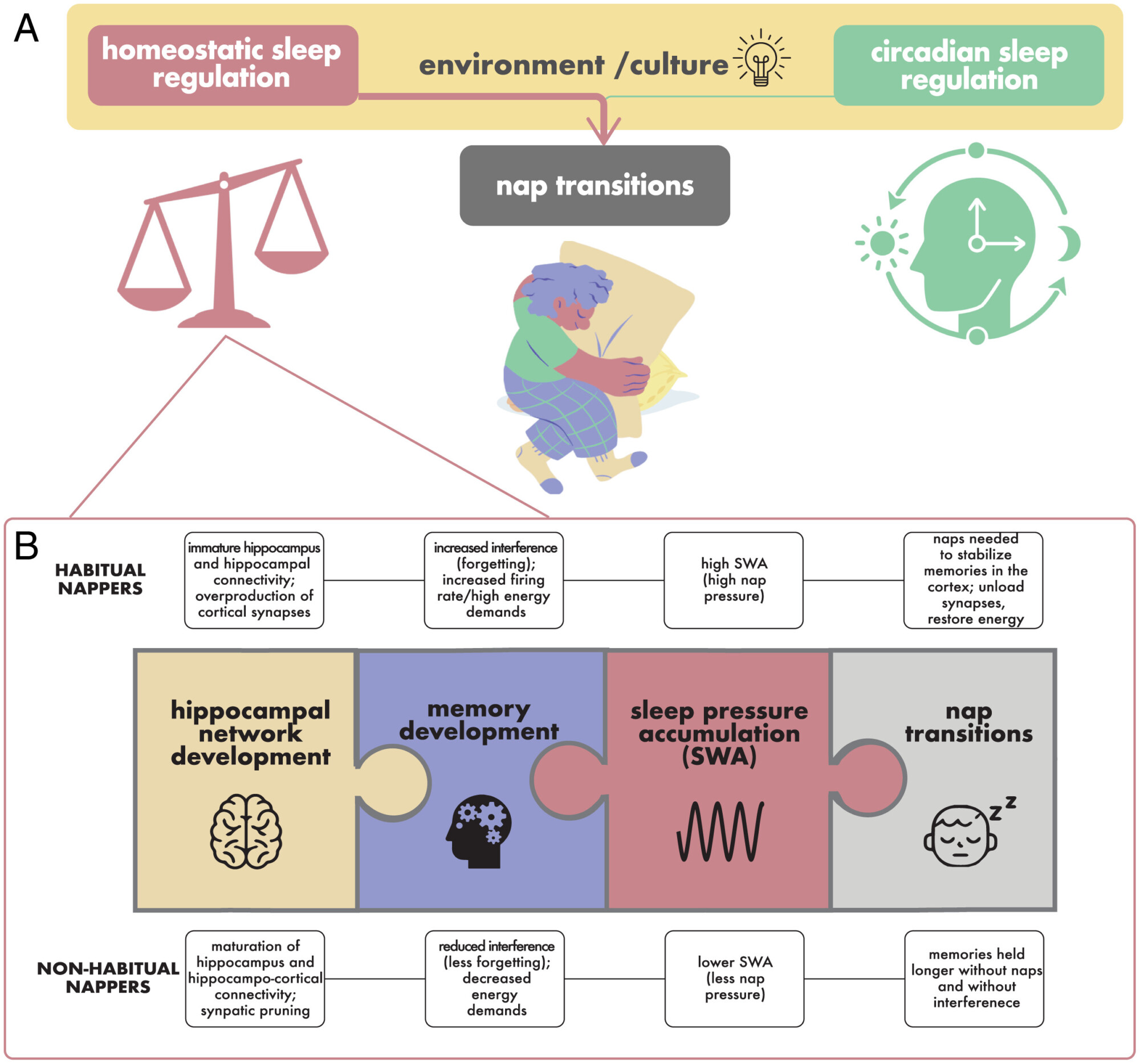
At its core, the viral content offered a concise summary of research from the University of Massachusetts (UMass), which proposed a compelling hypothesis: the maturation of the hippocampus, a brain structure critically involved in memory formation, is intrinsically linked to the process of nap transitions in young children. This concept intuitively aligns with the understanding that as a child’s brain develops, their fundamental sleep requirements naturally evolve.
Parental Discourse: A Tapestry of Experience and Inquiry
The dissemination of this research ignited a vibrant online conversation, transforming comment sections into forums for shared experiences, pressing questions, and even lighthearted anecdotes. This robust engagement served as a powerful testament to the universality of nap-related challenges in early childhood, positioning it as a near-ubiquitous parental dilemma. Several recurring themes emerged from the parental discourse:
Innate Curiosity Drives Engagement
A significant portion of the online community expressed a keen interest in understanding the underlying science. Comments such as, "So interesting! I never thought naps could be linked to brain development," and "Makes total sense once you think about memory consolidation," highlight a natural parental inclination to connect observed behaviors at home with scientific inquiry. This curiosity acts as a vital bridge, facilitating the integration of scientific understanding into everyday parenting practices.
The Unpredictable Calculus of Sleep Schedules
Many parents articulated the complex arithmetic of managing nap schedules during transitional periods. One parent succinctly captured this struggle: "If my three-year-old naps, bedtime is a disaster. If he skips it, he’s cranky for three hours – there’s no winning." Another echoed this sentiment, stating, "We’re in the weird in-between: my son still needs a nap, but it ruins bedtime every single night." These real-world accounts vividly illustrate the delicate equilibrium families often face when a child still requires restorative sleep, yet their internal biological clock is undergoing a significant shift.
Dr. Canapari frequently advises parents that children do not simply "decide" to stop napping. Instead, he notes, there is often an extended period characterized by a child’s perceived need for a nap coupled with a reluctance to take one. This can manifest as napping successfully in institutional settings like daycare, only to disrupt evening sleep on weekends, or vice versa.
Acknowledging Individual Developmental Trajectories
A crucial element of the online discussion centered on the inherent variability in children’s developmental timelines. Anecdotal evidence shared by parents underscored this point: "My daughter stopped napping right after turning two and her memory is incredible," and "Our son gave up naps around 2½ and he’s seven now – super mature and focused." While these individual experiences may not directly contradict the research, they effectively emphasize that brain development is not a monolithic process with a uniform onset. The maturation of neural pathways, including those involved in memory, occurs at a unique pace for each child.
Seeking Clarity and Deeper Understanding
A subset of parents sought further clarification on the nuances of the research. Questions such as, "Does dropping naps that young affect other parts of growth?" and "Are we talking about dropping all naps or just cutting from three to two?" reflect a desire for more precise information. The authors’ primary focus was on the transition from two naps to one. The research does not suggest any need to alter a child’s established sleep schedule based on this finding.
Innovative Solutions and Practical Adaptations
The thread also became a hub for parents sharing creative strategies and workarounds. One parent inquired about advice for daycare situations: "Daycare still makes them nap, and bedtime is chaos – what should I ask the teacher to do?" Another shared a successful adaptation: "We switched to quiet time instead of naps – books and soft music. It’s been a game-changer." These exchanges highlight the pragmatic application of sleep science in daily life, where the ultimate goal is not to "win" a nap battle but to ensure adequate rest and maintain family harmony.
Humorous Observations
The conversation concluded with a touch of humor, exemplified by the comment: "I guess my husband’s hippocampus is still developing!" This lighthearted observation serves as a reminder of the relatable and often amusing aspects of navigating early childhood development.
The Scientific Foundation: A Perspective on Memory and Brain Maturation

The viral discussion was directly influenced by a significant perspective piece published in the Proceedings of the National Academy of Sciences of the United States of America (PNAS) in 2022, authored by Spencer and Riggins. Titled "Contributions of Memory and Brain Development to the Bioregulation of Naps and Nap Transitions in Early Childhood," this editorial did not present new experimental data but rather synthesized existing research to propose a novel model.
The authors’ framework integrates two fundamental drivers of sleep-wake timing: sleep drive and the circadian clock. Sleep drive, colloquially understood as the accumulation of sleepiness throughout the day, is known to build more rapidly in infants. As children mature, this rate of accumulation slows, explaining the gradual reduction in nap frequency from multiple naps in newborns to a single nap in toddlers.
However, the precise timing of nap transitions—such as moving from three naps to two, two to one, or ceasing naps altogether—has historically been difficult to predict. The PNAS perspective table outlines typical age ranges for these transitions:
| Nap Transition | Typical Age Range | Description |
|---|---|---|
| 3 naps → 2 naps | 6–9 months | Morning, midday, and late afternoon naps consolidate to two (morning and afternoon) naps. |
| 2 naps → 1 nap | 12–18 months | Morning nap drops; most children nap only in the afternoon. |
| 1 nap → no naps | 3–5 years | Afternoon nap gradually ceases; most children stop napping by age 5. |
The authors of the PNAS perspective highlight the association between the maturation of the hippocampus and a slower accumulation of sleep drive. This suggests that as the hippocampus becomes more efficient in its memory consolidation role, the brain may require fewer naps to process and store new information. The hippocampus, a seahorse-shaped structure deep within the brain, plays a pivotal role in learning and memory, particularly in the formation of new episodic and spatial memories.
The researchers posit that early childhood is characterized by a unique developmental challenge: a massive influx of new information that the developing neural systems are still constructing. During this period, synaptic connections between neurons—the basis of learning—are rapidly being formed. This process, known as synaptic overproduction, peaks in early childhood. The authors propose that naps serve as a critical mechanism for managing the cognitive load associated with this intense learning phase.
In their words, "naps provide a solution to what is essentially a memory problem; high learning demands on an immature system create an overproduction of synapses that reaches its peak in early childhood. Sleep has been argued to help meet space and energy challenges associated with development… Thus, we posit that early childhood is a time of competing demands of learning, which loads the brain (the hippocampus in particular), and sleeping, which may unload synapses across the cortex."
This perspective is further supported by evidence linking slow-wave activity (SWA), characteristic of deep sleep, to the consolidation of emotional memories. The study notes that SWA during naps can predict enhanced memory for emotional stimuli and reduced emotional attention bias in young children. This offers a potential explanation for the "witching hour" phenomenon, where children who miss their naps may exhibit increased emotional dysregulation. Without the restorative processing of emotional experiences during sleep, the brain remains more reactive to stimuli, leading to heightened irritability and behavioral challenges at the end of the day.
Implications for Daily Parenting and Future Research
The research presented in the PNAS perspective offers a valuable framework for understanding nap transitions, but it is crucial to interpret its implications correctly. Several key points emerge:
- Individual Variability is Paramount: The research emphasizes that every child matures at a unique pace. The provided age ranges for nap transitions are broad, reflecting this inherent variability.
- No Prescriptive Changes Advised: The study does not advocate for specific changes to a child’s sleep schedule. Instead, it offers a scientific explanation for observed patterns.
- Focus on Rest and Well-being: The ultimate goal for parents should be to ensure their child receives adequate rest and to manage sleep transitions in a way that supports the child’s overall well-being and the family’s functioning.
For parents navigating the complexities of nap transitions, practical advice often involves patience and observation. Strategies may include:
- Observing Sleep Cues: Paying close attention to a child’s tired signals rather than adhering strictly to a schedule.
- Adjusting Nap Duration: Shortening naps if they are interfering with bedtime, or extending them if the child is still clearly benefiting.
- Implementing Consistent Bedtime Routines: Ensuring a predictable and calming pre-sleep routine to facilitate independent sleep.
- Considering "Quiet Time": Offering a period of calm, screen-free activity for children who no longer nap but still need downtime.
The Broader Message: Embracing Developmental Journeys
The overarching message derived from this research and the ensuing public discourse is that each child’s developmental timeline is distinct. Nap transitions are a natural part of this journey, not a measure of parental success or failure. It is important to avoid comparing one child’s progress to another’s and to recognize that early cessation of naps, while sometimes frustrating, is a common developmental occurrence and not typically a cause for concern.
The continued dialogue around childhood sleep highlights the ongoing need for evidence-based information accessible to parents. Platforms that facilitate the sharing of research and personal experiences, like podcasts and social media, play a vital role in demystifying complex scientific topics and fostering a supportive community for parents.
For those seeking further insights into nap transitions and the science of sleep, resources such as Episode 15 of "The Sleep Edit" (particularly the YouTube version with visual aids) and Dr. Canapari’s blog post on nap problems offer comprehensive information.
References for Nap Table
[1] Jenni, O. G., & Haig, A. J. (2006). How much sleep do toddlers and preschoolers really need? Pediatrics, 117(4), e736-e741.
[2] Iglowstein, I., Jenni, O. G., & Largo, R. H. (2005). Development of sleep in healthy full-term infants aged 0 to 24 months. Journal of Pediatrics, 146(4), 496-501.
[3] Kahn, A., & Kelly, D. (2008). Sleep in young children. Pediatrics, 121(5), 1032-1037.
[4] Mindell, J. A., & Williamson, A. A. (2018). Benefits of a behavioral sleep intervention for parents of children aged 6–24 months. Sleep Medicine, 41, 152-158.
[5] Van Litsenburg, C. J., & van Geijlswijk, I. J. (2010). Sleep in toddlers. Sleep Medicine Reviews, 14(6), 417-424.
[6] Gradisar, M., Jackson, K., Spurrier, N. J., Gibson, J., Whitham, J., Williams, N., … & Kennaway, D. J. (2011). The impact of sleep on emotional regulation in young children. Developmental psychology, 47(2), 521.
Wave Goodbye to Sleepless Nights
Struggling with your child’s sleep? My FREE Sleep Training Mini Course is your lifeline. Learn actionable steps to improve your family’s sleep quality. Subscribe today and say hello to better nights!
